Ever felt your heart suddenly pounding out of your chest, sweat pouring down your back, and a wave of terror hitting you out of nowhere? Or maybe you live with a constant low hum of worry that never quite goes away? Millions of people experience both anxiety and panic attacks, yet many still mix them up or don’t know how to tell them apart. Understanding the clear difference between panic attack vs anxiety can be life-changing—it helps you respond faster, reduce fear of the symptoms themselves, and choose the right tools to feel better.
Anxiety and panic attacks are related but not the same. Anxiety is a general feeling of unease that builds over time. A panic attack is an intense, short burst of fear that peaks within minutes. In this guide you will learn the exact differences, the science in plain language, how to spot each one in the moment, practical daily strategies that fit a healthy lifestyle, and when to seek professional help. You’ll also discover simple natural remedies—like the daily walking habit, magnesium lotion, and essential-oil blends we’ve covered before—that can calm both without medication.
What Is Anxiety?
Anxiety is your body’s natural response to stress or perceived danger. It can last hours, days, or even become a constant background feeling. Generalized anxiety disorder (GAD), social anxiety, or health anxiety are common forms. You might feel restless, tense, or worried about everyday things like work, money, or health. The feelings are uncomfortable but usually manageable enough to keep functioning.
What Is a Panic Attack?
A panic attack is a sudden, intense surge of fear or discomfort that reaches its peak within 10 minutes and usually fades within 30 minutes. It feels like your body is in full fight-or-flight mode even when there is no real danger. Panic attacks can happen out of the blue or be triggered by a specific situation. After one attack, many people develop fear of having another—sometimes leading to panic disorder.
7 Key Differences: Panic Attack vs Anxiety
Here’s the clearest side-by-side breakdown:
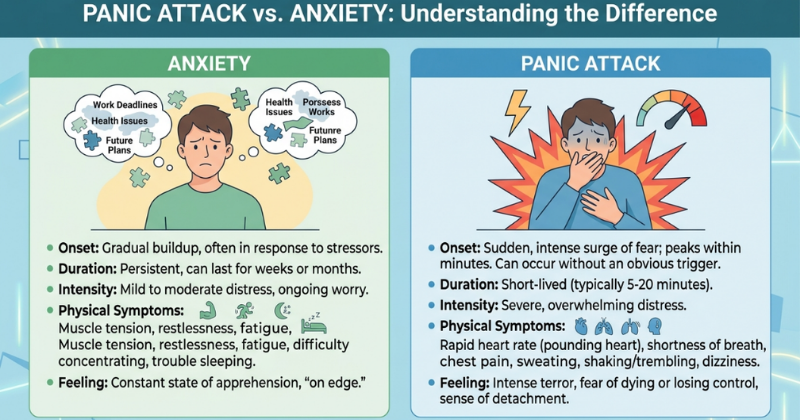
- Onset and Duration Anxiety builds gradually and can last all day or longer. A panic attack starts suddenly and peaks fast—usually under 10 minutes.
- Intensity Anxiety feels like a steady worry or tension. A panic attack feels like an overwhelming wave of terror or impending doom.
- Physical Symptoms Anxiety may cause muscle tension, fatigue, or stomach upset. Panic attacks trigger extreme symptoms: racing heart, shortness of breath, chest pain, dizziness, shaking, sweating, or numbness.
- Trigger Anxiety often ties to a specific worry or situation. Panic attacks can strike with no obvious trigger (unexpected) or from a feared situation (expected).
- Fear of Symptoms With anxiety you worry about the future. During a panic attack many people fear they are having a heart attack, dying, or “going crazy.”
- After Effects Anxiety leaves you drained but functional. After a panic attack you may feel exhausted and worried about when the next one will hit.
- Frequency Anxiety is ongoing. Panic attacks are episodic—some people have only a few in their lifetime, others experience them weekly.
Common Symptoms Side-by-Side
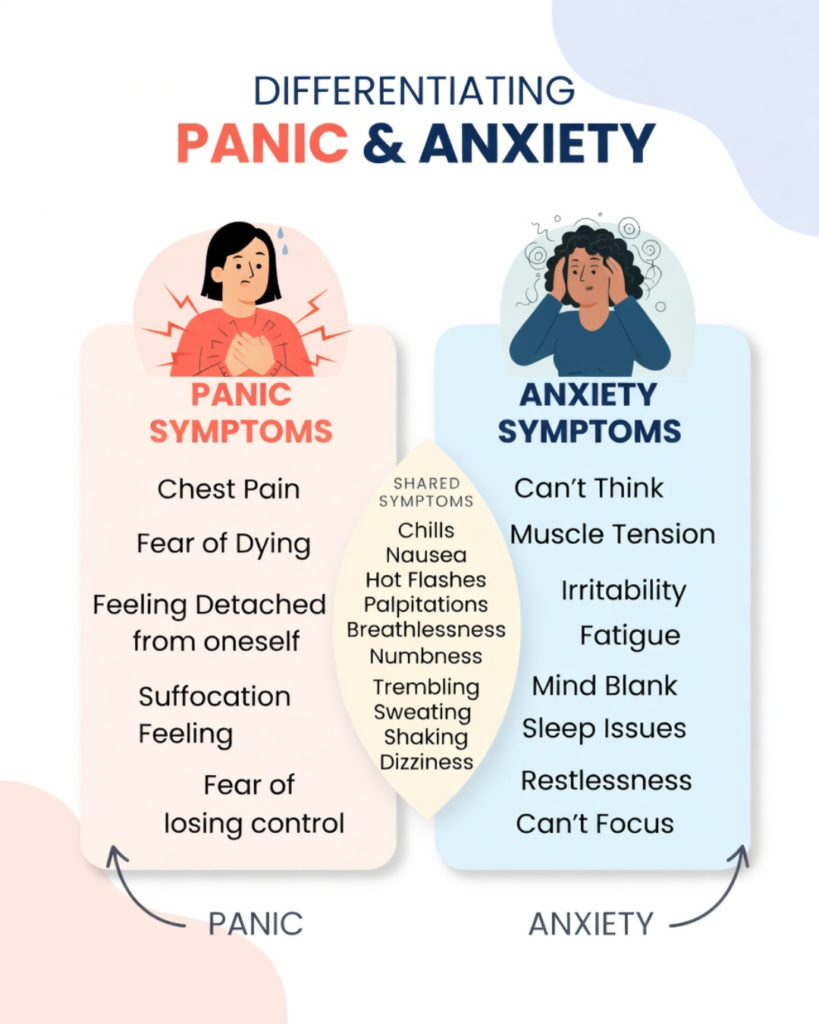
Anxiety symptoms (can be constant or wax and wane): • Restlessness or feeling on edge • Racing thoughts or worry • Trouble concentrating • Muscle tension or headaches • Sleep problems • Irritability
Panic attack symptoms (peak fast): • Sudden pounding heart or chest pain • Feeling short of breath or choking • Sweating, trembling, or chills • Dizziness or lightheadedness • Tingling or numbness • Fear of losing control or dying
The Science Behind Both
Both involve the brain’s amygdala (fear center) and the sympathetic nervous system. Anxiety is a longer activation of the stress response. A panic attack is an extreme, sudden misfiring of that system—your body releases adrenaline and cortisol as if you were facing a lion, even though you’re safe on the couch. Research from the National Institute of Mental Health shows that people with anxiety disorders often have an overactive fight-or-flight response. Genetics, trauma, stress, and even caffeine can lower the threshold for both.
Triggers and Risk Factors
Common anxiety triggers: work pressure, financial stress, health worries, social situations. Panic attack triggers: crowded places, driving, caffeine, lack of sleep, or even the fear of another attack itself.
Shared risk factors include family history, high stress, poor sleep, and certain medical conditions. Women are twice as likely as men to experience both.
How to Tell Them Apart in the Moment
Ask yourself two quick questions:
- Did this come on suddenly and feel extremely intense?
- Am I afraid I’m dying or losing control right now?
If yes to both, it’s likely a panic attack. If the feelings have been building and feel more like worry, it’s anxiety. Either way, the symptoms are real and scary—but they are not dangerous. Your body is simply overreacting.
Practical Relief Strategies That Fit Your Healthy Lifestyle
You don’t have to wait for an attack to use these tools. They work for both anxiety and panic:
• Breathing technique: Try 4-7-8 breathing—inhale for 4 seconds, hold 7, exhale 8. This quickly calms the nervous system. • Daily walking: A 30–60 minute brisk walk (as we covered earlier) reduces overall anxiety by 30–40 % and lowers the chance of panic attacks by improving mood and sleep. • Magnesium lotion: Massage the homemade magnesium lotion onto your feet and calves each evening. Magnesium calms overactive nerves and many people notice fewer panic episodes within weeks. • Essential-oil roll-on: Keep the grapefruit-peppermint or lavender blend in your bag. Inhale during early anxiety or at the first sign of panic. • Grounding: Name 5 things you see, 4 you can touch, 3 you hear, 2 you smell, 1 you taste. This pulls your brain out of panic mode. • Mood-boosting foods: Reach for oats, pumpkin seeds, or dark chocolate when anxiety rises—these support serotonin and steady blood sugar.
Common Mistakes That Make Symptoms Worse
Ignoring early anxiety until it spirals into panic. Drinking coffee or energy drinks when stressed. Avoiding situations that trigger panic (this actually makes fear grow). Self-diagnosing via Google instead of talking to a doctor. Trying to “just relax” during a panic attack—instead, remind yourself it will pass in minutes.
When to Seek Professional Help
See a doctor or therapist if: • Panic attacks happen often or interfere with daily life • Anxiety feels constant for 6+ months • You have chest pain, fainting, or fear of leaving home
Therapy (especially CBT), medication when needed, and lifestyle changes together give the best results. Many people become symptom-free.
Conclusion
Panic attack vs anxiety comes down to intensity, speed, and duration: anxiety is the steady background worry, while a panic attack is the sudden, overwhelming storm. Knowing the 7 key differences helps you respond with confidence instead of fear. Combine simple daily habits—walking, magnesium lotion, breathing, and mood-supporting foods—with professional care when needed, and you can dramatically reduce both.
Start tonight: make your magnesium lotion or take a short evening walk. Small, consistent steps build resilience so anxiety and panic lose their power. You are not alone, and relief is possible. Your calmer, steadier self is waiting—just one mindful breath and one healthy habit at a time.