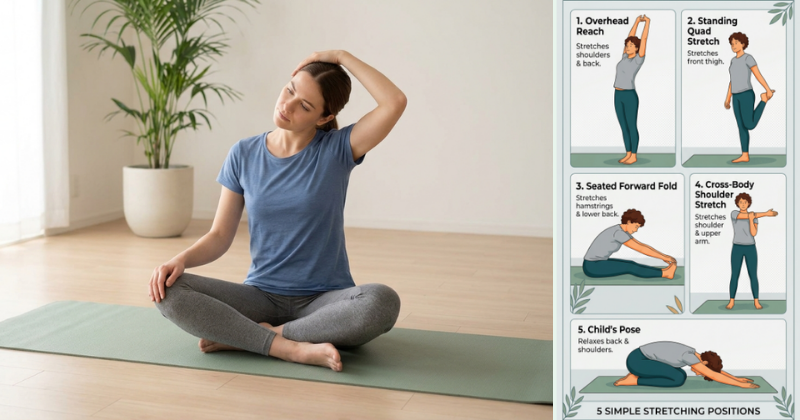
Struggling with tight hips after your daily walk, stiff shoulders from desk work, or that nagging lower-back tightness that kills your running form? You’re not alone. Most adults lose flexibility over time because of sitting, repetitive movements, and stress—yet just 10 minutes of targeted stretching each day can reverse those effects, improve posture, reduce injury risk, and help you move and feel better.
These 5 stretching exercises are simple, require zero equipment, and deliver noticeable results in as little as 7–14 days. They complement everything we’ve covered in your healthy lifestyle journey: they enhance your one-hour daily walk, fix the posture issues we tackled in perfecting your running form, calm the muscle tension that magnesium lotion already eases, and support deeper sleep by releasing stored stress. In this guide you’ll learn the exact science-backed benefits, step-by-step instructions with photos in mind, how long to hold each stretch, a ready-to-use daily routine, common mistakes to avoid, and easy ways to progress. Start tonight and wake up looser and more energized tomorrow.
Why Daily Stretching Is a Game-Changer for Your Body
Stretching increases blood flow to muscles, improves range of motion, and lengthens tight fascia—the connective tissue that can pull your posture out of alignment. A 2023 study in the Journal of Strength and Conditioning Research found that consistent daily stretching improves flexibility by 20–30 % in four weeks and significantly reduces lower-back and knee pain. It also lowers cortisol (stress hormone) and activates the parasympathetic nervous system, making it the perfect wind-down activity before your magnesium lotion ritual and sleep routine.
Unlike intense workouts, these stretches are gentle enough for beginners and powerful enough for runners and active adults. They target the most common tight spots: hips, hamstrings, calves, shoulders, and spine.
The 5 Best Daily Stretching Exercises
Do these in order as a 10-minute flow. Hold each static stretch for 30–60 seconds per side (or per pose), breathing deeply and relaxing into the stretch without forcing it. Perform the routine once in the morning for energy or in the evening after your walk or run for recovery.
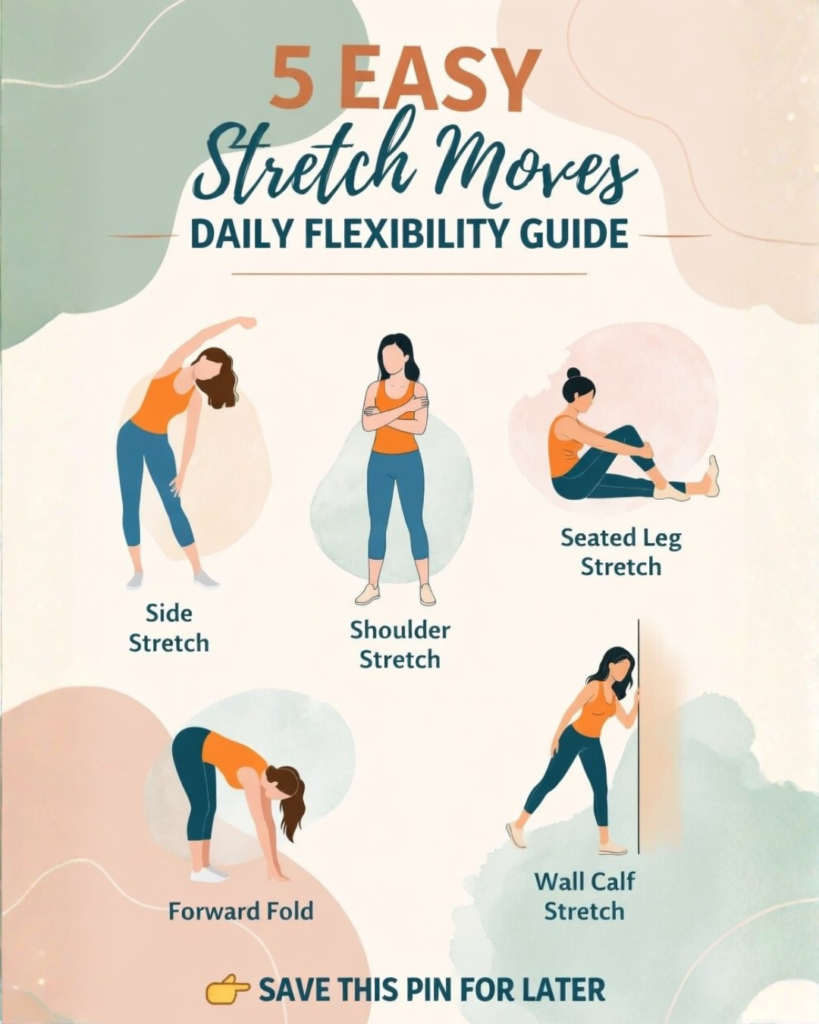
1. Standing Hamstring Stretch This lengthens the back of your legs and releases lower-back tension—perfect after running or walking. How to do it: Stand tall with feet hip-width apart. Step your right foot forward about 12 inches, keep the leg straight, and hinge at your hips to fold forward over the right leg. Keep a soft bend in the left knee. Hold, then switch sides. Benefits: Improves running stride, reduces hamstring tightness that pulls on your lower back, and supports better posture. Pro tip: If you can’t reach the floor, place hands on your shin or a chair.
2. Quad Stretch (Standing) Tight quads pull the pelvis forward and strain the knees—common in runners and desk workers. How to do it: Stand tall, bend your right knee, and bring your right heel toward your glutes. Grab your right ankle with your right hand (or use a towel if needed). Keep knees close together and gently press your hips forward. Hold, then switch sides. Benefits: Eases knee pain, improves hip mobility, and balances the muscle groups we strengthened in running-form drills. Pro tip: Keep your core lightly engaged to protect your lower back.
3. Hip Flexor Stretch (Lunge Position) Sitting shortens these muscles, leading to tight hips and poor posture. How to do it: Step your right foot forward into a lunge (right knee over ankle, left knee on the floor). Gently push your hips forward until you feel a stretch in the front of your left hip. Keep your torso tall. Hold, then switch sides. Benefits: Counters the effects of sitting, improves running form by allowing a full stride, and reduces lower-back pain. Pro tip: Add a gentle side bend away from the front leg for an extra oblique stretch.
4. Calf Stretch (Wall Stretch) Tight calves contribute to shin splints and plantar fasciitis. How to do it: Face a wall, place your right foot back with the heel on the ground and toes pointing forward. Lean into the wall until you feel the stretch in your right calf. Keep the back leg straight. Hold, then switch sides. Benefits: Prevents calf cramps, improves ankle mobility for better running efficiency, and pairs perfectly with the magnesium lotion massage on your calves. Pro tip: Bend the front knee slightly for a deeper soleus (lower calf) stretch.
5. Chest and Shoulder Opener (Doorway Stretch) Rounded shoulders from phones and computers compress the chest and restrict breathing. How to do it: Stand in a doorway, place your forearms on the doorframe at shoulder height (elbows bent 90 degrees). Gently step forward until you feel the stretch across your chest and front shoulders. Hold. Benefits: Opens the chest for better posture and breathing, reduces upper-back tension, and complements the arm swing we focused on in running-form drills. Pro tip: Keep your chin slightly tucked to avoid straining your neck.
Your 10-Minute Daily Stretching Routine
Morning (energizing): Do the full sequence after waking or before your walk. Evening (recovery): Perform after your run or walk, followed immediately by your magnesium lotion ritual on the stretched muscles. Total time: 10 minutes. Consistency beats intensity—do it every day for the best results.
How These Stretches Fit Your Healthy Lifestyle
These five moves enhance every habit we’ve built:
- They fix the posture and cadence issues from perfecting your running form.
- They release tension so your daily one-hour walk feels lighter.
- They calm the digestive system when paired with stomach-care foods and early meal timing.
- They prepare your muscles for deeper absorption of the magnesium lotion before bed.
- They support clearer skin by improving circulation (pair with the detox water recipe).
Common Mistakes to Avoid
- Bouncing or forcing the stretch (causes micro-tears).
- Holding your breath—instead exhale into the stretch.
- Stretching cold muscles—do a 2-minute warm-up walk first.
- Over-stretching one side (always balance both sides).
- Skipping the routine on “busy” days—10 minutes is enough to see progress.
Progression Tips for Faster Results
Week 1–2: Hold 30 seconds per stretch. Week 3+: Hold 45–60 seconds and add gentle pulsing at the end of the hold. Advanced: Add a yoga strap or resistance band for deeper stretches.
Conclusion
These 5 stretching exercises are simple, effective, and deliver real flexibility, posture improvements, and pain relief without fancy equipment or hours of your time. By adding them to your daily routine you’ll move better, run stronger, recover faster, and feel more comfortable in your body every single day.
Start tonight: spend just 10 minutes on the sequence after your evening walk, then follow with your magnesium lotion. In one week you’ll notice looser hips, taller posture, and fewer aches. Small daily stretches really do create big freedom of movement. You already have the healthy lifestyle foundation—now give your muscles the daily care they deserve.
Your body will thank you with easier walks, smoother runs, and the kind of effortless flexibility you thought you’d lost. Stretch, breathe, and enjoy the difference—one gentle reach at a time.