Most people think they’re “good” with sunscreen — a quick swipe before heading outside and they’re protected. Yet dermatologists report that 90% of adults still make critical sunscreen mistakes every single day, leading to premature aging, burns, and higher skin cancer risk. In 2026, with stronger UV levels and more awareness around photoaging, getting sunscreen right is no longer optional — it’s essential for healthy, youthful skin.
This guide reveals the 10 most common (and surprising) sunscreen mistakes people make, why they sabotage your protection, and exactly what to do instead. You’ll learn evidence-based tips, the science behind proper application, and a simple daily routine that actually works. No complicated rules, no expensive products — just smarter habits that keep your skin safe and glowing for years to come.
Why Sunscreen Mistakes Matter More Than Ever
Sunscreen is your skin’s first line of defense against UVA (aging) and UVB (burning) rays. When used incorrectly, even the highest SPF offers far less protection than the label claims. Research from the American Academy of Dermatology shows that most people apply only 25–50% of the recommended amount, cutting protection by up to 80%. The result? More wrinkles, dark spots, and long-term damage that shows up later. Understanding these mistakes is the fastest way to fix them.
The 10 Biggest Sunscreen Mistakes (And What to Do Instead)
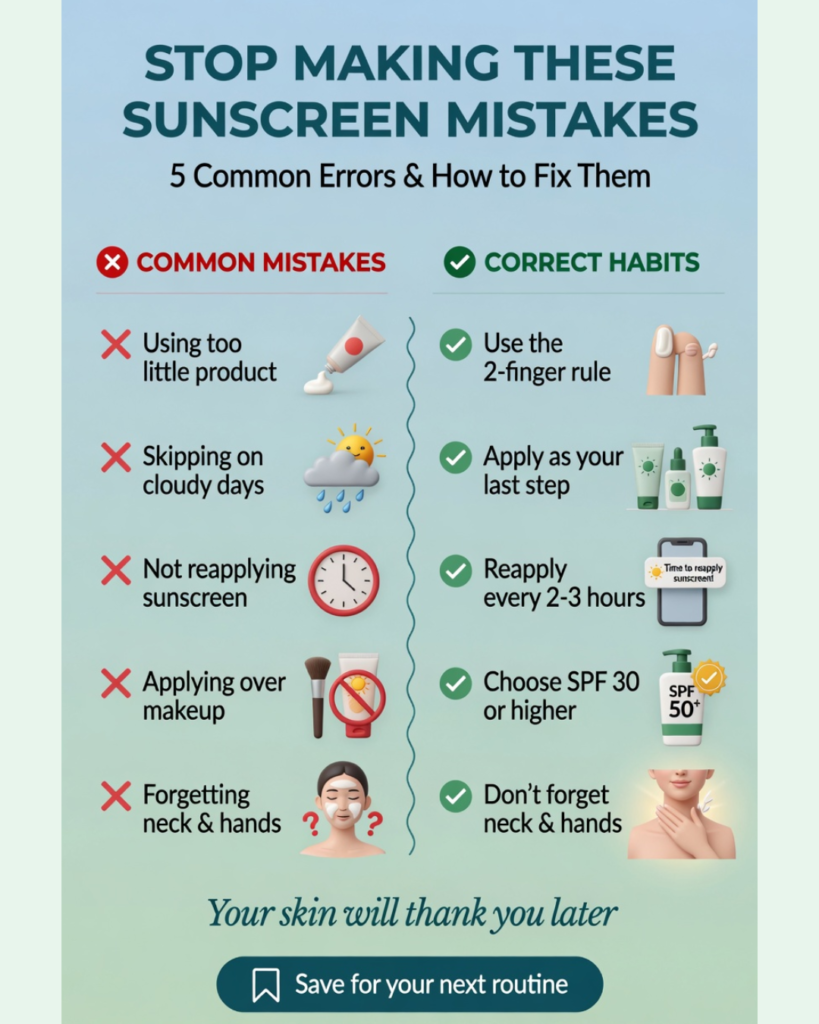
1. Using Too Little Sunscreen
Most people use a dime-sized amount when they actually need a full shot glass (about 1 ounce) for full-body coverage.
Do this instead: Measure it out the first few times until you get the feel. Apply generously 15–30 minutes before going outside and reapply every 2 hours (or immediately after swimming/sweating).
2. Skipping Reapplication
Even water-resistant formulas lose effectiveness after 80–120 minutes of sun exposure.
Do this instead: Set a phone timer for every 2 hours. Keep a travel-size bottle in your bag or car so it’s always handy.
3. Choosing the Wrong SPF
SPF 15 blocks only 93% of UVB rays, while SPF 30 blocks 97% and SPF 50 blocks 98%. Higher isn’t always dramatically better, but under 30 leaves you vulnerable.
Do this instead: Choose broad-spectrum SPF 30 or higher every day. For intense sun (beach, hiking), go SPF 50+.
4. Using Only SPF in Makeup or Moisturizer
Many “SPF” foundations and day creams contain tiny amounts and are applied too thinly to offer real protection.
Do this instead: Treat sunscreen as a separate step. Apply a dedicated sunscreen first, wait 15 minutes, then layer makeup or moisturizer on top.
5. Forgetting “Hidden” Areas
Ears, back of neck, tops of feet, lips, and eyelids are commonly missed — yet they burn and age quickly.
Do this instead: Use a lip balm with SPF 30 and a mineral stick for ears, neck, and hands. Apply a tiny dab on eyelids with your ring finger (never pull the skin).
6. Applying Sunscreen Too Late
Most people put it on right before stepping outside, but it needs time to bind to skin.
Do this instead: Apply 15–30 minutes before sun exposure. This gives the filters time to activate fully.
7. Relying on “Water-Resistant” Labels Without Reapplying
“Water-resistant 80 minutes” does not mean it survives swimming perfectly.
Do this instead: Reapply immediately after toweling off or every 40–80 minutes in water. No sunscreen is truly waterproof forever.
8. Using Expired or Old Sunscreen
Expired sunscreen loses potency and can even separate or become irritating.
Do this instead: Check the expiration date (usually 2–3 years from manufacture). Store sunscreen in a cool, dark place — never in a hot car.
9. Skipping Sunscreen on Cloudy or Winter Days
Up to 80% of UV rays still reach your skin on cloudy days, and snow reflects even more.
Do this instead: Make sunscreen a daily habit, 365 days a year. UV exposure is cumulative — every day counts.
10. Believing Sunscreen Alone Is Enough
Sunscreen is important, but it works best when combined with shade, clothing, and hats.
Do this instead: Follow the “Slip, Slop, Slap, Seek, Slide” rule: slip on clothing, slop on sunscreen, slap on a hat, seek shade, and slide on sunglasses.
Quick Daily Sunscreen Routine (Takes 60 Seconds)
- After morning cleansing and before moisturizer: apply broad-spectrum SPF 30+ to face, neck, and ears.
- Reapply at lunch or mid-afternoon.
- Use a mineral stick for quick touch-ups on high-exposure areas.
- At night, remove thoroughly with a gentle cleanser.
Pro Tips for Maximum Protection
- Choose mineral (zinc/titanium) sunscreens if you have sensitive or acne-prone skin — they sit on top and reflect rays.
- Shake chemical sunscreens well before use.
- Look for “broad-spectrum” and “water-resistant” labels.
- Combine with antioxidant serums (vitamin C) in the morning for extra free-radical protection.
- Teach kids early — sun damage in childhood causes most adult skin cancers.
Safety Notes
Sunscreen is safe and strongly recommended by dermatologists worldwide. Mineral sunscreens are generally preferred for babies over 6 months and those with sensitive skin. Always patch-test new formulas and consult a doctor if you have unusual reactions.
Conclusion
Sunscreen mistakes are incredibly common, but they’re also incredibly easy to fix once you know what to look for. By avoiding the 10 pitfalls above and adopting smarter habits — using enough product, reapplying on time, choosing the right SPF, and treating sunscreen as a daily non-negotiable — you can protect your skin, prevent premature aging, and keep it looking healthy and radiant for decades.
Start today by measuring out the correct amount and setting a 2-hour reapplication reminder. Small, consistent changes like these are what create long-term results. Your future skin will thank you for finally getting sunscreen right. Stop making these mistakes and start protecting your glow — the right way.