Meta Description: Learn how eczema is classified, including major dermatitis subtypes, their causes, symptoms, and clinical differences in this structured dermatology guide.
Eczema is not a single disease but a group of inflammatory skin conditions collectively known as dermatitis. These conditions share common features such as redness, itching, dryness, and skin barrier dysfunction—but they differ in causes, triggers, and clinical presentation.
Understanding the types of eczema (dermatitis subtypes) is essential for accurate diagnosis, targeted treatment, and long-term management.
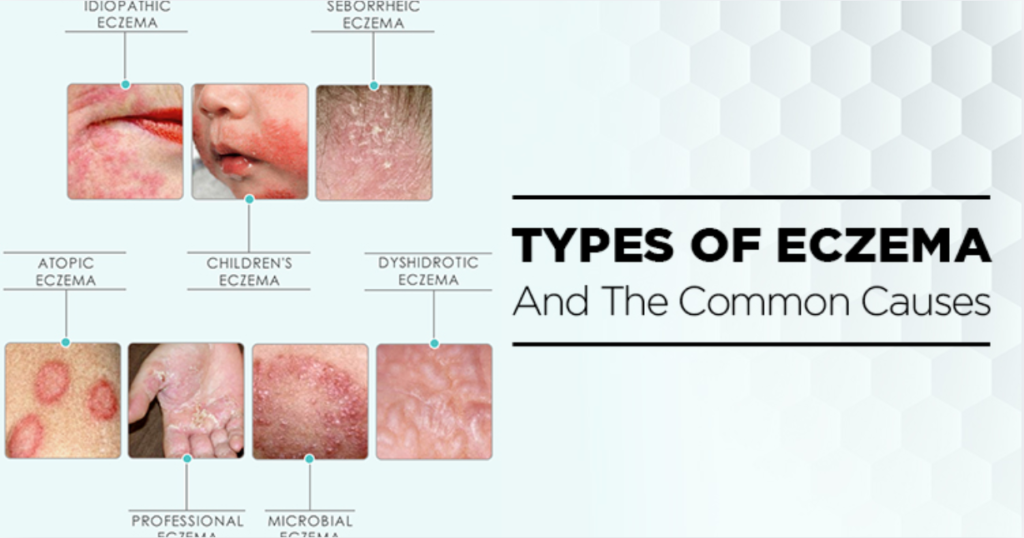
What Is Eczema (Dermatitis)?
Eczema refers to chronic or acute inflammation of the skin characterized by:
- Itching (often severe)
- Redness
- Dry or scaly patches
- Skin barrier dysfunction
Why classification matters
Different eczema types require different:
- Triggers avoidance strategies
- Topical treatments
- Long-term management plans
Featured Snippet: What are the types of eczema?
The main types of eczema include atopic dermatitis, contact dermatitis, seborrheic dermatitis, dyshidrotic eczema, nummular eczema, and stasis dermatitis.
1. Atopic Dermatitis
The most common form of eczema.
Key features
- Chronic, relapsing inflammation
- Strong itch (pruritus)
- Often begins in childhood but can persist into adulthood
Common triggers
- Allergens (dust, pollen)
- Stress
- Dry skin
Associated conditions
- Asthma
- Allergic rhinitis
2. Contact Dermatitis
Occurs when skin reacts to an external substance.
Types
- Irritant contact dermatitis (chemicals, soaps)
- Allergic contact dermatitis (immune reaction to allergens)
Symptoms
- Localized redness
- Burning or itching
- Blisters in severe cases
Featured Snippet: What causes contact dermatitis?
Contact dermatitis is caused by direct skin exposure to irritants or allergens, such as chemicals, soaps, metals, or cosmetics.
3. Seborrheic Dermatitis
A chronic inflammatory condition affecting oily areas.
Common locations
- Scalp
- Face (eyebrows, nose folds)
- Chest
Symptoms
- Greasy, yellowish scales
- Redness
- Dandruff-like flaking
Associated factors
- Yeast (Malassezia species)
- Stress
- Hormonal changes
4. Dyshidrotic Eczema
A type affecting hands and feet.
Key features
- Small, itchy blisters
- Intense itching
- Skin peeling after blisters resolve
Triggers
- Stress
- Allergies
- Sweating
5. Nummular Eczema
Also called discoid eczema.
Appearance
- Round or coin-shaped patches
- Red, scaly lesions
- Often very itchy
Common triggers
- Dry skin
- Skin injury
- Cold weather
6. Stasis Dermatitis
Related to poor blood circulation in the legs.
Key features
- Swelling in lower legs
- Skin discoloration (brownish patches)
- Itching and scaling
Underlying cause
- Venous insufficiency
Featured Snippet: What are the main types of eczema?
The main eczema types are atopic dermatitis, contact dermatitis, seborrheic dermatitis, dyshidrotic eczema, nummular eczema, and stasis dermatitis, each with distinct causes and patterns.
How Eczema Is Classified Clinically
Dermatologists classify eczema based on:
1. Cause-based classification
- Allergic (immune response)
- Irritant (external damage)
- Genetic (barrier dysfunction)
2. Location-based classification
- Hands (dyshidrotic eczema)
- Face/scalp (seborrheic dermatitis)
- Legs (stasis dermatitis)
3. Course of disease
- Acute (sudden flare)
- Chronic (long-term recurring)
Pathophysiology (What happens in the skin)
Step 1: Skin barrier disruption
- Loss of moisture
- Increased sensitivity
Step 2: Immune activation
- Inflammatory response triggered
Step 3: Itching–scratch cycle
- Scratching worsens inflammation
- Leads to further skin damage
Common Symptoms Across All Types
- Itching (main symptom)
- Redness
- Dryness
- Thickened skin in chronic cases
Featured Snippet: What are the symptoms of eczema?
Eczema symptoms include itching, redness, dry or scaly skin, inflammation, and in some cases blisters or thickened skin depending on the subtype.
Management Principles
Treatment depends on eczema type but follows common strategies.
1. Skin barrier repair
- Regular moisturizers (emollients)
- Gentle skincare routines
2. Anti-inflammatory treatment
- Topical corticosteroids
- Calcineurin inhibitors
3. Trigger avoidance
- Allergens
- Irritants
- Stress management
4. Infection control (if needed)
- Antifungal or antibacterial treatment
5. Lifestyle support
- Hydration
- Balanced diet
- Stress reduction
Internal Linking Opportunities
This topic connects well with:
- Skin inflammation and dermatitis overview
- Allergy and immune system disorders
- Fungal and bacterial skin infections
- Chronic inflammatory diseases
- Skin barrier function and repair
Conclusion
Eczema (dermatitis) includes multiple clinically distinct subtypes such as atopic, contact, seborrheic, dyshidrotic, nummular, and stasis dermatitis. While they share common symptoms like itching and inflammation, each type has unique triggers, locations, and treatment approaches.
Accurate classification is key to effective management, helping reduce flare-ups, improve skin barrier health, and enhance long-term quality of life.
Important Disclaimer: This article is for educational purposes only and should not replace professional medical advice. For persistent or severe skin conditions, consult a qualified healthcare provider.