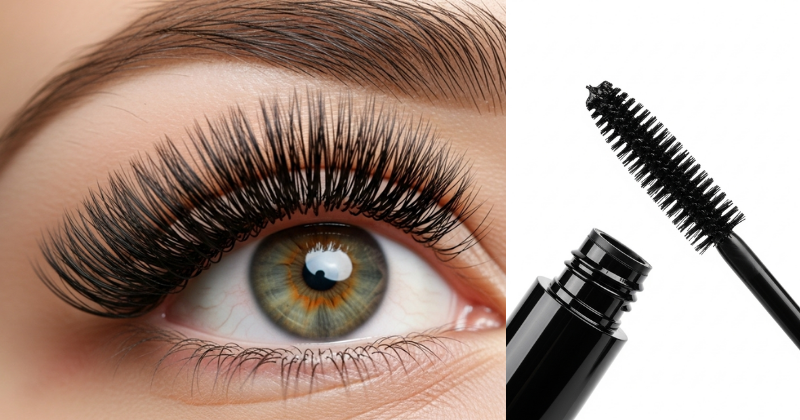
The cosmetics industry whispers promises of lush lashes through formulations laden with synthetic polymers, petroleum derivatives, and preservatives whose names read like chemical inventories rather than beauty products. Creating homemade non-toxic mascara without aloe vera liberates you from this dependence, placing control over ingredients directly into your hands while honoring sensitivities that make aloe vera problematic for some individuals.
This comprehensive exploration reveals the science behind mascara formulation, guiding you through evidence-based recipes that deliver genuine lash-darkening and volumizing effects without commercial products’ questionable ingredients. Whether you seek to avoid allergens, reduce environmental impact, or simply understand what touches your delicate eye area daily, this journey transforms you from passive consumer into informed formulator of your own cosmetics.

Understanding Mascara Chemistry: The Science Behind Lash Enhancement
Commercial mascara represents a sophisticated emulsion system combining waxes, pigments, oils, and film-forming agents in precisely calibrated ratios that achieve specific performance characteristics. Understanding this fundamental chemistry allows you to replicate these effects using natural, non-toxic alternatives that respect both skin sensitivity and environmental consciousness.
The Structural Components: Waxes, Pigments, and Carriers
Mascara’s physical structure relies on waxes that provide the semi-solid consistency enabling application while creating flexible films around individual lashes. These waxes—typically beeswax, carnauba wax, or candelilla wax in natural formulations—melt slightly at body temperature, allowing smooth application before resolidifying to maintain lash separation and curl.
Pigments create the visual darkening effect we associate with mascara. Activated charcoal, derived from coconut shells or bamboo, provides intense black coloration through carbon particles that absorb virtually all visible light wavelengths. Iron oxides offer brown and other earth-toned alternatives, while mica adds subtle shimmer for those seeking dimensional effects. These mineral pigments remain inert and non-reactive, making them suitable for sensitive eye areas where synthetic dyes often trigger irritation.
Carrier oils—such as jojoba, sweet almond, or fractionated coconut oil—provide the liquid medium that suspends pigments and softens waxes to workable consistency. These oils simultaneously condition lashes, delivering fatty acids and vitamins that strengthen hair structure and prevent brittleness that leads to breakage.
Why Aloe Vera Appears in Formulations (And Why We’re Avoiding It)
Aloe vera gel functions in mascara formulations as a natural thickener and film-former, its polysaccharide content creating viscosity while providing claimed conditioning benefits. Many DIY mascara recipes default to aloe vera as their primary liquid component, leveraging its gel-like consistency and purported lash-nourishing properties.
However, aloe vera sensitivity affects a significant subset of individuals, manifesting as contact dermatitis, ocular irritation, or allergic reactions ranging from mild redness to severe inflammation. The proteins and enzymes in aloe—particularly aloin and anthraquinones—can trigger immune responses in sensitized individuals. Additionally, commercially available aloe vera gel often contains preservatives like potassium sorbate or citric acid that some formulations seek to avoid.
Our aloe-free approach accommodates these sensitivities while maintaining mascara’s functional properties through alternative thickening and conditioning agents that deliver comparable or superior performance without allergenic potential.
The Role of Preservatives in Water-Based Formulations
Traditional mascara formulations incorporate water as a primary ingredient, necessitating robust preservation systems to prevent microbial contamination in the warm, moist environment near the eye. This presents a formulation challenge: water-based products require preservation, yet many commercial preservatives (parabens, formaldehyde-releasers) raise health concerns.
Our aloe-free homemade mascara approach sidesteps this challenge entirely by formulating oil-and-wax-based products that contain no water. This anhydrous (water-free) approach creates inherently inhospitable environments for bacterial and fungal growth, dramatically extending shelf life without synthetic preservatives. The absence of water also eliminates the primary vector for microbial contamination, making these formulations safer for sensitive eye areas.
Essential Ingredients: Building Your Non-Toxic Mascara Toolkit
Successful homemade mascara creation begins with sourcing high-quality, minimally processed ingredients that deliver specific functional properties. Each component serves distinct purposes in the final formulation, contributing to texture, application properties, pigmentation, and lash conditioning.
Wax Foundation: Structure and Application
Beeswax provides the traditional wax base for natural mascara, offering excellent adhesion to lashes, water resistance, and a smooth application texture. Its melting point around 62-64°C (144-147°F) creates stability at room temperature while allowing slight softening during application. Source yellow or white beeswax from reputable suppliers; white beeswax undergoes filtration that removes propolis and pollen potentially triggering allergies, making it preferable for sensitive individuals.
Candelilla wax serves as a vegan alternative to beeswax, derived from the leaves of the candelilla shrub native to northern Mexico and southwestern United States. Its higher melting point (68-72°C/154-162°F) creates slightly firmer formulations with enhanced hold, particularly valuable for maintaining lash curl throughout the day. Candelilla also provides superior water resistance compared to beeswax.
Carnauba wax—the hardest natural wax, melting at 82-86°C (180-187°F)—contributes primarily in small quantities (5-10% of total wax content) where it dramatically improves durability and creates glossy finish. Pure carnauba produces overly stiff formulations; blending it with softer waxes achieves ideal consistency balancing application ease with lasting performance.
Conditioning Oils: Nourishment and Texture
Jojoba oil technically represents a liquid wax ester rather than true oil, its molecular structure closely mimicking human sebum. This similarity enables excellent skin compatibility with minimal allergic potential. Jojoba’s stability (resistant to oxidation and rancidity) extends mascara shelf life while conditioning lashes through vitamin E and B-complex vitamins that strengthen hair structure.
Sweet almond oil provides lightweight conditioning rich in oleic acid (omega-9 fatty acid) that penetrates hair shafts, improving elasticity and reducing breakage. Its vitamin A content supports healthy lash growth cycles, while vitamin E offers antioxidant protection against environmental stressors. Choose cold-pressed, organic almond oil to avoid traces of hexane or other solvents used in commercial extraction.
Fractionated coconut oil—created by separating long-chain fatty acids from standard coconut oil—remains liquid at room temperature while maintaining coconut oil’s conditioning properties. Its lightweight texture prevents clumping and allows smooth mascara application without weighing down lashes. The fractionation process also enhances stability, creating products resistant to rancidity over extended storage periods.
Pigmentation: Achieving Desired Color Intensity
Activated charcoal powder provides the deepest black pigmentation available from natural sources. This ultra-fine carbon powder (particle size typically 5-25 micrometers) results from heating coconut shells, bamboo, or wood in low-oxygen environments, creating highly porous structures with enormous surface areas that scatter and absorb light completely. Medical-grade activated charcoal ensures purity and consistent particle size, preventing grittiness in final formulations.
Iron oxides offer brown, red-brown, and black pigmentation through naturally occurring mineral compounds. These inorganic pigments demonstrate exceptional stability—neither fading with light exposure nor reacting with other formulation components. Cosmetic-grade iron oxides undergo purification removing heavy metal contaminants, ensuring safety for eye-area application. Blend different iron oxide shades to achieve custom brown tones matching your natural lash color.
Cocoa powder provides subtle brown pigmentation with conditioning properties derived from cocoa butter content. Use raw, unsweetened cocoa powder rather than processed varieties containing added sugars or milk solids. While cocoa creates softer brown tones than iron oxides, its natural chocolate aroma adds pleasant sensory dimension to the mascara experience.
Optional Additives: Enhanced Performance
Vitamin E oil (tocopherol) functions as both lash conditioner and natural preservative, its antioxidant properties preventing oil rancidity that would compromise mascara quality over time. Use mixed tocopherols rather than synthetic dl-alpha-tocopherol for broader antioxidant activity encompassing multiple vitamin E forms. Add at 0.5-1% of total formulation weight.
Castor oil deserves special mention for lash growth properties attributed to ricinoleic acid, a unique fatty acid comprising approximately 90% of castor oil’s composition. While scientific evidence for topical castor oil promoting hair growth remains limited, anecdotal reports and traditional use suggest potential benefits. Its thick, viscous texture also contributes to mascara’s coating properties, though excessive amounts create overly heavy formulations.
The Basic Aloe-Free Mascara Recipe: Your Foundation Formula
This foundational recipe establishes the baseline from which you’ll customize according to personal preferences regarding texture, intensity, and performance characteristics. The formulation ratios reflect tested proportions that balance application ease with lasting wear and lash conditioning.
Ingredients and Equipment
Required ingredients:
- 2 teaspoons beeswax or candelilla wax (approximately 10 grams)
- 1 teaspoon jojoba oil or fractionated coconut oil (approximately 5 ml)
- 1/2 teaspoon sweet almond oil (approximately 2.5 ml)
- 1/4 teaspoon activated charcoal powder (for black) or 1/2 teaspoon cocoa powder (for brown)
- 3-5 drops vitamin E oil
- Optional: 1/4 teaspoon castor oil for enhanced conditioning
Equipment needed:
- Small double boiler or heat-safe glass bowl over simmering water
- Clean mascara tube with wand (thoroughly cleaned old tube or purchased empty tube)
- Small funnel or disposable pipette
- Stirring implement (wooden stick, small spatula)
- Digital scale (optional but recommended for precise measurements)
Step-by-Step Preparation Process
Step 1: Sanitization Protocol
Sterilize all equipment and containers before beginning. Wash thoroughly with hot, soapy water, rinse completely, then wipe with 70% isopropyl alcohol. Allow to air-dry completely—any residual moisture compromises the anhydrous formulation’s stability. This sterilization prevents introducing bacteria or fungi that could contaminate the product despite its water-free composition.
Step 2: Melting the Wax Base
Fill the bottom of a double boiler with 1-2 inches of water and bring to gentle simmer. Place the wax in the top vessel or heat-safe bowl, heating gently until completely melted. Waxes require temperatures of 60-85°C (140-185°F) depending on type; avoid overheating, which can degrade wax properties and create unpleasant odors. Stir occasionally to ensure even melting.
Step 3: Incorporating Oils
Once wax reaches liquid state, reduce heat to lowest setting maintaining liquid consistency. Add jojoba oil (or chosen carrier oil) and sweet almond oil, stirring continuously to create homogeneous mixture. The oils will initially separate from wax; persistent stirring encourages emulsification through mechanical action, creating uniform blend as temperature equilibrates.
Step 4: Pigment Integration
Remove the wax-oil mixture from heat source. Add activated charcoal or cocoa powder gradually, stirring vigorously to disperse pigment evenly throughout the base. Pigments clump easily when added to oils; thorough, persistent stirring breaks up aggregates, distributing color uniformly. Return to gentle heat if mixture begins solidifying before pigment fully incorporates.
Step 5: Final Additions and Filling
Add vitamin E oil and optional castor oil, stirring thoroughly for 30-60 seconds. Working quickly before the mixture solidifies, transfer to mascara tube using small funnel or disposable pipette. Fill tube only to 70-80% capacity, leaving space for wand insertion without overflow. Wipe any excess from tube opening with clean cloth, then insert wand and secure cap firmly.
Step 6: Setting and Testing
Allow filled mascara tube to cool completely at room temperature (this takes 2-3 hours). Avoid refrigeration for rapid cooling, which can create uneven texture or separation. Once solidified, test consistency by applying to back of hand—the mascara should coat smoothly without excessive clumping or flaking. Adjust future batches based on performance: too stiff indicates excess wax, too liquid suggests insufficient wax or excess oil.
Customization and Variations: Tailoring to Your Preferences
The foundational recipe provides reliable starting point, yet individual preferences regarding color intensity, texture, and performance vary significantly. These modifications allow you to craft mascara perfectly calibrated to your unique requirements and application preferences.
Adjusting Color Intensity
For deeper black pigmentation, increase activated charcoal to 1/2 teaspoon, understanding this may slightly dry the formula—compensate by adding an additional 1/4 teaspoon carrier oil. For softer brown tones, combine 1/4 teaspoon cocoa powder with 1/8 teaspoon iron oxide brown, creating dimensional color with subtle warmth.
Create custom shades by blending pigments: charcoal with small amounts of iron oxide brown produces softer blacks with warmer undertones; pure iron oxides in varying ratios generate spectrum of browns from light auburn to deep chocolate. Document your color experiments with precise measurements, enabling replication of successful custom shades.
Texture Modifications: From Natural to Dramatic
For natural, lightweight mascara:
- Reduce wax content to 1.5 teaspoons
- Increase carrier oils to 2 teaspoons total
- Use only beeswax (avoid firmer candelilla or carnauba)
- Reduce pigment slightly for softer definition
For volumizing, dramatic mascara:
- Increase wax to 2.5 teaspoons
- Add 1/4 teaspoon carnauba wax for structure
- Maximize pigment content (up to 1/2 teaspoon activated charcoal)
- Include full 1/4 teaspoon castor oil for thickness
For waterproof formula:
- Use candelilla wax exclusively (most water-resistant natural wax)
- Add 10% carnauba wax to total wax content
- Minimize oil content to 1 teaspoon maximum
- Accept trade-off: waterproof formulas require oil-based removers
Lengthening vs. Volumizing Wand Selection
The wand dramatically influences mascara performance independent of formulation. Thin, straight-bristled wands separate lashes and apply product thinly, creating lengthening effects with natural definition. Dense, curved wands deposit more product per stroke, building volume through multiple coats. Spiral wands combine separation with volume, their twisted bristles catching and coating each lash individually.
Experiment with wands salvaged from various commercial mascaras (thoroughly cleaned) to discover which geometry best suits your lash type and desired aesthetic. Short, sparse lashes often benefit from dense, straight wands that deposit maximum product; long, thick lashes may prefer sparse, curved wands that separate and define without clumping.
Troubleshooting Common Formulation Challenges
Even carefully crafted homemade mascara occasionally presents unexpected behaviors requiring diagnosis and adjustment. Understanding the chemical and physical principles underlying these issues enables targeted corrections that transform problematic formulations into optimal products.
Issue: Mascara Too Stiff or Difficult to Apply
Cause: Excessive wax content relative to oils, or inclusion of too much high-melting-point wax (carnauba) without sufficient softening agents.
Solution: Remelt the batch in double boiler, adding 1/4-1/2 teaspoon additional carrier oil in small increments while stirring thoroughly. Test consistency by dipping clean implement and observing how product coats it—aim for smooth, even coating without excessive thickness. If adding oil doesn’t sufficiently soften, the wax ratio fundamentally needs reduction in future batches.
Issue: Mascara Too Liquid or Won’t Hold Curl
Cause: Insufficient wax content, or oils comprise too large a percentage of formulation, preventing adequate film formation.
Solution: This issue proves more challenging to correct in finished product. You can attempt adding small amounts of melted beeswax (1/4 teaspoon at a time), but thoroughly incorporating additional wax into finished mascara requires complete remelting. Prevention through careful measurement during initial formulation proves more reliable than attempting corrections after completion.
For future batches, increase wax content by 1/2 teaspoon and/or incorporate small amount (1/4 teaspoon) of firmer carnauba wax to improve structure and hold. Document adjustments to establish your optimal wax-to-oil ratio for consistent results.
Issue: Pigment Clumping or Uneven Distribution
Cause: Inadequate pigment dispersion during mixing, often due to adding pigment to mixture that’s already cooling and thickening, or insufficient stirring time.
Solution: Pigment distribution issues rarely correct after mascara solidifies. Prevention requires adding pigment while mixture remains fully liquid and stirring vigorously for minimum 1-2 minutes, ensuring complete particle dispersion before cooling begins.
Some pigments disperse more easily when first mixed with small amount of oil before adding to wax mixture—create pigment paste by combining activated charcoal with 1/4 teaspoon oil, grinding with back of spoon to eliminate lumps, then incorporating this paste into melted wax-oil base.
Issue: Mascara Flakes Throughout Day
Cause: Formula contains insufficient oils to maintain flexibility after drying, or wax quality proves substandard (contains impurities or wrong wax type for mascara application).
Solution: Increase conditioning oil content by 1/4-1/2 teaspoon, particularly castor oil whose thick consistency improves film flexibility. Ensure wax source provides cosmetic-grade quality—beeswax intended for candle-making may contain impurities unsuitable for cosmetic applications.
Adding 2-3 drops additional vitamin E oil also improves film flexibility while providing antioxidant benefits. If flaking persists despite adjustments, consider whether environmental factors (extremely dry climate, exposure to fans or wind) contribute to excessive drying of mascara film.
Issue: Eye Irritation or Sensitivity
Cause: Contamination during preparation, sensitivity to specific ingredient, or inadequate sterilization of equipment and containers.
Solution: Immediately discontinue use and allow eyes to recover fully. Review ingredient sources—ensure all materials carry cosmetic-grade designation suitable for eye-area application. Some individuals demonstrate sensitivity to specific carrier oils; try reformulating with different oil (substitute coconut for almond, for example) to identify potential allergen.
Enhance sterilization protocols: some practitioners prefer boiling mascara tubes and wands for 10 minutes rather than alcohol wiping alone, ensuring complete elimination of potential irritants. Prepare mascara in small batches used within 2-3 months to minimize oxidation and potential rancidity that could trigger irritation.
Storage, Shelf Life, and Safety Considerations
Homemade mascara requires different storage and handling than commercial products, lacking synthetic preservatives and stabilizers that extend shelf life indefinitely. Understanding proper storage protocols maximizes product longevity while ensuring safety for use near the delicate eye area.
Optimal Storage Conditions
Store homemade mascara at cool room temperature (18-22°C/64-72°F) away from direct sunlight, which degrades both pigments and oils through photochemical reactions. Avoid bathroom storage where temperature and humidity fluctuate dramatically—these variations promote condensation inside the tube, potentially introducing moisture that encourages microbial growth despite the anhydrous formulation.
Cool, dark drawers or cabinets provide ideal storage environments. Refrigeration proves unnecessary and potentially counterproductive, as cold temperatures increase mascara viscosity, making application more difficult and potentially causing oils to separate from waxes. If you live in extremely hot climates (consistently above 30°C/86°F), refrigeration may prevent melting, though allow mascara to warm slightly before application for optimal texture.
Realistic Shelf Life Expectations
Without synthetic preservatives, homemade mascara maintains optimal quality for approximately 3 months. The vitamin E included in formulations provides some antioxidant protection, slowing oil oxidation, but cannot indefinitely prevent rancidity. Prepare small batches you’ll complete within this timeframe rather than large quantities that may degrade before use.
Monitor for signs of expiration: rancid or off odors (oils degrading), texture changes (excessive hardening or unusual softening), color shifts, or any unusual appearance suggest the product should be discarded. The 3-month guideline assumes proper storage and handling; mascara exposed to heat, moisture, or contamination may degrade more rapidly.
Hygiene and Contamination Prevention
Never add water or saliva to mascara, traditional practices that introduce bacteria directly into the product. If mascara seems dry, add 1-2 drops of jojoba oil rather than moisture. Avoid pumping the wand in and out of the tube—this action introduces air that dries the product and potentially carries contaminants into the formulation.
Clean the wand weekly by wiping with tissue or washing with gentle soap and water, allowing to dry completely before returning to tube. Replace mascara completely if you develop any eye infection; continuing use risks reintroducing pathogens even after infection clears. Consider maintaining separate mascaras if you have conditions like blepharitis requiring enhanced hygiene protocols.
Beyond Basic Mascara: Advanced Natural Formulations
Once comfortable with foundational mascara creation, advanced techniques and ingredient incorporations elevate your formulations from functional to exceptional, addressing specific lash concerns while expanding your cosmetic chemistry expertise.
Lash Growth-Promoting Formula
While no topical application miraculously transforms lash length overnight, certain ingredients demonstrate evidence for supporting hair follicle health and potentially enhancing growth over extended use. This advanced formula incorporates research-supported botanicals alongside conditioning agents:
Enhanced Growth Formula:
- 2 teaspoons beeswax
- 1 teaspoon jojoba oil
- 1/2 teaspoon castor oil (ricinoleic acid content)
- 1/4 teaspoon rosehip seed oil (vitamin A supports follicle health)
- 1/4 teaspoon activated charcoal
- 5 drops vitamin E oil
- 2 drops rosemary essential oil (improves circulation)
The rosehip seed oil contributes vitamin A (retinol) in natural form, supporting cellular turnover in follicles. Rosemary essential oil contains compounds that improve scalp circulation when applied topically, potentially benefiting lash follicles similarly. Use this formula as overnight lash treatment, applying before bed and removing in morning, allowing extended contact time for potential growth-supporting effects.
Conditioning Primer Formula
Create a clear lash primer applied before mascara, conditioning lashes while providing base that enhances color adherence and volumizing effects:
Clear Conditioning Primer:
- 1.5 teaspoons beeswax
- 1.5 teaspoons jojoba oil
- 1/2 teaspoon castor oil
- 1/4 teaspoon argan oil
- 5 drops vitamin E oil
This formula omits pigments entirely, creating transparent coating that conditions while preparing lashes for mascara application. The higher oil ratio (compared to mascara formula) maximizes conditioning effects. Apply primer, allow 30-60 seconds to set, then apply your regular mascara over the primer base for enhanced results.
Sensitive Eyes Formula
For individuals with extreme sensitivity or those recovering from eye irritation, this minimalist formula eliminates all but essential ingredients:
Ultra-Minimal Sensitive Formula:
- 2 teaspoons pharmaceutical-grade beeswax (highest purity)
- 1 teaspoon fractionated coconut oil (minimal allergenic potential)
- 1/4 teaspoon activated charcoal (medical-grade)
- 3 drops vitamin E oil (mixed tocopherols)
This stripped-down formulation removes all botanicals, essential oils, and additional ingredients that might trigger reactions. While perhaps less conditioning than fuller formulas, it provides mascara’s core functions—darkening and separating lashes—with minimal risk for sensitive individuals.
The Philosophy of DIY Cosmetics: Reclaiming Ingredient Awareness
Creating homemade non-toxic mascara transcends mere cost savings or crafting hobby—it represents fundamental reclamation of knowledge about what contacts your body daily. Commercial cosmetics obscure ingredients behind complex chemical nomenclature and marketing rhetoric, creating disconnection between consumer and product composition.
This DIY approach inverts that relationship, positioning you as informed formulator rather than passive purchaser. You select each ingredient deliberately, understanding its function and source. This knowledge transforms cosmetic application from mindless routine into conscious choice, where you actively decide what deserves contact with your body based on evidence rather than advertising claims.
The process also cultivates appreciation for cosmetic chemistry’s complexity. What appears as simple black paste actually represents sophisticated balance of waxes, oils, and pigments, each contributing specific properties essential to overall performance. This appreciation extends beyond mascara, informing how you evaluate all personal care products and question whether commercial formulations’ complexity truly serves functional purposes or primarily obscures ingredient quality beneath proprietary mystique.
Your homemade aloe-free mascara becomes more than cosmetic—it embodies principles of transparency, bodily autonomy, and environmental consciousness. Each application reminds you that effective beauty products need not depend on synthetic chemicals, plastic packaging, or corporate laboratories. The ingredients grow in fields and orchards, derive from bees’ architectural genius, or form through simple heating of coconut shells. These natural origins don’t guarantee superiority, but they offer different relationship with cosmetics—one grounded in understanding and choice rather than marketing and mystery.
The mascara tube on your vanity tells a story: of ingredients you researched, proportions you tested, adjustments you made based on experience. It whispers that cosmetic creation belongs not to corporations but to anyone willing to learn, experiment, and engage thoughtfully with the chemistry of enhancement and care. This empowerment ripples outward—today mascara, tomorrow perhaps foundation, moisturizer, or any number of personal care products currently purchased without full ingredient awareness.
Begin with one small batch. Observe how simple ingredients combine into functional cosmetic. Notice how your formulation compares to commercial alternatives—perhaps different in texture or longevity, but effective nonetheless and utterly transparent in composition. This first batch initiates journey toward greater autonomy over what contacts your body, informed by evidence and personal experience rather than marketing claims. The transformation extends beyond your lashes—it reaches into how you conceptualize, evaluate, and engage with the entire landscape of personal care products that shape daily life.