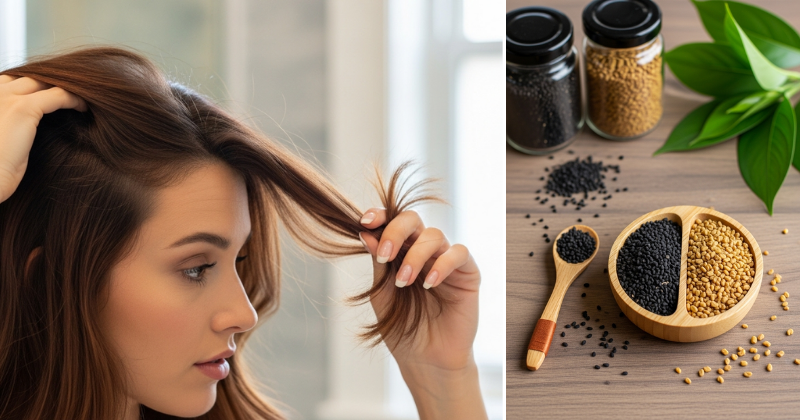
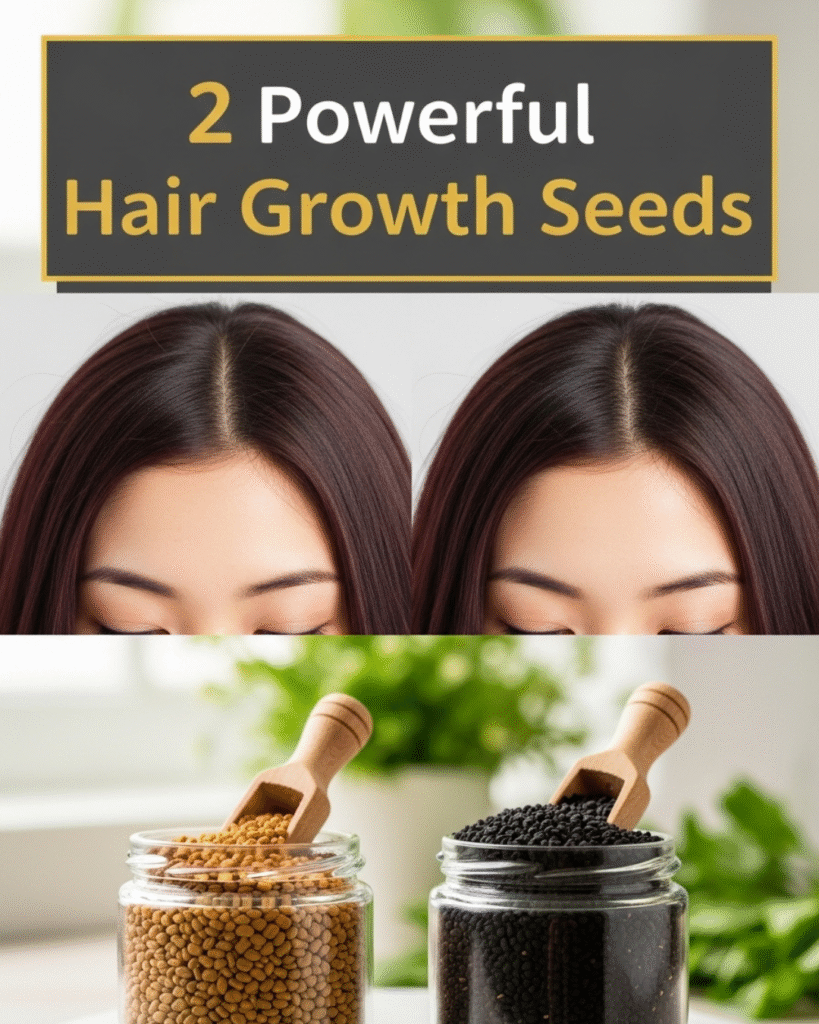
If you’re searching for natural, food-based solutions to enhance hair growth and combat thinning, you’ve likely encountered a vast, confusing array of supplements. But the secret to voluminous hair can be found in two humble seeds. 2 Powerful Hair Growth Seeds hold the nutritional blueprint to transform your hair health from the inside out, offering an achievable and cost-saving benefit compared to expensive treatments. This guide will reveal the identity of these powerhouse seeds, providing the scientific backing and step-by-step guidance you need to seamlessly integrate them into your sustainable lifestyle change for truly beautiful results.
Important Disclaimer: This article is for informational purposes only and should not replace professional advice. For health-related topics, consult healthcare providers. Individual results may vary, and personal circumstances should always be considered when implementing any suggestions.
🔬 Foundation First: The Nutritional Science of Hair Growth
Hair health is intrinsically linked to nutrient supply. When your body is deficient in key micronutrients, the hair follicle, a non-essential part of the body, is the first place resources are diverted from. Understanding this is key to appreciating the power of the 2 powerful hair growth seeds.
H3: Building Confidence with Basic Concepts: Keratin and Micronutrients
Hair is primarily composed of keratin, a robust structural protein. For your body to synthesize strong, healthy keratin, it requires a steady supply of specific building blocks.
- Protein Foundation: Adequate protein intake is non-negotiable for hair health. Since hair is protein, a lack of it can lead to brittle, weak strands and slowed growth.
- Key Co-factors: Vitamins and minerals act as co-factors in the enzymatic processes that create hair cells. Zinc, Iron, and B vitamins (especially Biotin) are critical for healthy follicular function.
- Encouraging Reassurance for Beginners: You don’t need complex supplements to get these nutrients. Nature has packaged them perfectly in the 2 powerful hair growth seeds, making gradual progress toward better hair accessible to everyone.
H3: Addressing Common Hesitations: Why Seeds and Not Oils?
While seed oils (like pumpkin seed oil) are popular for topical use, consuming the whole seed provides a superior nutritional profile.
- Fiber and Absorption: Consuming the whole seed provides necessary fiber, which aids in healthy digestion and nutrient absorption. The seed matrix helps the body process the fats and fat-soluble vitamins slowly and efficiently.
- Complete Nutrient Profile: The whole seed contains all the vitamins, minerals, and proteins that might be filtered or destroyed in the oil extraction process, ensuring you get the full scientific backing of its goodness.
🌟 Section 2: Core Methods: Identifying the 2 Powerful Hair Growth Seeds
The two nutritional powerhouses we’re focusing on are Pumpkin Seeds and Flax Seeds. These seeds tackle the two main nutritional causes of poor hair health: mineral deficiencies and hormonal imbalance.
Seed 1: The Mineral Marvel – Pumpkin Seeds (Zinc and Iron)
Pumpkin seeds (Cucurbita pepo) are legendary for their high concentration of minerals essential for the hair growth cycle.
- Zinc Power: Zinc is vital for the creation of new hair cells and repairing damage. It also plays a key role in the oil glands surrounding the follicle, keeping the hair moisturized and resilient. Deficiency in Zinc is strongly linked to hair loss.
- Practical Tips/Shortcuts: Consume raw or lightly roasted pumpkin seeds daily.
- Phytosterols and DHT: Pumpkin seeds contain phytosterols, plant compounds that some scientific backing suggests may inhibit the action of $5$-alpha reductase, the enzyme that converts testosterone into Dihydrotestosterone (DHT). High DHT is a primary cause of male and female pattern hair loss.
Seed 2: The Omega Maestro – Flax Seeds (Omega-3s and Lignans)
Flax seeds (Linum usitatissimum) offer a potent combination of healthy fats and unique fibers that support the follicle environment.
- Omega-3s (Alpha-Linolenic Acid, ALA): Flax seeds are one of the best plant-based sources of Omega-3 fatty acids, which reduce inflammation across the body, including the scalp. A healthy, non-inflamed scalp is the foundation for strong hair growth.
- Actionable Language: Flax seeds must be ground just before consumption for maximum Omega-3 absorption. Whole flax seeds pass through the digestive system largely intact.
- Lignans and Hormonal Balance: Flax seeds are rich in lignans, compounds that act as phytoestrogens. Lignans can help balance hormones, which is often a key factor in sudden hair shedding, especially in women.
🥄 Section 3: Advanced Strategies: Preparation and Daily Integration
To truly transform your hair, consistency and proper preparation of the 2 powerful hair growth seeds are paramount.
H3: The Golden Rule: Grinding and Storage
You must grind your seeds, particularly flax, to unlock their nutritional benefits.
- Grinding Pro Tip: Use a coffee grinder designated for seeds and spices only. Grind only a week’s worth of flax seeds at a time. The powerful Omega-3 oils in ground flax seeds oxidize (go rancid) very quickly when exposed to air. Store ground seeds in an opaque, airtight container in the refrigerator for best results.
- Creative Solutions: Pumpkin seeds can be consumed whole, but grinding them (or using pre-ground powder) and mixing them into smoothies or soups is an effective way to customize approach for daily consumption.
H3: Suggested Daily Intake (Timing and Planning Considerations)
- Flax Seeds: Aim for $1$ to $2$ tablespoons of freshly ground flax seeds daily.
- Pumpkin Seeds: Aim for $\frac{1}{4}$ cup (a small handful) of pumpkin seeds daily.
| Meal Suggestion | Preparation Method | Ingredient Focus |
| Breakfast | Blend ground flax into a smoothie or oatmeal. | Omega-3s, Fiber |
| Mid-Day Snack | Eat a small handful of raw pumpkin seeds. | Zinc, Protein |
| Dinner Topping | Sprinkle ground pumpkin seeds over salad or soup. | Minerals, Texture |
⚠️ Section 4: Troubleshooting and Common Challenges
Integrating any new food into your diet can come with minor issues. Addressing these helps maintain gradual progress and consistency.
Featured Snippet Potential: “Can eating too many pumpkin or flax seeds cause side effects?”
Eating too many pumpkin or flax seeds can cause mild digestive upset, such as bloating or gas, primarily due to their high fiber content. To prevent this, start slowly with $\frac{1}{2}$ tablespoon of flax and a small pinch of pumpkin seeds daily, gradually increasing the dosage over 2-3 weeks. Ensure you increase your water intake simultaneously, as fiber requires adequate hydration to move smoothly through the digestive system.
Practical Troubleshooting Tips (Wellness Focus)
- Problem: Digestive discomfort or bloating.
- Obstacle: Too much fiber too fast, or insufficient water intake.
- Solution: Preventive measures: Reduce the quantity immediately. Go back to the introductory dose and increase your water consumption significantly. You can also soak whole flax seeds briefly before grinding to make them easier to digest.
- Problem: Difficulty achieving consistent consumption.
- Obstacle: Forgetting to integrate the seeds into meals.
- Solution: Encouragement for setbacks: Implement the “Set-and-Forget” method. Pre-mix the required daily amounts of the 2 powerful hair growth seeds into a batch of granola or homemade energy bars. This makes consumption automatic and relatable to daily life.
- Problem: The taste is off-putting (especially flax).
- Solution: Alternative approaches: Mask the flavor. Flax seeds have a nutty, earthy flavor that is easily hidden in strong-flavored foods. Mix them into highly-flavored dishes like chili, curry, or strong spices, offering multiple options to suit different preferences.
📈 Section 5: Maximizing Results: Synergistic Strategies and Long-Term Care
To maximize the benefits of the 2 powerful hair growth seeds, integrate them with complementary strategies that support overall follicular health.
- Topical Complement (Complementary Strategies): While you are consuming the seeds, consider a gentle topical treatment. Massage the scalp 2-3 times a week with diluted Rosemary Essential Oil. Rosemary is scientifically shown to stimulate circulation in the scalp, enhancing nutrient delivery to the follicles, effectively building upon the internal success of the seeds. (Internal Linking Opportunity: Check our guide on “Making Your Own DIY Rosemary Scalp Oil.”)
- Maintenance and Long-Term Considerations: Hair growth is slow. Do not expect dramatic results in weeks. The hair growth cycle takes months. Commit to a minimum of 3 to 6 months of daily, consistent consumption of the 2 powerful hair growth seeds to observe a change in thickness and shedding rate. This long-term focus is key to sustainable lifestyle changes.
- Inspire Continued Growth and Learning: Keep a simple hair journal. Note the date you began consuming the seeds and track subtle changes in shedding (less hair in the shower drain) or new baby hairs. Documenting your gradual progress serves as excellent motivation.
✅ Conclusion: Your Capability to Achieve Hair Vitality
You have successfully unlocked the potential of the 2 powerful hair growth seeds—Pumpkin and Flax. By consistently supplying your body with Zinc, Iron, and essential Omega-3s, you are providing the critical building blocks necessary to transform your hair from the root up.
Embrace the simplicity and cost-saving benefit of incorporating these seeds into your daily regimen. Your capability to succeed in achieving thicker, stronger, and healthier hair through natural nutritional methods is now within reach.
Will you start by adding freshly ground flax seeds to your morning smoothie or by grabbing a handful of pumpkin seeds as your afternoon snack to begin your hair transformation journey?