
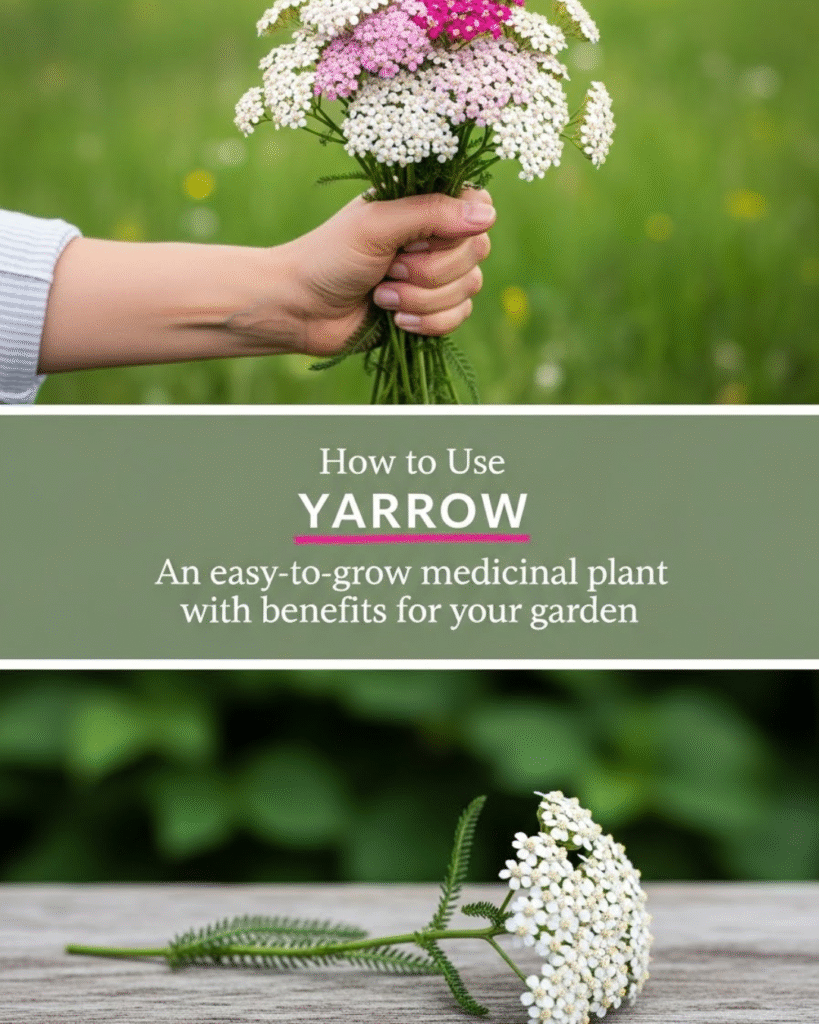
Have you heard of Yarrow, that beautiful, feathery plant with tiny white or pink flowers, but wondered about its true potential beyond a pretty face? If you’re looking for an easy-to-grow medicinal plant that simultaneously acts as a powerhouse for your entire garden ecosystem, look no further than Achillea millefolium! Learning how to use Yarrow is a foundational skill in gardening topics and herbalism that can truly transform your approach to natural living. This comprehensive guide will discover the remarkable benefits for your garden, from attracting beneficial insects to improving soil health, and show you how to use Yarrow in simple, achievable wellness topics applications. Get ready to unlock the ancient secrets of this versatile, hardy perennial and deepen your connection with nature.
🌿 Section 1: Foundation First: Growing and Understanding Yarrow
Before you can learn how to use Yarrow, you need to understand where it thrives and its basic characteristics. This section helps build confidence with basic concepts about this resilient herb.
H3: Building Confidence with Basic Concepts: Yarrow’s Ideal Environment
Yarrow is incredibly forgiving, making it an ideal choice for beginner gardeners and those seeking easy-to-grow medicinal plant varieties.
- Sunlight: Yarrow loves full sun (at least six hours per day).
- Soil: It prefers poor, well-draining soil. Rich, fertile soil can actually cause it to flop over. This makes it perfect for neglected corners or challenging dry areas of your garden.
- Water: It is extremely drought-tolerant once established.
- Encouraging Reassurance for Beginners: Yarrow is considered invasive in some areas due to its aggressive spread via rhizomes. Plant it in a spot where it has room to roam or use physical barriers (like sunken pots) to contain its vigorous growth.
H3: Addressing Common Concerns: Harvesting for Maximum Potency
Knowing when and how to harvest is key to maximizing the plant’s medicinal plant properties and its benefits for your garden.
- Timing: Harvest the flowers and leaves when the flower heads are fully open but before they start to brown or fade. This is when the volatile oils, which contain the therapeutic compounds, are at their peak.
- Method: Cut the stems back by about one-third. Use sharp, clean shears. This practical tip encourages the plant to produce a second flush of blooms, providing continuous harvest and better seasonal considerations.
- Drying: Hang small bundles upside down in a dark, dry, airy place for $1 \text{-} 2$ weeks. Once completely dry, store the leaves and flowers in airtight containers away from direct light.
🌻 Section 2: Core Methods: Yarrow’s Powerful Garden Benefits
One of the most valuable aspects of knowing how to use Yarrow lies in its role as a dynamic accumulator and a champion of your garden’s ecosystem benefits.
Step 1: Using Yarrow as a Companion Plant
Yarrow is known as a “companion plant” or “beneficial attractor” because it helps the plants growing nearby.
- Aiding Neighbors (Actionable Language): Plant Yarrow near fruit trees, vegetables, or aromatic herbs. The Yarrow’s deep roots draw up essential minerals from the soil and concentrate them in its tissues. When Yarrow leaves naturally drop or are cut and left as mulch (a practical tip), these concentrated nutrients are released back into the topsoil, benefiting surrounding, shallow-rooted plants.
- Attracting Beneficiaries: The wide, flat flower heads of Yarrow are magnets for beneficial insects like hoverflies, parasitic wasps, and ladybugs. These insects are natural predators of common pests like aphids, providing a completely sustainable lifestyle change for pest control.
Step 2: Boosting Compost and Soil Health
Yarrow is a must-have in your compost pile.
- Compost Activator: Yarrow contains sulfur and copper, which act as natural activators, speeding up the decomposition process of your compost. Throw chopped Yarrow stems and leaves directly into your pile.
- Timing and Planning Considerations: Always incorporate Yarrow when starting a new compost batch or turning an old one. This ensures the nutrients are integrated throughout the pile, providing richer compost for your other gardening topics projects.
Step 3: Making Yarrow Foliar Feed
For a quick, nutrient-rich liquid boost, make a Yarrow tea for your plants.
- Preparation (Actionable Language): Take a large handful of fresh Yarrow leaves and flowers.
- Steep: Place them in a non-metal bucket and cover them with $1 \text{ gallon}$ of water. Cover the bucket loosely.
- Ferment: Let the mixture steep for $1 \text{-} 2$ weeks until it forms a pungent, dark liquid (this is a classic herbal compost tea).
- Use: Dilute this “tea” with plain water until it looks like weak iced tea (about 1 part Yarrow tea to 10 parts water). Use this liquid to water the base of your plants, delivering concentrated nutrients directly to the roots.
🩹 Section 3: Advanced Strategies: Yarrow’s Medicinal Applications
The ancient knowledge of how to use Yarrow is rooted in its historical role as a potent medicinal plant. You can easily integrate its benefits into your wellness topics routine.
H3: Creative Solutions: Yarrow as a Natural Wound Healer
The scientific name Achillea comes from the mythical Greek hero Achilles, who purportedly used Yarrow to stop the bleeding of his soldiers’ wounds. This is a powerful, achievable self-care application.
- The Hemostatic Effect: Yarrow contains alkaloids and tannins that help constrict blood vessels, making it a natural hemostatic (blood-stopping) agent.
- Creative Solution: Keep a small container of dried, crushed Yarrow leaves in your hiking or garden first-aid kit. In the event of a minor scrape or cut, press a pinch of the crushed leaves directly onto the wound.
- Important Safety Consideration: Only use Yarrow on minor cuts and scrapes. Always clean the area thoroughly first, and never use it on deep or severe wounds.
H3: Ways to Customize Approach: Simple Yarrow Tea for Wellness
Yarrow tea has traditionally been used to help break a fever and stimulate circulation.
- Tea Recipe: Use $1 \text{ tsp}$ of dried Yarrow flowers and leaves per $8 \text{ oz}$ cup of boiling water. Steep for 10 minutes.
- Customization: The tea can be slightly bitter. Ways to customize approach include adding honey (also soothing) or blending it with a milder herb like chamomile. This encourages supportive, non-judgmental language when discussing herbal remedies—start mild and find what works for you!
- Consultation: While generally safe, if you are pregnant, nursing, or taking blood-thinning medication, consult a healthcare provider before regularly consuming Yarrow tea.
🚫 Section 4: Troubleshooting and Common Challenges
Even though Yarrow is an easy-to-grow medicinal plant, you might encounter growing or usage issues. Here are practical troubleshooting tips.
Featured Snippet Potential: “What are the common problems when growing Yarrow and how can I fix them?”
The most common problems when growing Yarrow are legginess and powdery mildew. Legginess (a tendency to flop over) is usually caused by over-fertilizing or overly rich soil. To fix this, stop fertilizing and ensure the plant is getting full sun. Powdery mildew is caused by poor air circulation and high humidity. To prevent mildew, ensure plants are spaced properly, and cut back old, dense growth to promote better airflow.
Practical Troubleshooting Tips (Gardening and DIY Focus)
- Problem: The Yarrow plant is spreading too aggressively.
- Obstacle: Yarrow’s vigorous rhizomes are taking over the garden bed.
- Solution: Preventive Measures: Next season, plant Yarrow inside a bottomless bucket or barrier sunk into the ground to contain its root spread. For existing patches, use a sharp spade to cut vertically around the desired clump every spring to remove stray runners.
- Problem: The dried Yarrow lost its scent and color.
- Obstacle: The herb was dried too slowly or stored improperly, causing the valuable volatile oils to degrade.
- Solution: Encouragement for Setbacks: Ensure future batches are dried quickly in a dark, well-ventilated space. Store only in air-tight glass jars, not plastic bags. The next best alternative approach is to use the less-fragrant Yarrow for compost activation instead of topical or tea use.
- Problem: The Yarrow foliar feed smells awful (fermented).
- Obstacle: The fermentation process, which releases nitrogen, naturally creates a strong, unpleasant odor.
- Solution: This is normal! Do not use this feed indoors. When applying outside, dilute it heavily (1:10 ratio) and apply on a calm day. This is a real example of how effective biological processes can be a little smelly!
🚀 Section 5: Maximizing Results: Next Level Yarrow Integration
You’ve learned how to use Yarrow for both gardening topics and wellness topics. Let’s explore maintenance and long-term considerations to truly embrace this sustainable lifestyle change.
- Show How to Build Upon Basic Success (DIY): Create a Yarrow-infused oil. Pack fresh or dried Yarrow flowers into a jar and cover completely with olive or sweet almond oil. Place in a sunny window for 4-6 weeks, shaking daily. Strain, and use this oil for soothing muscle rubs or dry skin applications. This is a great DIY project with cost-saving benefits.
- Maintenance and Long-Term Considerations: Plan for continuous bloom. Deadheading (removing spent flower heads) encourages the plant to produce more blooms, which in turn attracts more beneficial insects all season long, maximizing the ecosystem benefits.
- Suggest Complementary Strategies: Plant other powerhouse herbs alongside Yarrow, such as Chamomile and Nettles. These three herbs create a formidable “herbal trifecta” that synergizes both in the garden (improving soil) and in the home (for teas and remedies). (Internal Linking Opportunity: Read our guide on “Companion Planting with Medicinal Herbs.”)
✅ Conclusion: Your Capability to Master Yarrow
You have now unlocked the full potential of Yarrow, an easy-to-grow medicinal plant with benefits for your garden. By integrating this hardy perennial, you are not only cultivating a beautiful, low-maintenance flower but also activating a natural, sustainable lifestyle change that nourishes your soil, attracts beneficial insects, and provides simple, effective self-care remedies.
Embrace the empowerment that comes from knowing how to use Yarrow to its fullest. Your capability to succeed in creating a dynamic, self-sustaining garden is clear!
Will you plant Yarrow near your vegetables this spring to boost their growth, or will you start drying a batch of flowers today to prepare your first soothing tea?