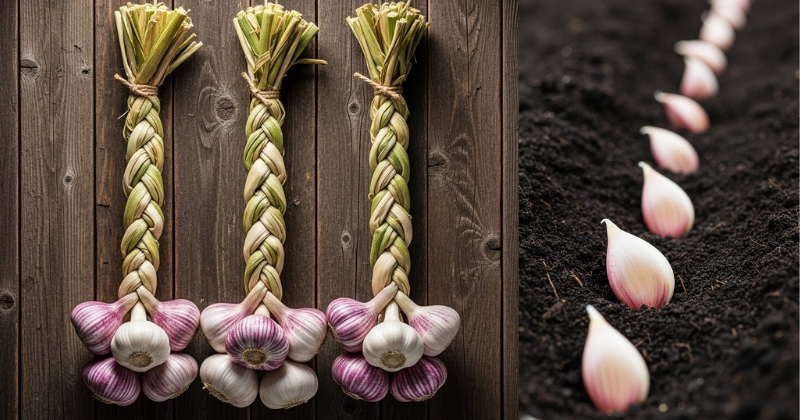
Planting garlic is a sacred autumn ritual, a promise whispered into cooling soil that will answer you months later with fierce, aromatic abundance. There’s something profoundly moving about tucking cloves into the earth just as the world prepares for sleep, entrusting your faith to the darkness, knowing that beneath frozen ground, magic transforms a single clove into an entire bulb of layered wonder.
I remember my first garlic planting—hands cold in October air, kneeling on ground that smelled of fallen leaves and approaching winter. Each clove felt like a secret being shared with the earth, a compact vessel of potential that would multiply beneath snow and ice, emerging in spring as green spears of defiance against lingering cold. That simple act connected me to centuries of gardeners who understood that garlic asks little but gives generously, that it thrives not despite the cold but because of it, that patience planted in autumn yields pungency and satisfaction by summer.
Understanding Garlic’s Ancient Wisdom
Garlic cultivation carries within it the accumulated knowledge of civilizations. This isn’t merely a crop—it’s a conversation with agricultural history, a practice refined across millennia by hands that recognized garlic’s dual nature as sustenance and medicine.
The Poetry of Garlic Varieties
Hardneck garlic speaks the language of cold climates, sending up dramatic scapes in early summer like botanical question marks, curling towers that taste of concentrated garlic essence. These varieties demand winter’s bite, requiring prolonged cold periods to trigger the complex internal divisions that transform single cloves into segmented bulbs. Their flavors run deep and complex, each variety a distinct personality—some sharp and assertive, others mellow and almost sweet, many carrying subtle notes of spice or earthiness that reveal themselves slowly across the palate.
Softneck garlic whispers a different story, one of Mediterranean warmth and storage longevity. These are the garlics that braid beautifully, their supple stems weaving into those iconic plaits that graced ancient market stalls and still adorn modern kitchens. They adapt more readily to mild winters, producing abundant cloves arranged in layers like botanical rose petals, their flavors bright and immediate, their keeping qualities legendary.
The choice between them isn’t merely practical—it’s an alignment with climate and intention, a decision about what kind of relationship you want with this ancient allium.
Why Autumn Planting Transforms Everything
Garlic planted in fall undergoes a metamorphosis that spring-planted cloves can never achieve. The cold isn’t punishment but catalyst, triggering genetic switches that command the clove to divide, to transform its singular form into multiplicity. Those weeks and months of winter dormancy are actually periods of intense underground activity, roots pushing through cold soil, establishing foundations that will support summer’s harvest.
Spring planting yields smaller bulbs, rushed growth, compromised flavor. Autumn planting grants garlic the time it craves—the slow, patient development that builds complexity, size, and that distinctive pungency that makes good garlic unforgettable.
The Sacred Ritual of Planting Garlic
Garlic planting follows rhythms older than calendars, responding to signals written in cooling temperatures and shortening days. Understanding these rhythms transforms planting from task to ceremony.
Reading the Season’s Subtle Messages
The ideal planting window arrives when soil still holds summer’s warmth but air carries winter’s first whispers. In most regions, this sweet spot falls between mid-September and early November, though exact timing dances with latitude and local climate. The goal is simple yet profound—give garlic time to establish roots before ground freezes, but not so much time that green shoots emerge prematurely.
Watch for signs beyond calendar dates. When overnight temperatures consistently drop below fifty degrees, when leaves begin their chromatic transformation, when your body instinctively reaches for warmer layers—these are garlic’s signals, nature’s gentle insistence that the time has come.
Preparing Sacred Ground
Garlic demands little but insists absolutely on drainage. Waterlogged soil is garlic’s nemesis, inviting rot and disappointment. Choose a site where water never pools, where soil structure allows roots to breathe even after heavy rain.
Begin by enriching soil with aged compost, that black gold that feeds both plant and the complex soil ecosystem that supports it. Garlic is a heavy feeder, pulling nutrients steadily through its long growing season. Work compost deeply, at least six to eight inches, creating a fertile foundation that will sustain growth from autumn through summer.
The soil should feel alive in your hands—crumbly, rich, full of promise. If it clumps densely or feels depleted, spend time amending it with organic matter. This preparatory work is meditation, each handful of compost a gift to future harvests.
The Planting Choreography
Select the largest, healthiest cloves from bulbs reserved for planting. Each clove is a complete genetic package, and size matters—larger cloves yield larger bulbs, while small cloves struggle to achieve their potential. Save smaller cloves for cooking; give your garden the champions.
Keep the papery skin intact on each clove. This protective sheath shields against soil pathogens and moisture imbalances during the vulnerable establishment period.
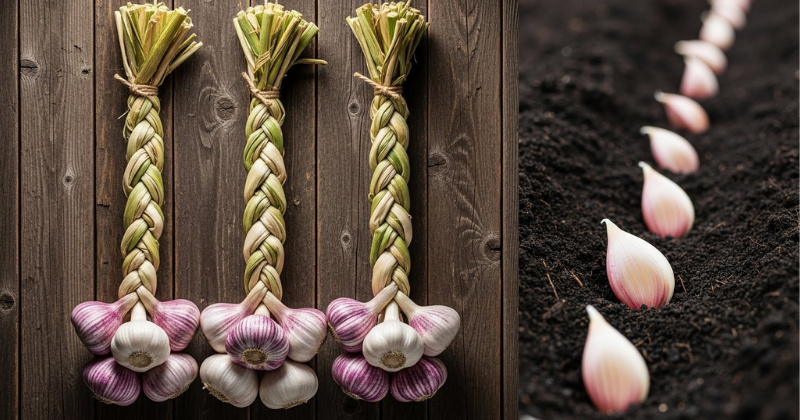
Plant cloves pointy end skyward, flat basal plate downward—this orientation matters profoundly, as roots emerge from the basal plate and shoots from the pointed tip. Reversed cloves waste energy correcting their position underground.
Depth and spacing create the architecture of your garlic bed. Plant cloves four to six inches deep, measured from soil surface to clove top. This depth protects against winter heaving while ensuring shoots don’t emerge prematurely. Space cloves six inches apart in rows separated by twelve inches, creating enough room for bulb expansion without excessive wasted space.
Press soil gently around each clove, then water thoroughly. This initial watering settles soil around cloves, eliminating air pockets and initiating the first whispers of root growth.
Nurturing Through the Seasons
Garlic’s journey from clove to bulb spans three seasons, each presenting distinct needs and opportunities for attentive care.
Winter’s Patient Protection
After planting, blanket your garlic bed with four to six inches of organic mulch—straw, shredded leaves, or aged wood chips. This protective layer moderates soil temperature fluctuations, suppresses winter weeds, and maintains soil moisture. As mulch decomposes, it feeds soil life and improves structure, a slow gift that keeps giving.
In regions with harsh winters, this mulch isn’t optional—it’s essential armor against freeze-thaw cycles that can heave cloves upward, exposing them to damaging cold.
Spring’s Green Awakening
When soil warms and days lengthen, garlic responds with vigorous growth. Green shoots pierce through mulch, sturdy and determined. This is the moment to ensure consistent moisture—garlic needs regular water during active growth, roughly one inch per week from rain or irrigation combined.
Pull back mulch slightly if it’s preventing shoots from emerging easily, but maintain that protective layer to suppress weeds. Garlic competes poorly with weeds, which steal nutrients and water that should fuel bulb development.
If you planted hardneck varieties, watch for scapes in late spring or early summer. These curling flower stalks are both beautiful and delicious, but leaving them drains energy from bulb development. Harvest scapes when they’ve completed one or two curls, before they straighten and toughen. Cut them at the base and celebrate this early harvest—scapes are culinary treasures, perfect for pesto, stir-fries, or simply grilled with a touch of olive oil.
The Summer Crescendo
As days lengthen toward summer solstice, reduce watering. Garlic needs drier conditions as it approaches maturity, allowing skins to form and cure properly. Stop watering entirely two weeks before planned harvest, giving bulbs time to prepare for storage.
Watch the leaves for harvest signals. When lower leaves brown while upper leaves remain green, usually leaving four to six green leaves, garlic has reached harvest window. This typically occurs in late June through July, depending on variety and planting date, though some regions harvest later.
Timing this harvest requires attention and courage—too early yields underdeveloped bulbs with loose, unformed cloves; too late risks splitting bulbs and deteriorating storage quality.
Mastering the Harvest and Beyond
The moment of harvest carries ceremony and satisfaction, the fulfillment of faith planted months earlier.
The Gentle Unearthing
Use a garden fork rather than shovel, inserting it several inches from plants to avoid piercing bulbs. Lift gently, loosening soil and revealing those beautiful bulbs. Brush away excess soil, but resist the urge to wash bulbs—moisture at this stage invites problems during curing.
Handle harvested garlic with care. Bruised or damaged bulbs don’t store well and should be used first.
Curing for Longevity
Proper curing transforms fresh garlic into the storage-stable bulbs that will season meals through autumn and beyond. Hang bundles or lay bulbs in a single layer in a well-ventilated, shaded location protected from rain and direct sun. Air circulation is crucial—garlic needs to dry gradually, allowing moisture to escape while skins papery and protective.
Cure for two to four weeks, until outer skins are papery and roots are completely dry. Then trim roots close to the bulb base and cut stems about an inch above the bulb, or leave stems long for braiding if you grew softneck varieties.
Storage Rituals
Store cured garlic in a cool, dark, dry location with good air circulation. Mesh bags, baskets, or braids hung in pantries or cellars maintain quality for months. Properly cured and stored hardneck garlic typically lasts four to six months, while softneck varieties can stretch to eight months or longer.
Save the largest, healthiest bulbs from each harvest for next season’s planting, creating a cycle of continuous improvement as you select the best performers adapted to your specific conditions.
Embracing the Garlic Journey
Growing garlic connects you to rhythms deeper than seasons, to practices refined across cultures and centuries. Each harvest teaches something new—about timing, about soil, about the patient rewards of working with nature rather than against it.
The beauty of garlic cultivation lies in its accessibility. You don’t need extensive space or complex equipment. A sunny corner, decent soil, and willingness to wait transform into harvest abundance that fills your kitchen with home-grown flavor unmatched by store-bought alternatives.
As you separate cloves this autumn, pressing them into prepared earth, remember that you’re participating in one of humanity’s oldest agricultural relationships. Those cloves carry within them the same genetic heritage that fed ancient civilizations, the same pungent promise that has seasoned human history.
Plant with intention. Nurture with attention. Harvest with gratitude. And when you slice that first home-grown clove months later, when its aroma fills your kitchen with sharp, complex perfection, you’ll understand why garlic has earned its place as both culinary staple and garden essential—a small miracle of multiplication, a testament to the generous returns of patience planted in autumn soil.