
The first 150–160 characters below serve as the meta description:
Remove mold from bathroom tiles using baking soda + salt with simple steps, safe ingredients, and long-term prevention you can start today.
Bathrooms are humid spaces where mold thrives, especially between tile grout lines. When you notice dark spots, discoloration, or a musty smell, you may think you need harsh chemicals. But you don’t. You can remove mold from bathroom tiles using only baking soda + salt—two common, inexpensive kitchen staples. This guide walks you step-by-step through an effective natural cleaning system that restores tiles and protects your family while saving money.
This article empowers you to handle mold removal confidently. You will discover how these ingredients work, learn expert methods for stubborn stains, troubleshoot common issues, and prevent mold from returning. By the end, you will have a proven process you can repeat whenever needed.
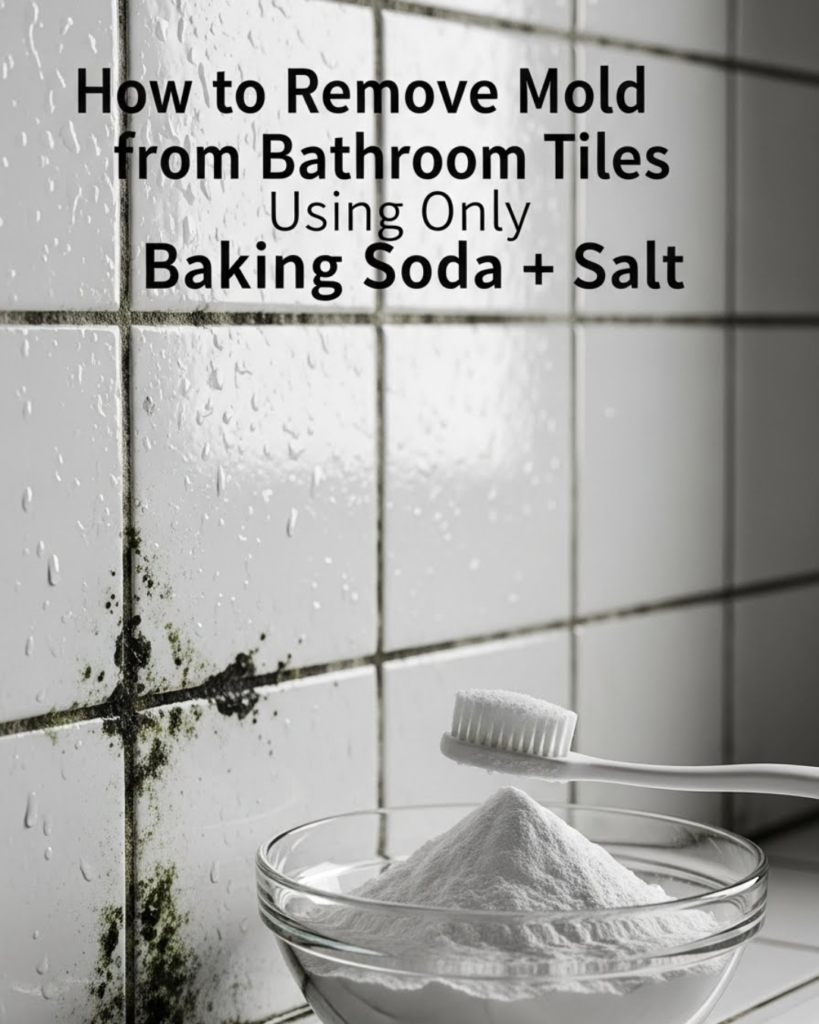
What You Need to Know Before Removing Mold with Baking Soda + Salt
Before diving into the method, it’s helpful to understand why mold forms and how these two ingredients work. Knowing the science behind the process makes the steps feel easier and increases your success rate.
Why mold appears on bathroom tiles
Bathrooms are warm, humid, and often poorly ventilated. Mold spores are always present in the air, and when moisture lingers—especially in grout pores—they multiply. Common causes include:
- Hot showers creating condensation
- Leaky pipes or shower seals
- Infrequent cleaning
- Poor airflow and slow drying
Understanding the cause is key to preventing future growth.
Why baking soda and salt are effective
Each ingredient works differently, but together they create a powerful natural cleaning force.
Baking Soda Benefits
- Mild abrasive removes surface mold
- Alkaline properties break down organic materials in mold
- Deodorizing eliminates musty smell
- Safe for tile, grout, and skin contact
Salt Benefits
- Absorbs moisture mold needs to grow
- Natural abrasive boosts scrubbing power
- Dehydrates and kills mold cells through osmotic pressure
Using them together creates a paste that sticks to grout and cleans deeply.
When natural cleaners are a smart choice
You might choose this method if you:
- Prefer chemical-free cleaning
- Want inexpensive solutions
- Have children or pets
- Experience breathing sensitivity around bleach
Step-by-Step Guide: How to Remove Mold from Bathroom Tiles Using Baking Soda + Salt
This complete process cleans tiles and grout safely and thoroughly. Take your time; slow scrubbing often yields the best results.
Step 1: Gather Supplies
You will need:
- Baking soda
- Fine salt
- Warm water
- Small bowl
- Cleaning gloves
- Soft brush or old toothbrush
- Clean cloth or sponge
- Spray bottle (optional)
Step 2: Mix the Paste
A thick paste works best because it clings to grout. Use this basic ratio:
- 2 tablespoons baking soda
- 1 tablespoon salt
- Enough water to form a paste
If treating large areas, double or triple the recipe.
Step 3: Apply Paste to Molded Areas
Use a brush or gloved fingers to press mixture directly onto mold. Focus on:
- grout lines
- tile corners
- shower seals
- edges around faucets or drains
Step 4: Let the Mixture Sit
Wait at least 10–15 minutes. Letting the mixture sit allows the salt to draw out moisture while baking soda breaks down mold structure.
Step 5: Scrub Gently but Firmly
Use circular motions to scrub the affected areas. For deep-set mold:
- Add a little extra dry salt for abrasion
- Reapply paste and scrub again
Step 6: Rinse and Dry Completely
Use warm water to remove residue. Then dry fully using a towel. Drying is essential because moisture invites mold back.
Step 7: Repeat if Necessary
Stubborn mold may require two or three treatments. Persistence pays off.
Pro Cleaning Tips for Better Results
Use steam for stubborn stains
If mold won’t budge, run hot water in the shower to steam the room. Steam softens mold, making scrubbing easier.
Add vinegar as a booster (optional)
While this method focuses on baking soda + salt, adding vinegar afterward can enhance disinfecting power. Spray vinegar on the cleaned area and wipe dry after 5 minutes.
Focus on grout pores
Grout is porous and holds moisture. Spend extra time scrubbing grout lines since mold roots deeper there.
Troubleshooting Common Mold Cleaning Challenges
Everyone’s bathroom environment is different. These solutions address typical problems readers encounter.
The mold returns in a few days
Probable causes include:
- lingering moisture
- poor ventilation
- soap scum buildup trapping mold
Solutions:
- run exhaust fan longer
- wipe walls after showering
- remove soap residue weekly
Paste keeps drying too fast
Add more water or steam the room before applying. Moisture helps paste spread.
Heavy black mold spots
These spots often hide deep inside grout. Try:
- scratching surface lightly to expose pores
- multiple paste applications
- steam + paste combo
Mold odor remains
Odor means mold is still active. Keep area dry and treat again. Salt will dehydrate mold, and baking soda eliminates odor.
Long-Term Strategies to Prevent Mold from Returning
Cleaning mold once is only part of the solution. Developing small habits keeps your bathroom fresher and molds away.
Improve airflow daily
- Open windows
- Use exhaust fan for 20 minutes after showers
- Leave the door open to prevent trapped humidity
Keep surfaces dry
Dry tiles after showering using a squeegee or towel. Simple habit, major impact.
Regular baking soda maintenance
Sprinkle baking soda weekly along grout lines, then rinse. This prevents spores from taking hold.
Seal grout if possible
Sealing prevents moisture absorption. This is especially helpful in humid regions.
Why Baking Soda + Salt Works Better Than Store-Bought Cleaners for Many People
Commercial cleaners often contain harsh chemicals and strong scents. While they kill mold fast, they can irritate breathing, damage tile finishes, and cost more.
This natural method offers:
- safe ingredients
- no toxic fumes
- affordable materials
- gentle abrasion instead of corrosion
- eco-friendly waste removal
For families, renters, or people with allergies, back-to-basics solutions are a win.
Related Home and Cleaning Topics (internal linking opportunities)
Readers searching this topic may also look for:
- natural bathroom cleaning solutions
- how to remove soap scum buildup
- best ventilation tips for humid rooms
- dealing with hard water stains
- eliminating mildew from shower curtains
These topics make strong internal linking anchors for site navigation.
Conclusion
Removing mold from bathroom tiles using baking soda + salt is a simple, effective, and natural method for refreshing your bathroom without harsh chemicals. With common kitchen ingredients and only a few minutes of scrubbing, you can eliminate mold stains, tackle musty smells, and protect your family’s environment. By also applying long-term prevention strategies—like airflow improvement, drying surfaces, and maintaining grout—you’ll dramatically reduce future mold growth.
You now have a repeatable cleaning system that saves time and money while delivering satisfying results. Start today with a bowl, two ingredients, and motivation to transform your bathroom into a clean, healthy space.