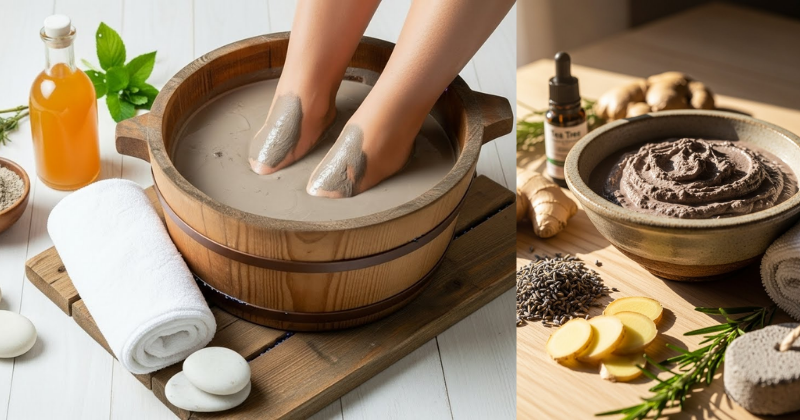
Try this Bentonite Clay Foot Detox Recipe to revitalize your body and soothe tired feet. Discover how a natural volcanic clay mask can draw out impurities easily.
Have you ever finished a long week feeling physically heavy, sluggish, and completely worn out? Your feet, which carry you through every single task, often bear the brunt of your daily stress. We live in a world where environmental pollutants and skin impurities are unavoidable, and sometimes a simple shower just isn’t enough to make you feel truly “clean.” Many people turn to expensive spa treatments or chemical-laden foot pads to find relief, but the ultimate solution is far more grounded. Using a Bentonite Clay Foot Detox Recipe is a traditional, cost-effective way to reset your system and pamper your soles simultaneously.
Today, you are going to discover how to transform your wellness routine from the ground up. This guide will empower you with achievable, step-by-step guidance to create a professional-grade detox mask in the comfort of your own home. You have the capability to achieve a lighter, more refreshed feeling that radiates through your entire body. Get ready to unlock the power of volcanic earth and achieve a level of relaxation you never thought possible!
Foundation: Why Bentonite Clay is a Wellness Essential
Before we dive into the mixing bowl, let’s build your confidence with the basic concepts of how this natural wonder works. Understanding the science behind the clay will help you appreciate every minute of your detox session.
The Ionic Power of Clay
Bentonite clay, also known as Montmorillonite, is composed of aged volcanic ash. What makes it special is its unique “electrical” charge. In its dry state, the molecules are stable, but when you add water, they become negatively charged. Most toxins, heavy metals, and impurities carry a positive charge. When you apply this Bentonite Clay Foot Detox Recipe, the clay acts like a magnet, drawing out the positively charged “junk” from your pores.
Benefits for Your Feet
Your feet have some of the largest pores on your body, making them the perfect gateway for detoxification.
- Odor Elimination: Clay naturally neutralizes the bacteria that cause foot odor.
- Skin Softening: It acts as a gentle exfoliant, removing dead skin cells without harsh scrubbing.
- Reduction in Swelling: The drawing action can help reduce fluid retention after a long day of standing.
Reassurance for Beginners
If you have never tried a “mud mask” on your feet before, you might be worried about the mess or the sensation. Don’t be! This process is incredibly soothing and easy to clean up. You are taking an admirable step toward self-care, and there is no “wrong” way to relax. By the time you finish this article, you will feel like a pro.
Step-by-Step: The Ultimate Bentonite Clay Foot Detox Recipe
Ready to refresh your soles? Follow these manageable steps to create and apply your detox mask.
1. Gather Your Non-Metal Tools
This is the most important rule: Never use metal bowls or spoons with bentonite clay. Metal can react with the clay’s ionic charge, making it less effective before it even touches your skin.
- The Tools: Use a glass, ceramic, or wooden bowl and a wooden or plastic spoon.
2. Mixing the Recipe
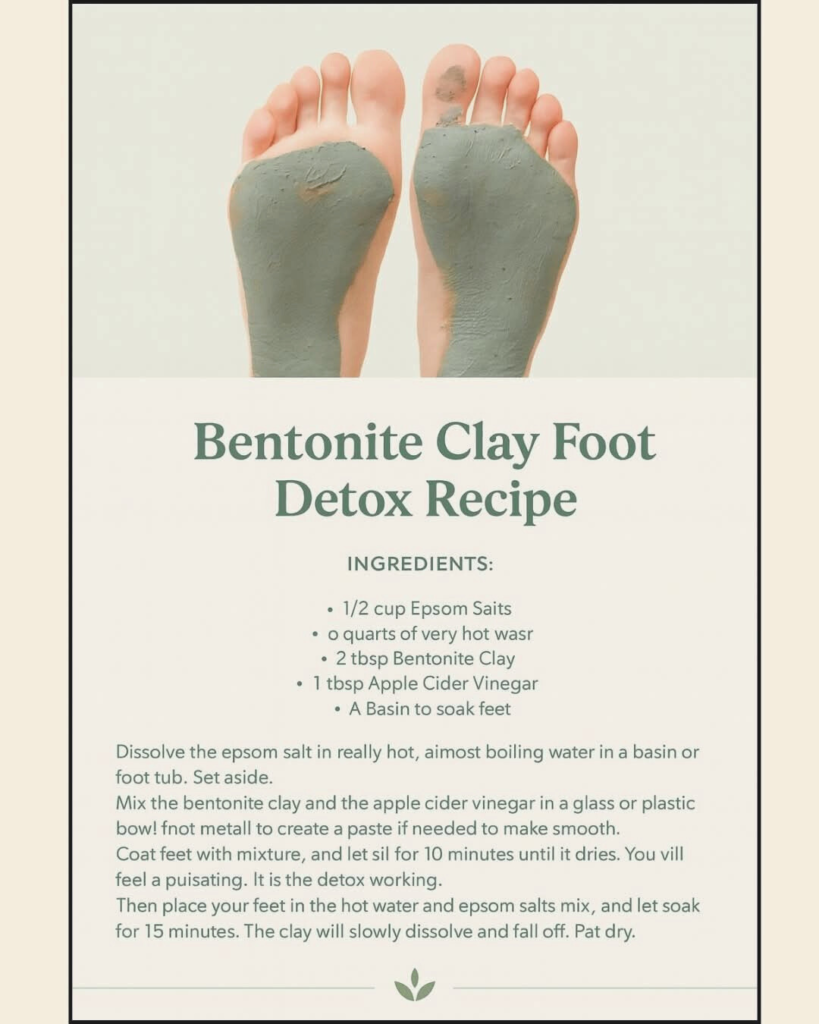
- The Ingredients: 3 tablespoons of Bentonite clay, 2 tablespoons of Apple Cider Vinegar (ACV), and 1 teaspoon of water (optional for consistency).
- The Action: Combine the clay and ACV in your bowl. It will fizz slightly—this is normal! Stir until it reachs a smooth, paste-like consistency, similar to Greek yogurt.
3. Application and Timing
- The Method: Sit comfortably where you can keep your feet elevated (like the edge of a tub or a chair with a towel underneath). Spread a thick layer of the paste over the bottoms and tops of your feet.
- The Wait: Let the mask dry for 15–20 minutes. You will feel a pulsing or “pulling” sensation as the clay tightens. This means it is working!
- The Clean-Up: Rinse with warm water. You may want to use a washcloth to ensure all the clay is removed from the creases of your toes.
Advanced Strategies: Pro Tips for a Spa-Like Experience
Once you have mastered the basic Bentonite Clay Foot Detox Recipe, share expert-level insights with yourself by customizing the experience.
Incorporating Aromatherapy
You can turn your detox into a sensory journey by adding essential oils to your paste.
- Pro Tip (For Energy): Add 2 drops of Peppermint oil to stimulate blood flow and cool the skin.
- Pro Tip (For Sleep): Add 2 drops of Lavender oil to calm the nervous system.
- Internal Link: To complement your glowing skin, learn A Gentle Morning Habit That Makes Your Face Glow All Day for a full-body radiance.
The Epsom Salt Double-Down
For maximum results, give your feet a 10-minute warm soak with Epsom salts before applying the clay mask. This softens the skin and opens the pores, allowing the clay to penetrate even deeper.
- Internal Link: While your feet are soaking, why not think about your home’s atmosphere? Discover This Simple Cleaning Trick Makes Your Kitchen Smell Amazing to match your fresh feet with a fresh home.
Featured Snippet: How do you do a foot detox with bentonite clay?
To perform a foot detox, mix 3 parts bentonite clay with 2 parts apple cider vinegar in a non-metal bowl using a wooden spoon. Apply the paste to your feet and let it dry for 15 to 20 minutes. The clay’s negative ionic charge draws out positively charged toxins and impurities from the pores. Rinse with warm water and follow with a natural moisturizer for soft, detoxified skin.
Troubleshooting: Common Challenges and Solutions
Even the best wellness routines can have minor setbacks. Here is how to handle them with an encouraging mindset:
- “The clay is too clumpy”: This usually happens if you add the liquid too fast. Action: Add your ACV one teaspoon at a time next time, stirring constantly to keep the texture smooth.
- “My skin looks red after rinsing”: This is common and usually disappears within 30 minutes. It is caused by increased blood flow to the area.
- Internal Link: If your skin is extra sensitive, you might want to review The Natural Hair Routine That Finally Stopped Breakage for tips on gentle, botanical-based care.
- “I don’t have apple cider vinegar”: You can use water, but the ACV helps balance the pH of the clay.
- Alternative: Use brewed green tea (cooled) for an antioxidant-rich substitute.
Maximizing Results: Next Level Wellness Tips
Now that you’ve used the Bentonite Clay Foot Detox Recipe, build upon your success by supporting your body’s natural filtration systems.
Hydration is Key
A detox doesn’t stop at the skin. Drinking plenty of water after your foot mask helps your kidneys flush out the impurities the clay has moved.
- Internal Link: Be careful what you drink, though! Some habits aren’t as helpful as they seem. Learn why This Daily Drink Is Slowly Weakening Your Joints Without You Noticing.
Mindful Maintenance
Try to perform this detox once every two weeks. Consistency is the secret to long-term results.
- Internal Link: Maintaining a clean environment also helps reduce the “toxic load” on your body. Try a floor cleaner diy to keep your home surfaces free of harsh chemicals that your feet might pick up.
Conclusion: Achieve a Lighter, Healthier You
You have now discovered the ultimate Bentonite Clay Foot Detox Recipe and, more importantly, you have the achievable steps to start your wellness journey tonight. You have moved from feeling weighed down by the day’s stress to being an empowered advocate for your own health. By following these methods—avoiding metal, mixing with ACV, and allowing the clay to “pull”—you have achieved a strategy for total body rejuvenation.
The journey to a vibrant, energetic life is an achievable and rewarding path. We encourage you to mix up your first batch this evening and feel the “pull” for yourself! You are more than capable of achieving a state of balance and beauty that starts from the soles of your feet and moves up.
Important Disclaimer: This article is for informational purposes only and should not replace professional advice. For health-related topics, consult healthcare providers. For safety procedures, verify current best practices and local regulations. Individual results may vary, and personal circumstances should always be considered when implementing any suggestions.