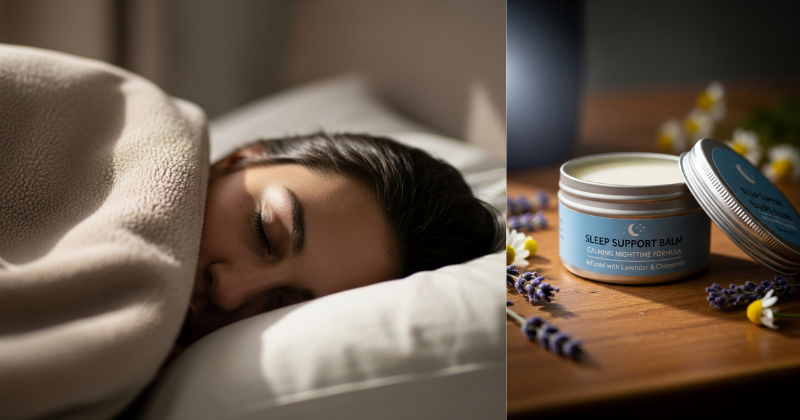
Discover the power of a natural sleep support balm. Learn how to craft and use this soothing DIY remedy to transform your bedtime routine and achieve deep rest.
Do you often find yourself staring at the ceiling at 2:00 AM, your mind racing through tomorrow’s to-do list while your body aches for rest? You are not alone. In our fast-paced, blue-light-filled world, achieving deep, restorative sleep can feel like a distant dream. But what if you could unlock a sense of calm with a simple, aromatic ritual? A sleep support balm is more than just a skincare product; it is a sensory signal to your brain that it is time to power down and recharge.
In this guide, you will discover the transformative benefits of using botanical ingredients to support your sleep hygiene. We will walk you through the science of scent, provide a foolproof recipe for making your own balm at home, and share expert tips for maximizing your nightly rest. By the end of this article, you will feel empowered to take control of your evening routine and finally enjoy the peaceful slumber you deserve. Let’s embark on this journey toward better rest together!
Important Disclaimer: This article is for informational purposes only and should not replace professional advice. For health-related topics, consult healthcare providers. For financial or legal matters, seek qualified professional guidance. For safety procedures, verify current best practices and local regulations. Individual results may vary, and personal circumstances should always be considered when implementing any suggestions.
Foundation: Why a Sleep Support Balm Works
Before we start mixing ingredients, it is helpful to understand why a topical sleep support balm is so effective. It isn’t just “magic”; it is a combination of aromatherapy and the power of touch.
The Science of Aromatherapy
When you inhale the essential oils found in a sleep support balm, the molecules travel through your olfactory system directly to the limbic system of your brain. This area controls emotions and the nervous system. Ingredients like lavender and chamomile have been shown in various studies to reduce cortisol levels and encourage the production of melatonin.
The Power of Ritual
Our brains love patterns. By applying a balm every night, you are creating a “sleep anchor.” Over time, your brain associates that specific scent and the feeling of the balm on your skin with falling asleep. This psychological conditioning is a major step in [improving sleep onset latency].
Core Ingredients for Success
To create a high-quality balm, you need three key components:
- A Carrier Oil: Such as sweet almond or jojoba oil, which nourishes the skin.
- A Hardening Agent: Beeswax or soy wax gives the balm its structure and portability.
- Essential Oils: The active botanical agents that provide the calming effects.
Step-by-Step: Crafting Your Signature Sleep Support Balm
Making your own balm is an incredibly rewarding DIY project. It allows you to control exactly what goes onto your skin while saving you money compared to boutique store brands.
1. Gather Your Supplies
You will need a double boiler (or a glass bowl over a pot of simmering water), small metal tins or glass jars, and your ingredients. For a standard batch, aim for a ratio of roughly 3 parts oil to 1 part wax.
2. The Melting Process
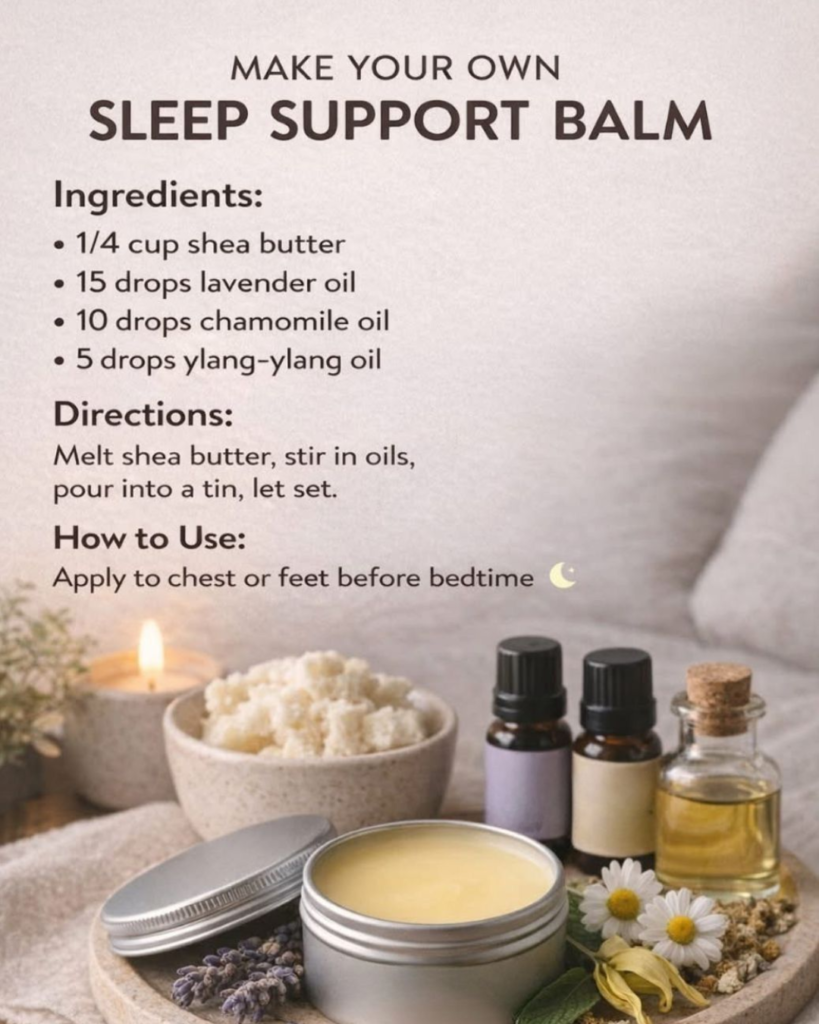
- Place 1/4 cup of beeswax pellets and 1/2 cup of coconut oil in your double boiler.
- Heat gently on low until the mixture is completely liquid and clear.
- Pro Tip: Avoid high heat, as it can degrade the quality of the carrier oils.
3. Adding the Magic
Once the mixture is off the heat but still liquid, add your essential oils. For a standard 4oz batch, 40-50 drops is usually ideal.
- 20 drops Lavender: The ultimate relaxation oil.
- 15 drops Cedarwood: Grounding and warm.
- 10 drops Roman Chamomile: Gentler than its German counterpart and perfect for sleep.
4. Pouring and Setting
Carefully pour the liquid into your tins. Let them sit undisturbed at room temperature for at least two hours. Once they are firm, your sleep support balm is ready to use!
Advanced Strategies: Customizing for Your Needs
Once you have mastered the basic recipe, you can begin to experiment. Personalization is the key to a truly effective wellness routine.
Magnesium-Infused Balms
Many people are deficient in magnesium, a mineral crucial for muscle relaxation. You can find “magnesium oil” (which is actually a concentrated brine) and whisk a small amount into your balm as it cools. This creates a dual-action product that calms both the mind and restless legs.
Seasonal Variations
Just like a garden changes with the seasons, your balm can too. In the winter, you might add a drop of Sandalwood for extra warmth. In the summer, a tiny hint of Bergamot (ensure it is FCF-free to avoid sun sensitivity) can provide a refreshing yet calming twist.
Targeted Application Points
For the best results, don’t just rub it anywhere. Apply your sleep support balm to:
- The Temples: For immediate aromatic benefits.
- The Inside of Wrists: Where the skin is thin and the pulse helps dissipate the scent.
- The Soles of the Feet: A traditional reflexology point for grounding energy.
Featured Snippet: How do you use a sleep support balm for best results?
To use a sleep support balm effectively, apply a small amount to your pulse points, such as the wrists, temples, and behind the ears, about 20 minutes before bed. The warmth of your skin releases the calming essential oils, while the ritual of application signals to your brain that it is time to rest. For an enhanced effect, apply the balm to the bottoms of your feet and put on cotton socks to lock in the moisture and aroma.
Troubleshooting: Common Balm Challenges
Even the simplest DIY projects can have hiccups. Here is how to fix common issues with your homemade sleep support balm.
“My balm is too hard to scoop out.”
- The Cause: You likely used too much beeswax.
- The Fix: Simply melt the balm down again and add a tablespoon or two of carrier oil. It will reset with a much creamier texture.
“The scent isn’t strong enough.”
- The Cause: Essential oils are volatile and can evaporate if added to oils that are too hot.
- The Solution: Next time, wait until the melted wax has cooled slightly (but is still liquid) before adding your oils. For your current batch, you can add a little more oil to the surface and massage it in.
“I have sensitive skin.”
- The Strategy: Always perform a [patch test for essential oils] on a small area of skin before full use. If you experience redness, reduce the concentration of essential oils in your next batch or stick to gentler oils like Lavender and Frankincense.
Maximizing Results: Creating a Sleep Sanctuary
Your sleep support balm is a powerful tool, but it works best when supported by a healthy environment. Let’s look at how to build upon your success.
Perfect the Environment
Use your balm as part of a “wind-down hour.” Turn off overhead lights, put away your phone, and let the scent of the balm lead you into relaxation. Consider [optimizing your bedroom temperature]—usually around 18°C—to help your body drop to its ideal sleep state.
Pair with Breathwork
As you apply the balm to your temples, take three deep, slow breaths. This “box breathing” technique, combined with the aroma of the oils, can instantly flip your nervous system from “fight or flight” to “rest and digest.”
Long-Term Maintenance
Keep your balm in a cool, dark place. Because it contains no water, it doesn’t need harsh preservatives, but the essential oils will stay potent longer if kept away from direct sunlight. Most DIY balms will remain effective for 6-12 months.
Conclusion
Embracing the ritual of a sleep support balm is a beautiful way to honor your body’s need for rest. You have learned how to harness the power of aromatherapy, how to craft a custom balm at home, and how to troubleshoot common issues like a pro. By making this simple change, you aren’t just trying to sleep; you are actively nurturing your well-being.
You have the capability to transform your nights and, by extension, your days. Remember, progress in wellness is about small, consistent steps. Reach for your balm tonight, take a deep breath, and trust in your body’s ability to find its way back to peace. Sleep well!