Making your own laundry powder is easier than you think, and it’s one of the most satisfying DIY projects you can tackle in your home. If you’re tired of spending money on expensive detergents filled with questionable ingredients, you’re in the right place. This guide will show you exactly how to create effective, natural laundry powder that cleans beautifully, saves you serious money, and gives you complete control over what touches your family’s clothes. Whether you’re motivated by budget concerns, environmental consciousness, or simply want to avoid harsh chemicals, homemade laundry powder delivers on all fronts.
Why Make Your Own Laundry Powder?
The benefits of creating DIY laundry powder extend far beyond just saving money, though that’s certainly a compelling reason to start. When you make your own detergent, you’re taking control of your laundry routine in ways you might not have imagined.
Financial Savings That Add Up
Commercial laundry detergents can cost anywhere from $15 to $30 for a container that lasts maybe a month or two. Your homemade version will cost you roughly $20 for ingredients that make enough powder to last an entire year or more. That’s a savings of hundreds of dollars annually. When you break it down per load, you’re looking at pennies compared to the 25-50 cents per load that commercial brands charge. These savings multiply dramatically for larger families doing multiple loads weekly.
Control Over Ingredients
Store-bought detergents contain dozens of ingredients, many with names you can’t pronounce. Optical brighteners, synthetic fragrances, dyes, and preservatives all make their way into conventional products. When you make your own powder, you know exactly what’s going into it. This transparency is especially valuable for people with sensitive skin, allergies, or those who simply want to reduce their exposure to unnecessary chemicals. You can customize your formula to be completely fragrance-free or add natural essential oils that you know work for your family.
Environmental Impact
The environmental benefits are substantial. You eliminate plastic bottle waste since you can store your powder in reusable containers. Commercial detergents often contain phosphates and other ingredients that harm aquatic ecosystems. Your homemade version uses biodegradable ingredients that break down naturally. Plus, you reduce your carbon footprint by eliminating the transportation and manufacturing impacts associated with mass-produced detergents.
Essential Ingredients for Homemade Laundry Powder
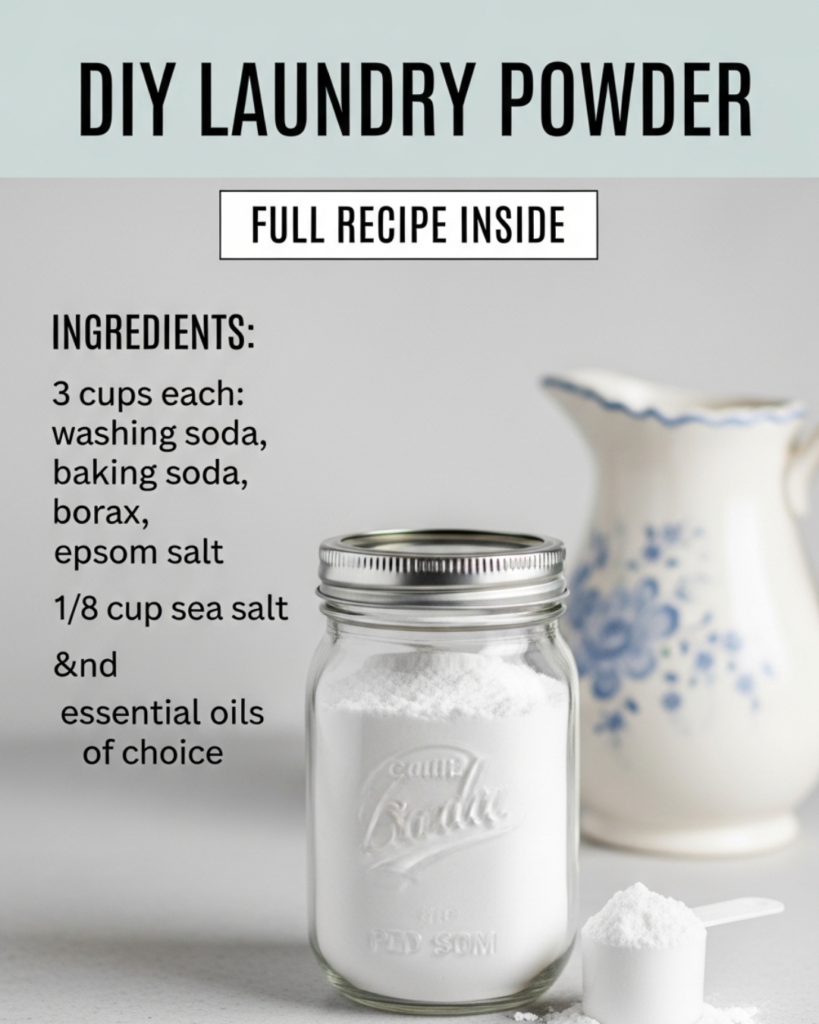
Creating effective laundry powder requires just three basic ingredients, with optional additions for customization. Let’s break down what each component does and why it matters.
The Core Three Ingredients
Washing Soda (Sodium Carbonate) is your primary cleaning agent. It cuts through grease, removes stains, and softens water to make other ingredients work more effectively. Don’t confuse this with baking soda—while they’re related, washing soda is much more alkaline and powerful for laundry purposes. You can find it in the laundry aisle of most grocery stores, typically sold under the Arm & Hammer brand.
Borax (Sodium Borate) acts as a natural laundry booster and deodorizer. It enhances the cleaning power of your detergent, helps remove tough stains, and neutralizes odors effectively. Borax also inhibits the growth of mold and bacteria in your washing machine, keeping your appliance cleaner in the process.
Bar Soap provides the surfactant action that lifts dirt from fabric fibers. Many people use Fels-Naptha, a traditional laundry bar soap known for its stain-fighting abilities. Alternatively, you can use Castile soap for a gentler, more natural option, or even Ivory soap or Zote soap depending on your preferences and what’s available in your area.
Optional Additions for Enhanced Performance
Baking Soda can be added to boost deodorizing power and provide gentle abrasive action for extra cleaning. While not essential, it’s affordable and enhances overall performance.
Essential Oils allow you to customize the scent naturally. Lavender, lemon, and tea tree oil are popular choices. Add 15-20 drops per batch for subtle fragrance. Remember that a little goes a long way, and the scent will be quite mild after washing and drying.
Oxygen Bleach Powder (sodium percarbonate) brightens whites and tackles tough stains without the harshness of chlorine bleach. This is particularly valuable if you wash a lot of white or light-colored items.
Step-by-Step Instructions for Making Laundry Powder
Now that you understand the ingredients, let’s walk through the simple process of creating your own laundry powder. You’ll be amazed at how straightforward this is.
What You’ll Need
Gather these supplies before you begin:
- 1 bar of laundry soap (5-6 ounces)
- 1 cup washing soda
- 1 cup borax
- Food processor, blender, or box grater
- Large mixing bowl
- Airtight storage container
- Measuring cups
- Optional: 1 cup baking soda, 1 cup oxygen bleach powder, essential oils
The Making Process
Step 1: Grate or Process the Bar Soap
If using a box grater, use the finest side to create small soap particles that will dissolve easily in water. This method requires some elbow grease but works perfectly well. For a faster approach, cut the soap bar into chunks and pulse it in a food processor until it reaches a fine, powder-like consistency. Aim for pieces smaller than rice grains—the finer your soap particles, the better they’ll dissolve during washing.
Step 2: Combine Dry Ingredients
In your large mixing bowl, combine the grated soap, washing soda, and borax. If you’re adding baking soda or oxygen bleach powder, include those now. Mix thoroughly with a large spoon or whisk, ensuring all ingredients are evenly distributed. This even distribution is crucial for consistent cleaning power in every load.
Step 3: Add Essential Oils (Optional)
If you want scented laundry powder, add your essential oils now. Drizzle them over the powder mixture, then stir vigorously to distribute the oils throughout. You may notice slight clumping initially—break up any clumps with your spoon to ensure the oils are well incorporated.
Step 4: Store Properly
Transfer your finished powder to an airtight container. Mason jars work beautifully for this purpose and look attractive on laundry room shelves. Alternatively, use any airtight plastic container with a good seal. Store in a cool, dry place away from moisture. A small scoop or measuring spoon stored in the container makes dispensing easy.
How to Use Your DIY Laundry Powder
Using your homemade detergent effectively ensures optimal cleaning results and helps you avoid common pitfalls that can occur when transitioning from commercial products.
Dosage Guidelines
For standard loads in a regular washing machine, use 1-2 tablespoons of your homemade powder. Yes, that’s significantly less than commercial detergents recommend—your powder is highly concentrated. For heavily soiled loads, increase to 3 tablespoons. High-efficiency (HE) machines require even less—start with just 1 tablespoon and adjust as needed.
Best Practices for Top Performance
Add your powder directly to the drum before loading clothes, rather than using the dispenser drawer. This ensures better dissolution, especially in cold water. Speaking of temperature, hot water works best with homemade laundry powder because it helps all ingredients dissolve completely. If you prefer cold water washing for energy savings or fabric care, you can pre-dissolve your powder in a cup of hot water before adding it to the load.
For extra-tough stains, create a paste with your powder and a small amount of water, then apply directly to the stain before washing. Let it sit for 15-30 minutes before laundering as usual. This pre-treatment method works wonders on collar stains, food spills, and grass marks.
Machine-Specific Considerations
Front-loading machines work excellently with homemade powder, but remember they’re designed for low-sudsing detergents. Your DIY powder is naturally low-sudsing, making it ideal for these machines. Top-loaders handle homemade powder beautifully as well, though you might see slightly more suds depending on your bar soap choice.
If you notice residue on clothes or in your machine, you’re likely using too much powder or washing in water that’s too cold. Scale back the amount and try warmer water temperatures to resolve the issue.
Troubleshooting Common Issues
Even with a simple recipe, questions and challenges can arise. Here’s how to address the most common concerns people encounter with DIY laundry powder.
Powder Won’t Dissolve Completely
This is the most frequent issue new users face. The solution is almost always temperature-related. Try using warmer water, or pre-dissolve your powder in a cup of hot water before adding to the wash. Also verify that you’re using actual washing soda (sodium carbonate), not baking soda, which doesn’t dissolve as readily. If you live in an area with very hard water, consider adding an extra tablespoon of washing soda to your recipe to help soften the water.
Clothes Feel Stiff or Scratchy
This typically indicates detergent residue or hard water issues. First, reduce the amount of powder you’re using—remember, less is more with homemade formulas. Second, add half a cup of white vinegar to your rinse cycle as a natural fabric softener. The vinegar smell dissipates completely during drying, and it helps remove any residue while softening fabrics naturally.
Whites Aren’t Bright
If your white clothes seem dingy, boost your powder’s whitening power by adding oxygen bleach powder to your recipe. You can also occasionally run a load of whites with an extra tablespoon of oxygen bleach added directly. Ensure you’re washing whites in hot water when possible, as temperature significantly affects cleaning and brightening power.
Soap Scum Building Up in Machine
Some soap bars create more residue than others. If you notice buildup in your washing machine, switch to a different bar soap—Castile soap typically creates less residue than Fels-Naptha. Also run a cleaning cycle monthly with hot water, two cups of white vinegar, and a half cup of baking soda to keep your machine fresh.
Strong Smell from Borax or Washing Soda
These ingredients are naturally odorless, so if you’re noticing strong chemical smells, check that you purchased actual borax and washing soda rather than scented alternatives. Store your powder in an airtight container to prevent it from absorbing odors from the surrounding environment.
Advanced Tips for Next-Level Results
Once you’ve mastered the basic recipe, these expert strategies will help you customize and optimize your homemade laundry powder for even better performance.
Seasonal Adjustments
During humid summer months, consider storing a silica gel packet in your powder container to prevent clumping. In winter, when clothes tend to build up more static, add a quarter cup of baking soda to your recipe to help combat static cling naturally.
Specialty Formulas for Different Needs
For baby clothes and sensitive skin, create a gentler version using pure Castile soap and omitting the borax. Double the baking soda instead for extra softness. For workout clothes and heavy-duty cleaning, increase the oxygen bleach powder and add an extra half cup of washing soda to your batch.
Cost-Cutting Strategies
Buy your ingredients in bulk to save even more money. Washing soda and borax have indefinite shelf lives when stored properly. Consider splitting bulk purchases with friends or family members to reduce per-unit costs further. You can also make washing soda from baking soda by baking it in a 400°F oven for an hour—it’s a simple chemical transformation that saves money.
Scaling Your Recipe
This recipe makes enough powder for approximately 40-50 loads, but you can easily double or triple the batch. Use the same proportions and mix in a large storage bin. Just ensure thorough mixing when working with larger quantities so every scoop contains the right balance of ingredients.
Pairing with Natural Fabric Softener
Create a complementary natural fabric softener by mixing equal parts water, white vinegar, and hair conditioner. Add 1/4 cup to your rinse cycle for soft, static-free clothes. This combination with your DIY powder provides a complete, natural laundry solution.
Making DIY Laundry Powder a Sustainable Habit
You’ve created your first batch of homemade laundry powder—congratulations! Now you’re part of a growing movement of people who’ve discovered that effective cleaning doesn’t require expensive, chemical-laden commercial products. Your clothes will be just as clean, your wallet will thank you, and you’ll feel good knowing exactly what’s going into your laundry routine.
The beauty of this DIY project is that once you’ve made it once, it becomes second nature. Set a reminder every few months to whip up a new batch, and you’ll always have natural, effective detergent on hand. Many people find that making laundry powder becomes a gateway to other DIY household products—once you realize how simple and effective homemade solutions can be, you’ll start looking at everything from dish soap to cleaning sprays with fresh eyes.
Remember that every small change adds up. By choosing to make your own laundry powder, you’re reducing plastic waste, eliminating exposure to unnecessary chemicals, saving significant money, and taking control of your home environment. That’s a win worth celebrating. Now grab those ingredients and get mixing—your first batch of DIY laundry powder is waiting to transform your laundry routine!