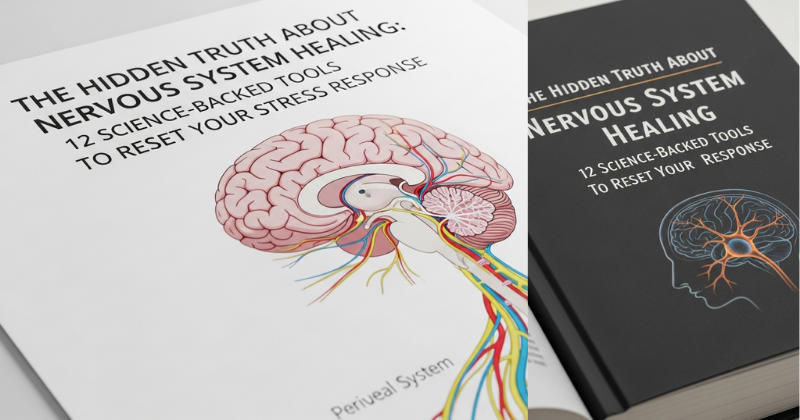
Your nervous system has been running a program written by every stressful experience you’ve ever had — and for millions of people, that program is stuck on high alert. Chronic stress dysregulation isn’t a character flaw or a sign of weakness. It’s a measurable neurobiological state in which the autonomic nervous system has recalibrated its baseline toward persistent sympathetic dominance, fundamentally altering how your brain and body respond to ordinary life demands. The profound and underappreciated truth about nervous system healing is that this recalibration is reversible. Modern neuroscience has identified specific, accessible tools that directly target the physiological mechanisms maintaining chronic stress arousal — and you can begin applying them today. This guide presents 12 science-backed interventions organized by mechanism, giving you not just the what but the why behind each tool, empowering you to build a genuine, evidence-grounded reset protocol for your stress response.
The Neuroscience of a Dysregulated Stress Response
Understanding what nervous system dysregulation actually means at the biological level transforms it from a vague concept into a specific, targetable physiological state. This clarity is the foundation everything else builds upon.
The Autonomic Nervous System: Your Internal Thermostat
The autonomic nervous system (ANS) operates as your body’s automatic regulatory system, governing functions ranging from heart rate and digestion to immune activation and hormonal secretion — all without conscious input. It divides into two primary branches with largely opposing effects. The sympathetic nervous system (SNS) mobilizes the organism for action: increasing heart rate and cardiac output, dilating bronchioles, redirecting blood flow from digestive organs to skeletal muscles, elevating blood glucose, and suppressing immune and reproductive functions. The parasympathetic nervous system (PNS), mediated primarily through the vagus nerve, promotes the restorative state: reducing heart rate, stimulating digestion, supporting immune surveillance, and facilitating tissue repair.
Under healthy conditions, these branches exist in dynamic reciprocal balance, shifting responsively as situational demands change. Acute stress appropriately activates the SNS; the threat passes; the PNS restores homeostasis. The problem emerges when this natural oscillation breaks down — when chronic psychological stressors, accumulated trauma, or sustained physiological threats maintain SNS activation beyond its adaptive window, gradually resetting the system’s baseline toward a state of chronic low-grade arousal.
Polyvagal Theory and the Hierarchy of Safety
Psychiatrist Stephen Porges’ Polyvagal Theory, published initially in 1994 and substantially elaborated since, provides a neurophysiological framework that has significantly advanced understanding of stress dysregulation and its treatment. The theory proposes that the ANS contains not two but three hierarchically organized subsystems, each associated with distinct behavioral and physiological states.
The ventral vagal complex (VVC) — the evolutionarily newest system — supports social engagement, emotional regulation, and the felt sense of safety when it’s dominant. The sympathetic nervous system mediates the fight-or-flight mobilization response. The dorsal vagal complex (DVC) — the evolutionarily oldest system — mediates immobilization, shutdown, and dissociation when threat is perceived as inescapable. Chronic stress dysregulation frequently involves deficient VVC tone combined with excessive sympathetic or dorsal vagal activation — a neurophysiological state that manifests as hypervigilance, emotional reactivity, social withdrawal, fatigue, and digestive disruption. Nervous system healing, from this framework, fundamentally involves restoring VVC dominance and its associated sense of physiological safety.
The HPA Axis: Stress Hormones and Neuroplastic Consequences
Parallel to autonomic dysregulation, chronic stress produces profound alterations in hypothalamic-pituitary-adrenal (HPA) axis function. Sustained cortisol elevation — the hormonal signature of chronic stress — produces measurable structural changes in brain regions governing emotional regulation and cognitive function. The hippocampus, critical for memory formation and HPA axis negative feedback, shows dendritic retraction and reduced neurogenesis under chronic cortisol exposure. The prefrontal cortex, which provides top-down inhibitory control over the amygdala’s threat-detection function, undergoes functional weakening. The amygdala itself becomes hyperreactive and structurally enlarged with prolonged stress exposure.
These neuroplastic changes aren’t permanent — and this is the genuinely hopeful core of modern stress neuroscience. The same neuroplasticity mechanisms that create stress-induced structural changes can reverse them when appropriate interventions consistently shift the physiological environment toward safety and restoration.
Tools 1–4: Vagal Nerve Activation for Immediate Regulation
The vagus nerve — the tenth cranial nerve and the primary conduit of parasympathetic signaling — provides the most accessible direct pathway into nervous system regulation. These four tools activate vagal afferents (sensory fibers running from body to brain) that signal safety to the brainstem structures governing autonomic state.
Tool 1: Extended Exhalation Breathing. The respiratory-cardiac coupling mechanism makes controlled breathing the fastest available route to parasympathetic activation. Heart rate increases during inhalation (SNS influence) and decreases during exhalation (PNS/vagal influence) — a phenomenon called respiratory sinus arrhythmia. By deliberately extending exhalation to twice the duration of inhalation (for example, inhaling for 4 counts and exhaling for 8), you selectively amplify the parasympathetic phase of each breathing cycle. Research from the Stanford Neuroscience Institute demonstrates that the “physiological sigh” — a double inhalation followed by extended exhalation — produces the fastest single-breath reduction in physiological arousal through this mechanism. Practice 5-10 minutes daily, with 20-second extended exhalation cycles producing the most robust heart rate variability improvements.
Tool 2: Cold Water Facial Immersion. Submerging the face in cold water (10-15°C) activates the diving reflex — an evolutionarily conserved cardiovascular response mediated by trigeminal nerve branches and the vagus nerve. This reflex produces immediate, dramatic parasympathetic activation: heart rate drops 10-25% within seconds, peripheral vasoconstriction redirects blood to vital organs, and autonomic arousal decreases measurably. Even splashing cold water on the face activates this pathway partially. For acute stress or anxiety regulation, 30-60 seconds of facial cold water immersion is one of the most rapid physiological regulation tools available outside clinical settings.
Tool 3: Humming, Singing, and Gargling. The vagus nerve innervates the muscles of the larynx, pharynx, and soft palate. Activating these muscles through sustained vocalization — particularly humming at a frequency that creates perceptible vibration — generates afferent vagal stimulation that shifts autonomic state toward parasympathetic dominance. Neurologist and Polyvagal researcher Deb Dana and clinical practitioners working within the Polyvagal framework have documented the regulatory effects of humming in clinical populations. Gargling vigorously for 30-60 seconds activates the same vagal afferents through pharyngeal muscle engagement. These simple, accessible tools can be performed anywhere and produce measurable heart rate variability increases within minutes.
Tool 4: Slow, Rhythmic Movement. Gentle, rhythmic physical movements — particularly those involving bilateral stimulation such as slow walking, rocking, or swaying — activate vestibular and proprioceptive pathways that interface with vagal and cerebellar circuits governing autonomic regulation. Rocking chairs have been used in clinical settings for patients with dementia and anxiety for precisely this reason; the vestibular stimulation from rocking reliably reduces agitation and sympathetic arousal. A daily practice of 10-15 minutes of slow, mindful walking — attending to the rhythmic sensations of footfall, breathing, and environmental cues — produces cumulative improvements in baseline vagal tone over weeks.
Tools 5–8: Neuroplasticity-Based Regulation Approaches
This second category targets the cortical and limbic structures involved in threat appraisal and emotional regulation, working through mechanisms of neuroplastic change that require more time to manifest but produce deeper, more durable shifts in stress baseline.
Tool 5: Mindfulness-Based Attention Training. Mindfulness meditation’s effects on the stress response are among the most rigorously studied in mind-body medicine. Meta-analyses encompassing hundreds of randomized controlled trials document consistent reductions in cortisol, amygdala reactivity, and inflammatory markers alongside increases in prefrontal cortical thickness and hippocampal gray matter density following 8 weeks of consistent practice. The mechanism involves repeated activation of prefrontal attentional networks that strengthen top-down inhibitory control over amygdala-mediated threat responses. The result is not the absence of stress reactivity but its modulation — a trained capacity to observe arousal without automatic escalation. Even 10-15 minutes of daily focused attention practice produces measurable neuroplastic changes within 4-8 weeks.
Tool 6: EMDR and Bilateral Stimulation. Eye Movement Desensitization and Reprocessing (EMDR), developed by Francine Shapiro in 1987 and now a WHO-recommended treatment for PTSD, utilizes bilateral sensory stimulation (alternating left-right eye movements, tactile taps, or auditory tones) while accessing distressing memories. The mechanism remains actively researched, but current evidence suggests bilateral stimulation activates cross-hemispheric communication and mimics the memory consolidation processes of REM sleep, facilitating the reprocessing of traumatic memories from emotionally activated to more neutral encoding. Self-administered bilateral stimulation techniques — such as the “butterfly hug” (alternating tapping on the chest) — can provide mild regulatory benefits accessible outside clinical settings.
Tool 7: Somatic Tracking and Interoceptive Awareness. Interoception — the conscious perception of internal bodily states — is significantly impaired in many individuals with chronic stress dysregulation, a pattern documented extensively in trauma research. The inability to accurately perceive and interpret internal signals perpetuates stress cycles: misinterpreted physiological sensations trigger anxiety, which generates further sympathetic arousal. Somatic tracking — deliberately attending to body sensations with curiosity and without catastrophizing interpretation — gradually recalibrates interoceptive accuracy and reduces the threat value assigned to normal physiological fluctuations. Developed within Pain Reprocessing Therapy and Alan Gordon’s somatic approaches, this practice produces measurable reductions in both pain and anxiety by changing the brain’s interpretation of bodily signals rather than the signals themselves.
Tool 8: Trauma-Informed Yoga and Embodiment Practices. Yoga’s documented effects on the stress response extend beyond the flexibility and strength benefits commonly associated with the practice. Research by psychiatrist Bessel van der Kolk (author of The Body Keeps the Score) and others demonstrates that trauma-informed yoga — emphasizing interoceptive awareness, voluntary movement choice, and present-moment sensation — produces significant reductions in PTSD symptom severity, cortisol dysregulation, and autonomic reactivity. The mechanism involves repeated, safe experiences of inhabiting the body while maintaining regulatory capacity, gradually expanding the window of tolerance for physiological arousal.
Tools 9–12: Lifestyle Architecture for Sustained Nervous System Regulation
Sleep, Chronobiology, and HPA Axis Restoration
Tool 9: Sleep Architecture Optimization. Sleep isn’t merely rest — it’s the primary biological mechanism for HPA axis restoration, inflammatory regulation, and memory consolidation. Slow-wave sleep (SWS, stages 3-4 of NREM sleep) is particularly critical for cortisol clearance and hippocampal memory consolidation that supports accurate threat appraisal. REM sleep processes emotional memories, reducing their affective charge and facilitating the integration of stress experiences. Chronic sleep restriction produces progressive HPA axis dysregulation, amygdala hyperreactivity, and prefrontal impairment that directly mirrors and amplifies stress dysregulation. Optimizing sleep architecture through consistent sleep-wake schedules, temperature-appropriate sleeping environments, and pre-sleep parasympathetic activation routines represents a foundational nervous system healing intervention. Research consistently demonstrates that addressing sleep disturbance produces downstream improvements in stress reactivity, emotional regulation, and autonomic balance.
Tool 10: Strategic Exercise Dosing. Exercise’s effects on the stress response follow an inverted U-curve — moderate, consistent aerobic activity produces profound nervous system benefits, while excessive training volume without adequate recovery can exacerbate HPA axis dysregulation. Moderate aerobic exercise (60-70% maximum heart rate, 30-45 minutes, 3-5 times weekly) increases hippocampal BDNF (brain-derived neurotrophic factor), promotes hippocampal neurogenesis, reduces resting cortisol, and improves HRV — all direct mechanisms of nervous system regulation and healing. The critical nuance for individuals with existing stress dysregulation is that high-intensity exercise performed frequently without adequate recovery can function as an additional physiological stressor, temporarily worsening rather than improving HPA axis regulation. Exercise timing also matters: morning exercise aligns with the natural cortisol awakening response and supports healthy circadian cortisol rhythms; intense evening exercise can disrupt sleep architecture by elevating cortisol and core temperature.
Nutritional Neuroscience and Gut-Brain Axis Regulation
Tool 11: Gut Microbiome and Vagal Tone. The bidirectional gut-brain axis — connecting intestinal microbiota to central nervous system function through vagal afferents, immune signaling, and neuroactive metabolite production — represents one of the most rapidly expanding frontiers in stress neuroscience. Approximately 80-90% of vagal nerve fibers are afferent (running from gut to brain), meaning the gut communicates far more to the brain than the brain communicates to the gut. Gut microbiota produce neurotransmitter precursors (approximately 95% of the body’s serotonin is produced in the gut), short-chain fatty acids that regulate inflammatory tone, and GABA that directly modulates anxiety circuitry. Research demonstrates that individuals with reduced microbiome diversity show increased HPA axis reactivity and reduced vagal tone compared to those with diverse microbiomes. Dietary interventions promoting microbiome diversity — emphasizing fermented foods, prebiotic fiber variety, and polyphenol-rich plant foods — represent an underutilized nervous system regulation strategy with growing evidence support.
Tool 12: Targeted Nutritional Supplementation. Several nutritional compounds have documented mechanisms of action relevant to stress response regulation. Magnesium — deficient in an estimated 50% of Western populations — is a cofactor for over 300 enzymatic reactions and modulates NMDA receptor activity and HPA axis function; supplementation trials demonstrate significant reductions in anxiety and stress reactivity. Ashwagandha (Withania somnifera) root extract exhibits adaptogenic properties through HPA axis modulation, with multiple randomized controlled trials documenting cortisol reductions of 15-30% and significant anxiety improvements compared to placebo. L-theanine, an amino acid found in green tea, crosses the blood-brain barrier and promotes alpha wave activity — the neurological signature of alert, calm wakefulness — while reducing the cortisol response to acute psychological stressors. These supplemental interventions are most effective as adjuncts to the behavioral and somatic tools described above rather than as standalone treatments.
Overcoming Common Obstacles in Nervous System Healing
The path to genuine stress response regulation encounters predictable challenges that deserve honest acknowledgment alongside constructive solutions.
When Nervous System Tools Seem to Backfire
A paradoxical experience that many individuals with significant stress dysregulation encounter is that relaxation practices initially increase rather than decrease anxiety. This phenomenon — termed “relaxation-induced anxiety” in the clinical literature — reflects a nervous system that has been in chronic sympathetic activation for so long that the unfamiliar sensations of parasympathetic shift trigger threat responses. The DVC dorsal vagal state of shutdown can also feel indistinguishable from relaxation to the nervous system initially, generating confusion and distress.
The solution involves titration — applying regulation tools in very small doses initially and gradually expanding tolerance for the physiological sensations of regulation. Starting with 2-3 minutes of extended exhalation breathing rather than 20 minutes, or 30 seconds of cold water facial immersion rather than sustained cold exposure, allows the nervous system to experience safety in small increments. This titrated approach, borrowed from somatic trauma therapy, prevents overwhelm while systematically expanding the window of tolerance for regulatory states.
Building Consistency When Dysregulation Undermines Motivation
Chronic stress dysregulation itself undermines the executive function, motivation, and working memory required to implement new practices consistently — a cruel biological irony. The prefrontal cortex impairment produced by elevated cortisol reduces exactly the cognitive resources needed to establish new health behaviors. This is not a personal failing; it’s a neurobiological constraint requiring structural solutions rather than willpower-based ones.
Environmental design proves more reliable than motivation for establishing nervous system regulation practices. Habit stacking — attaching new regulation practices to existing daily anchors (morning coffee, commute, pre-sleep routine) — reduces the executive function load required for implementation. Starting with a single 5-minute daily practice rather than a comprehensive protocol prevents the overwhelm that derails early adoption. Tracking completion with a simple calendar creates visual momentum that neurologically reinforces the behavior chain.
Maximizing Long-Term Nervous System Resilience
The ultimate goal transcends symptom management toward genuine nervous system resilience — the capacity to experience significant stressors and return to regulatory baseline efficiently rather than accumulating allostatic load over time.
The Window of Tolerance as a Progress Metric
Psychiatrist Dan Siegel’s “window of tolerance” concept provides a useful framework for tracking nervous system healing progress. The window describes the optimal zone of arousal — not too activated (hyperarousal), not too shutdown (hypoarousal) — within which emotional processing and adaptive functioning occur. Chronic stress dysregulation narrows this window, making individuals more easily triggered into hyperarousal or shutdown states by relatively minor stressors.
Nervous system healing measurably widens this window over time. Meaningful progress markers include: situations that previously triggered significant stress responses now feeling manageable, faster return to baseline after disruption, greater capacity to remain present during emotionally activating conversations, and improved sleep quality reflecting better overnight HPA axis regulation. These functional improvements reflect genuine neuroplastic change in the stress response architecture — not suppression of stress reactivity but its genuine modulation through structural neurological change.
Integration: Building a Personalized Regulation Protocol
The 12 tools presented here operate through distinct but complementary mechanisms, and their integration produces effects greater than any single intervention achieves independently. A sustainable personal protocol might include: daily extended exhalation breathing (10 minutes, morning), moderate aerobic exercise (4 times weekly), consistent sleep scheduling with a parasympathetic pre-sleep routine, weekly somatic awareness practice, dietary support for microbiome diversity, and magnesium supplementation. The specific combination matters less than the consistency of application and the alignment of chosen tools with your individual physiological profile and lifestyle constraints.
Conclusion
Nervous system healing is not a metaphor — it is a literal, measurable neurobiological process in which the structural and functional properties of stress response circuits change through consistent, targeted intervention. The 12 tools presented here are grounded in the same neuroscience that governs clinical stress and trauma treatment, made accessible for self-directed application. Begin with the vagal activation tools for immediate regulatory relief, and layer the neuroplasticity-based and lifestyle approaches for durable, cumulative change. Your nervous system built its current stress response through experience — and through new experiences, consistently repeated, it can build a fundamentally different one.
Important Disclaimer: This article is for informational purposes only and should not replace professional advice. For health-related topics, particularly regarding trauma, anxiety disorders, or PTSD, consult qualified healthcare providers. Individual results may vary, and personal circumstances should always be considered when implementing any suggestions.