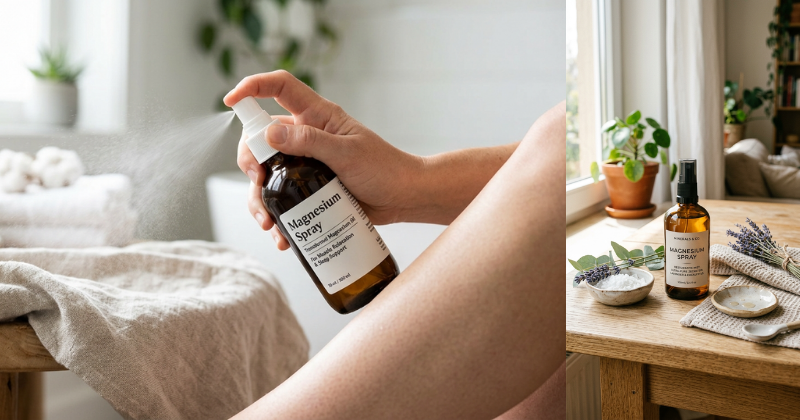
Feeling tense, sore, or struggling to unwind at night? A DIY magnesium spray might be the simple, natural addition your routine needs.
Magnesium plays a vital role in muscle relaxation, nerve function, and stress regulation. Yet many people don’t get enough through diet alone. While oral supplements are common, topical magnesium spray has become popular for targeted support — especially for muscle cramps, sleep, and post-workout recovery.
In this guide, you’ll learn how to make magnesium spray at home, how to use it safely, and how to maximize its benefits.
Why Magnesium Matters for Your Body
Magnesium is involved in over 300 enzymatic reactions in the body. According to the National Institutes of Health, magnesium supports:
- Muscle and nerve function
- Blood pressure regulation
- Energy production
- Bone health
- Sleep quality
Low magnesium levels may contribute to muscle tension, cramps, fatigue, and poor sleep.
H3: Why Choose Topical Magnesium?
Some people prefer magnesium spray because:
- It can be applied directly to sore areas
- It may bypass digestive discomfort
- It’s easy to incorporate into nightly routines
While research on transdermal absorption is still evolving, many people report subjective improvements in muscle relaxation and comfort.
DIY Magnesium Spray Recipe (Step-by-Step)
Making magnesium oil spray at home is simple and cost-effective.
H3: Ingredients You’ll Need
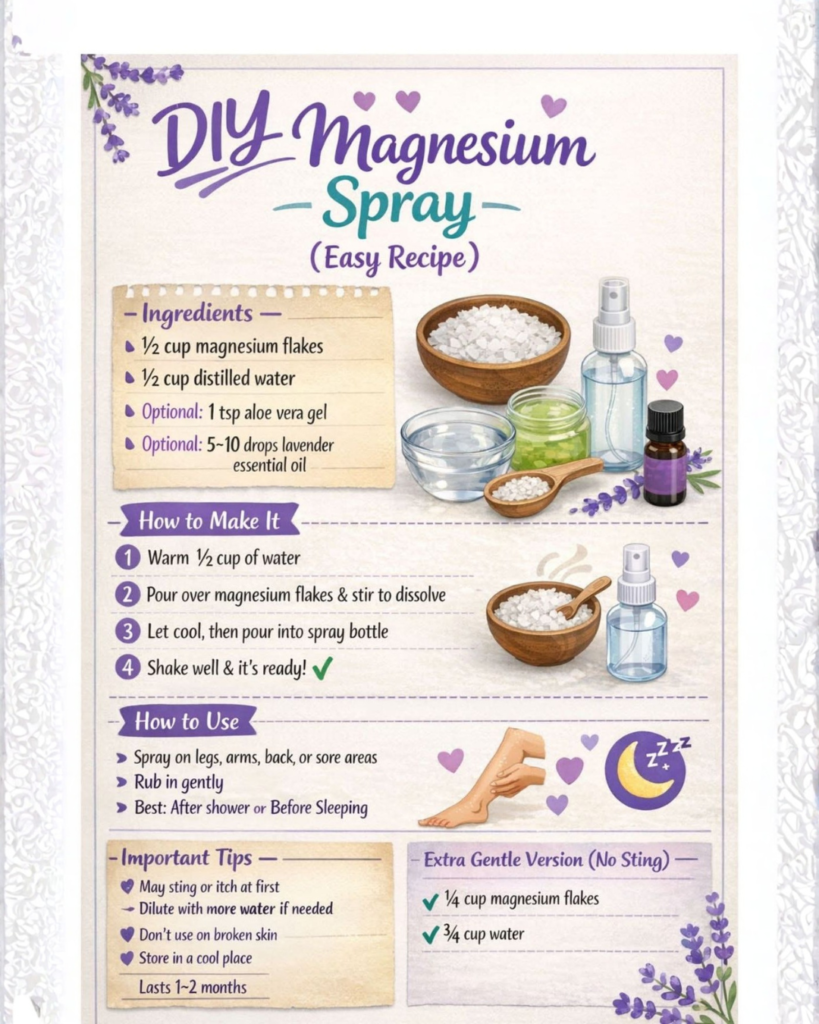
- ½ cup magnesium chloride flakes
- ½ cup distilled water
- Glass spray bottle
Tip: Choose pure magnesium chloride flakes labeled for topical use.
H3: Step-by-Step Instructions
Step 1: Heat the Water
Warm distilled water until hot but not boiling.
Step 2: Dissolve the Magnesium
Pour the magnesium chloride flakes into a glass bowl. Add the hot water and stir until fully dissolved.
Step 3: Let It Cool
Allow the solution to cool completely.
Step 4: Transfer to Spray Bottle
Pour into a clean glass spray bottle.
Your magnesium spray is ready to use.
How to Use Magnesium Spray Safely
H3: For Muscle Tension
- Spray directly onto calves, shoulders, or lower back
- Massage gently
- Leave on for 20–30 minutes before rinsing (optional)
H3: For Relaxation & Sleep
- Spray on feet or legs before bedtime
- Allow to absorb before getting dressed
H3: For Post-Workout Recovery
- Apply to sore muscles
- Pair with light stretching
Common Questions About Magnesium Spray
H3: Why Does It Tingle?
A mild tingling or itching sensation is common, especially during the first few uses. This may happen if:
- Skin is dry
- You use too much
- You’re new to topical magnesium
If irritation occurs, dilute with a bit more distilled water or apply to damp skin.
H3: Can You Use It Daily?
Many people use magnesium spray daily, but start slowly — once per day — and observe how your skin reacts.
H3: Where Should You Avoid Applying It?
Avoid:
- Broken or irritated skin
- Freshly shaved areas
- Sensitive facial skin
Tips to Maximize Results
- Exfoliate gently once weekly to improve absorption
- Stay hydrated
- Combine with magnesium-rich foods like spinach, almonds, and pumpkin seeds
- Maintain a consistent routine
Topical magnesium works best when used regularly rather than occasionally.
Who Should Be Cautious?
If you have:
- Kidney issues
- Severe skin sensitivity
- Chronic health conditions
Consult a healthcare provider before starting regular magnesium use.
Conclusion: Simple, Affordable, and Effective
DIY magnesium spray is one of the easiest wellness tools you can make at home. With just two ingredients and a few minutes, you can create a natural solution that supports muscle relaxation, better sleep, and post-workout recovery.
Small habits, done consistently, create real change.
Start with a small batch. Try it for a week. Notice how your body responds.
Important Disclaimer: This article is for informational purposes only and should not replace professional medical advice. Consult a healthcare provider before starting new supplements or topical treatments, especially if you have underlying health conditions. Individual results may vary.