Introduction
Feeling tired, getting sick often, or noticing changes in your skin or hair?
It might not just be stress or lack of sleep—it could be a zinc deficiency.
Zinc is a small but essential mineral that plays a big role in your immune system, skin health, wound healing, and even taste and smell. Because your body doesn’t store zinc, you need to get it regularly through food.
In this article, you’ll learn:
- What zinc does in your body
- Common signs of deficiency
- Who is at risk
- The best foods to recover zinc levels naturally
- Practical tips for better absorption
Why Zinc Is So Important
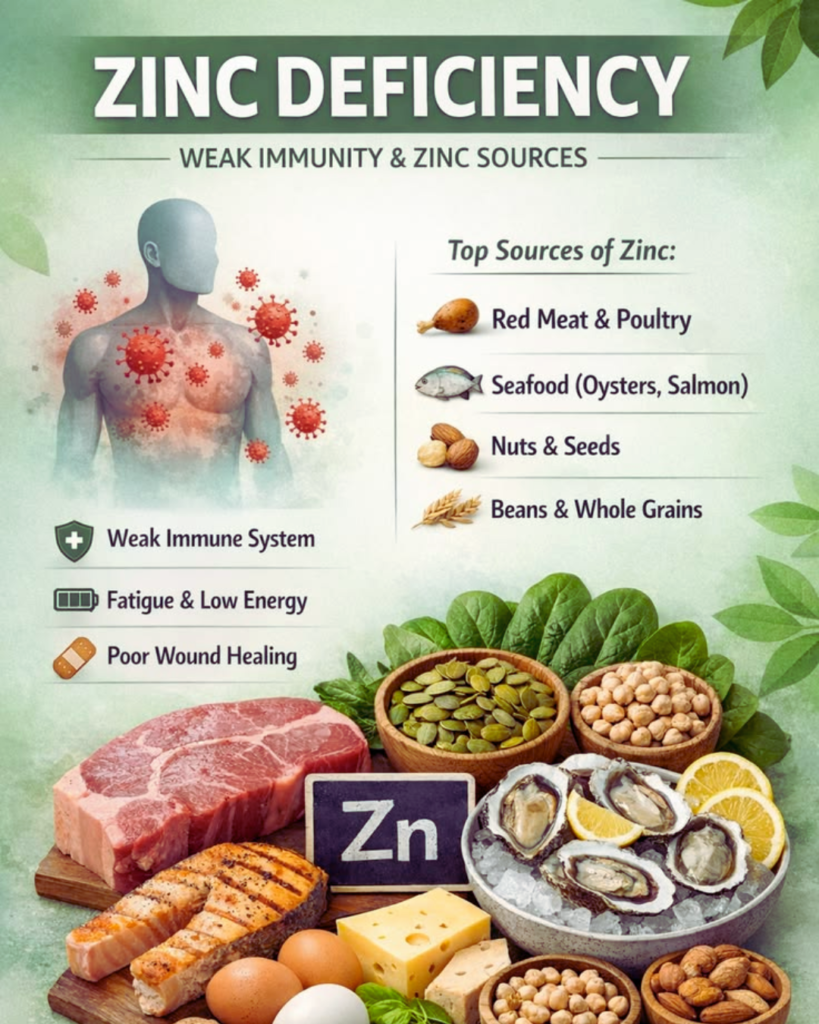
Zinc supports many key functions:
- Immune defense
- Skin repair and healing
- Cell growth and regeneration
- Hormone balance
- Taste and smell
Even a mild deficiency can affect how your body functions daily.
Common Signs of Zinc Deficiency
Zinc deficiency doesn’t always show up clearly, but there are patterns to watch for.
1. Frequent Illness
If you get sick often, your immune system may be weakened.
Zinc helps your body fight infections and recover faster.
2. Slow Wound Healing
Cuts, acne marks, or الجلد (skin) irritation taking longer to heal can be a sign.
Zinc plays a key role in tissue repair.
3. Hair Loss
Low zinc levels can weaken hair follicles and lead to increased shedding.
4. Skin Problems
You may notice:
- Acne flare-ups
- Dry or irritated skin
- Redness or inflammation
5. Loss of Taste or Smell
Zinc is essential for your senses. A deficiency can dull taste and smell.
6. Fatigue & Low Energy
Zinc supports metabolism and immune function—low levels can leave you feeling drained.
Who Is More at Risk?
Some people are more likely to have low zinc levels:
- People with low-protein diets
- Vegetarians or vegans (due to lower absorption)
- Individuals with digestive issues
- People under chronic stress
Best Foods to Recover Zinc Levels
The good news: you can improve your zinc intake through simple dietary changes.
1. Animal-Based Sources (High Absorption)
- Red meat (in moderation)
- Chicken
- Eggs
- Dairy products
These are the most easily absorbed forms of zinc.
2. Plant-Based Sources
- Chickpeas
- Lentils
- Pumpkin seeds
- Nuts (especially cashews and almonds)
Tip: Soaking or cooking helps improve absorption.
3. Zinc-Rich Seeds
- Pumpkin seeds
- Sesame seeds
These are great for easy snacks or toppings.
4. Whole Grains
- Oats
- Brown rice
Provide zinc along with fiber and energy.
How to Improve Zinc Absorption
Even if you eat zinc-rich foods, absorption matters.
Tips:
- Combine with protein-rich meals
- Soak legumes and grains before cooking
- Avoid excessive processed foods
- Maintain a balanced diet
Simple Daily Meal Plan
Breakfast
- Oats + nuts + yogurt
Lunch
- Chicken or lentils + vegetables + whole grains
Snack
- Pumpkin seeds or fruit + nuts
Dinner
- Eggs or fish + vegetables
How Long Does Recovery Take?
Recovery depends on severity.
- Mild deficiency: a few weeks
- Moderate deficiency: 1–3 months
Consistency is key.
Common Mistakes
1. Relying Only on Supplements
Food sources are better absorbed and more balanced.
2. Ignoring Diet Variety
You need multiple nutrients, not just zinc.
3. Expecting Instant Results
Nutrient restoration takes time.
When to Seek Medical Advice
If symptoms persist or worsen, consult a healthcare professional. Severe deficiencies may require targeted treatment.
Conclusion
Zinc may be a small nutrient, but its impact on your health is significant.
By recognizing the early signs of deficiency and adding zinc-rich foods to your daily routine, you can support your immune system, improve your skin, and restore your energy naturally.
Start simple. Stay consistent. Your body will respond.