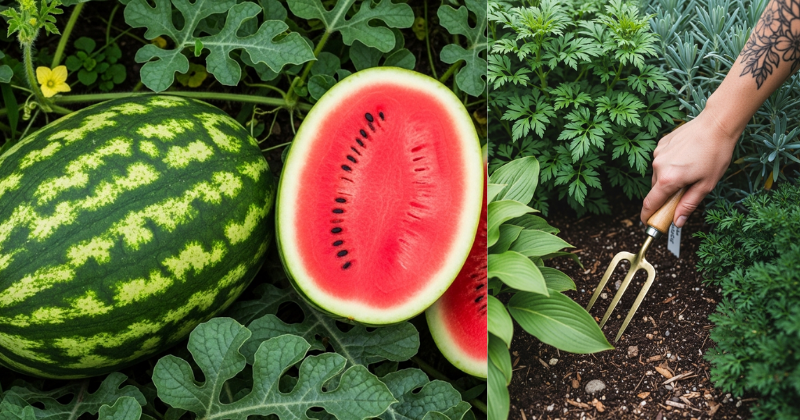
Imagine slicing into a watermelon you’ve grown on your own balcony—the knife meeting resistance before surrendering to flesh so red it seems to hold summer’s very essence, juice cascading like a sweet waterfall, seeds gleaming like dark promises of future abundance. Growing watermelon in a container transforms the impossible into the intimate, bringing the sprawling exuberance of melon patches into the confined poetry of urban spaces, onto apartment balconies, patios, and small-yard gardens where every square inch becomes potential, where limitation births creativity rather than resignation.
Container watermelon cultivation is not merely adaptation—it’s revolution. It challenges the agricultural assumption that certain crops demand vast territories, that abundance requires acreage. In truth, watermelons possess a remarkable plasticity, a willingness to negotiate their growth patterns when we provide the right conditions, the proper encouragement, the attentive care that transforms constraint into focused vitality. These ten tips represent years of experimentation, countless seasons of learning to read watermelon’s subtle communications, understanding its non-negotiable needs and its surprising flexibilities.

Understanding Watermelon’s Container Psychology
Before we explore specific techniques, we must first comprehend what we’re asking of this plant. Watermelons evolved to sprawl across sun-baked earth, sending exploratory vines across meters of territory, their roots penetrating deep into soil in search of moisture and nutrients. When we confine this wanderer to a container, we’re not diminishing its nature—we’re intensifying it, concentrating its energy, creating conditions where every resource becomes maximally utilized rather than casually dispersed.
The Watermelon’s Essential Character
Watermelons belong to the Cucurbitaceae family, alongside cucumbers, squash, and their melon cousins. They originate from the Kalahari Desert of Africa, which explains their paradoxical nature: they require abundant water for fruit development yet possess drought-adapted root systems and prefer warm, dry air around their foliage. This dual heritage—desert resilience and water dependence—defines their cultivation requirements and informs every decision we make as container growers.
Container cultivation works because watermelons, despite their sprawling reputation, actually possess relatively compact root systems compared to their vine length. A mature watermelon plant can thrive in a surprisingly modest root zone if we provide concentrated nutrition and consistent moisture. The challenge lies not in root space but in managing vine growth, supporting developing fruit, and meeting the plant’s intense nutritional demands during its explosive growth phase.
Tip 1: Choose Your Variety with Strategic Wisdom
Not all watermelons embrace container life equally. Your variety selection determines whether you’ll experience triumphant harvest or disappointing struggle. The watermelon world divides broadly into categories that matter profoundly for container growing.
Compact and Dwarf Varieties: Seek cultivars specifically bred for small spaces. ‘Sugar Baby’ remains the classic choice—a compact plant producing 6-10 pound fruits with deep red flesh and concentrated sweetness. ‘Bush Sugar Baby’ takes compactness further, with vines reaching only 3-4 feet rather than the standard 10-15 feet. ‘Golden Midget’ offers early maturation and smaller, yellow-fleshed fruits perfect for containers. ‘Blacktail Mountain’ tolerates cooler conditions and produces 8-12 pound melons on manageable vines.
Personal-Sized Watermelons: The rise of “icebox” watermelons—so named because they fit in refrigerators—has been a gift to container gardeners. These varieties produce 5-8 pound fruits that strain containers less than their massive cousins. ‘Sugar Pot’ develops fruits weighing just 3-4 pounds, making it ideal for growing multiple melons on a single container plant.
Avoid traditional varieties like ‘Crimson Sweet’ or ‘Charleston Gray’—these vigorous growers produce 20-30 pound fruits that will overwhelm containers structurally and nutritionally. The plant’s entire energy system must support that massive fruit, creating demands that containers struggle to meet.
I learned this lesson through expensive failure, planting an heirloom variety in my largest container and watching the plant produce a single fruit that grew to twelve pounds before the vine suddenly collapsed, the container’s soil depleted despite my feeding regimen. Compact varieties aren’t compromises—they’re watermelons that have learned to focus their excellence rather than broadcasting it across expansive territory.
Tip 2: Select Your Container Like Choosing a Home
The container is not merely a vessel—it’s the entire universe your watermelon will inhabit, its earth and sky compressed into portable form. This choice determines root health, moisture retention, temperature moderation, and ultimately, harvest success.
Size Requirements: Minimum container size is 5 gallons, but I strongly recommend 10-15 gallons for genuine success. Larger containers provide several critical advantages: greater soil volume buffers against temperature fluctuations and moisture stress, more root space supports healthier plants and larger yields, and increased nutrient reserves reduce feeding frequency demands.
Material Considerations: Each container material creates a distinct microclimate. Plastic containers retain moisture excellently and cost less but can overheat in direct sun—consider light-colored plastics or shade the container sides. Fabric grow bags provide superior drainage and air pruning of roots (preventing root circling and creating healthier root systems) but dry out more quickly, requiring more attentive watering. Ceramic or clay pots offer aesthetic appeal and thermal mass that moderates temperature swings but add significant weight and can be expensive in large sizes.
Drainage is Non-Negotiable: Watermelons tolerate brief drought better than waterlogged roots. Your container must have multiple drainage holes—I drill additional holes in commercial containers, creating at least 6-8 drainage points across the bottom. Elevate containers on pot feet or bricks, ensuring water escapes freely rather than pooling beneath.
The Color Strategy: In hot climates, light-colored containers reflect rather than absorb solar radiation, keeping root zones cooler. I’ve measured temperature differences of 15-20°F between black and white containers in full summer sun—enough to stress roots and reduce fruit development. If using dark containers, wrap them in reflective material or position them where afternoon shade protects the container while the plant receives full sun.
Tip 3: Craft Soil That Breathes and Feeds
Container soil differs fundamentally from garden earth. It must provide structural support, retain adequate moisture, drain rapidly to prevent waterlogging, and contain concentrated nutrition—all while remaining lightweight enough that containers stay manageable.
The Base Formula: Create a blend that honors these competing demands. I use 40% high-quality potting mix (peat or coir-based), 30% compost (for nutrition and moisture retention), 20% perlite or pumice (for drainage and aeration), and 10% worm castings (for slow-release nutrients and beneficial microorganisms). This combination creates soil that feels fluffy and light when you plunge your hands into it, that drains within seconds when watered yet holds moisture in its organic matter reserves.
Pre-Planting Amendments: Before planting, incorporate slow-release organic fertilizer formulated for vegetables—watermelons are heavy feeders with particular fondness for phosphorus (for root development and fruit production) and potassium (for sugar production and disease resistance). I add 2-3 tablespoons per 5 gallons of soil volume, mixing thoroughly.
pH Precision: Watermelons prefer slightly acidic to neutral soil, pH 6.0-7.0. Test your soil mix and adjust if necessary using lime to raise pH or sulfur to lower it. This detail seems minor but profoundly affects nutrient availability—in alkaline soils, micronutrients become locked up; in overly acidic conditions, toxic aluminum can become available.
The soil you create is living architecture, a porous universe where roots explore, where water moves in capillary channels, where microorganisms break down organic matter into plant-available nutrients. Mix it with intention, understanding that this medium determines everything that follows.
Tip 4: Position for Maximum Solar Alchemy
Watermelons worship the sun with an intensity that borders on religious devotion. Inadequate light produces weak vines, poor flowering, and fruits that never develop their characteristic sweetness. Position your container where it receives 8-10 hours of direct sunlight daily—preferably more.
Light Quality Matters: Morning sun is particularly valuable, drying dew from leaves and reducing disease pressure. Afternoon sun provides intense light energy during peak photosynthetic hours. If you must choose, prioritize morning and midday sun over late afternoon exposure.
Reflective Strategies: In situations with marginal light, employ reflective surfaces to maximize available sun. White walls, aluminum foil panels, or reflective mulch around the container base bounce light onto lower leaves, increasing total light interception. This technique can add the equivalent of 1-2 hours of direct sun through reflected illumination.
Rotation Ritual: Unlike in-ground plants, container watermelons can be rotated weekly to ensure even light exposure on all sides. This prevents lopsided growth and encourages balanced vine development. Mark one side of your container and rotate it 90 degrees each week, creating a ritual that connects you to the plant’s rhythmic growth.
I grow watermelons on my south-facing balcony, where summer sun beats down with relentless intensity. The plants don’t merely tolerate this exposure—they thrive in it, their leaves oriented perpendicular to solar rays, their vines producing new growth inches daily, their fruits swelling with visible speed during peak season. This is watermelon’s true nature: a plant that converts sunshine into sugar with remarkable efficiency, that stores summer’s light as sweet liquid within its flesh.
Tip 5: Master the Water Dance—Neither Drought nor Deluge
Watering container watermelons requires nuanced attention, a middle path between extremes. The common name suggests constant water, yet overwatering causes more container watermelon failures than drought. We must learn to read the plant’s thirst, to respond to its actual needs rather than our assumptions.
The Deep Watering Technique: When you water, water thoroughly until liquid streams from drainage holes. This ensures the entire root zone receives moisture and flushes accumulated salts from the soil. Surface watering creates a gradient where upper soil stays moist while lower roots struggle in dust—a recipe for shallow root systems that can’t support heavy fruit production.
Reading Moisture Cues: Before watering, check soil moisture 2-3 inches below the surface. Insert your finger or a moisture meter into the root zone. Water when this depth feels barely moist—not bone dry, but no longer wet. This technique prevents both drought stress and the root rot that follows constant saturation.
Growth Stage Adjustments: Young plants need consistent moisture to establish roots but less total water due to limited leaf surface area. Mature plants with extensive foliage transpire heavily, requiring daily watering in hot weather. During fruit development, maintain steady moisture—fluctuations cause fruits to crack or develop hollow centers.
The Morning Advantage: Water early, allowing foliage to dry before nightfall. Wet leaves overnight invite fungal diseases like powdery mildew. Morning watering also ensures plants face the day’s heat stress fully hydrated.
I confess to occasional watering errors—days when distraction led to wilted vines, afternoons when I returned home to find leaves drooping in surrender to heat. Watermelons forgive occasional lapses, recovering within hours of deep watering. But chronic stress—the daily cycle of wilt and recovery—compromises fruit quality even when plants survive. Consistency outweighs perfection.
Tip 6: Feed the Beast—Intensive Nutrition for Explosive Growth
Container soil, no matter how carefully prepared, contains finite nutrients. A watermelon plant performing its miracle—transforming earth, water, and sunlight into pounds of sweet fruit—depletes these reserves rapidly. Strategic feeding makes the difference between scraggly vines producing golf-ball fruits and vigorous plants bearing full-sized melons.
The Feeding Timeline: Begin fertilizing two weeks after emergence, once seedlings display their first true leaves (the serrated leaves that appear after initial smooth cotyledons). Use diluted liquid fertilizer at half-strength weekly for the first month, building the plant’s vegetative foundation without overwhelming young roots.
Growth Stage Nutrition: As vines begin running, switch to full-strength feeding every 7-10 days. Choose a balanced organic fertilizer (10-10-10 or similar) for the vegetative phase, providing equal parts nitrogen (for leaf and vine growth), phosphorus (for root development), and potassium (for overall plant health).
Bloom and Fruit Shift: When flowers appear, transition to a fertilizer higher in phosphorus and potassium, lower in nitrogen (something like 5-10-10). Excessive nitrogen during fruiting produces luxuriant foliage at the expense of fruit development and can create fruits with inferior flavor. The plant’s priority shifts from building infrastructure to producing offspring—our feeding should mirror this change.
Micronutrient Attention: In containers, micronutrient deficiencies appear more readily than in diverse garden soil. Watch for yellowing between leaf veins (iron deficiency), brown leaf edges (potassium deficiency), or stunted growth (zinc deficiency). Foliar sprays of liquid kelp or fish emulsion provide broad-spectrum micronutrients that roots absorb rapidly through leaf tissue.
I fertilize on a fixed schedule—Sunday mornings become my feeding ritual, a time when I inspect each plant, noting new growth, counting flowers, anticipating harvest. This regularity prevents the forgotten feedings that undermine container growing. Set reminders, create routines, make feeding as automatic as watering.
Tip 7: Train Vines with Gentle Authority
Watermelon vines possess wanderlust, an evolutionary drive to explore territory and distribute risk across space. Container growing requires us to channel rather than suppress this instinct, guiding vines in ways that respect their nature while accommodating spatial limitations.
Vertical Aspirations: Training watermelons vertically on trellises or cages maximizes space efficiency and offers multiple advantages. Better air circulation reduces disease pressure, easier inspection allows early detection of pests and problems, and improved light penetration reaches all leaves rather than creating shaded layers.
Trellis Construction: Use sturdy structures—mature watermelon plants with developing fruit create substantial weight. I prefer cattle panel arched over the container or heavy-duty tomato cages anchored against tipping. The structure must support not just vine weight but also developing melons in their fabric slings.
Sling System for Fruits: As melons develop, create individual support slings from old t-shirts, fabric scraps, or commercial melon nets. Tie these to the trellis, cradling each fruit to prevent stem breakage under increasing weight. Check slings weekly, adjusting as fruits expand—a melon falling from height will likely crack, losing its entire season’s promise in one gravitational moment.
Strategic Pruning: Container space limitations may require selective pruning. Remove weak lateral vines, focusing the plant’s energy on 2-3 main vines. After several fruits set and reach softball size, pinch off vine tips and remove new flowers—the plant cannot mature unlimited fruits in container conditions, and focusing energy on fewer melons produces better-quality harvest.
Ground-Sprawl Alternative: If vertical growing feels too complex, allow vines to trail over container edges onto surrounding surfaces. Place developing fruits on small boards or tiles to prevent ground contact and rot. This approach requires more space but eliminates support structure concerns.
Tip 8: Navigate Pollination—The Essential Transaction
Watermelon flowers engage in one of nature’s most critical exchanges—the transfer of pollen from male to female flowers that triggers fruit development. In gardens, bees and other pollinators handle this transaction reliably. In container situations—particularly on high-rise balconies or during periods of low pollinator activity—we may need to become the bees.
Understanding Flower Gender: Watermelons produce separate male and female flowers on the same plant. Male flowers appear first, in greater numbers, on thinner stems. Female flowers appear slightly later and are immediately recognizable by the miniature melon (technically an ovary) visible at their base, behind the petals.
Hand Pollination Technique: When both flower types are present and open (typically morning hours), either use a small paintbrush to collect pollen from male flower centers and brush it onto female flower stigmas, or pluck a male flower, remove its petals, and rub its pollen-laden anther directly onto the female stigma. One male flower can pollinate 2-3 females.
Timing is Everything: Flowers open for a single day—miss the window and that female flower aborts without setting fruit. Check plants daily once flowering begins, pollinating each morning. You’ll know pollination succeeded when the miniature melon behind the female flower begins swelling within days rather than yellowing and dropping off.
Attracting Helpers: If pollinators visit your area, encourage them by planting pollinator-friendly flowers nearby in companion containers—borage, nasturtiums, and cosmos attract bees while adding beauty. Avoid pesticides, even organic ones, during bloom period—most insecticides harm pollinators regardless of their source.
I discovered hand pollination’s necessity after my first container watermelon season produced abundant flowers but zero fruit. The following year, armed with understanding and a paintbrush, I spent five minutes each morning playing bee—resulting in six beautiful melons from two plants. That simple intervention transformed failure into abundance.
Tip 9: Monitor for Pests and Diseases with Vigilant Care
Container plants aren’t immune to the challenges that affect garden plants, but their containment offers advantages: easier inspection, quicker intervention, and the ability to isolate infected plants. Watermelons face several common adversaries that container growers must recognize and address.
Aphids: These tiny sap-suckers cluster on new growth, weakening plants and spreading diseases. Spray them off with strong water jets or apply insecticidal soap or neem oil. Check undersides of leaves during regular inspections—early detection prevents major infestations.
Cucumber Beetles: Striped or spotted beetles that feed on leaves, flowers, and fruit while spreading bacterial wilt. Hand-pick when possible; use row covers during early growth; apply organic pyrethrin sprays for severe infestations. One beetle seems harmless, but populations explode rapidly.
Powdery Mildew: This fungal disease appears as white powder on leaf surfaces, eventually yellowing and killing leaves. Prevention is easier than cure: ensure good air circulation, avoid overhead watering, and remove affected leaves immediately. Spray preventively with baking soda solution (1 tablespoon per gallon of water with a drop of dish soap) or use organic sulfur fungicides.
Fusarium Wilt: Soil-borne fungal disease that causes sudden vine collapse. Prevention includes using sterile potting soil, avoiding overwatering, and choosing resistant varieties when available. Once present, remove infected plants and sterilize containers before reuse.
The Daily Walk: Make inspection a ritual. Circle your container slowly, lifting leaves to examine undersides, noting color changes, checking vine tips for vigor. This intimate attention allows you to spot problems when they’re manageable—a few aphids rather than a colony, the first powdery mildew spots before the entire plant is compromised.
Container growing creates a more controlled environment than sprawling garden plots, but this doesn’t equal automatic protection. Vigilance, early intervention, and preventive care keep your watermelon thriving from planting through harvest.
Tip 10: Master the Harvest Art—Knowing Perfect Ripeness
After months of nurturing—from seed or seedling through sprawling vines to swelling fruits—the final test arrives: determining perfect ripeness. Harvest too early and sweetness disappoints; too late and texture deteriorates. Watermelons don’t continue ripening after picking, making timing crucial.
The Ground Spot: Where the fruit rests changes from white or pale green to creamy yellow when ripe. This ground spot transformation is one of the most reliable indicators—checking it requires lifting the fruit slightly to examine the underside.
Tendril Status: The curly tendril closest to the fruit stem transitions from green to brown and dry when the melon matures. Some varieties show this change more reliably than others, but it’s worth checking as part of your assessment constellation.
Thump Test: Tap the fruit with your knuckles—ripe melons produce a deep, hollow sound rather than the high-pitched ping of unripe fruits. This technique requires practice and comparison, but experienced growers rely on it confidently.
Skin Changes: The fruit’s outer skin dulls slightly and becomes harder to scratch with a fingernail when fully mature. The contrast stripes often become less pronounced, colors deepening overall.
Days from Pollination: Track pollination dates if you hand-pollinate. Most varieties mature 30-45 days post-pollination depending on weather and variety. This timeline gives you a harvest window to watch for other signs.
The Harvest Moment: Use clean, sharp pruners or a knife to cut the stem 2-3 inches from the fruit—never twist or pull, which can damage the vine. Handle fruits gently; despite their tough appearance, impacts create internal bruising that affects texture and flavor.
I’ve cut into watermelons across the ripeness spectrum—underripe fruits with pale, crunchy flesh and muted sweetness; perfectly ripe melons whose scarlet flesh parts like butter, whose juice runs down my arms, whose flavor captures summer’s essence; and overripe specimens beginning their breakdown into fermentation. Perfect timing produces transcendence. All the effort—the container preparation, the consistent watering, the patient training—culminates in that first slice revealing whether you’ve achieved watermelon mastery.
The Greater Journey: What Container Watermelon Growing Teaches
Beyond the practical harvest, growing watermelon in containers offers lessons that extend into life’s broader territory. It teaches us that limitations can focus rather than constrain, that intensive care produces abundance even in small spaces, that patience and attention transform seeds into sweetness. Each season becomes a conversation between your intentions and the plant’s needs, a negotiation where both parties must adapt.
Container watermelon cultivation proves that we need not resign ourselves to purchasing produce grown hundreds or thousands of miles away. We can participate in our own food production even without expansive property, creating personal agricultural systems on balconies and patios, connecting to the ancient human practice of growing food while honoring contemporary spatial realities.
The watermelon you grow yourself tastes different—not just because it’s fresher, though it is, or because you can choose superior varieties unavailable commercially, though you can. It tastes different because you’ve participated in its entire life cycle, because you’ve witnessed the alchemy of seed becoming vine becoming fruit, because you’ve invested attention and care across months. That investment flavors every bite with satisfaction beyond mere sweetness.
Start this season. Choose a compact variety that speaks to you. Fill your container with carefully crafted soil. Position it in full sun. Water with attention, feed with consistency, train with gentle guidance. Watch the miracle unfold—the rapid vine growth, the surprising flowers, the swelling fruits. And when you make that first cut, when juice runs and the flesh parts to reveal its scarlet heart, know that you’ve achieved something remarkable: you’ve grown watermelon in a container, transforming limitation into abundance, constraint into focused vitality.
Your balcony, patio, or small yard holds more potential than you imagine. These ten tips provide the foundation, but your attention and care will write the specific story of your harvest. Begin now—summer and its sweet rewards await your participation.