
The first 150–160 characters serve as the meta description:
Discover the top 10 foods to avoid with arthritis and learn how diet influences inflammation, joint pain, and long-term symptom management.
Living with arthritis can feel overwhelming when pain flares for no clear reason. Yet many people are surprised to learn that daily food choices can influence inflammation. Understanding which foods to avoid with arthritis empowers you to take control of symptoms and support your joints through mindful eating. When you remove certain triggers, you may notice less stiffness, more mobility, and a greater sense of well-being.
This comprehensive guide explores the top 10 foods linked to increased inflammation, explains why they may worsen arthritis, and offers alternatives to support joint health. Throughout the article, you’ll learn actionable steps, science-backed insights, and realistic strategies that fit into daily life. Whether you’re managing rheumatoid arthritis, osteoarthritis, or chronic joint pain, these tips can help transform your routine and unlock relief.
Understanding the Connection Between Diet and Arthritis
Food plays a major role in inflammation. For people with arthritis, certain ingredients can stimulate immune responses, aggravate swollen joints, or increase oxidative stress. When you learn what to avoid, you create space for nourishing foods that support joint repair and long-term wellness.
Why Some Foods Trigger Joint Pain
Research suggests that foods high in refined sugars, saturated fats, and inflammatory compounds can worsen arthritis by increasing inflammation markers such as C-reactive protein.
H3: Common Hesitations When Changing Diet
It’s natural to feel nervous about giving up favorite meals. You might worry change will be difficult, expensive, or restrictive. The truth is progress starts with awareness and gradual substitution.
Section 1: What Foods Should You Avoid with Arthritis?
The answers below provide featured-snippet ready clarity.
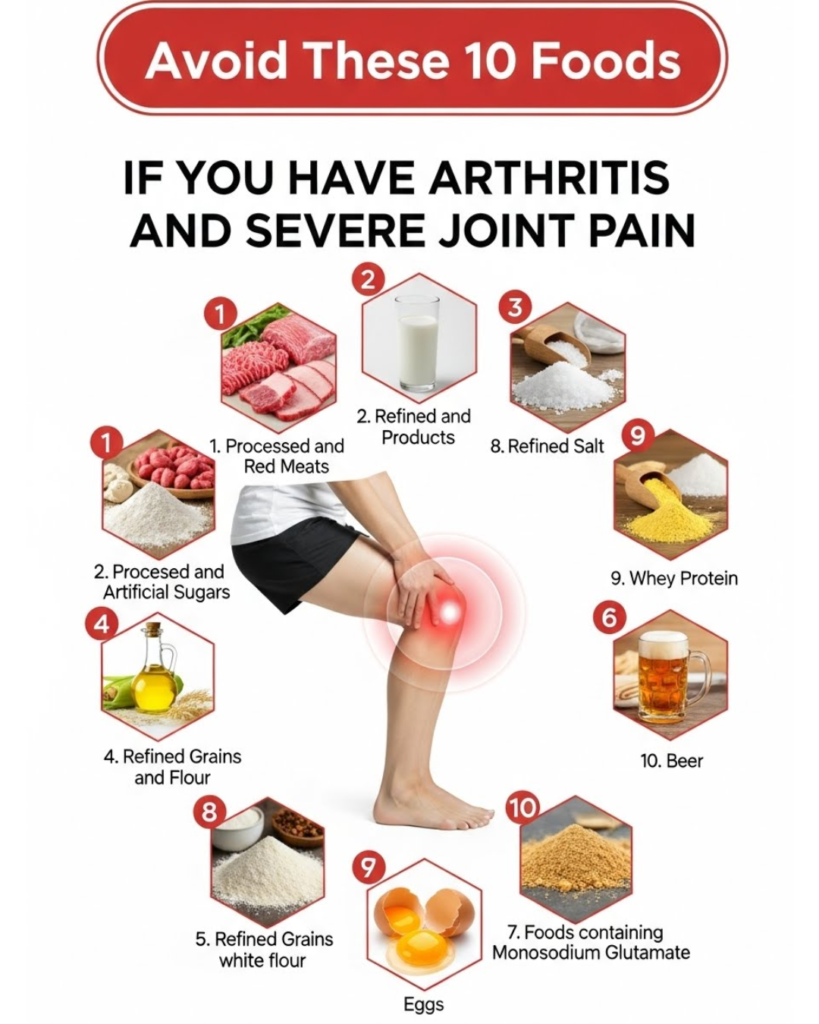
These are the top 10 foods to avoid with arthritis due to their inflammatory effects:
- Sugar and sweets
- Processed meats
- Fried foods
- Refined carbohydrates
- Alcohol
- Excess salt
- Trans fats
- Vegetable oils high in omega-6
- Dairy for some individuals
- Artificial additives and preservatives
Let’s explore each food group and why limiting them could help reduce symptoms.
H3: Sugar and Sweets
High sugar intake can spike inflammation, increase joint swelling, and lead to weight gain that strains joints.
H3: Processed Meats
Bacon, sausage, and deli meats contain nitrates and harmful compounds linked to chronic inflammation.
H3: Fried Foods
Deep-fried meals contain high levels of trans fats that trigger inflammatory responses.
Section 2: Foods That Sneak into Your Diet
Hidden sources make avoidance tricky. Awareness unlocks better choices.
H3: Refined Carbohydrates
White bread, white rice, and pastries offer little fiber and rapidly raise blood sugar, worsening inflammation.
H3: Alcohol
Excess consumption strains the liver and increases inflammatory markers. Consider moderation or elimination.
H3: Excess Salt
Salt causes water retention and can damage joint tissues over time. Many packaged foods contain high sodium levels.
Section 3: Advanced Strategies to Reduce Inflammatory Foods
You can achieve progress through gradual adjustments.
H3: Healthy Substitution Ideas
- Replace sugary snacks with fruit.
- Swap deli meats for grilled chicken or legumes.
- Use olive oil instead of vegetable oils high in omega-6.
- Replace processed snacks with nuts and seeds.
H3: Preparing Meals at Home
Cooking at home allows you to control ingredients and minimize inflammation triggers.
H4: Meal Planning Tips
- Create weekly menus.
- Use fresh fruit and vegetables.
- Avoid ready-made sauces high in salt and sugar.
Section 4: Troubleshooting Challenges When Avoiding Inflammatory Foods
H3: Cravings for Sweet or Salty Snacks
Cravings are common. Stay prepared:
- Keep healthier snacks accessible.
- Drink more water to reduce salt cravings.
H3: Eating Away from Home
Look for grilled proteins and fresh vegetables when ordering meals. Ask for sauces on the side.
Section 5: Maximize Long-Term Success
You can transform your relationship with food one choice at a time.
H3: Track Trigger Foods
A food journal can reveal patterns and pinpoint your personal triggers.
H3: Complementary Joint Care Strategies
- Maintain movement tailored to your condition.
- Focus on anti-inflammatory fats like omega-3 from fish.
- Prioritize sleep to reduce inflammation.
These topics offer internal linking opportunities to future articles on turmeric benefits, omega-3 rich foods, and anti-inflammatory meal plans.
Section 6: When Should You Seek Professional Guidance?
If symptoms persist despite dietary change, consult a healthcare provider. Diet is one aspect of arthritis management and can complement other treatments.
Conclusion
Avoiding inflammatory trigger foods is a powerful step toward managing arthritis discomfort. By reducing sugar, processed meats, fried foods, and other items on this list, you can unlock greater comfort, mobility, and confidence in daily life. Remember that lasting transformation develops gradually. You don’t have to remove everything at once. Start small, celebrate progress, and stay committed to nourishing your body.
You are capable of building a lifestyle that supports joint health and long-term wellness—one meal at a time.
Important Disclaimer: This article is for informational purposes only and should not replace professional advice. For health-related topics, consult healthcare providers. For financial or legal matters, seek qualified professional guidance. For safety procedures, verify current best practices and local regulations. Individual results may vary, and personal circumstances should always be considered when implementing any suggestions.