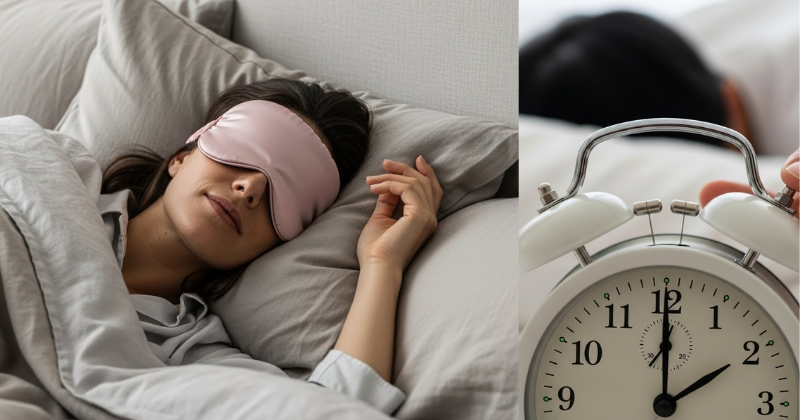
Do you ever feel like you’re doing everything right—managing stress, exercising, eating well—yet you still wake up feeling groggy, or find yourself staring at the ceiling at 3 AM? If you’re ready to stop counting sheep and start enjoying truly deep, restorative sleep, you’re in the right place. This comprehensive guide provides 10 Proven Tips to Help You Sleep Better at Night, focusing on practical, science-backed adjustments to your routine and environment. We will help you transform your nights and discover the secrets to consistent, high-quality rest. Remember, improving sleep is an achievable wellness topics goal, and you have the capability to succeed in taking control of your rest!
🛑 Important Disclaimer
Important Disclaimer: This article is for informational purposes only and should not replace professional advice. For health-related topics, consult healthcare providers. For financial or legal matters, seek qualified professional guidance. For safety procedures, verify current best practices and local regulations. Individual results may vary, and personal circumstances should always be considered when implementing any suggestions.
😴 Section 1: Foundation First: The Science of Your Sleep Cycle
To effectively use the 10 Proven Tips to Help You Sleep Better at Night, we must first build confidence with basic concepts about the mechanisms that govern when and how you fall asleep—namely, your circadian rhythm.
H3: Building Confidence with Basic Concepts: Circadian Rhythm and Melatonin
Your sleep-wake cycle is governed by your internal biological clock, the circadian rhythm, which is heavily influenced by light.
- The Light/Dark Cue: Exposure to light signals your brain to be awake. Darkness triggers the release of melatonin, the hormone that signals to your body it’s time to sleep.
- Consistency is King: The most effective way to improve sleep is by establishing a predictable rhythm. This process emphasizes gradual progress over quick fixes.
H3: Addressing Common Concerns: Stimulants and Sleep Quality
Many people don’t realize how common daily habits sabotage their ability to sleep better at night.
- The Caffeine Cut-Off: Caffeine has a half-life of about 5 hours, meaning that 5 hours after consumption, half of it is still in your system. We recommend a strict caffeine cut-off time (usually 6-8 hours before bed) to ensure your body is truly ready for rest.
- The Alcohol Effect: While alcohol might make you feel drowsy, it fragments the second half of your night and suppresses REM sleep (the restorative, dream stage). This is why a drink can make you fall asleep quickly but often leads to waking up feeling unrefreshed.
🌙 Section 2: Core Methods: Tips 1-4 for Pre-Bed Preparation
The first four of the 10 Proven Tips to Help You Sleep Better at Night focus on controlling your exposure to stimuli and winding down effectively.
Tip 1: Stick to a Strict Schedule (Timing and Planning Considerations)
This is the single most powerful tip for improving your sleep.
- Actionable Language: Go to bed and wake up at the same time every day, including weekends. This trains your circadian rhythm to operate smoothly.
- Practical Tips and Shortcuts: If you must deviate, limit your weekend “sleep-in” to no more than one hour past your usual wake-up time.
Tip 2: Implement a Digital Sunset (The Blue Light Barrier)
Blue light from phones, tablets, and TVs suppresses melatonin production, actively telling your brain it’s daytime.
- Actionable Language: Power down all screens at least 60 minutes before bed.
- General Lifestyle/Casual Tips: If you must read on a device, use blue-light-blocking glasses or set the screen to “Night Mode” (which shifts the color temperature to a warmer spectrum).
Tip 3: Create a Consistent Wind-Down Ritual (Self-Care)
Your brain needs a bridge between the busy day and sleep. A self-care ritual signals that transition.
- Actionable Language: Dedicate $30 \text{-} 45$ minutes before bed to non-stimulating activities.
- Real-World Scenarios: This could be reading a physical book, gentle stretching, listening to calming music, or taking a warm bath. Avoid anything stressful, stimulating, or engaging, such as checking work emails or discussing heavy topics.
Tip 4: Watch Your Evening Intake (Hydration and Digestion)
What you consume in the evening directly impacts your ability to sleep better at night.
- Actionable Language: Avoid heavy, spicy, or fatty meals within 2-3 hours of bedtime, as your body working hard to digest can prevent deep sleep.
- Practical Tips: Limit liquids in the hour before bed to reduce nighttime trips to the bathroom.
❄️ Section 3: Advanced Strategies: Tips 5-7 for Environmental Control
These three tips focus on leveraging your sleep environment—your bedroom—to optimize conditions for deep rest. This is an expert-level insight into making the most of your Home Tips & DIY space.
Tip 5: Keep It Cool (The Temperature Sweet Spot)
Your body’s core temperature needs to drop slightly to initiate and maintain sleep.
- Expert-Level Insights: Research shows the optimal ambient temperature for sleep is surprisingly cool, generally between $60^{\circ} \text{F}$ and $67^{\circ} \text{F}$ ($15.5^{\circ} \text{C}$ and $19.5^{\circ} \text{C}$).
- Creative Solutions: If you tend to run hot, use breathable, natural fiber sheets (like linen or cotton) and layered blankets you can easily kick off.
Tip 6: Embrace the Darkness (Total Blackout)
Light pollution—even tiny lights from chargers or alarm clocks—can disrupt melatonin production.
- Actionable Language: Make your room as dark as possible. Use blackout curtains or blinds.
- Ways to Customize Approach: Cover or remove any LED lights on electronics. If complete darkness is impossible or undesirable, wear a comfortable sleep mask.
Tip 7: Manage Sound (The Power of White Noise)
The quietest room isn’t always the best for sleep; consistent sound is often better than sudden noise.
- Expert-Level Insights: The brain processes sudden changes in noise, even while asleep.
- Practical Examples: Use a fan or a white noise machine to mask disruptive external sounds (traffic, neighbors) and create a constant, soothing auditory blanket.
🧘 Section 4: Troubleshooting: Tips 8-9 for When You Can’t Sleep
Even with the best preparation, there will be times when you wake up or can’t fall asleep. These two practical troubleshooting tips offer solutions for common nighttime obstacles.
Featured Snippet Potential: “What should I do if I wake up in the middle of the night and can’t fall back asleep?”
If you wake up in the middle of the night and can’t fall back asleep after 15-20 minutes, the best strategy is to get out of bed and go to another room. Staying in bed and stressing about not sleeping can reinforce the psychological link between your bed and wakefulness. Go to a dimly lit room and engage in a quiet, non-stimulating activity (like reading a very boring book or doing gentle stretches) until you feel genuinely drowsy. Then, return to bed. This offers an alternative approaches solution to overcome anxiety.
Tip 8: Tame the Restless Mind (Mental Wind-Down)
One of the most frequent obstacles to sleep better at night is an overly active mind reviewing the day or planning the next.
- Preventive Measures: Incorporate a “Brain Dump” earlier in the evening. Spend 5 minutes writing down your to-do list, worries, or thoughts for the next day. This moves the thoughts from your mental space to the paper.
- Encouragement for Setbacks: If you wake up and your mind starts racing, try a simple, supportive, non-judgmental language technique like 4-7-8 breathing: Inhale for 4 seconds, hold for 7 seconds, and exhale for 8 seconds. This naturally calms the nervous system.
Tip 9: Re-Evaluating the Nap Strategy (Daytime Sleep)
Naps can be fantastic, but poor timing or length can sabotage nighttime sleep.
- Practical Troubleshooting Tips: Limit naps to 20-30 minutes (the power nap duration) and take them before 3 PM. Longer or later naps can steal crucial “sleep pressure” needed to fall asleep that night. If you’re struggling to sleep better at night, consider eliminating naps entirely until your nighttime rhythm is restored.
🚀 Section 5: Maximizing Results: Tip 10 and Next Level Habits
The final, tenth tip and these next level tips are about long-term success and sustainable lifestyle changes.
Tip 10: Leverage Morning Light (Your Circadian Regulator)
This is a powerful expert-level insight into resetting your internal clock.
- Show How to Build Upon Basic Success: As soon as you wake up, expose yourself to bright light (ideally natural sunlight) for 10-15 minutes. This sends a powerful “wake up” signal to your brain, cementing your wake-up time and ensuring your body starts the melatonin release process effectively that evening.
- Maintenance and Long-Term Considerations: Consistent morning light exposure is one of the most effective, non-pharmaceutical ways to regulate your sleep cycle and inspire continued growth and learning in sleep hygiene.
Next Level Tips for Deep Sleep
- Suggest Complementary Strategies: Magnesium Supplementation: Magnesium is involved in hundreds of bodily functions, including regulating neurotransmitters that directly relate to sleep. Taking a magnesium glycinate supplement (known for high absorption and gentleness on the stomach) an hour before bed can promote muscle relaxation and mental calm. (Internal Linking Opportunity: Find our guide on “The Best Forms of Magnesium for Sleep.”)
- The Power of Exercise: Regular physical activity (ideally 30 minutes of moderate exercise daily) significantly improves sleep quality. However, avoid intense workouts within 2-3 hours of bedtime, as raising your core temperature too close to sleep time can be counterproductive.
✅ Conclusion: Your Capability to Achieve Restful Sleep
You have now been empowered with the 10 Proven Tips to Help You Sleep Better at Night. By implementing these actionable language strategies—from managing your light exposure to mastering the cool bedroom environment—you are actively participating in a sustainable lifestyle change that will yield profound benefits for your health and energy.
Remember, the goal isn’t immediate perfection, but gradual progress. You have the capability to succeed and transform your nights into deep, restorative resting periods.
Which of these 10 Proven Tips—setting a cooler temperature or committing to a digital sunset—will you implement tonight to sleep better at night?