Discover the early warning signs of low estrogen, a critical hormone for women’s health, and learn how to recognize changes that may affect your physical and emotional well-being.
Estrogen is more than just a reproductive hormone—it plays a vital role in bone health, cardiovascular function, cognitive performance, and overall metabolic balance. Yet, many women remain unaware of the subtle changes that signal declining estrogen levels. Recognizing these early warning signs can empower women to make informed lifestyle choices, seek medical guidance, and maintain long-term health. This article explores the 12 most common indicators of low estrogen and provides evidence-based insights to help women safeguard their well-being.
Section 1: What Is Estrogen and Why Is It Crucial for Women?
Estrogen is a primary female sex hormone produced mainly by the ovaries, though small amounts are also secreted by the adrenal glands and fat tissue. It regulates the menstrual cycle, supports fertility, and maintains the health of reproductive tissues. Beyond reproduction, estrogen has systemic effects, influencing cardiovascular health, bone density, brain function, and skin integrity.
H3: The Broader Role of Estrogen
Estrogen contributes to the elasticity of skin, the maintenance of bone mass, and even modulates mood through interactions with neurotransmitters such as serotonin and dopamine. When levels drop, either due to menopause, premature ovarian insufficiency, or other medical conditions, women may experience both visible and internal health changes.
Section 2: How Does Low Estrogen Affect the Menstrual Cycle?
One of the earliest signs of declining estrogen is a change in menstrual patterns.
- Irregular Periods: Cycles may become longer, shorter, or sporadic.
- Missed Periods: Amenorrhea can occur when estrogen drops significantly.
- Heavy or Light Bleeding: Altered uterine lining thickness can change the volume of menstrual flow.
These changes can indicate hormonal imbalance long before other physical symptoms become noticeable.
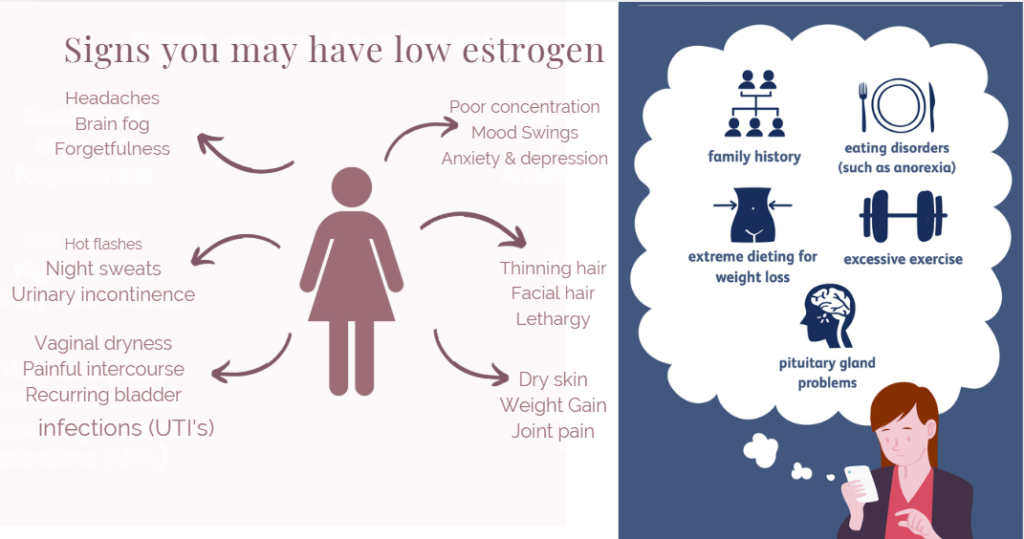
Section 3: Which Physical Symptoms Indicate Low Estrogen?
Estrogen deficiency manifests in multiple bodily systems.
- Hot Flashes and Night Sweats: Sudden surges of heat and perspiration are classic menopausal symptoms tied to estrogen decline.
- Vaginal Dryness: Thinning vaginal tissues and reduced lubrication can lead to discomfort during intercourse.
- Sleep Disturbances: Low estrogen can disrupt melatonin and cortisol rhythms, contributing to insomnia or fragmented sleep.
- Fatigue and Low Energy: Diminished estrogen impairs mitochondrial function, affecting cellular energy production.
Recognizing these patterns early can help women manage symptoms proactively.
Section 4: How Does Low Estrogen Influence Mental and Emotional Health?
Estrogen is integral to brain function and emotional regulation.
- Mood Swings and Irritability: Fluctuating estrogen can affect serotonin and GABA pathways, increasing emotional lability.
- Memory Lapses: Some women report “brain fog” or difficulty concentrating when estrogen levels drop.
- Anxiety and Depression Risk: Chronic low estrogen may increase vulnerability to mood disorders, especially during perimenopause.
Cognitive and emotional changes often accompany physical symptoms, highlighting estrogen’s systemic importance.
Section 5: Which Signs Affect Skin, Hair, and Nails?
Estrogen helps maintain collagen production, skin hydration, and hair follicle health.
- Dry, Thinning Skin: Reduced collagen leads to sagging and fine lines.
- Hair Thinning or Loss: Estrogen supports hair growth cycles; deficiency can accelerate shedding.
- Brittle Nails: Weakened keratin formation may cause fragile, splitting nails.
External changes often provide visible cues of internal hormonal shifts.
Section 6: How Does Low Estrogen Impact Bone and Cardiovascular Health?
Estrogen protects bones and cardiovascular tissue.
- Bone Density Loss: Decreased estrogen accelerates bone resorption, increasing fracture risk and osteoporosis.
- Cardiovascular Changes: Low estrogen may elevate LDL cholesterol, decrease HDL, and contribute to arterial stiffness.
- Joint Pain: Reduced estrogen can affect synovial fluid, leading to discomfort and stiffness.
Early recognition and intervention, including lifestyle strategies and supplementation, can mitigate long-term risks.
Section 7: Lifestyle and Environmental Factors That Influence Estrogen Levels
Several factors can exacerbate estrogen decline or mimic its effects:
- Age and Menopause: Natural decline occurs in the late 40s and 50s.
- Stress and Cortisol: Chronic stress can suppress estrogen production.
- Nutrition: Low-fat diets, insufficient phytoestrogens, and nutrient deficiencies may impact estrogen balance.
- Environmental Toxins: Endocrine-disrupting chemicals in plastics, cosmetics, and processed foods can affect estrogen signaling.
Understanding these factors helps women adopt habits that support hormone balance.
Section 8: What Steps Can Women Take to Address Low Estrogen?
Recognizing signs of low estrogen is the first step; proactive measures can help maintain health and quality of life.
- Consult Healthcare Providers: Blood tests and medical evaluation determine whether intervention is needed.
- Dietary Support: Include phytoestrogen-rich foods (soy, flaxseeds, legumes) and maintain adequate protein and healthy fats.
- Exercise: Weight-bearing and resistance training improve bone density and cardiovascular health.
- Sleep and Stress Management: Adequate rest and mindfulness practices support hormone regulation.
- Medical Interventions: Hormone replacement therapy (HRT) or bioidentical hormones may be considered under professional guidance.
Regular monitoring and individualized strategies optimize physical and emotional well-being.
Conclusion: Early Recognition Empowers Women’s Health
Low estrogen manifests across physical, cognitive, and emotional domains. By recognizing changes such as menstrual irregularities, fatigue, mood shifts, and skin or hair changes, women can take proactive steps to maintain hormone balance. Combining medical guidance, dietary strategies, and lifestyle modifications provides the best approach to mitigating symptoms and safeguarding long-term health.
Your body communicates through these subtle signals—listening and responding with informed choices can preserve energy, vitality, and overall well-being.
Important Disclaimer
This article is for informational purposes only and should not replace professional medical advice. If you suspect low estrogen or experience concerning symptoms, consult a qualified healthcare provider. Individual results may vary, and all interventions should be personalized to your health status.