Are you feeling off but can’t pinpoint why? Discover the 12 signs of low estrogen and learn how to navigate these hormonal shifts to reclaim your vibrant energy today!
Hormones are the silent conductors of your body’s orchestra, and estrogen is undoubtedly one of the lead performers. While often associated primarily with reproductive health, estrogen actually influences everything from your brain function to the strength of your bones. When levels begin to dip—whether due to menopause, stress, or other health factors—the “music” starts to sound a bit discordant. You might experience a range of frustrating symptoms that leave you feeling like a stranger in your own skin.
But here is the good news: your body is incredibly communicative. By learning to identify the 12 signs of low estrogen, you can unlock the door to better self-care and targeted wellness strategies. This guide is designed to empower you with knowledge, helping you transform confusion into a clear plan for hormonal harmony. We will explore the subtle and obvious red flags, providing you with the authority to advocate for your health. Let’s embark on this journey to achieve a balanced, energized lifestyle together!
Foundation: What is Estrogen and Why Does It Drop?
To truly understand hormonal shifts, we first need to build confidence in the basic science. Estrogen is not a single hormone but a group of chemically similar hormones, including estrone, estradiol, and estriol. It is produced primarily in the ovaries, but your adrenal glands and fat tissues also contribute to the mix. It regulates the menstrual cycle, protects the heart, and keeps your skin elastic.
Why Levels Fluctuate
It is completely natural for estrogen to change throughout your life. The most common cause of a significant drop is perimenopause and menopause. However, low levels can also be triggered by excessive exercise, eating disorders, or issues with the pituitary gland. Addressing these concerns early is the best way to ensure long-term health.
The Role of Balance
Hormonal health is rarely about a single number; it is about the relationship between estrogen and other hormones like progesterone. When this balance is disrupted, your body sends out signals—some subtle and some quite loud. Knowing what to look for is the first step toward discovering your path to wellness.
Reassurance for Your Journey
If you are noticing changes, please know that you are not alone. Millions of women navigate these shifts every year. Modern wellness offers countless simple techniques to relax and heal the body and restore balance, making this a transition you can manage with grace and vitality.
The Core List: 12 Signs of Low Estrogen to Watch For
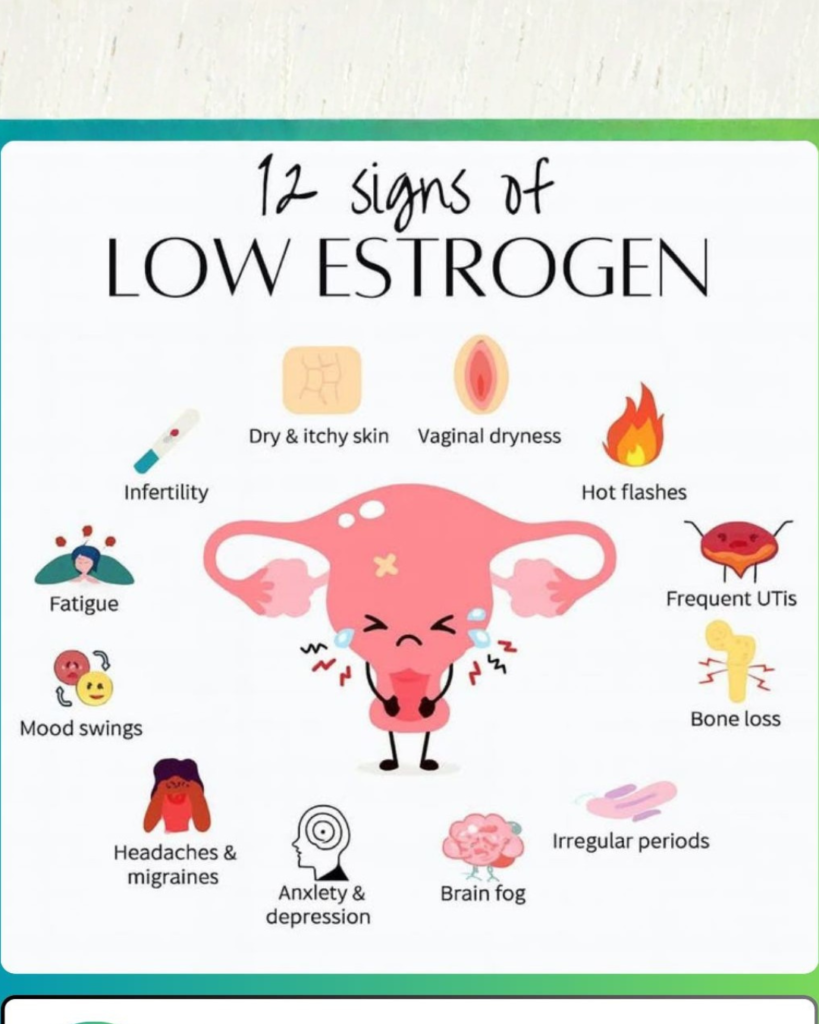
Let’s break down the most common physical and emotional indicators. Recognizing these symptoms allows you to move into a proactive “manager” role for your health.
1. Irregular or Missed Periods
This is often the first red flag. Estrogen is responsible for thickening the uterine lining; when it’s low, your cycle may become unpredictable, lighter, or stop altogether.
2. Hot Flashes and Night Sweats
Perhaps the most famous sign! Low estrogen affects the hypothalamus—the body’s thermostat—causing it to overreact to slight changes in temperature.
3. Mood Swings and Irritability
Estrogen is closely linked to serotonin, the “feel-good” brain chemical. When estrogen drops, serotonin often follows, leading to sudden bouts of sadness or frustration.
4. Brain Fog and Memory Lapses
Do you feel like your “mental engine” is stalling? Estrogen helps maintain the parts of the brain responsible for memory and focus. Low levels can make you feel uncharacteristically forgetful.
5. Sleep Disturbances
Insomnia isn’t just about stress. Estrogen helps regulate sleep cycles, and its decline often leads to waking up frequently or having trouble falling asleep.
6. Breast Tenderness
While often associated with high estrogen, a sharp drop can also cause the breast tissue to lose density and become sensitive or sore.
7. Frequent Urinary Tract Infections (UTIs)
Estrogen keeps the lining of the urethra healthy. Low levels can thin this lining, making it easier for bacteria to take hold.
8. Skin Changes and Dryness
Estrogen stimulates collagen and oils. Without it, you may notice more wrinkles, sudden acne, or overall dry, itchy skin.
9. Headaches or Migraines
Many women experience “hormonal headaches” during times of estrogen fluctuation, especially right before their period or during perimenopause.
10. Weight Changes (Especially Around the Middle)
Low estrogen can shift where your body stores fat, often moving it from the hips to the abdomen. It can also slow down your metabolism.
11. Vaginal Dryness and Discomfort
This is a very common but often unspoken symptom. Estrogen maintains the lubrication and elasticity of vaginal tissues.
12. Weakened Bones
Estrogen works with calcium and Vitamin D to keep bones strong. Persistent low levels can increase the risk of fractures and decreased bone density.
Advanced Strategies: Pro Tips for Hormonal Support
Once you’ve identified the signs, the next step is taking expert-level action. You can customize your approach to satisfy your body’s unique needs through lifestyle and nutrition.
- Prioritize Phytoestrogens: These are plant-based compounds that can weakly mimic estrogen in the body. Foods like organic soy, flaxseeds, and chickpeas are excellent additions to your diet. (For more on food-body connections, check out [What Your Cravings Really Mean]!)
- Master Stress Management: Chronic stress produces cortisol, which can “steal” the raw materials your body needs to make estrogen. Implementing [simple techniques to relax and heal the body] is not just a luxury; it is a hormonal necessity.
- Optimize Your Sleep Environment: Since sleep is a major struggle, focus on “sleep hygiene.” Keep your room cool (65°F-68°F), use blackout curtains, and consider [diy shower steamers] with lavender to calm your nervous system before bed.
- Strength Training: To combat the risk of bone loss, incorporate weight-bearing exercises. Lifting weights or using resistance bands sends a signal to your bones to stay dense and strong.
Troubleshooting: Common Challenges and Obstacles
Navigating hormonal health can feel like a maze. Here is how to handle frequent obstacles with confidence and prevent setbacks.
“I’m too young for this to be menopause.” It is a common misconception that low estrogen only happens in your 50s. Perimenopause can begin in your late 30s or early 40s. Additionally, high stress or intense athletic training can lower estrogen at any age. Don’t dismiss your symptoms based on the calendar!
“The symptoms are so vague; I’m not sure if it’s hormones.” The best way to troubleshoot is by keeping a “Hormone Journal.” Track your symptoms, your cycle, and your stress levels for three months. Patterns will emerge that provide much-needed clarity for you and your healthcare provider.
“I’m worried about the long-term effects.” Preventive measures are your best friend. If you notice signs like bone aches or frequent UTIs, speak with a professional about bone density scans or topical treatments. Early intervention is the key to achieving a vibrant future.
Maximizing Results: Featured Snippet Optimization
What are the most common signs of low estrogen? The most frequent indicators include irregular periods, hot flashes, night sweats, and mood changes. Many women also report brain fog, vaginal dryness, and a sudden increase in UTIs. If you are experiencing several of these symptoms simultaneously, it may be a sign of a hormonal imbalance that requires a focus on nutrition, stress management, or professional consultation.
Maintenance and Long-Term Success
Building upon your initial success requires consistency. Think of your hormones as a garden—they need regular tending.
- Internal Linking Opportunity: Just as you might use [diy aroma stones] to keep your environment calm, you should use “internal” tools like a consistent bedtime and a nutrient-dense diet.
- Stay Curious: Hormonal health science is always evolving. Stay empowered by reading current research and listening to your body’s daily feedback.
Conclusion
Recognizing the 12 signs of low estrogen is a transformative step in your wellness journey. You have moved from wondering why you feel “off” to having a roadmap for your body’s internal landscape. By addressing these signs through self-care, nutrition, and professional guidance, you can reclaim your vitality and sense of self.
Remember, you have the capability to succeed and thrive through every stage of life. Hormonal shifts are a natural part of being a woman, but they don’t have to define your quality of life. Use the empowering message of this guide to advocate for yourself and achieve the balance you deserve. You’ve got this!
Would you like me to create a 7-day “Hormone Balance” meal plan to help support your estrogen levels naturally?
Important Disclaimer: This article is for informational purposes only and should not replace professional advice. For health-related topics, consult healthcare providers. For financial or legal matters, seek qualified professional guidance. For safety procedures, verify current best practices and local regulations. Individual results may vary, and personal circumstances should always be considered when implementing any suggestions.