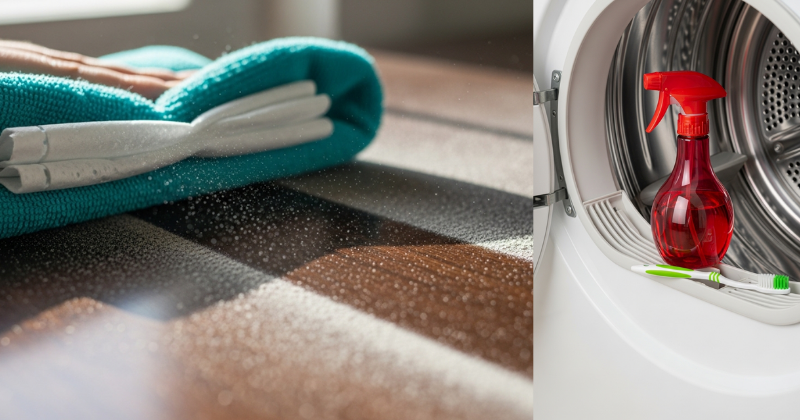
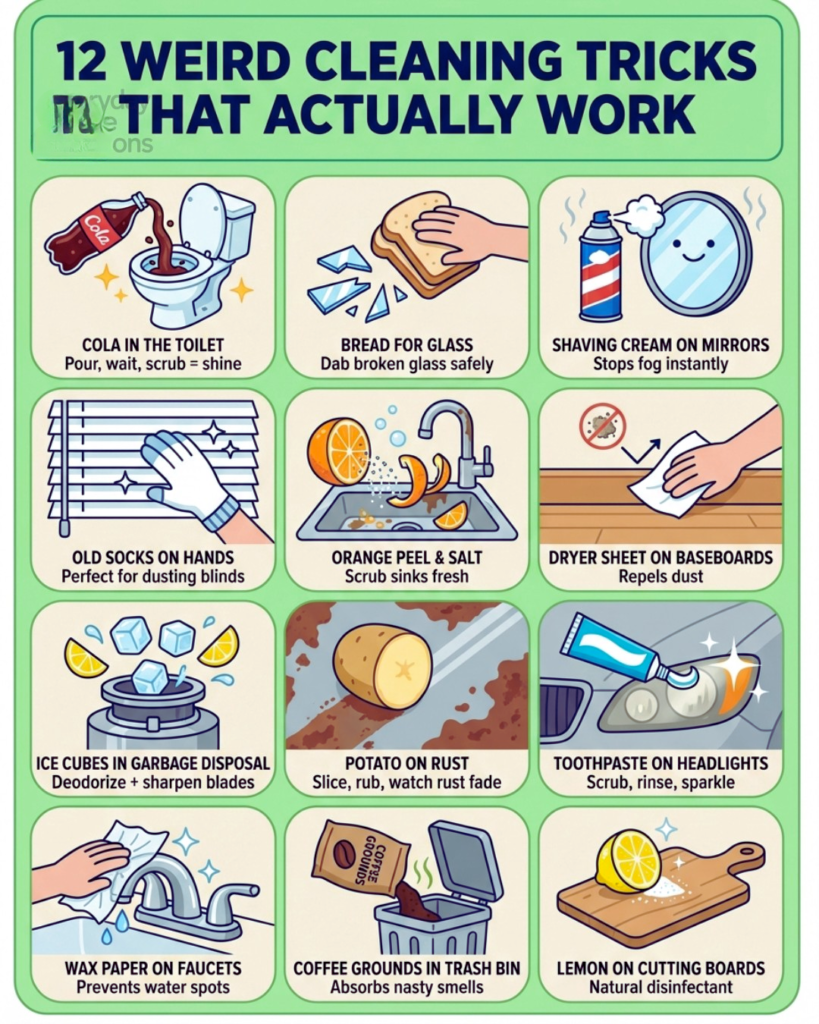
The most effective cleaning solutions often aren’t the expensive specialty products marketed through aggressive advertising campaigns — they’re unexpected household items whose cleaning properties emerge from basic chemistry that’s been validated through decades of practical use and, increasingly, through controlled testing. These 12 unusual cleaning tricks leverage the chemical and physical properties of common household substances including bread (for delicate surface cleaning through gentle abrasion), shaving cream (as a surfactant-rich stain remover), newspaper (for streak-free glass through cellulose fiber properties), and other surprising materials that clean as effectively as or better than purpose-formulated commercial products. Each method works through identifiable mechanisms — acid-base reactions, surfactant emulsification, physical abrasion, or solvent action — making them genuine solutions rather than folk remedy speculation. You’ll discover why these unconventional approaches succeed where conventional methods sometimes fail, and you’ll gain practical protocols for applying them safely and effectively across your home’s most challenging cleaning problems.
The Chemistry Behind Unconventional Cleaning Solutions
Understanding why unexpected items clean effectively requires examining the fundamental chemical and physical processes underlying all cleaning: dissolution, emulsification, chemical reaction, and mechanical action.
Surfactants, Solvents, and Mechanical Action
Cleaning fundamentally involves removing unwanted substances from surfaces through one or more mechanisms. Surfactants (surface-active agents) are molecules with both hydrophilic (water-loving) and hydrophobic (water-hating) regions that position themselves at the interface between oil and water, reducing surface tension and allowing oils to emulsify into water for removal. Common soaps and detergents are surfactants, but many unexpected household items contain surfactant compounds — shaving cream, for instance, is essentially a foam-stabilized surfactant preparation originally designed for lubricating razors but equally effective at lifting stains.
Solvents dissolve specific substances through molecular interaction — water dissolves polar compounds, alcohols dissolve both polar and some nonpolar substances, and oils dissolve other oils (“like dissolves like” principle). Many unusual cleaning tricks exploit unexpected solvent properties: vodka’s ethanol content makes it effective for dissolving certain inks and adhesive residues, while mayonnaise’s oil content dissolves sticky price tag residue.
Mechanical action — physical scrubbing or abrasion — removes material through friction. The unconventional aspect involves using materials with just-right abrasive properties: soft enough not to scratch the underlying surface but textured enough to dislodge dirt. White bread, rice, and even pencil erasers fall into this category.
Acid-Base Chemistry in Household Cleaning
Many tough cleaning problems involve deposits or stains that respond to pH manipulation. Mineral deposits (calcium carbonate, calcium sulfate) dissolve in acids — explaining why vinegar, citric acid, and even ketchup (which contains acetic acid) remove hard water stains and rust. Grease and protein-based stains break down in alkaline conditions — explaining why baking soda, which produces mildly alkaline solutions, effectively tackles organic stains.
The key insight is that the active chemical isn’t always in the form you’d expect. Ketchup cleans copper through its vinegar content, not through any special “ketchup magic.” Understanding the actual active ingredient helps you apply the method correctly and troubleshoot when results vary.
Tricks 1-4: Kitchen and Food-Based Cleaning Methods
Trick 1: White Bread for Cleaning Delicate Surfaces and Artwork
White bread’s soft, slightly sticky texture makes it surprisingly effective for cleaning delicate surfaces that can’t withstand moisture or abrasive scrubbing — particularly oil paintings, non-washable wallpaper, and silk lampshades.
The mechanism: Fresh white bread (crusts removed) has a soft, pliable crumb with just enough tackiness to lift surface dust, fingerprints, and light grime without scratching or moisture damage. The gluten proteins and starches create gentle adhesive properties that pick up particles without leaving residue.
Application protocol: Remove the crust from a fresh slice of white bread. Knead the bread crumb into a ball, working it until it becomes pliable and slightly tacky. Gently roll the bread across the surface using light pressure — the bread will visibly darken as it picks up dirt. When one section of bread becomes saturated with dirt, discard it and use a fresh piece. This method is particularly valuable for conservators cleaning artwork and antiques where traditional wet cleaning would cause irreversible damage.
Trick 2: Ketchup for Copper and Brass Polishing
Ketchup’s combination of acetic acid (from vinegar), citric acid (from tomatoes), and mild abrasives makes it remarkably effective at removing the tarnish (copper oxide and copper carbonate) that develops on copper and brass through atmospheric oxidation.
The mechanism: The acids in ketchup dissolve the tarnish layer through acid-base reaction: copper oxide reacts with acetic acid to form copper acetate (soluble in water) plus water, effectively removing the dull green-brown tarnish and revealing the shiny metallic copper beneath. The tomato pulp provides very gentle abrasive action that assists in removing stubborn deposits without scratching the metal.
Application protocol: Apply a generous layer of ketchup to tarnished copper or brass. Allow it to sit for 5-10 minutes for light tarnish, or up to 30 minutes for heavy tarnish. Rub gently with a soft cloth or sponge in circular motions, then rinse thoroughly with warm water and dry immediately with a clean towel. For items with deep crevices (ornate candlesticks, detailed hardware), use an old toothbrush to work the ketchup into the details before rinsing.
Trick 3: Rice for Cleaning Inside Narrow-Neck Bottles and Vases
Cleaning the interior of narrow-neck containers — vases, decanters, bottles — challenges traditional scrubbing methods since brushes often can’t reach or adequately contact all interior surfaces. Raw rice provides an ingenious solution through its gentle abrasive properties.
The mechanism: Dry rice grains act as tiny scrubbers that reach all interior surfaces when the container is shaken vigorously. The angular shape and hard texture of rice provide sufficient abrasion to dislodge mineral deposits, residue, and light staining without scratching glass. Combined with a small amount of soapy water or vinegar, the rice creates a self-agitating cleaning system.
Application protocol: Add 2-3 tablespoons of dry rice to the bottle or vase. Add 1/4 cup of warm water plus a drop of dish soap (for organic residue) or a tablespoon of white vinegar (for mineral deposits). Seal the opening with your palm or a stopper and shake vigorously for 2-3 minutes, ensuring the rice mixture reaches all interior surfaces. The water and rice will become visibly dirty as they remove deposits. Pour out the mixture, rinse thoroughly with clean water, and repeat if necessary for heavily soiled containers.
Trick 4: Mayonnaise for Removing Water Rings and Sticky Residue
Mayonnaise’s oil content makes it effective for two distinct cleaning applications: removing white water rings from wood furniture (where water has penetrated the finish) and dissolving sticky adhesive residue from price tags and labels.
The mechanism: For water rings, the oil in mayonnaise penetrates the finish and displaces the trapped moisture that creates the white clouding. For sticky residue, the oil dissolves the adhesive’s petroleum-based compounds through the “like dissolves like” principle — oil-based substances dissolve other oil-based substances.
Application protocol for water rings: Apply a generous amount of full-fat mayonnaise directly to the water ring. Let it sit for several hours or overnight — the extended contact time allows the oil to penetrate and the moisture to wick out. Wipe away the mayonnaise with a clean cloth, buff the area to restore the finish, and apply furniture polish if needed. For stubborn rings, repeat the process.
Application protocol for adhesive residue: Apply mayonnaise to cover the sticky area completely. Let sit for 10-15 minutes, then wipe away along with the softened adhesive. The oil breaks down the adhesive’s polymer structure, making it easy to remove without the harsh solvents in commercial adhesive removers.
Tricks 5-8: Unexpected Fabric and Upholstery Solutions
Trick 5: Shaving Cream for Carpet and Upholstery Stain Removal
Shaving cream (the foam type, not gel) contains a rich concentration of surfactants similar to those in carpet cleaning solutions, making it surprisingly effective for removing fresh stains from carpets and upholstery.
The mechanism: Shaving cream’s surfactant molecules surround and lift stain particles, while the foam delivery system provides extended contact time and prevents over-wetting (which can damage carpet backing or create water stains on upholstery). The lubricating agents that facilitate smooth razor glides also help lift stains from fabric fibers.
Application protocol: Blot fresh spills immediately with clean towels — never rub, which drives the stain deeper into fibers. Apply white shaving cream (avoid colored or scented varieties which may leave their own stains) directly to the stain, covering it completely. Allow to sit for 5-10 minutes, then blot away with a damp white cloth, working from the outside of the stain toward the center. Rinse by blotting with clean water, then blot dry with towels. For oil-based stains, this method works remarkably well because shaving cream is specifically designed to emulsify oils.
Trick 6: Vodka as a Fabric Refresher and Odor Neutralizer
Vodka’s high alcohol content (typically 40% ethanol) makes it effective for refreshing fabrics that can’t be washed — curtains, lampshades, delicate garments, and upholstered furniture — by killing odor-causing bacteria and allowing absorbed odors to evaporate.
The mechanism: Ethanol is both an antimicrobial agent (killing odor-causing bacteria through protein denaturation and membrane disruption) and a solvent (dissolving some odor compounds and allowing them to evaporate as the alcohol evaporates). Unlike water-based fabric refreshers, vodka’s high alcohol content means it evaporates quickly without leaving moisture that could damage delicate fabrics or promote mildew.
Application protocol: Pour vodka into a spray bottle (use the cheapest vodka available — expense doesn’t improve cleaning efficacy). Lightly mist the fabric surface — don’t saturate, just create a light even coating. Hang items in a well-ventilated area to dry. The alcohol smell dissipates completely as it evaporates, taking absorbed odors with it. This method is particularly effective for refreshing suits, formal wear, and vintage clothing between professional cleanings.
Trick 7: Tennis Ball in the Dryer for Fluffing Down Items
This widely-known trick of adding clean tennis balls to the dryer when washing down jackets, comforters, and pillows genuinely works through mechanical action that commercial dryer balls replicate.
The mechanism: As the dryer tumbles, the tennis balls bounce against the down items, breaking up clumps of down that tend to aggregate when wet, redistributing the fill evenly, and restoring loft. The repeated impacts simulate hand-fluffing but with greater frequency and consistency than manual manipulation could achieve.
Application protocol: Add 2-3 clean tennis balls to the dryer with freshly washed down items. Use low to medium heat (high heat can damage down’s natural oils) and expect longer drying times than typical loads — down items often require 2-3 drying cycles to dry completely. Check periodically and manually break up any remaining clumps. The tennis balls will make significant noise, but this confirms they’re providing the mechanical action needed. This method prevents the expense of professional down cleaning and maintains the item’s insulating properties.
Trick 8: Ice Cubes for Removing Carpet Dents from Furniture
Heavy furniture leaves compressed dents in carpet that persist even after the furniture is moved. Ice cubes provide a simple solution through controlled moisture reintroduction that allows carpet fibers to relax and expand.
The mechanism: Carpet fibers (typically nylon, polyester, or wool) compress under sustained weight and lose their resilient structure. Introducing moisture causes the fibers to swell and regain some elasticity, while the slow melting of ice provides just enough water to achieve this without over-wetting the carpet or pad underneath.
Application protocol: Place one or two ice cubes directly on the carpet dent. Allow them to melt completely (typically 30-60 minutes depending on room temperature and ice cube size). As the fibers absorb the melt water, blot excess moisture with a towel, then use your fingers or a fork to gently lift and separate the carpet fibers, encouraging them to return to their original upright position. For deep dents, repeat the process a second time. Once the carpet is fully dry, vacuum to restore texture.
Tricks 9-12: Surprising Solutions for Tough Problems
Trick 9: Newspaper for Streak-Free Window and Mirror Cleaning
Newspaper has been used for glass cleaning for generations, and while the practice predates understanding of the mechanism, the effectiveness is genuine and measurable.
The mechanism: Newspaper’s tightly packed cellulose fibers have just-right absorbency — enough to absorb cleaning solution and moisture without leaving lint, but not so much that they become saturated and ineffective. The slight texture provides gentle polishing action. The ink (particularly in older newspapers) may contribute minor solvent properties, though modern soy-based inks likely contribute less than the petroleum-based inks of the past.
Application protocol: Spray glass cleaner (or a vinegar-water solution) onto the window or mirror surface. Crumple newspaper into a ball and wipe the surface using circular motions, then finish with vertical strokes to remove any remaining streaks. Flip to a fresh section of newspaper as areas become saturated. The newspaper will leave a bit of newsprint on your hands but will leave the glass exceptionally clear and streak-free. This method is particularly effective because newspaper doesn’t leave the lint that paper towels often do.
Trick 10: Denture Tablets for Cleaning Water-Stained Containers and Toilets
Denture cleaning tablets contain a combination of sodium bicarbonate (baking soda), citric acid, and oxygen-releasing compounds (sodium perborate or sodium percarbonate) — essentially a pre-formulated cleaning system for removing stains and deposits.
The mechanism: When dissolved in water, denture tablets produce an effervescent reaction releasing oxygen bubbles that provide mechanical scrubbing action at the microscopic level. The citric acid dissolves mineral deposits, the alkaline components break down organic stains, and the oxygen bleaches discoloration without harsh chlorine. This combination makes them remarkably effective for removing tea and coffee stains, hard water deposits, and toilet bowl rings.
Application protocol for containers: Fill the stained container with warm water and drop in 1-2 denture tablets. Allow to fizz and soak for 15-30 minutes (overnight for stubborn stains). The effervescence will loosen deposits, and the water will turn visibly brown or yellow as stains dissolve. Pour out the solution and rinse thoroughly.
Application protocol for toilets: Drop 2-3 denture tablets into the toilet bowl. Allow to fizz and work for 20-30 minutes, then scrub with a toilet brush and flush. The combination of chemical action and effervescence makes this nearly effortless compared to scrubbing with traditional cleaners.
Trick 11: Lemon and Salt for Cutting Board Deodorizing and Stain Removal
Wood and bamboo cutting boards absorb odors and stains from pungent foods (garlic, onions, fish). The lemon-salt combination provides both deodorizing and gentle scrubbing through natural components.
The mechanism: Lemon’s citric acid provides antimicrobial properties (killing odor-causing bacteria), mild bleaching (reducing stain intensity), and pleasant fragrance (masking remaining odors). Salt provides gentle abrasive scrubbing without scratching the wood, while its hygroscopic properties draw moisture and absorbed odors from the wood fibers.
Application protocol: Sprinkle coarse salt (kosher or sea salt) liberally across the cutting board surface. Cut a lemon in half and use it as a scrubber, squeezing as you scrub to release juice across the surface. The salt will form an abrasive paste with the lemon juice. Scrub the entire surface, paying extra attention to stained or odorous areas. Allow the lemon-salt mixture to sit for 5-10 minutes, then scrape off the salt and rinse the board with warm water. Dry immediately and thoroughly. Apply mineral oil or cutting board conditioner to maintain the wood once completely dry.
Trick 12: Club Soda for Fresh Stain Removal on Fabrics and Carpets
Club soda’s reputation as a stain remover is well-established, and while the mechanism is simpler than often portrayed, the effectiveness is genuine for fresh stains.
The mechanism: Club soda is carbonated water with added minerals (sodium bicarbonate, potassium bicarbonate, potassium sulfate). The carbonation provides gentle mechanical agitation through CO₂ bubbles that help lift stain particles from fabric fibers, while the minerals contribute mild alkalinity that assists with breaking down organic stains. The primary value is in the immediate flushing action — diluting the stain before it sets — rather than any magical chemical property.
Application protocol: For fresh spills on fabric or carpet, pour club soda directly onto the stain immediately. Blot (don’t rub) with a clean white cloth, working from the outside toward the center. The goal is to flush the stain out of the fabric while preventing it from spreading. Continue blotting and adding fresh club soda until the cloth comes away clean. For red wine, coffee, and juice stains caught immediately, this method can prevent permanent staining that would otherwise require professional cleaning.
Maximizing Success With Unusual Cleaning Tricks
Testing on Inconspicuous Areas
The most important principle when using any unusual cleaning method is testing first on a hidden or inconspicuous area. Apply the method to a small, hidden section and observe for any adverse reactions (discoloration, texture changes, finish damage) before proceeding to visible areas. This 30-second precaution prevents irreversible damage to valuable items.
Understanding When to Choose Conventional Methods
These unusual tricks work genuinely and effectively for their specific applications, but they’re not universally superior to conventional methods. Use conventional cleaning products for: heavily soiled areas requiring aggressive surfactants, disinfection applications requiring antimicrobial efficacy, and situations where time constraints make the convenience of purpose-formulated products valuable. The unusual tricks excel when: you lack conventional supplies, conventional methods have failed, or the item requires gentle treatment that commercial products don’t provide.
Building Your Natural Cleaning Toolkit
Creating a home cleaning arsenal centered on versatile household items provides flexibility, cost savings, and reduced chemical exposure. Stock: white vinegar (acid-based cleaning), baking soda (alkaline cleaning and abrasion), dish soap (surfactant for grease), hydrogen peroxide (oxidizing bleach), rubbing alcohol (solvent and antimicrobial), salt (abrasive), and lemons (acid plus fragrance). These seven items, combined with the unusual tricks described above, address 90% of household cleaning needs at a fraction of commercial product costs.
Conclusion
These 12 unusual cleaning tricks succeed not through magic but through fundamental chemistry and physics — surfactant emulsification, acid-base reactions, gentle mechanical abrasion, and solvent dissolution. White bread cleans delicate surfaces through tackiness without moisture damage. Ketchup’s acids dissolve copper tarnish. Rice provides accessible abrasion inside narrow containers. Mayonnaise’s oil content lifts water rings and dissolves adhesives. Shaving cream delivers concentrated surfactants perfect for fabric stains. Vodka’s ethanol kills odor-causing bacteria. Tennis balls mechanically fluff compressed down. Ice cubes rehydrate compressed carpet fibers. Newspaper’s cellulose fibers polish glass streak-free. Denture tablets combine effervescence with cleaning chemistry. Lemon and salt deodorize and scrub cutting boards. Club soda’s carbonation flushes fresh stains. Apply these methods with the same careful attention you’d give any cleaning task — test first, use appropriate technique, and recognize when conventional methods remain the better choice. Your cleaning challenges now have solutions that work because the science is sound, not because they’re trendy.