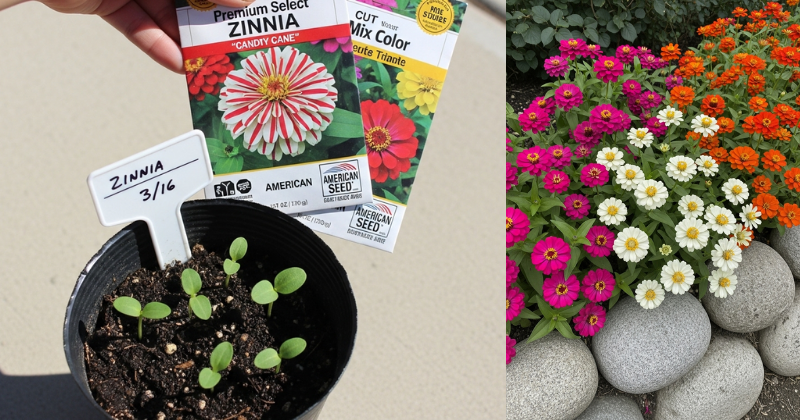
Zinnias are the ultimate sun-loving annuals, famous for their vibrant, cheerful blooms that last all summer long. Learning the 7 SMART WAYS TO GROW THE BRIGHTEST ZINNIAS IN POTS is an achievable gardening project that brings spectacular color to any patio, balcony, or small space. This guide promises to transform your container gardening skills, enabling you to nurture these cheerful flowers from tiny seeds to towering floral displays. We’ll cover everything from smart variety selection to advanced watering techniques, empowering you to discover the deep satisfaction of creating a stunning, high-impact flower garden right on your doorstep.

🌻 Foundation First: Zinnia’s Needs and Container Basics
Zinnias (Zinnia elegans) are inherently easy to grow, but maximizing their potential in a container requires understanding their fundamental requirements.
H3: Building Confidence with Basic Concepts: Sunlight and Soil
Zinnias thrive on heat and light. Getting these two factors right is the bedrock of successful container growth.
- Sunlight is Non-Negotiable: Zinnias are native to Mexico and demand full sun—at least 6 to 8 hours of direct, intense sunlight daily. Less sun leads to tall, weak, floppy stems and fewer, duller blooms.
- Soil and Drainage: In containers, drainage is essential. Do not use garden soil, which compacts easily in pots. Use a high-quality, well-draining potting mix that is labeled for containers. Pro Tip: Mixing in a handful of perlite can further build confidence in drainage capacity.
- Encouraging Reassurance for Beginners: The beauty of growing zinnias in pots is mobility! If your spot isn’t sunny enough, you can simply move the pot—a perfect achievable solution for beginners.
H3: Addressing Common Concerns: Choosing the Right Pot
The pot size directly impacts the plant’s final size and ability to retain moisture. This is a crucial element among the 7 smart ways to grow the brightest zinnias in pots.
- Size Matters: Tall varieties (like ‘Benary’s Giant’ or ‘Queen Lime’) need large containers, at least $10$ to $12$ inches in diameter and depth, to support their root systems. Dwarf varieties (like ‘Zahara’ or ‘Profusion’) can tolerate $6$ to $8$-inch pots.
- Color and Material (Seasonal Considerations): Terracotta pots look classic but dry out quickly, especially in hot summers. Dark plastic or glazed ceramic pots retain moisture better, but dark colors can heat the soil excessively. If using dark pots in extreme heat, ensure they are placed where the afternoon sun won’t scorch the roots.
💧 Section 2: Core Methods: The 7 Smart Ways to Grow the Brightest Zinnias
Implementing these 7 smart ways to grow the brightest zinnias in pots focuses on maximizing bloom production and achieving those vibrant colors that define the flower.
1. Smart Variety Selection (Actionable Language)
For the best performance in containers, choose varieties known for compact growth and disease resistance.
- Actionable Language: Choose ‘Profusion’ or ‘Zahara’ series for incredible disease resistance and continuous blooming in smaller pots. For cut flowers, use ‘Benary’s Giant’ in large barrels or tubs.
2. The Direct-Sow Strategy (Practical Tips)
Zinnias hate having their roots disturbed.
- Practical Tip: Sow seeds directly into the final container outdoors, two weeks after the last expected frost date, when the soil is reliably warm. Plant seeds about $\frac{1}{4}$ inch deep.
3. The Potting Mix Boost (Nutrient Shortcut)
Containers require more nutrients than in-ground gardens.
- The Shortcut: Before planting, mix a slow-release granular fertilizer (balanced, like 10-10-10) directly into the potting mix. This provides a steady base of food for the entire growing season.
4. The Critical Thinning Step
Overcrowding in a pot leads to poor air circulation, which is the primary cause of powdery mildew.
- Step-by-Step Guidance: Once seedlings have two sets of true leaves, thin them ruthlessly. Leave only the strongest plants, spacing them 6 to 8 inches apart for tall varieties or 4 to 6 inches for dwarf types. This preventive measure ensures proper airflow.
5. Water Deeply, but Infrequently
Container zinnias need consistent moisture, but hate soggy feet.
- Watering Technique: Water thoroughly until you see water run freely from the drainage holes. Wait until the top 1 to 2 inches of soil feel dry before watering again. Do not let the pot sit in a saucer full of water—this is a common cause of root rot.
6. The “Pinch” for Bushier Plants
This technique transforms a leggy seedling into a bushy, bloom-covered specimen.
- The Pinch: When the zinnia seedling reaches about 8-10 inches tall and has 4-5 sets of leaves, use clean scissors to snip off the main stem just above a leaf node. The plant will then produce two side shoots, resulting in more flowers and a sturdier plant.
7. Deadheading is Mandatory
Deadheading (removing spent flowers) is crucial for encouraging continuous bloom production.
- Actionable Language: Snip the spent flower head off just above the first set of healthy leaves below the bloom. If you allow the old flowers to go to seed, the plant will stop producing new blooms, believing its reproductive cycle is complete.
🐝 Section 3: Advanced Strategies: Feeding and Environmental Management
Once your zinnias are established using the core methods, these expert insights will push the color saturation and bloom volume to the next level.
H3: Precision Feeding for Peak Bloom
Zinnias are heavy feeders, especially when confined to a container.
- Creative Solutions: Supplement the slow-release fertilizer (Method 3) with a liquid fertilizer every 2-3 weeks, starting once the plant begins to bud. Choose a fertilizer high in phosphorus (the middle number on the NPK ratio, e.g., 10-15-10). This encourages flower production over foliage, resulting in brighter, more prolific blooms.
- Avoid Over-Nitrogen: Too much nitrogen (the first number) encourages lush green leaves at the expense of flowers, yielding a disappointing bloom display. Ways to customize approach: If your plant looks too leafy, cut back on feeding immediately.
H3: Maximizing Airflow and Pest Prevention
Powdery mildew is the number one enemy of zinnia brilliance.
- Pro Tip: Encourage experimentation with pot placement. Position your zinnia containers where they receive maximum cross-breeze. Do not crowd them against walls or other pots.
- Preventive Measure: Water only at the base of the plant. Wetting the foliage, especially in the evening, creates the perfect humid environment for fungal spores to develop, leading to white, dusty patches and dull-looking flowers.
🐛 Section 4: Troubleshooting and Common Challenges
Even when following the 7 smart ways to grow the brightest zinnias in pots, gardeners face issues. Be ready with these practical solutions.
Featured Snippet Potential: “Why are my potted zinnia flowers turning brown or yellow early?”
Your potted zinnia flowers are turning brown or yellow early, or the leaves are yellowing, likely due to a combination of inconsistent watering and nutrient deficiency (specifically nitrogen or magnesium). In containers, nutrients leach out rapidly. Ensure you are applying liquid fertilizer every 2-3 weeks and maintain a consistent, deep watering schedule without allowing the pot to sit in standing water.
Practical Troubleshooting Tips (Gardening Focus)
- Problem: Tall, skinny, weak plants that fall over (leggy).
- Obstacle: Lack of sufficient sunlight, or the plant wasn’t pinched early enough (Method 6).
- Solution: Alternative approaches: Move the container to a location with 2 more hours of direct sun. If the plants are already too tall, stake them gently and give them a “hard pinch” (cutting back up to $\frac{1}{3}$ of the stem length) to force branching.
- Problem: Flowers are small and dull compared to the seed packet pictures.
- Obstacle: Plant is root-bound in a pot that is too small (Section 1) or is severely lacking phosphorus/potassium.
- Solution: Repot the zinnia into a larger container, ensuring the roots are gently teased out if coiled. Immediately apply a high-phosphorus liquid fertilizer to stimulate better blooming.
- Problem: White, powdery patches on leaves (Powdery Mildew).
- Obstacle: Poor airflow and high humidity.
- Solution: If already established, remove the infected leaves immediately. Spray the remaining plant (avoiding hot midday sun) with a simple mixture of 1 teaspoon baking soda and 1 quart of water with a few drops of mild soap. Repeat weekly.
🦋 Section 5: Maximizing Results: Connection with Nature and Long-Term Tips
Beyond just beautiful blooms, growing zinnias in pots provides a vital connection with nature and enhances the ecosystem benefits of your outdoor space.
- Attracting Pollinators (Next Level Tip): Zinnia varieties with open, single flowers (not the densely packed pom-pom types) are magnets for butterflies, bees, and hummingbirds. By planting these, you actively inspire continued growth and learning about your local ecosystem.
- Maintenance and Long-Term Considerations: Plan for a continuous bloom cycle. Sow a second batch of seeds directly into the pots 3-4 weeks after the first batch. This suggests complementary strategies to ensure a fresh wave of blooms takes over when the initial plants begin to tire in late summer.
- Seed Saving (Cost-Saving Benefits): Allow a few of your healthiest, most vibrant flowers to remain on the plant until they dry and turn brown. Harvest the seeds from these spent heads for a free supply of next year’s zinnias, truly maximizing your cost-saving benefits. (Internal Linking Opportunity: Learn more about “Simple Flower Seed Saving Techniques.”)
✅ Conclusion: Your Capability to Nurture Brilliance
You are now fully equipped with the 7 SMART WAYS TO GROW THE BRIGHTEST ZINNIAS IN POTS, mastering everything from initial potting mix selection to the critical deadheading process. By focusing on sun, spacing, and consistent fertilization, you can nurture a spectacular and continuous floral display.
Embrace the vibrant colors and the ease of container gardening. Your capability to succeed in achieving zinnia brilliance is high, and your reward will be months of cheerful blooms.
Which of the 7 smart ways to grow the brightest zinnias in pots—the Critical Thinning Step or the Deadheading is Mandatory—will you prioritize to ensure spectacular blooms this season?