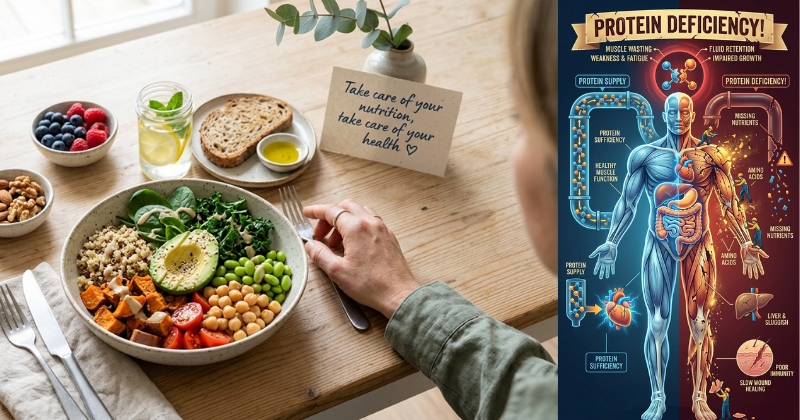
Feeling tired all the time, dealing with hair fall, or getting hungry again and again? It might not be just stress — it could be a sign of protein deficiency. Your body depends on protein every single day to repair, rebuild, and stay energized.
If you’ve been brushing off these symptoms as “normal,” this guide will help you understand what protein deficiency looks like, why it happens, and how you can fix it in a simple, sustainable way.
Why Protein Is So Important for Your Body
Protein isn’t just for athletes or bodybuilders. It’s a core building block of your body.
Every cell — from your hair to your muscles — relies on protein. It helps:
- Repair tissues
- Support muscle strength
- Produce enzymes and hormones
- Strengthen your immune system
- Keep you feeling full longer
Without enough protein, your body struggles to maintain these essential functions.
H3: Protein and Energy Levels
Protein helps stabilize blood sugar. When your meals lack protein, you may feel a quick energy spike followed by a crash. That constant fatigue? It might be your body asking for better balance.
H3: Protein and Hair Health
Hair is primarily made of a protein called keratin. Low protein intake can lead to increased hair shedding and slower growth.
H3: Protein and Hunger Control
If you’re hungry shortly after eating, your meals may be too carb-heavy and low in protein. Protein increases satiety hormones, helping you stay full longer.
Common Signs of Protein Deficiency
Protein deficiency doesn’t usually happen overnight. It shows up gradually.
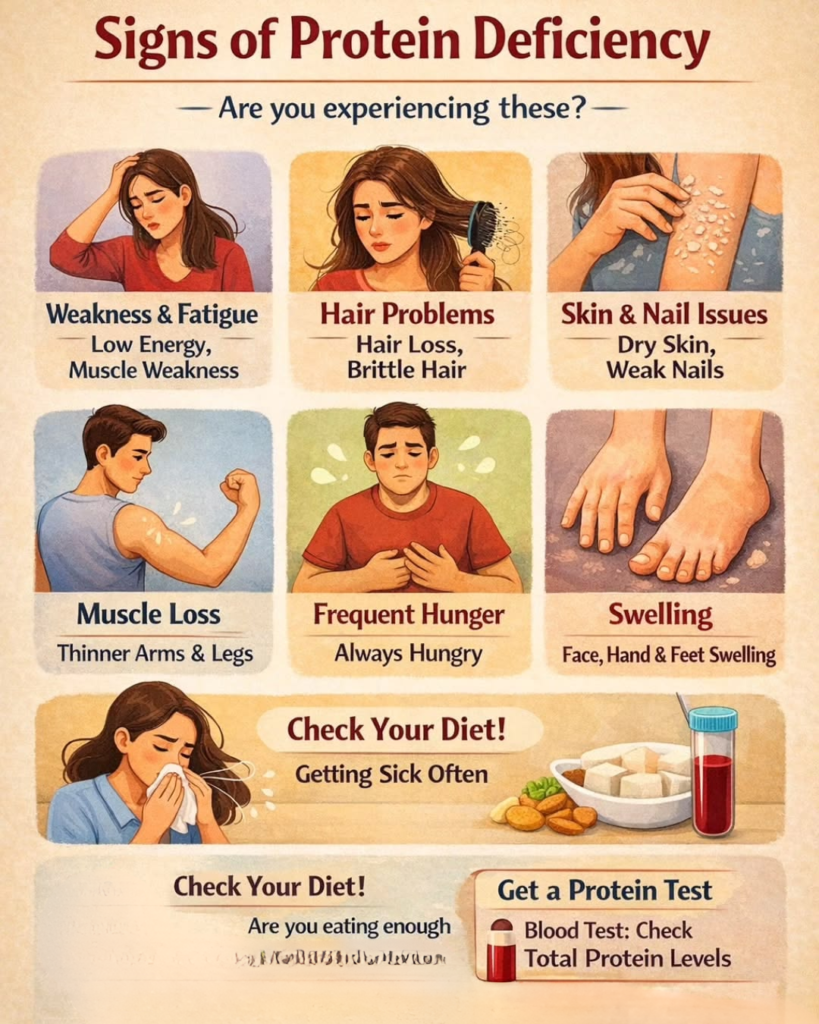
Here are some signs to watch for:
- Constant fatigue
- Frequent hunger
- Hair thinning or shedding
- Brittle nails
- Slow wound healing
- Muscle weakness
- Frequent infections
If several of these sound familiar, it may be time to evaluate your diet.
How Much Protein Do You Actually Need?
A common question is: How much protein is enough?
Most adults need approximately 0.8–1 gram of protein per kilogram of body weight daily. Active individuals may need more.
For example:
- A 60 kg person needs around 48–60 grams daily.
- A 70 kg person may need 56–70 grams daily.
Your needs can vary depending on age, activity level, pregnancy, or health conditions.
Best Sources of Protein
You don’t need complicated supplements to fix protein deficiency. Start with whole foods.
H3: Animal-Based Protein
- Eggs
- Chicken
- Fish
- Greek yogurt
- Milk
- Lean beef
These are complete proteins containing all essential amino acids.
H3: Plant-Based Protein
- Lentils
- Chickpeas
- Beans
- Tofu
- Quinoa
- Nuts and seeds
If you’re vegetarian, combining different plant proteins helps ensure you get all essential amino acids.
Simple Ways to Increase Protein Intake
You don’t need a full diet overhaul. Small adjustments make a big difference.
H3: Add Protein to Every Meal
Instead of:
Toast + tea
Try:
Toast + eggs or nut butter
Instead of:
Rice only
Try:
Rice + lentils or chicken
H3: Start Your Day with Protein
A protein-rich breakfast helps control hunger all day.
Examples:
- Eggs + whole grain toast
- Greek yogurt + seeds
- Oats + nuts + milk
H3: Smart Snacking
Swap chips for:
- Roasted chickpeas
- Boiled eggs
- Peanut butter on fruit
- Cottage cheese
Common Mistakes That Worsen Protein Deficiency
Many people unknowingly reduce protein intake by:
- Skipping meals
- Eating mostly refined carbs
- Fear of “high protein = weight gain”
- Following extreme restrictive diets
Protein does not automatically cause weight gain. In fact, it can support muscle health and healthy weight management.
How Long Does It Take to Feel Better?
Once you start increasing protein intake:
- Energy levels may improve within 1–2 weeks
- Hunger may stabilize within days
- Hair improvements may take 2–3 months (hair cycle takes time)
Consistency matters more than perfection.
When to See a Professional
If symptoms are severe or persistent, consult a healthcare provider. Blood tests can help rule out anemia, thyroid disorders, or other conditions that may mimic protein deficiency.
Building Sustainable Protein Habits
The goal isn’t extreme dieting. It’s balance.
Ask yourself:
- Does every meal include a protein source?
- Am I skipping breakfast?
- Am I relying too heavily on processed carbs?
Small, daily adjustments create long-term results.
Final Thoughts
Feeling tired, experiencing hair fall, and constant hunger are signals — not random problems. Your body communicates through symptoms.
Protein deficiency is common but fixable. With mindful food choices and balanced meals, you can restore energy, support hair health, and feel satisfied longer.
Start with one protein-rich meal today. Your body will thank you.
Important Disclaimer: This article is for informational purposes only and should not replace professional advice. For health-related topics, consult healthcare providers. Individual results may vary.