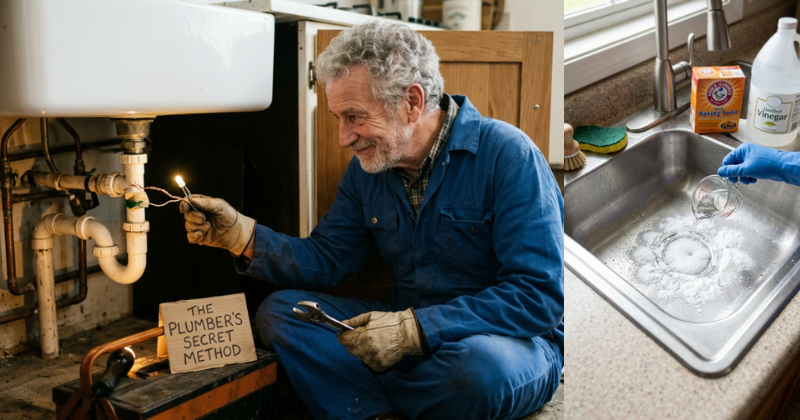
Introduction
Clogged sink? Slow drain? Bad smell coming from your pipes?
Before calling a plumber or using harsh chemical cleaners, there’s a simple method many people swear by—the baking soda sink trick.
It’s affordable, easy to do, and uses ingredients you probably already have at home.
In this article, you’ll learn:
- How the baking soda method works
- Why it helps with clogs and odors
- Step-by-step instructions
- When it works (and when it doesn’t)
- Common mistakes to avoid
Why Your Sink Gets Clogged
Your sink doesn’t clog overnight—it builds up over time.
Common Causes:
- Grease and oil buildup
- Food particles
- Soap residue
- Hair (especially in bathroom sinks)
These materials stick to the inside of pipes, slowly narrowing the flow of water.
Why Baking Soda Works
Baking soda (sodium bicarbonate) is a mild alkaline compound.
When combined with vinegar, it creates a fizzy reaction that helps:
- Break down grease
- Loosen debris
- Neutralize odors
This reaction can help clear minor clogs and freshen your drain.
The Baking Soda + Vinegar Reaction (Simple Science)
When baking soda meets vinegar:
- It produces carbon dioxide gas (bubbles)
- Creates pressure inside the pipe
- Helps dislodge buildup
While it’s not as strong as chemical cleaners, it’s safer and more eco-friendly.
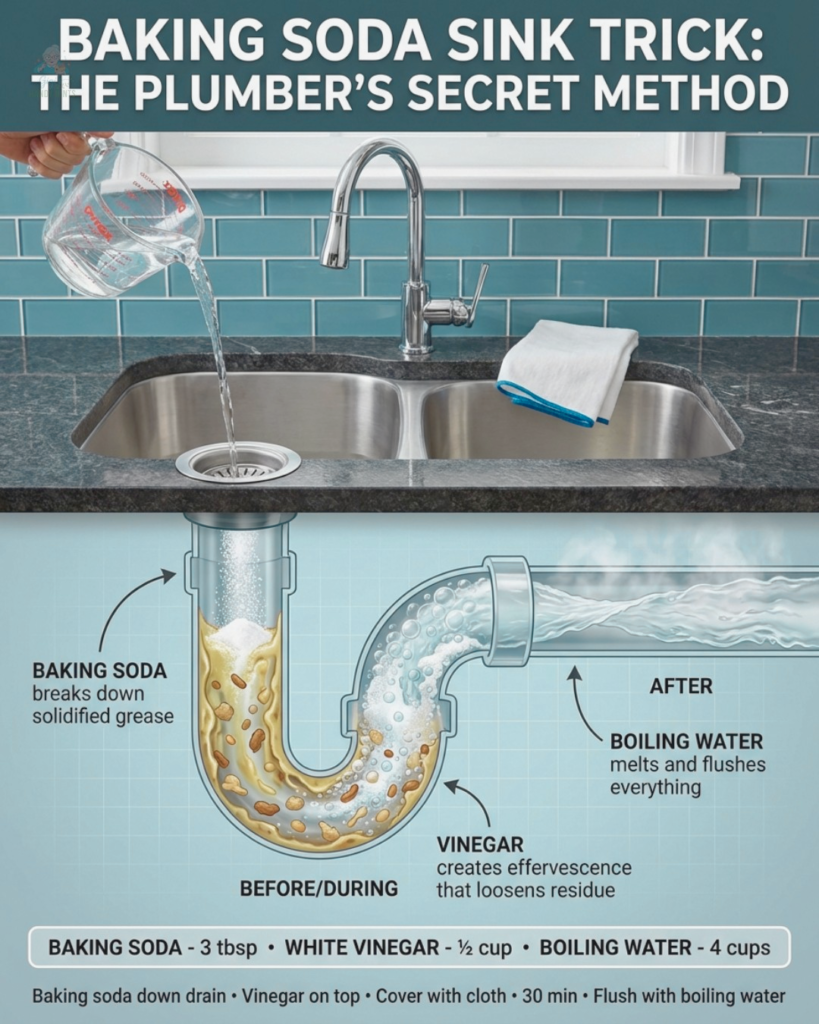
Step-by-Step: The Baking Soda Sink Trick
What You Need:
- ½ cup baking soda
- 1 cup vinegar (white vinegar works best)
- Boiling water
Step 1: Pour Baking Soda
Pour ½ cup of baking soda directly into the drain.
Try to get as much as possible inside the pipe.
Step 2: Add Vinegar
Slowly pour 1 cup of vinegar into the drain.
You’ll immediately see fizzing—this is the reaction working.
Step 3: Let It Sit
Let the mixture sit for 10–15 minutes.
This gives time for buildup to loosen.
Step 4: Flush with Hot Water
Pour boiling water down the drain to flush everything out.
When This Trick Works Best
This method is ideal for:
- Slow drains
- Light grease buildup
- Mild odors
- Preventive cleaning
When It Won’t Work
Be realistic—this is not a magic fix.
It may NOT work for:
- Severe clogs
- Solid blockages
- Deep pipe issues
In those cases, you may need:
- A plunger
- A drain snake
- Professional help
Extra Tips for Better Results
1. Use Hot Water First
Run hot water before starting to soften grease.
2. Repeat if Needed
For better results, repeat once or twice.
3. Do It Weekly for Prevention
Keeps your pipes clean and fresh.
Common Mistakes to Avoid
1. Using Cold Water
Hot water is essential to flush grease.
2. Expecting Instant Results
Sometimes it takes a couple of tries.
3. Mixing with Chemical Cleaners
Never combine natural methods with harsh chemicals.
4. Overusing Baking Soda
Too much can cause buildup instead of clearing it.
Natural Alternatives You Can Try
If baking soda alone isn’t enough:
- Salt + hot water (for grease)
- Lemon + baking soda (for odor)
These methods are also safe and effective for maintenance.
Is It Safe for Pipes?
Yes—this method is generally safe for most household plumbing.
It’s much gentler than commercial drain cleaners, which can damage pipes over time.
Conclusion
The baking soda sink trick is simple, effective, and budget-friendly.
While it won’t fix every clog, it’s a great first step for maintaining clean, fresh drains without harsh chemicals.
Try it regularly as part of your cleaning routine—and you might avoid bigger plumbing problems altogether.