Every morning, you face a choice at the shower dial that has more physiological consequence than most people realize. Cold water versus hot water — two dramatically different thermal stimuli that trigger distinct cascades of biological responses throughout your body. Understanding the science behind each option transforms this daily ritual from a matter of personal preference into a deliberate wellness decision. Whether you’re chasing faster muscle recovery, better skin health, improved mental resilience, or deeper relaxation, the temperature of your shower genuinely matters — and the research behind both options is more compelling than you might expect. This comprehensive guide breaks down exactly what cold and hot showers do to your body, when each delivers its greatest benefits, and how to intelligently combine both for optimal results.
The Physiology of Temperature: What Happens When Water Hits Your Skin
To understand why shower temperature matters, you first need to appreciate how profoundly the human body responds to thermal stimuli. Your skin contains approximately 3.5 million thermoreceptors — specialized sensory neurons that detect temperature changes and transmit signals to the hypothalamus, your brain’s central thermoregulation hub. Within seconds of cold or hot water contact, a coordinated systemic response unfolds involving the cardiovascular, endocrine, immune, and nervous systems simultaneously.
Cold Water: The Cascade of Physiological Responses
The moment cold water (typically defined as below 15°C/59°F) contacts your skin, thermoreceptors fire rapidly, triggering immediate peripheral vasoconstriction — the narrowing of blood vessels near the skin surface. This response serves a critical thermoprotective function: redirecting blood flow away from the periphery toward the body’s vital core organs to preserve core temperature. Your heart rate initially increases sharply (the “cold shock response”), blood pressure rises transiently, and breathing deepens involuntarily as the body mobilizes resources to maintain homeostasis.
Simultaneously, the sympathetic nervous system activates, releasing norepinephrine — a catecholamine with potent effects on alertness, mood, and metabolic rate. Research from the Thrombosis Research Institute in London documented a 200-300% increase in norepinephrine concentration following cold water immersion, a finding that explains the characteristic alertness and mood elevation cold shower users consistently report. Metabolically, cold exposure activates brown adipose tissue (BAT) — specialized thermogenic fat that burns energy to generate heat through a process called non-shivering thermogenesis, mediated by uncoupling protein-1 (UCP1).
Hot Water: Vasodilation, Relaxation, and Thermoregulatory Adaptation
Hot water (typically 38-42°C/100-108°F) produces the physiologically opposite response. Peripheral vasodilation occurs as blood vessels dilate to dissipate excess heat, increasing skin blood flow by up to 7-8 times resting levels. Core temperature rises modestly, parasympathetic nervous system tone increases, muscle tension decreases, and the hypothalamus triggers sweating as a secondary cooling mechanism. This combination of increased peripheral circulation, reduced sympathomuscular tone, and parasympathetic dominance produces the characteristic relaxation response associated with hot showers and baths.
Hot water also activates heat shock proteins (HSPs) — molecular chaperones that protect cells from thermal stress and assist in protein folding and repair. While research on HSP activation from shower-temperature hot water exposure remains less conclusive than from more extreme heat (sauna-level temperatures), regular moderate-heat exposure appears to promote mild HSP induction that may contribute to cellular resilience over time.
The Evidence-Based Benefits: Cold Shower vs Hot Shower Compared
Cold Shower Benefits: What the Research Actually Shows
The case for cold showers rests on a growing body of rigorous research, though it’s important to distinguish between well-supported findings and more speculative claims.
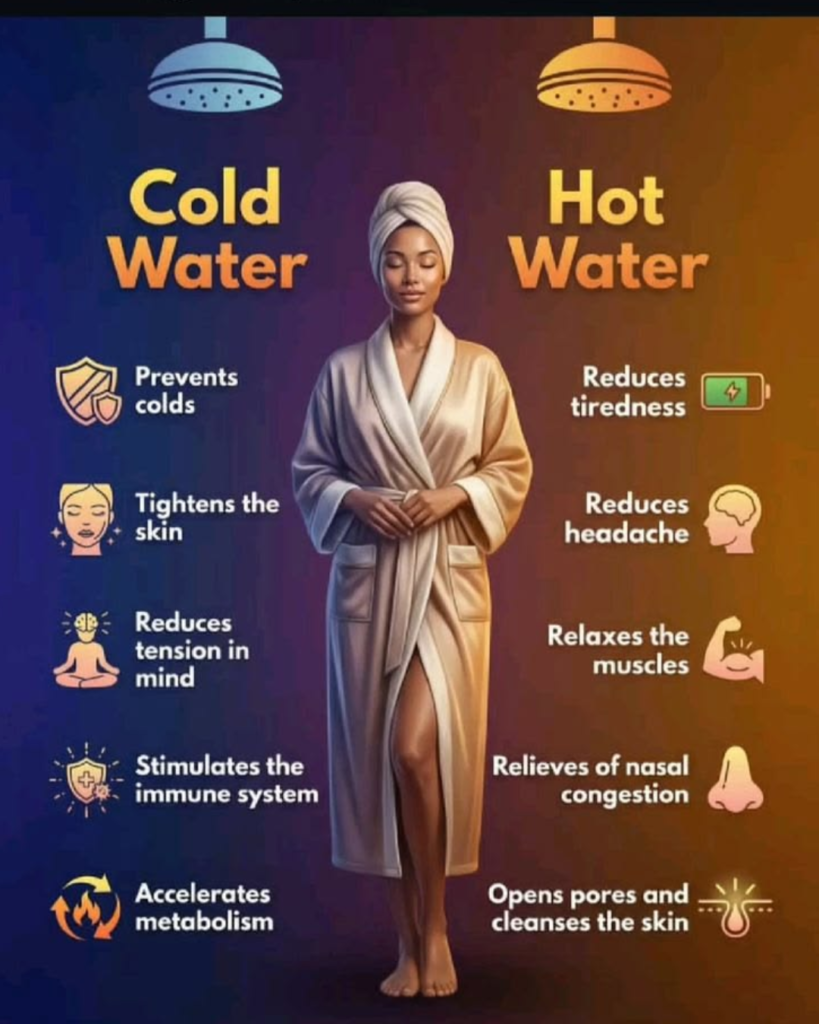
Mental Health and Mood Elevation. A landmark randomized controlled trial published in PLOS ONE (Buijze et al., 2016) — the Dutch “Cool Down” study involving 3,018 participants — demonstrated that individuals taking cold showers for 30-90 seconds after warm showers reported a 29% reduction in self-reported sick leave absence from work, alongside significant improvements in perceived quality of life and energy levels. The norepinephrine surge from cold exposure provides a neurochemical basis for mood improvement, and some researchers have proposed cold hydrotherapy as an adjunctive intervention for mild depression, though clinical trials specifically addressing this application remain limited.
Immune Function Enhancement. The same Dutch trial documented reduced sick day frequency in cold shower groups, suggesting immune benefits. Research on cold water swimmers in Prague (Prchal et al., 1998) documented elevated levels of lymphocytes, monocytes, and cytotoxic T-cells following repeated cold water exposure, indicating adaptive immune system enhancement with repeated cold stimulus. The proposed mechanism involves repeated mild physiological stress (hormesis) training the immune system’s regulatory response.
Muscle Recovery and Inflammation Reduction. Cold water immersion (CWI) post-exercise is one of the most extensively researched applications of cold hydrotherapy in sports science. Meta-analyses consistently document reduced delayed-onset muscle soreness (DOMS) and faster recovery of force production following CWI compared to passive recovery. The mechanism involves vasoconstriction reducing inflammatory mediator accumulation in exercised tissues, combined with reduced metabolic activity in cooled muscle reducing oxidative stress.
Skin and Hair Benefits. Cold water causes cutaneous vasoconstriction that temporarily tightens pores and reduces transepidermal water loss from the stratum corneum. It also smooths hair cuticle scales — the overlapping protective protein structures on each hair shaft — lying them flatter and increasing light reflection, which explains the increased shine and reduced frizz that cold water rinse users observe. These effects are real but temporary, resolving as tissue temperature normalizes.
Hot Shower Benefits: Therapeutic Value and Genuine Science
Hot showers deliver a distinct set of evidence-supported benefits that complement rather than duplicate cold shower effects.
Muscle Relaxation and Pain Relief. Heat therapy for musculoskeletal pain has one of the longest evidence bases in therapeutic medicine. Hot water increases tissue extensibility by reducing the viscosity of connective tissue and muscle, while simultaneously increasing local blood flow that delivers oxygen and nutrients to recovering tissue. A Cochrane systematic review on heat therapy for lower back pain documented significant pain reduction compared to placebo, establishing heat application as a first-line conservative treatment. Hot showers apply this therapeutic principle conveniently throughout the body.
Respiratory Benefits and Congestion Relief. Steam inhalation during hot showers liquefies mucus secretions in the upper respiratory tract, facilitating mucociliary clearance — the natural mechanism by which the respiratory epithelium removes pathogens and debris. While steam inhalation doesn’t treat underlying respiratory infections, it provides meaningful symptomatic relief during upper respiratory illness and can temporarily improve nasal airflow by reducing mucosal edema.
Sleep Quality Enhancement. Perhaps the most counterintuitive hot shower benefit involves sleep. Taking a hot shower 1-2 hours before bedtime accelerates sleep onset through a mechanism called distal vasodilation-mediated heat loss. The hot shower dilates peripheral blood vessels, allowing the body to rapidly dissipate heat and achieve the core temperature drop that the circadian system requires for sleep initiation. Research published in Sleep Medicine Reviews (Haghayegh et al., 2019) found that warm water immersion 1-2 hours before bed improved sleep onset latency by an average of 10 minutes and improved sleep quality ratings.
Skin Cleansing Effectiveness. From a dermatological standpoint, warm to moderately hot water is genuinely more effective at removing sebum, bacteria, and environmental pollutants from skin than cold water. The elevated temperature reduces the surface tension of oils, improving their solubility and removal by cleansing agents. However, temperatures above 40°C accelerate disruption of the skin’s lipid barrier — the lamellar body-derived lipid matrix between corneocytes that maintains hydration and barrier function — making excessively hot showers net-negative for skin barrier health with chronic use.
Which Shower Temperature Is Right for You? A Decision Framework
The “cold vs hot shower” question doesn’t have a single correct answer — it has a context-dependent answer based on your specific goals, timing, and individual physiology.
Matching Temperature to Purpose and Timing
Think of cold and hot showers as different pharmacological tools — each with specific indications and optimal timing. Cold showers deliver their greatest value in the morning (leveraging the norepinephrine-driven alertness benefit at peak utility), immediately post-exercise (capitalizing on vasoconstriction to reduce inflammation during the critical recovery window), and during periods when immune challenge is a priority. Hot showers serve best in the evening (triggering the sleep-facilitating temperature drop), after prolonged static postures (relieving muscle tension accumulated through the day), and during respiratory illness (utilizing steam’s mucociliary benefit).
The contrast shower — alternating between hot and cold in cycles — represents a third option combining benefits of both thermal stimuli. Typically performed as 2-3 minutes hot followed by 30-60 seconds cold for 3-5 cycles, contrast hydrotherapy exploits repeated vascular “pumping” — alternating vasodilation and vasoconstriction — that may enhance metabolic waste clearance from tissues more effectively than either temperature alone. Sports medicine practitioners commonly recommend contrast showers for recovery applications.
Individual Factors That Should Influence Your Choice
Several personal health factors meaningfully affect which shower temperature is appropriate. Individuals with cardiovascular conditions, hypertension, or Raynaud’s phenomenon should approach cold shower exposure cautiously and with medical guidance — the acute cardiovascular stress response to sudden cold immersion can be significant. People with eczema, psoriasis, or compromised skin barrier function generally tolerate lukewarm showers better than either extreme, as both very hot and very cold water can exacerbate barrier disruption and inflammatory flares. Pregnant individuals should avoid hot showers that significantly elevate core temperature, particularly during the first trimester.
Building a Smart Shower Practice: Practical Implementation
The Gradual Cold Adaptation Protocol
If cold showers currently feel unthinkable, the adaptation process is both physiologically sound and psychologically manageable when approached progressively. The cold shock response — the involuntary gasp and cardiovascular surge experienced during sudden cold water contact — diminishes substantially with repeated exposure through a process of habituation at the level of both peripheral thermoreceptors and central autonomic regulation.
Begin with your normal warm shower, then in the final 30 seconds, turn the temperature dial progressively cooler — not to maximum cold immediately, but to a temperature that feels distinctly uncomfortable rather than painful. Over 2-3 weeks, extend the cold portion to 60 seconds, then 90 seconds, simultaneously allowing the temperature to decrease further. Research on cold water adaptation suggests that meaningful physiological habituation occurs within 4-6 repeated exposures, with the most dramatic reduction in cold shock response occurring in the first 5 sessions.
Protecting Skin Barrier Regardless of Temperature
Both temperature extremes present skin barrier challenges that smart shower practice mitigates. Limit total shower duration to 5-10 minutes regardless of temperature — prolonged water exposure, even at neutral temperatures, removes protective epidermal lipids through simple aqueous extraction. Apply moisturizer within 3 minutes of exiting the shower while skin is still slightly damp, capitalizing on the occlusive effect that traps residual moisture in the stratum corneum. Use pH-appropriate cleansers (pH 4.5-5.5 matching skin’s natural acid mantle) that cleanse without disrupting the microbiome or stripping protective lipids.
Common Challenges and How to Overcome Them
The Cold Shower Mental Barrier. The greatest obstacle to cold shower practice is psychological rather than physiological. The anticipatory anxiety before a cold shower often exceeds the actual discomfort of the shower itself — a phenomenon well-documented in pain psychology research on expectation versus experience. A practical strategy: commit to just 15 seconds of cold at the end of your shower and focus entirely on slow, controlled breathing during exposure. Controlled breathing prevents the hyperventilation component of the cold shock response and creates a sense of agency over the experience, transforming cold shower from something that “happens to you” to something you actively manage.
Hot Shower Skin Dryness. If hot showers are leaving your skin tight, itchy, or flaky, the water temperature is almost certainly too high and duration too long. Reduce temperature to warm rather than hot (targeting 38°C/100°F rather than 42°C+) and reduce shower duration to under 8 minutes. These modifications preserve cleansing effectiveness while dramatically reducing barrier disruption. The post-shower moisturization step becomes even more critical — consider applying a ceramide-containing moisturizer within 2 minutes of stepping out to reinforce the barrier lipids that hot water has temporarily compromised.
Maximizing Long-Term Benefits: Building an Integrated Approach
The most sophisticated approach to shower temperature leverages both thermal stimuli strategically across your week rather than committing exclusively to one. Morning showers might conclude with 60-90 seconds of cold for alertness and immune benefit. Evening showers use moderately hot water and end 90 minutes before sleep for optimal circadian benefit. Post-workout showers implement contrast protocol or a cold finish for recovery. This periodized approach extracts maximum benefit from both temperature ranges while avoiding the chronic downsides of temperature extremes used indiscriminately.
Over months and years of consistent practice, the cumulative benefits compound meaningfully. Cold exposure repeatedly throughout weeks and months produces sustained increases in brown adipose tissue activity and cold tolerance. Regular heat exposure maintains cardiovascular flexibility and connective tissue extensibility. The combination builds physiological resilience — the capacity to maintain function and wellbeing across a broader range of environmental and physiological challenges — that represents genuine, measurable adaptation.
Conclusion
The cold versus hot shower debate resolves not into a winner but into a nuanced, evidence-based framework: each temperature stimulus delivers distinct, scientifically validated benefits through different physiological mechanisms. Cold showers excel for alertness, mood, immune priming, and post-exercise recovery. Hot showers deliver superior muscle relaxation, sleep facilitation, and respiratory relief. Your optimal approach depends on your goals, timing, and individual health context — and the most powerful strategy intelligently combines both. Start by adding just 30 seconds of cold to the end of your next shower and observe how your body responds. That single small experiment begins a practice with genuinely transformative potential.
Important Disclaimer: This article is for informational purposes only and should not replace professional advice. For health-related topics, consult healthcare providers. Individual results may vary, and personal circumstances should always be considered when implementing any suggestions.