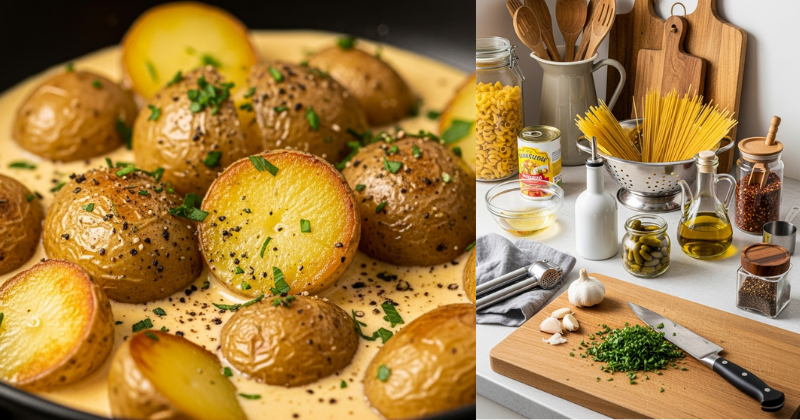
Salut les gourmands!
There exists a moment in French bistro kitchens, just as dinner service begins, when the scent of butter meeting garlic fills the air like an aromatic overture—a promise that something extraordinary is about to unfold. I first encountered this alchemy in a tiny restaurant in Lyon’s old quarter, where Madame Dupont, her apron dusted with flour and her hands moving with the confidence of fifty years’ practice, transformed humble baby potatoes into glossy, golden treasures bathed in a cream sauce so luscious it seemed to capture moonlight itself.
These creamy garlic sauce baby potatoes represent more than a side dish—they embody the French philosophy that simple ingredients, treated with respect and proper technique, transcend their modest origins to become something approaching culinary poetry. The baby potatoes, each no larger than a walnut, possess a delicate sweetness and creamy interior texture that larger potatoes cannot match. When pan-roasted until their skins blister and crisp, then enrobed in a sauce where garlic mellows into nutty sweetness and cream reduces to silken richness, they achieve a perfection that makes them equally suitable accompanying roasted chicken or standing alone as the evening’s star.
What I offer you today isn’t merely a recipe but an invitation into the tactile, aromatic world of French home cooking—where patience yields tenderness, where garlic transforms from pungent to sweet through gentle heat, where cream and butter conspire to create sauce that clings to each potato like liquid velvet. This dish demands neither exotic ingredients nor professional equipment, only attention, quality components, and willingness to let time work its magic on your stovetop.
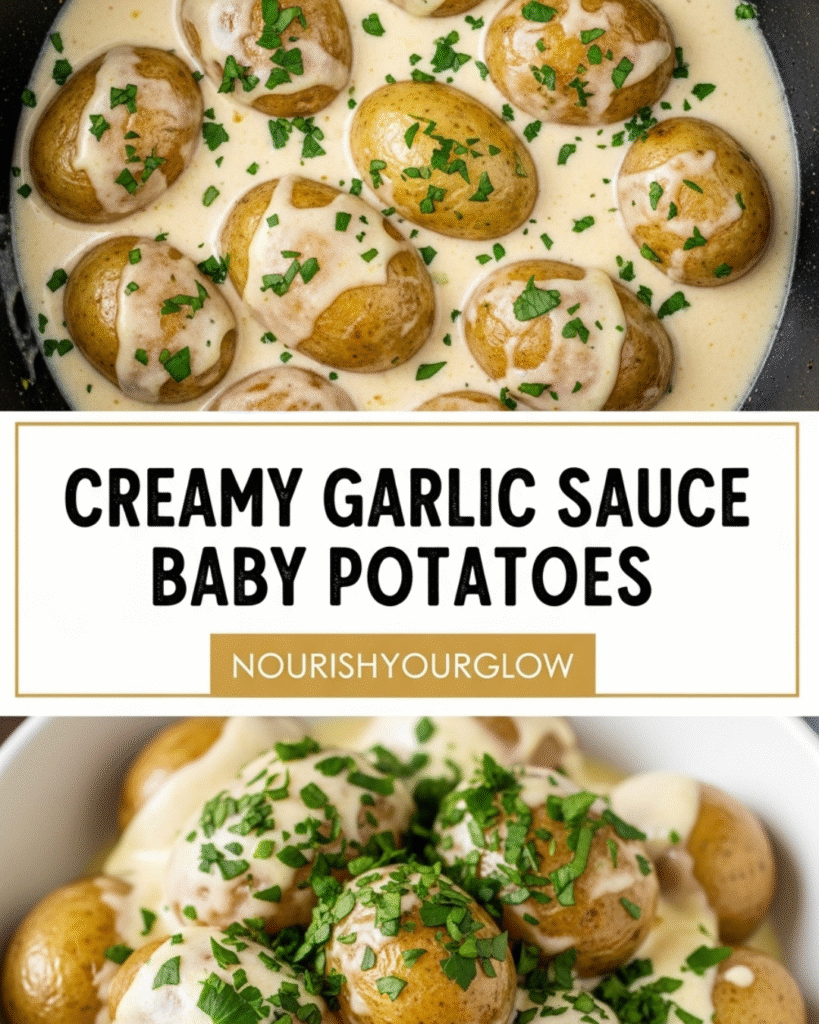
Présentation de la Recette: Understanding the Journey
Before we begin our culinary meditation, let’s establish the temporal and practical landscape of this dish that balances simplicity with sophistication.
Temps de Préparation: 10-15 minutes of mindful engagement—washing potatoes with intention, peeling garlic cloves while contemplating their journey from earth to your kitchen, gathering your mise en place with the precision of a painter arranging colors on a palette.
Temps de Cuisson: 35-45 minutes of transformative heat application, during which starches convert to sugars, proteins denature and recombine, and the Maillard reaction creates that golden exterior that whispers of caramelization and promises textural contrast against creamy interiors.
Temps Total: Approximately 50-60 minutes from raw ingredients to table-ready dish, though the actual active involvement comprises perhaps twenty minutes—the rest unfolds through the patient application of steady heat and watchful attention.
Portions: This recipe yields 4-6 servings as a substantial side dish, or serves 3-4 as a main course when paired with crusty bread and a simple green salad. The quantities scale beautifully—double for entertaining, halve for intimate dinners, adjust according to the rhythm of your household.
Niveau de Difficulté: Beginner-friendly with room for mastery. The techniques are straightforward and forgiving, yet executing them with precision—achieving that perfect balance between crispy exterior and tender interior, reducing cream to ideal consistency without breaking—separates competent cooking from transcendent results. Your first attempt teaches you the process; your third reveals the nuances that make this dish memorable.
The Soul of Baby Potatoes
Baby potatoes—whether fingerlings, new potatoes, or true petite varieties—possess characteristics that mature potatoes cannot replicate. Their thin, delicate skins require no peeling, saving labor while providing textural contrast and nutritional benefits (the skin contains significant fiber, potassium, and antioxidants). Their compact size means they cook evenly and quickly, developing caramelized exteriors before interiors overcook. Their naturally higher sugar content creates more pronounced caramelization, producing those golden-brown patches that catch light and promise crunch.
The cream sauce—deceptively simple in composition—represents classical French technique distilled to essentials. Heavy cream, when reduced, undergoes a transformation: water evaporates, milk proteins concentrate, butterfat emulsifies into silken cohesion. Garlic, mellowed through gentle cooking, releases allicin’s sharp bite and develops sweet, almost nutty complexity. Together, they create sauce that coats rather than drowns, enhances rather than obscures, elevates rather than overwhelms.
Ingrédients: The Elemental Foundation
Quality ingredients form the bedrock of this dish’s success. Each component plays essential roles in creating the harmony of flavors and textures that make these potatoes irresistible.
For the Potatoes:
- 2 pounds (900g) baby potatoes—the stars of our production, chosen with care for uniformity and quality
- 3 tablespoons unsalted butter (divided use)—richness and browning catalyst
- 2 tablespoons extra virgin olive oil—raising butter’s smoke point while adding fruity depth
- 1 teaspoon fine sea salt (plus more for seasoning)—the flavor awakener
- ½ teaspoon freshly cracked black pepper—warming spice that doesn’t overwhelm
- 2 sprigs fresh rosemary or thyme (optional but recommended)—aromatic enhancement connecting us to Mediterranean hillsides
For the Creamy Garlic Sauce:
- 6-8 large garlic cloves, minced or pressed—the aromatic foundation that transforms through cooking
- 1½ cups (360ml) heavy cream (35% fat minimum)—the sauce’s luxurious body
- ½ cup (120ml) chicken or vegetable stock—depth and savory undertones
- 2 tablespoons unsalted butter—final enrichment creating glossy finish
- ¼ cup (25g) freshly grated Parmesan cheese—umami depth and subtle tang
- 2 tablespoons fresh parsley, finely chopped—bright finish and color contrast
- 1 teaspoon fresh lemon juice—acidity balancing richness
- Salt and white pepper to taste—final seasoning adjustment
Ingredient Selection Philosophy:
Potato Considerations: Seek baby potatoes of relatively uniform size—consistency ensures even cooking. Varieties with waxy texture (red, fingerling, Yukon Gold babies) hold their shape better than starchy types. The skin should appear smooth, unblemished, without green tinges (indicating solanine accumulation from light exposure). If purchasing from farmers’ markets, ask about variety characteristics—some possess more pronounced earthiness, others offer subtle sweetness.
I’m particularly fond of fingerling potatoes for this preparation—their elongated shape provides more surface area for crisping, their buttery flavor requires minimal enhancement, and their elegant appearance elevates the dish’s visual appeal.
Cream Quality Matters: Heavy cream with higher fat content (36-40%) produces more stable, luscious sauce compared to lighter cream or half-and-half. The increased butterfat resists breaking when reduced and creates that characteristic silken texture defining French cream sauces. Avoid ultra-pasteurized cream when possible—the high-heat processing alters protein structures, affecting how cream reduces and emulsifies.
Garlic Transformation: Fresh garlic’s sharp, pungent character mellows dramatically through cooking. Raw garlic contains allicin—a sulfur compound creating its characteristic bite. Heat converts allicin into various organosulfur compounds with sweet, nutty, almost caramelized flavor profiles. The longer and gentler the cooking, the more pronounced this transformation. For this recipe, we’ll cook garlic just until fragrant and golden—enough to soften its edges without eliminating all complexity.
Herbs as Aromatic Architecture: Fresh rosemary or thyme, cooked alongside potatoes, release volatile oils (pinene, cineole, linalool) that infuse both potatoes and surrounding air with Mediterranean essence. These aromatics don’t merely flavor food but create anticipatory pleasure through scent—preparing your palate before the first bite reaches your lips.
Préparation: The Transformative Ritual
Cooking these creamy garlic sauce baby potatoes unfolds through distinct phases, each representing specific chemical and physical transformations that build toward the final harmonious dish.
Phase 1: Potato Preparation—Honoring the Foundation
Step 1: The Washing Meditation
Place baby potatoes in large bowl filled with cool water. Using your hands—not a brush, which can damage delicate skins—gently rub each potato, feeling its shape, noting any imperfections, removing clinging soil. This tactile connection grounds you in the present moment, transforming mundane washing into mindful practice.
As you work, sort potatoes by size. Those significantly larger than their companions should be halved or quartered—uniformity ensures even cooking. I’ve learned through experience that even a 25% size difference creates problems: smaller potatoes become mushy while larger ones remain underdone.
Drain washed potatoes in colander. Pat thoroughly dry with clean kitchen towel—this step matters enormously. Moisture is browning’s enemy; water on potato surfaces must evaporate before caramelization begins, delaying crisping and potentially causing sputtering when potatoes meet hot fat.
Step 2: The Parboiling Decision
For truly tender interiors without risk of underdone centers, I recommend brief parboiling—a technique that pre-cooks potatoes’ interior while leaving exteriors firm enough for subsequent pan-roasting:
Bring large pot of generously salted water (it should taste like mild seawater) to rolling boil. Add prepared potatoes. Cook 8-12 minutes depending on size—they should offer slight resistance when pierced with knife tip, neither rock-hard nor completely tender.
Drain immediately in colander. Let steam for 2-3 minutes—this surface drying prepares potatoes for optimal browning. Some cooks shake the colander vigorously, deliberately roughening potato surfaces to create more area for crisping. I prefer gentler treatment, valuing smooth exteriors that showcase golden-brown patches against pale backgrounds.
Alternative: Skip Parboiling for Different Texture
If you prefer firmer, more toothsome potatoes with deeply caramelized exteriors, skip parboiling entirely. This approach requires lower initial heat and longer cooking time, but produces intensely crispy skins and slightly denser interiors—a legitimate stylistic choice rather than error.
Phase 2: The Golden Transformation—Pan-Roasting
Step 3: Creating the Perfect Cooking Environment
Select your largest, heaviest skillet—cast iron if you have it, otherwise heavy-bottomed stainless steel. The pan’s thermal mass matters: it maintains steady heat despite adding room-temperature potatoes, preventing temperature drops that cause steaming rather than searing.
Place skillet over medium-high heat. Add 2 tablespoons butter and 2 tablespoons olive oil. This combination provides butter’s incomparable flavor while olive oil’s higher smoke point prevents burning. Watch as butter melts, foams, then subsides—the foam’s disappearance signals that water has evaporated and fat has reached cooking temperature.
Step 4: The First Contact—Achieving the Sear
Carefully arrange parboiled (or raw) potatoes in single layer with slight space between each—crowding creates steam, preventing the caramelization we seek. You should hear immediate sizzle as each potato touches the hot fat. This sound—the hiss of moisture meeting heat—is music to the cook’s ear, confirmation that Maillard reactions are initiating.
Resist the urge to move, shake, or stir for 5-7 minutes. Patience here rewards with golden-brown crusts. Premature movement disrupts crust formation, creating pale, steamed surfaces instead of caramelized exteriors.
After this undisturbed interval, check one potato’s underside. You’re seeking deep golden brown—not pale tan, not dark brown approaching burnt, but that sweet spot where sugars have caramelized and proteins have cross-linked into complex flavors. If achieved, use thin spatula or tongs to carefully turn each potato, presenting a fresh surface to the heat.
Step 5: The Aromatic Infusion
Once potatoes show color on two sides, reduce heat to medium. Add remaining 1 tablespoon butter. As it melts and foams, tuck fresh rosemary or thyme sprigs among potatoes. The herbs will sizzle and perfume the kitchen—their essential oils releasing into both air and fat, creating aromatic environment that enhances flavor perception before tasting begins.
Continue cooking, turning occasionally, for an additional 15-20 minutes if using parboiled potatoes, 25-30 minutes if starting raw. You’re seeking two simultaneous achievements: completely tender interiors (knife should slide through with zero resistance) and exteriors covered with irregular golden-brown patches.
Season with salt and pepper during final 5 minutes—earlier salting can draw moisture to surfaces, interfering with browning.
Step 6: The Rest Period
When potatoes achieve perfection—crispy exteriors yielding to creamy interiors, golden color distributed across surfaces, herbs fragrant and slightly crisped—transfer them to serving dish. Leave behind any excess fat and those herb sprigs (they’ve surrendered their aromatic gifts). Cover potatoes loosely with foil to maintain warmth while you prepare the sauce.
This rest period isn’t wasted time but essential phase: it allows interior moisture to redistribute evenly rather than concentrating in centers, ensures exterior maintains crispness rather than steaming under cover, and gives you space to focus entirely on sauce creation without divided attention.
Phase 3: The Sauce—Alchemy of Cream and Garlic
Step 7: Building the Flavor Foundation
Return the same skillet to medium heat (no need to wash—those brown bits clinging to pan bottom are fond, concentrated flavor waiting to be dissolved into your sauce). Add 2 tablespoons butter. As it melts, add minced garlic.
This moment demands attention and restraint. Garlic cooks quickly—too hot and it burns, turning acrid and bitter; too cool and it remains raw and harsh. The target: gentle sizzling, gradual color change from white to pale gold, releasing that characteristic sweet-pungent aroma that makes mouths water and neighbors curious.
Stir constantly with wooden spoon, keeping garlic moving. After 1-2 minutes, when garlic appears golden and smells nutty rather than sharp, you’ve reached the perfect point.
Step 8: The Deglazing and Reduction
Immediately add stock to pan. It will hiss dramatically, steam rising as liquid meets hot pan. Use your wooden spoon to scrape pan bottom, dissolving those precious fond bits into the liquid—this technique, deglazing, captures flavors that would otherwise remain trapped on metal surfaces.
Let stock simmer vigorously for 2-3 minutes, reducing by half. This concentration intensifies flavors while creating room for cream addition without excessive final volume.
Step 9: Cream’s Silken Transformation
Reduce heat to medium-low. Add heavy cream, stirring to combine with reduced stock and garlic. The mixture will initially appear thin, almost soup-like—don’t worry. Cream’s magic occurs through patient reduction.
Simmer gently—small bubbles breaking surface rhythmically, steam rising steadily but not violently—for 8-12 minutes. During this time, cream undergoes molecular transformation: water evaporates, proteins concentrate, butterfat emulsifies. The sauce gradually thickens, coats spoon’s back, develops glossy sheen.
Stir occasionally, scraping pan bottom to prevent scorching. Watch for the moment when cream achieves “nappe consistency”—when you draw your finger across the spoon’s back, the line remains visible rather than immediately flowing together. This signals proper reduction.
Step 10: Final Enrichments—Completing the Symphony
Remove sauce from heat. Stir in grated Parmesan—its umami depth and slight tang balance cream’s richness while its proteins further stabilize the emulsion. Add final tablespoon of butter, swirling until it melts and incorporates—this mounting with butter (French: monter au beurre) creates luxurious glossy finish and rounds flavors.
Add fresh lemon juice—just enough to brighten without making sauce noticeably acidic. Taste. Adjust seasoning with salt and white pepper (white pepper maintains visual purity while providing warmth without black flecks).
Stir in half the chopped parsley, reserving remainder for final garnish.
Phase 4: The Marriage—Uniting Potatoes and Sauce
Step 11: The Final Assembly
Return those patiently waiting golden potatoes to the skillet containing warm sauce. Using gentle folding motion with rubber spatula, turn potatoes in sauce, ensuring each becomes coated with creamy garlic embrace. The sauce should cling to potatoes rather than pooling at pan bottom—if too thin, simmer briefly to reduce further; if too thick, thin with splash of cream or stock.
Cook together for 2-3 minutes, allowing flavors to marry, ensuring everything reaches same temperature. This brief co-cooking integrates dish components from separate entities into unified creation.
Step 12: The Presentation
Transfer creamy garlic baby potatoes to warmed serving platter or individual plates. Spoon any remaining sauce over and around. Garnish with reserved fresh parsley—its bright green providing color contrast against cream’s pale elegance. A final grind of black pepper, perhaps a few flakes of Maldon sea salt catching light—small touches that signal care and attention.
Petit Conseil Pro: Secrets of Potato Perfection
Through countless iterations of this dish—successful evenings where guests scraped plates clean and requested recipes, and learning experiences where sauce broke or potatoes remained stubbornly pale—I’ve accumulated insights that separate good from extraordinary.
The Size Sorting Imperative
I cannot overstate this: uniform potato size determines success more than any other single factor. Invest those extra two minutes sorting your pound of baby potatoes into three groups: small (under 1 inch), medium (1-1.5 inches), large (over 1.5 inches). Cut the large ones in half. Now everything cooks evenly—no mushy small potatoes sacrificed to cook stubborn large ones, no crunchy centers in oversized specimens.
The Parboiling Salinity Secret
That instruction to “generously salt” parboiling water isn’t casual suggestion but critical technique. Properly salted water (approximately 1 tablespoon per quart) seasons potatoes from within, distributing flavor throughout rather than leaving seasoning only on surfaces. Additionally, salt raises water’s boiling point slightly and affects starch gelatinization, producing creamier interiors.
The Pan Selection Science
Cast iron excels for this dish through superior heat retention and distribution. Its thermal mass means adding room-temperature potatoes doesn’t dramatically lower pan temperature—browning continues uninterrupted. Stainless steel works well, though you may need slightly longer to achieve equivalent caramelization. Nonstick pans, while convenient, typically cannot withstand the high heat necessary for proper browning and make fond development difficult—save them for eggs and delicate fish.
The Cream Breaking Prevention
Cream sauces can “break”—separating into greasy butterfat and watery whey—through several mechanisms. Prevent this disappointment by:
- Never boiling cream vigorously—gentle simmer only
- Adding cream to warm (not screaming hot) liquid
- Stirring occasionally but not constantly (constant agitation can over-emulsify then break emulsion)
- Using cream with higher fat content (36-40%) which stabilizes better than lighter options
- Removing from heat before adding Parmesan and final butter
If sauce does break despite precautions, sometimes you can rescue it: remove from heat, add tablespoon of cold cream, whisk vigorously. The cold fat can re-emulsify broken sauce. Not guaranteed, but worth attempting.
The Garlic Mellowing Technique
Raw garlic’s harsh bite mellows through cooking, but the degree of mellowing depends on temperature and time. For this dish, I aim for garlic that’s softened and sweet but retains some character—not so mild it disappears, not so pungent it overwhelms. The 1-2 minute sauté in butter achieves this balance. For even milder garlic presence, increase cooking time to 3-4 minutes at lower heat. For more pronounced garlic flavor, add half the garlic at the initial sauté, reserving the rest to stir in during final minute of sauce reduction.
The Herb Variation Exploration
While I’ve suggested rosemary or thyme, experiment with other herbs matching your meal’s flavor profile:
- Tarragon: Provides French bistro authenticity with subtle anise notes
- Sage: Creates earthier, autumn-appropriate character
- Dill: Lighter, more Scandinavian direction perfect with fish
- Chives: Delicate onion family flavor added fresh at finish
Accompagnements Suggérés: Creating the Complete Experience
These creamy garlic baby potatoes shine in various contexts, from supporting roles amplifying main courses to starring performances commanding attention.
Classic Pairings—Letting Potatoes Support
Roasted Chicken or Turkey: The rich, garlicky potatoes balance poultry’s leaner meat while cream sauce echoes traditional gravy without competing. The combination represents comfort food elevated—familiar yet refined.
Grilled or Pan-Seared Steak: The potatoes’ richness complements beef’s marbling and char. Add simply dressed arugula or watercress salad for bitter contrast cutting through the meal’s richness.
Herb-Crusted Lamb Chops: The Mediterranean herbs in both potatoes and lamb create thematic coherence. Consider finishing lamb with same rosemary used in potato cooking—repetition with variation creates professional menu design.
Seared Salmon or Halibut: Fish’s delicate flavor and flaky texture contrast beautifully with potatoes’ creaminess and substance. Add lemon wedges and steamed asparagus for restaurant-quality fish course.
Vegetarian Main Course Applications
As Satisfying Centerpiece: These potatoes can anchor vegetarian meals through their substantial nature and rich sauce. Serve generous portion alongside:
- Roasted Seasonal Vegetables: Brussels sprouts, carrots, beets prepared with olive oil and balsamic reduction
- Fresh Green Salad: Bitter greens like frisée or radicchio with sharp vinaigrette cutting richness
- Crusty Artisan Bread: For capturing every drop of cream sauce
Brunch Elegance: Serve creamy garlic potatoes alongside soft-scrambled eggs, smoked salmon, and champagne for luxurious morning meal that impresses brunch guests.
The Wine Pairing Consideration
The dish’s richness and garlic presence guide wine selection:
White Wines: Chardonnay with buttery oakiness mirrors dish’s cream and butter, creating harmony through similarity. Alternatively, crisp Sauvignon Blanc’s acidity cuts richness, creating balance through contrast.
Rosé: Dry Provence rosé splits the difference—enough body to match richness, sufficient acidity to refresh palate.
Light Reds: If serving with red meat, choose lighter style—Pinot Noir’s delicate fruit doesn’t overwhelm while earthy undertones complement garlic and herbs.
Leftover Renaissance
Should you have remnants (unlikely but possible), these potatoes transform beautifully:
Breakfast Hash: Roughly smash potatoes, pan-fry in butter until crispy, top with poached eggs and hollandaise for decadent morning meal.
Potato Soup Base: Blend leftover potatoes with additional stock and cream, creating instant creamy potato-garlic soup requiring only heating and garnishing.
Pasta Enhancement: Toss leftovers with hot pasta, additional Parmesan, and pasta water to create impromptu dinner from refrigerator remnants.
La Science Derrière la Magie: Understanding the Transformations
For those who crave deeper comprehension of the processes occurring in your skillet, exploring the underlying chemistry and physics enriches both appreciation and troubleshooting capability.
The Maillard Reaction: Creating Golden Beauty
Those golden-brown patches covering your potatoes result from Maillard reactions—complex interactions between amino acids and reducing sugars occurring at temperatures above 285°F (140°C). These reactions create hundreds of flavor compounds contributing to what we describe as “browned,” “caramelized,” or “roasted” character.
The Maillard reaction differs from caramelization (which involves only sugars) but both contribute to the complex flavor profile of well-cooked potatoes. This is why proper searing temperature matters—too low and potatoes steam rather than brown; too high and exteriors carbonize before interiors cook.
Starch Gelatinization: The Creamy Interior
Potato flesh consists primarily of starch granules suspended in water and cell walls. When heated above 140°F (60°C), these granules absorb water and swell—a process called gelatinization. As temperature increases further, granules burst, releasing starch molecules that create the creamy, smooth texture we associate with properly cooked potatoes.
The parboiling step initiates this process uniformly throughout potato interiors, ensuring complete gelatinization even if subsequent pan-roasting focuses heat on surfaces.
Emulsion Science: Why Cream Sauce Works
Cream sauce represents an emulsion—butterfat droplets suspended in water, stabilized by milk proteins (primarily casein). When you reduce cream, water evaporates while fat and protein concentrate. The proteins form networks trapping fat droplets, creating stable, thickened sauce.
Adding Parmesan contributes additional proteins that further stabilize the emulsion while contributing savory depth. The final butter addition (mounting) creates richness and gloss through temporary emulsification of additional fat—as sauce cools slightly, this fat integrates into the existing emulsion.
Understanding emulsion principles explains why vigorous boiling breaks cream sauces: excessive heat and agitation can denature proteins beyond their emulsifying capacity, causing fat and water to separate.
À Vos Tabliers: Your Potato Journey Awaits
The ingredients rest within reach—those humble baby potatoes holding potential for transformation, cream awaiting its reduction into silk, garlic prepared to surrender its harsh edges to butter’s mellowing embrace. Between you and a dish that will have dinner guests requesting recipes and family members scraping plates clean lies only commitment to process and attention to detail.
Your first batch may emerge slightly pale, perhaps with sauce that’s thinner or thicker than ideal. This represents not failure but education—each attempt builds intuitive knowledge of how potatoes sound when properly searing, how reduced cream coats a spoon, the precise moment when garlic shifts from raw to golden. These insights cannot be fully conveyed through text but develop through engaged practice.
I encourage you to approach this recipe as meditation rather than task. Notice the sensory experiences unfolding: the sizzle as potatoes meet hot fat, the gradual darkening as Maillard reactions proceed, the thickening cream’s visual transformation, the layered aromas building from butter to garlic to herbs to cream. Cooking becomes not merely meal preparation but engagement with physical transformations, chemistry made edible, science translated into comfort.
What draws you to this recipe? Is it childhood memories of creamy potatoes, curiosity about French technique, or simply hunger for something warming and substantial? Share your intentions, your results, your variations in the comments below. This community of home cooks learns collectively—your experiments and observations contribute to shared knowledge that elevates everyone’s cooking.
The skillet awaits heating. The potatoes are washed and ready. The cream stands prepared for its transformation. The only remaining ingredient is your presence, your attention, your willingness to tend these ingredients through their metamorphosis from separate components to unified dish that satisfies both stomach and soul.
À vos tabliers et bon appétit!