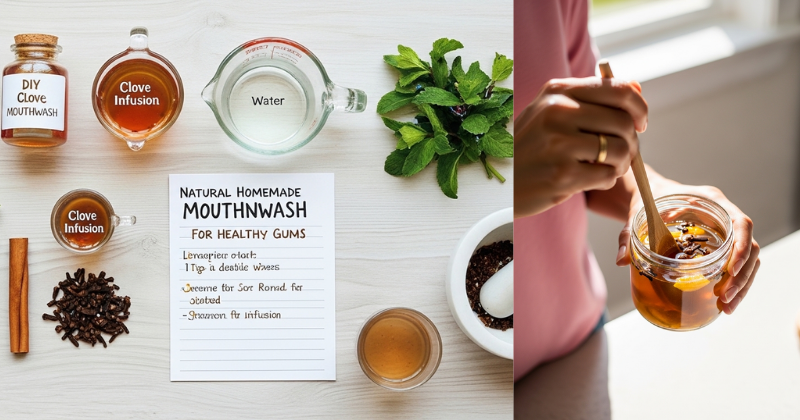
Discover how to make a DIY clove mouthwash recipe for healthy gums. This natural homemade mouthwash is easy to craft and promotes a fresh, vibrant smile today!
Important Disclaimer: This article is for informational purposes only and should not replace professional advice. For health-related topics, consult healthcare providers. For financial or legal matters, seek qualified professional guidance. For safety procedures, verify current best practices and local regulations. Individual results may vary, and personal circumstances should always be considered when implementing any suggestions.
Have you ever glanced at the back of your store-bought mouthwash bottle and wondered why it contains so many unpronounceable chemicals and artificial dyes? You aren’t alone. Many people are moving away from harsh, alcohol-based rinses that can leave your mouth feeling dry and irritated. If you are looking for a way to transform your oral hygiene routine into something more holistic, you have come to the right place.
By choosing a DIY clove mouthwash recipe, you are embracing a natural path to oral wellness. This natural homemade mouthwash for healthy gums uses the power of botanical ingredients to freshen breath and support your mouth’s delicate ecosystem. Imagine starting your morning with a rinse that feels gentle, tastes like warm spices, and actually helps your gums thrive. In this guide, we will unlock the secrets to crafting your own dental rinse that is as effective as it is satisfying to make. Let’s discover how easy it is to achieve a professional-level clean right in your own kitchen!
Foundation: Why Clove is a Dental Powerhouse
To build your confidence in making your own dental products, it helps to understand the science behind the ingredients. Cloves have been used in traditional medicine for centuries, particularly for oral care. The “magic” ingredient in cloves is a compound called eugenol. Eugenol is widely recognized for its natural anesthetic and antiseptic properties, which is why your dentist might still use clove-scented materials in their office today!
Many beginners hesitate to try a natural homemade mouthwash because they worry it won’t be “strong” enough to kill bacteria. However, cloves are incredibly potent. When you use a DIY clove mouthwash recipe, you are utilizing a plant-based solution that targets bad breath at its source without wiping out the “good” bacteria your mouth needs for a healthy microbiome.
H3: The Key Benefits for Your Gums
- Natural Antiseptic: Helps reduce the bacteria that lead to plaque and gingivitis.
- Soothing Properties: Eugenol can help calm minor gum irritation or sensitivity.
- Breath Freshener: Unlike mint, which just masks odors, cloves help neutralize them.
H3: Addressing Common Concerns
“Is it safe?” and “Will it stain?” are common questions. When diluted properly in a mouthwash format, cloves are safe for daily use. Unlike some commercial rinses that use heavy dyes, this clear-to-amber liquid won’t discolor your teeth. In fact, switching to a natural rinse is a great step to take alongside eating foods high in magnesium for overall tooth and bone strength.
Step-by-Step Process: Crafting Your Mouthwash
Making your own rinse is a simple, achievable process. You don’t need fancy equipment—just a few pantry staples and about 15 minutes of your time. Here is how to create a batch that will last you for weeks.
The Core Recipe Ingredients
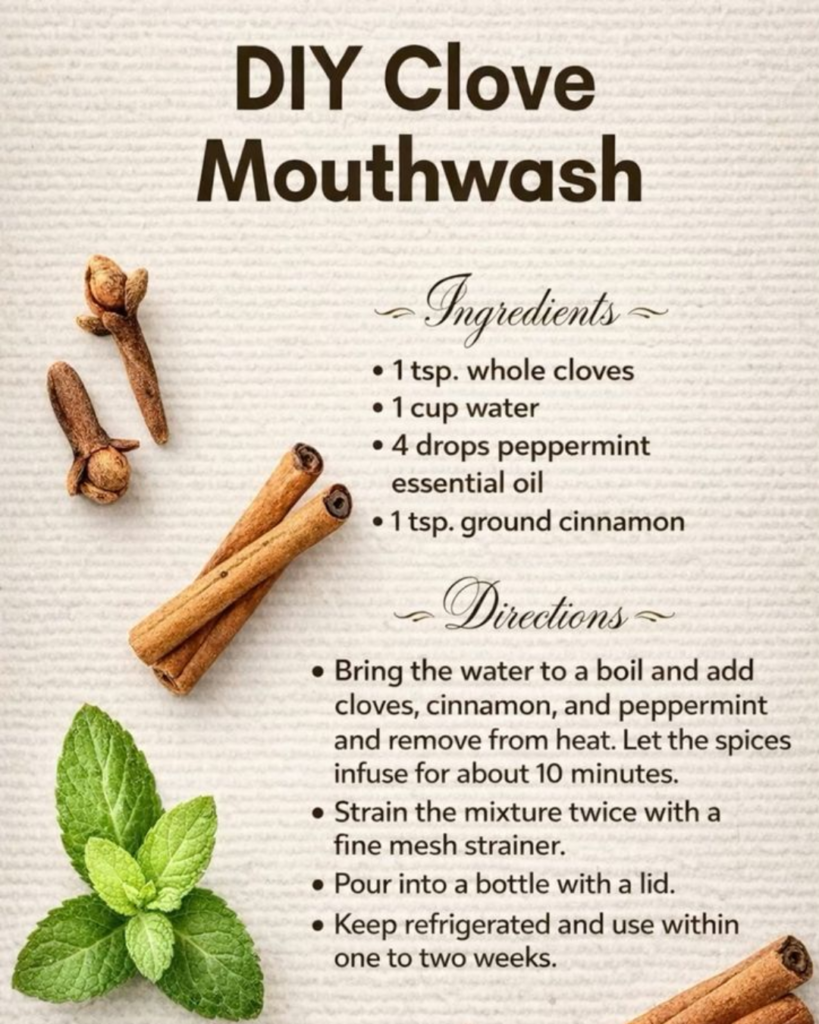
- 1 cup Distilled Water: Using distilled water ensures your mouthwash stays fresh longer.
- 1 teaspoon Whole Cloves: Whole cloves provide a slower, more controlled infusion than powder.
- 1 Cinnamon Stick: Optional, but adds extra antimicrobial power and a great taste.
- Optional Add-ins: A drop of peppermint essential oil for that “cool” feeling.
Step 1: The Infusion
Place your water, cloves, and cinnamon stick in a small saucepan. Bring the mixture to a gentle boil. Once it reaches a boil, reduce the heat to low and let it simmer for about 5 to 10 minutes. You will notice the water turning a beautiful light brown color and the aroma filling your kitchen.
Step 2: The Cooling Phase
Turn off the heat and let the mixture sit until it reaches room temperature. This “steeping” time allows the eugenol and other beneficial oils to fully move from the spices into the water.
Step 3: Strain and Store
Use a fine-mesh strainer or cheesecloth to remove the solids. Pour the liquid into a glass bottle. Glass is preferred over plastic as it doesn’t leach chemicals and keeps the essential oils stable. Your natural homemade mouthwash for healthy gums is now ready!
Advanced Strategies: Customizing Your Rinse
Once you have mastered the basic DIY clove mouthwash recipe, you can start to play “scientist” and tailor the formula to your specific needs. There are many ways to customize your approach to suit your preferences.
H3: Variations for Specific Needs
- For Extra Whitening: Add a half-teaspoon of aluminum-free baking soda to your cooled mixture. This helps gently polish teeth and neutralize acids.
- For Maximum Freshness: Add 2 drops of food-grade tea tree oil. Tea tree is a powerful ally against the bacteria that cause bad breath.
- For Sensitivity: Infuse a bit of dried chamomile along with the cloves to provide an extra-soothing effect for inflamed tissues.
The Role of pH Balance
Your mouth thrives when it isn’t too acidic. Commercial mouthwashes can sometimes be very acidic, which weakens tooth enamel. By making your own, you can ensure your rinse is closer to a neutral pH. If you use it alongside a diet for fatty liver disease or other health-focused eating plans, you are supporting your body’s wellness from the very first entry point—your mouth!
Troubleshooting: Common Challenges
If your first batch doesn’t turn out exactly as expected, don’t be discouraged! Here is how to handle frequent obstacles.
- “My mouthwash tastes too strong.” Clove is powerful. If the zing is too much for you, simply dilute the mixture with more distilled water until it feels comfortable.
- “The mixture went cloudy.” This often happens if you use tap water instead of distilled, or if you added certain essential oils. It is usually still safe to use, but try distilled water next time for a cleaner look.
- “I have a clove allergy.” If you are sensitive to cloves, you can swap them for rosemary or thyme, which also have excellent antiseptic properties.
Preventive Measures
To keep your mouthwash effective, always store it in a cool, dark place. Sunlight can break down the natural compounds. Also, remember that this is a “natural” product without chemical preservatives. Aim to make small batches that you can finish within 2 weeks to ensure peak freshness and potency.
Maximizing Results: A Holistic Approach to Oral Health
To truly see a transformation in your gum health, your DIY clove mouthwash recipe should be part of a larger self-care strategy. Oral health is a window into your overall well-being.
Complementary Strategies
- Oil Pulling: Consider starting your morning with oil pulling using coconut oil before using your clove rinse. This is a fantastic way to “unlock” deeper cleaning.
- Clean Tools: Ensure you are changing your toothbrush every three months. Just as you might use everyday items that act as natural antibiotics for your skin, your mouth deserves the cleanest environment possible.
- Dietary Support: Eat plenty of crunchy vegetables like carrots and celery, which naturally “scrub” teeth and stimulate saliva production.
Long-Term Maintenance
Consistency is your best friend. Use your natural homemade mouthwash twice a day after brushing and flossing. Over time, you may notice your gums looking pinker and feeling firmer. This simple act of self-care is a sustainable lifestyle change that pays off in every smile.
Conclusion: Empower Your Daily Routine
You have now learned how to create a high-quality DIY clove mouthwash recipe that rivals any store-bought alternative. By taking the time to craft this natural homemade mouthwash for healthy gums, you are proving that you have the capability to take charge of your own health.
The journey to a healthier smile doesn’t have to be expensive or complicated. With just a few cloves and a bit of water, you have created a tool that protects your teeth, refreshes your breath, and honors your body’s natural balance. Take that first swish today and feel the difference that nature can make. You’ve got this!