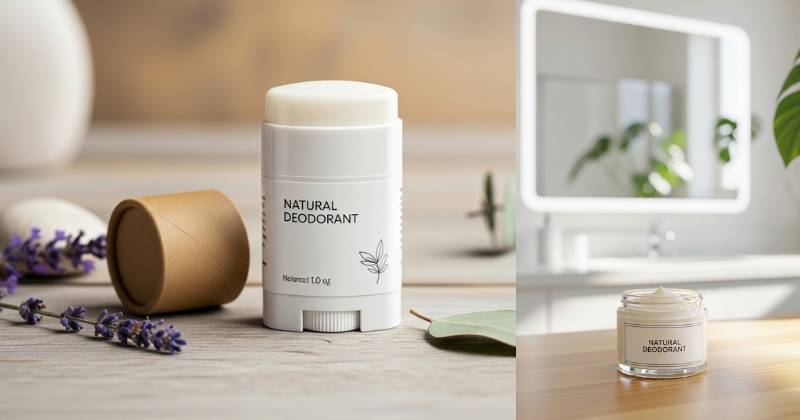
Learn how to make your own natural deodorant with this easy DIY guide. Discover simple ingredients for long-lasting freshness and skin-friendly wellness.
Important Disclaimer: This article is for informational purposes only and should not replace professional advice. For health-related topics, consult healthcare providers. For safety procedures, verify current best practices and local regulations. Individual results may vary, and personal circumstances should always be considered when implementing any suggestions.
Have you ever spent minutes standing in the personal care aisle, squinting at long chemical names on a label and wondering if there’s a better way? Many of us are looking for ways to reduce our “chemical footprint” while still staying fresh throughout a busy day. Switching to a natural deodorant is one of the most empowering sustainable lifestyle changes you can make. It’s not just about smelling good; it’s about understanding exactly what you are putting on your body every single morning.
In this comprehensive guide, you will discover how to create a high-performance, aluminum-free alternative that actually works. We are going to break down the science of why we sweat, unlock the secrets of botanical odor-fighters, and provide you with a step-by-step recipe you’ll love. By the end of this article, you’ll feel ready to ditch the store-bought sticks for a custom blend that nurtures your skin and boosts your confidence. Let’s dive into the world of clean beauty!
Foundation: Why Switch to Natural Deodorant?
Before we start mixing, it’s important to understand what a natural deodorant actually does. A common misconception is that deodorants and antiperspirants are the same. Antiperspirants use aluminum salts to physically block your sweat glands. In contrast, a natural deodorant allows your body to perform its natural function—sweating—while neutralizing the bacteria that cause odor.
The Science of Sweat and Odor
Sweat itself is actually odorless! The scent we associate with “B.O.” happens when the proteins and fats in your sweat meet the bacteria living on your skin. By using ingredients that balance your skin’s pH and inhibit bacterial growth, you can stay fresh without interfering with your body’s temperature regulation. This shift is a key part of gradual progress and self-care in a modern wellness routine.
Addressing Common Concerns
Many people hesitate to switch because they fear a “detox period” or worry that natural products won’t hold up during a workout. While your body may take a week or two to adjust to the absence of aluminum, a well-formulated DIY version can be incredibly effective. We are here to provide encouraging reassurance: you don’t have to choose between “natural” and “effective.” You can have both!
H3: Key Components of an Effective Blend
- The Absorbent: Ingredients like arrowroot powder or cornstarch soak up moisture.
- The Neutralizer: Baking soda or magnesium hydroxide helps kill odor-causing bacteria.
- The Base: Coconut oil and shea butter provide a smooth texture and nourish the skin.
- The Scent: Essential oils provide natural fragrance and additional antibacterial benefits.
Step-by-Step: Crafting Your Signature Deodorant
Creating your own natural deodorant is an achievable, cost-saving project that yields professional results. Follow these manageable steps to craft your first batch.
1. Prepare Your Workspace and Tools
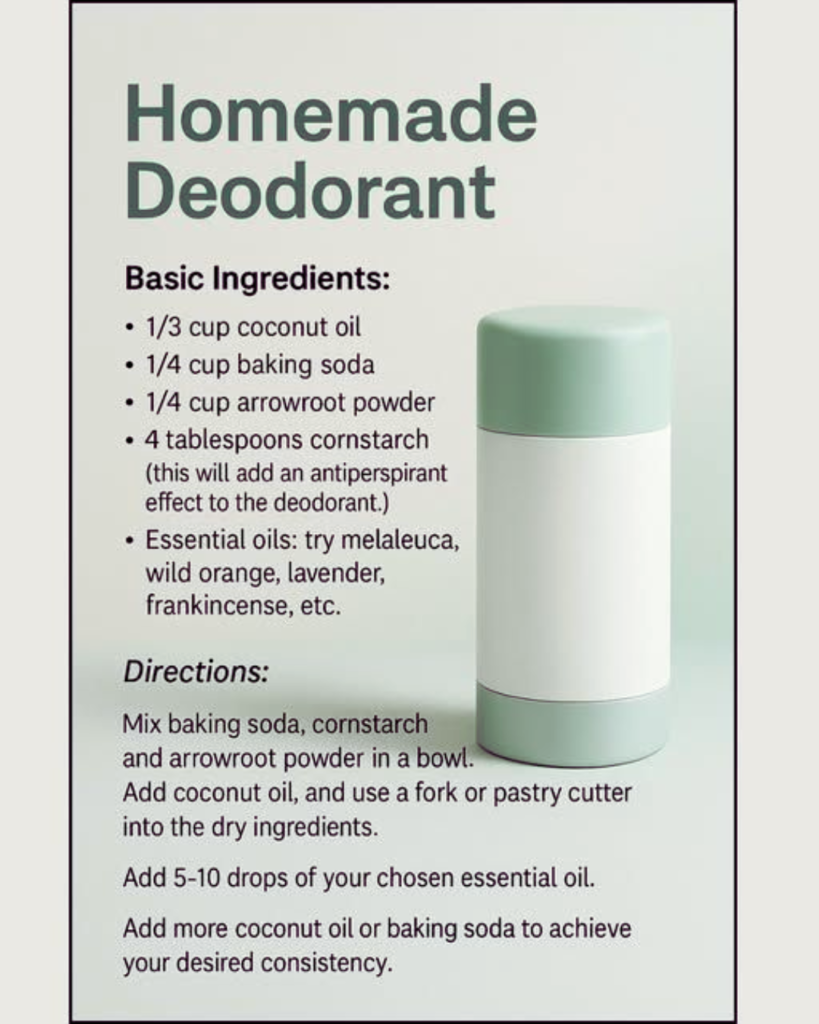
You will need a small glass jar or an empty, cleaned deodorant tube. For the mixing process, use a small saucepan and a heat-proof glass bowl to create a double boiler. This ensures your ingredients melt gently without burning.
2. The Melting Process
In your double boiler, combine 3 tablespoons of coconut oil and 2 tablespoons of shea butter. Stir gently over low heat until they are completely liquid. Coconut oil is a favorite in relaxing skincare tips because it contains lauric acid, which is naturally antimicrobial.
3. Mix in the Powders
Once melted, remove the bowl from the heat. Whisk in 3 tablespoons of arrowroot powder and 2 tablespoons of baking soda (or magnesium hydroxide if you have sensitive skin). Stir until the mixture is perfectly smooth and free of clumps. This is the stage where the “magic” happens, turning oils into a functional paste.
4. Add the Scent
Wait about two minutes for the mixture to cool slightly but remain liquid. Add 15–20 drops of your chosen essential oils. Stir one last time and pour the liquid into your container. Place it in the refrigerator for about an hour to set.
Advanced Strategies: Customizing for Your Body
Expert-level DIY involves tailoring the formula to your specific needs. No two bodies are the same, and your natural deodorant shouldn’t be either!
H3: Formulating for Sensitive Skin
If you notice redness or irritation, you likely have a sensitivity to baking soda, which is quite alkaline. You can easily customize your approach:
- The Magnesium Swap: Replace baking soda with magnesium hydroxide powder. It is gentler on the skin’s pH but still highly effective at neutralizing odor.
- Soothing Additions: Add a teaspoon of vitamin E oil or a few drops of calendula oil to the base for extra skin repair.
Essential Oil “Pro” Blends
Don’t be afraid to experiment with scent profiles that offer more than just a nice smell.
- The Tea Tree Powerhouse: 10 drops Tea Tree + 10 drops Lemon. This is a heavy-duty antibacterial blend for active days.
- The Calming Forest: 10 drops Lavender + 5 drops Cedarwood + 5 drops Bergamot. Perfect for a relaxing, grounded feel.
- The Fresh Citrus: 10 drops Grapefruit + 5 drops Peppermint. An energizing blend to start your morning.
Troubleshooting: Solving Common Challenges
If your first batch isn’t perfect, don’t worry! Here is how to address frequent obstacles with simple solutions.
- “My deodorant is too hard.” If you live in a cold climate, coconut oil can become very firm. Next time, add a teaspoon of sweet almond oil to the mix to keep it creamy.
- “It’s melting in my bathroom.” Coconut oil melts at 24°C. If your house is warm, add a tablespoon of grated beeswax to the melting stage to raise the melting point of your final product.
- “I’m still experiencing odor.” This often happens during the initial transition. Try an “underarm mask” using bentonite clay and apple cider vinegar once a week to help draw out impurities and speed up the adjustment period.
Preventive Measures
To ensure your natural deodorant stays fresh, always use clean fingers or a small wooden spatula to apply it. Since this recipe doesn’t contain water, it has a long shelf life, but keeping it away from moisture (like shower steam) will keep it at its best for 6–12 months.
Maximizing Results: The Holistic Freshness Routine
Building upon your DIY success means looking at the bigger picture of body wellness. Your deodorant is just one part of a healthy lifestyle.
Dietary Considerations
What you eat can actually impact how you smell! Drinking plenty of water helps flush toxins, while a diet rich in leafy greens (containing chlorophyll) can act as a natural internal deodorizer. This is a great example of how sustainable lifestyle changes in one area can benefit another.
Complementary Strategies
Pair your new deodorant with other natural habits. Using a DIY Lavender Sleep Mist (as discussed in our other guides) can lower stress levels; since stress sweat is often more pungent than heat sweat, staying calm actually helps you stay fresh! You might also consider exploring natural soap making to ensure your entire cleansing routine is free from harsh sulfates.
Conclusion: Empower Your Personal Care
Switching to a natural deodorant is a transformative step toward a cleaner, more intentional lifestyle. You have learned how to harness the power of coconut oil, the absorbent qualities of arrowroot, and the customized benefits of essential oils. By making your own products, you’ve unlocked a level of self-sufficiency that is both rewarding and cost-effective.
Remember, your body is capable of incredible things, and giving it the grace to function naturally is a beautiful form of self-love. Whether you are hitting the gym or heading to the office, you can now do so with the confidence that you are protected by ingredients you trust. Start your first batch today—your skin (and the planet) will thank you!