
Magnesium deficiency affects approximately 50% of Western populations, creating cascading physiological consequences ranging from muscular dysfunction to neurological impairment and cardiovascular complications. Transdermal magnesium supplementation through topically-applied magnesium oil represents an innovative delivery system bypassing gastrointestinal limitations while potentially achieving superior tissue bioavailability compared to oral routes.
This comprehensive analysis examines the biochemistry, formulation protocols, and therapeutic applications of DIY magnesium oil, integrating current scientific understanding with practical implementation strategies. Understanding the intersection of mineral physiology, cutaneous absorption mechanisms, and solution chemistry empowers individuals to create evidence-based topical magnesium preparations addressing documented deficiency states through accessible, cost-effective interventions.
Understanding Magnesium Physiology and Transdermal Delivery Mechanisms
Magnesium functions as essential cofactor in over 300 enzymatic reactions regulating fundamental cellular processes including ATP synthesis, protein formation, nucleic acid metabolism, neuromuscular transmission, and cardiovascular function. Despite this critical importance, modern dietary patterns frequently provide insufficient magnesium intake, with epidemiological studies documenting that 45-60% of adults fail to meet recommended daily allowances.
The conventional oral supplementation route encounters significant absorption challenges. Gastrointestinal magnesium uptake occurs primarily in the small intestine through both passive paracellular diffusion and active transcellular transport mediated by TRPM6 and TRPM7 channels. However, absorption efficiency rarely exceeds 30-40% under optimal conditions, with various factors—including phytate content, calcium competition, and intestinal transit time—further compromising bioavailability. Additionally, oral magnesium frequently produces osmotic diarrhea at therapeutic doses, limiting practical supplementation capacity.
Cutaneous Absorption: Molecular Pathways and Physiological Evidence
Transdermal magnesium delivery exploits the skin’s permeability to small ionic species, though the mechanisms and efficiency remain subjects of ongoing scientific investigation. The stratum corneum—skin’s outermost layer—consists of corneocytes embedded in lipid matrix, creating formidable barrier to hydrophilic compounds like magnesium chloride. However, several pathways facilitate ion penetration: intercellular lipid routes between corneocytes, transcellular passage through keratinocytes, and appendageal routes via hair follicles and sweat ducts.
Scientific evidence supporting transdermal magnesium absorption presents a nuanced picture. A seminal 2010 study published in Magnesium Research examined serum and cellular magnesium levels following daily transdermal application, reporting modest but statistically significant increases in both parameters over 12-week observation periods. However, methodological limitations—including small sample sizes and lack of rigorous control groups—temper definitive conclusions. More recent investigations utilizing advanced analytical techniques demonstrate measurable magnesium accumulation in dermal tissues following topical application, though systemic bioavailability remains quantitatively uncertain.
The concentration gradient represents a critical determinant of transdermal flux. Magnesium oil—despite its nomenclature—consists of supersaturated magnesium chloride solution rather than actual oil, achieving concentrations of 30-50% magnesium chloride by weight. This extreme concentration creates substantial chemical potential driving diffusion across cutaneous barriers, potentially overcoming the stratum corneum’s inherent resistance to hydrophilic ion passage.
Biochemical Rationale for Topical Application
Beyond systemic absorption considerations, topical magnesium application may provide localized therapeutic effects through direct tissue penetration. Skeletal muscle contains substantial magnesium reservoirs, and direct dermal delivery potentially bypasses plasma compartment entirely, achieving higher tissue concentrations than possible through oral routes. This mechanism proves particularly relevant for applications targeting muscular tension, cramping, or sports recovery where localized tissue effects rather than systemic supplementation represent the primary therapeutic goal.
Additionally, transdermal application avoids first-pass hepatic metabolism and gastrointestinal degradation, potentially preserving magnesium’s bioactive form. While magnesium chloride itself requires minimal metabolic processing, avoiding digestive tract exposure eliminates interactions with dietary components, medications, or intestinal microbiota that might compromise absorption or therapeutic efficacy through oral routes.
Materials Science and Solution Chemistry: Creating Pharmaceutical-Grade Magnesium Oil
Formulating effective magnesium oil requires understanding solution chemistry, particularly the relationship between magnesium chloride concentration, water activity, and resulting solution properties. Unlike complex botanical preparations requiring multiple ingredients and processing steps, magnesium oil formulation involves straightforward aqueous chemistry—yet achieving optimal therapeutic and cosmetic properties demands attention to several critical variables.
Magnesium Chloride Selection and Purity Considerations
Magnesium chloride hexahydrate (MgCl₂·6H₂O) represents the standard chemical form for magnesium oil production. This crystalline compound contains approximately 47% water by weight as hydration sphere surrounding magnesium cations, with remaining mass split between magnesium (12%) and chloride (41%) ions. Pharmaceutical-grade or food-grade designations ensure minimal contamination with heavy metals, sulfates, or other impurities that might cause adverse dermal reactions.
Alternative magnesium sources—including magnesium sulfate (Epsom salt), magnesium hydroxide, or magnesium citrate—prove unsuitable for transdermal oil formulation due to solubility limitations, pH incompatibility, or unfavorable skin reactivity profiles. Magnesium chloride’s high aqueous solubility (approximately 550 g/L at 20°C) enables supersaturated solutions necessary for meaningful transdermal flux, while chloride ions demonstrate excellent dermal tolerance compared to sulfate or carbonate alternatives.
Natural magnesium chloride sources derived from ancient seabed deposits or concentrated seawater—marketed as “magnesium flakes” or “Zechstein magnesium”—contain identical chemical composition to synthetic magnesium chloride but appeal to consumers preferring naturally-sourced minerals. From biochemical perspective, no meaningful therapeutic differences exist between natural and synthetic sources of equivalent purity, though psychological factors and marketing narratives may influence perceived efficacy through placebo mechanisms.
Concentration Optimization: Balancing Efficacy and Tolerability
Magnesium oil concentration fundamentally determines both therapeutic potential and user experience. Standard formulations employ 30-35% magnesium chloride solutions, achieving approximately 3.5-4.0% elemental magnesium concentration. This range balances several competing factors: higher concentrations maximize transdermal gradient driving absorption, yet excessive concentration produces unpleasant tactile sensations—described as “tacky” or “sticky”—and may increase irritation risk in sensitive individuals.
The concentration-sensation relationship derives from magnesium chloride’s hygroscopic properties. Concentrated solutions extract moisture from surrounding environment, including from skin itself, creating the characteristic sticky feeling users report. Additionally, high salt concentrations alter skin surface osmolarity, potentially triggering mild irritant responses manifesting as tingling, itching, or transient burning sensations—particularly on freshly shaved skin or areas with compromised barrier function.
Individuals new to magnesium oil should consider initiating therapy with diluted preparations—20-25% magnesium chloride concentration—gradually increasing as tolerance develops. This titration approach minimizes adverse sensory experiences while allowing assessment of individual sensitivity. The concentration can be adjusted through simple dilution calculations: adding equal volume of distilled water to standard 30% magnesium oil yields approximately 15% solution, halving both magnesium content and associated tactile effects.
Step-by-Step Formulation Protocol
Creating pharmaceutical-quality magnesium oil requires minimal equipment yet demands attention to measurement precision, water purity, and contamination prevention to ensure product safety and stability.
Phase 1: Equipment Preparation and Ingredient Measurement (10 minutes)
Sanitize all equipment using boiling water immersion or 70% isopropyl alcohol application. While magnesium chloride demonstrates inherent antimicrobial properties at high concentrations, proper hygiene prevents introduction of resistant microorganisms that might proliferate upon dilution or contaminate skin during application. Select glass containers for final product storage—glass demonstrates superior chemical inertness compared to plastics that may leach compounds into concentrated salt solutions over extended storage periods.
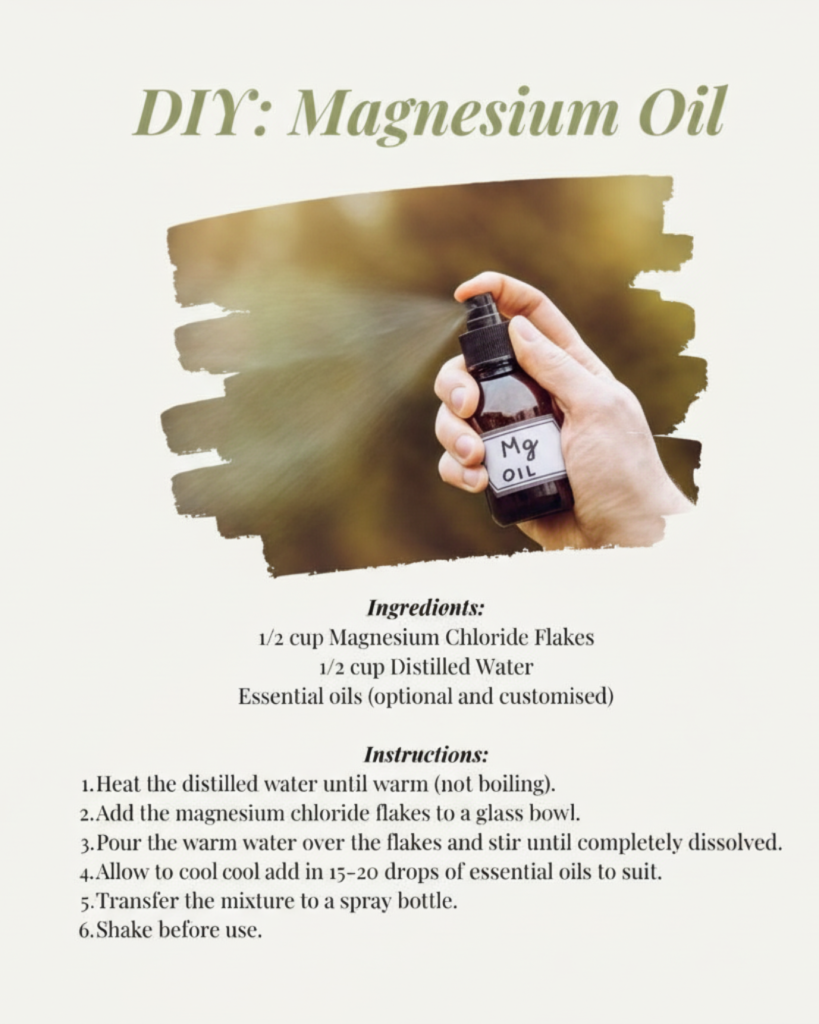
Measure ingredients using digital scale accurate to 1 gram for small batches. Standard formulation for 100ml finished product: 50g magnesium chloride hexahydrate, 50g distilled water. This 1:1 weight ratio yields approximately 31% magnesium chloride solution accounting for hydration water within the crystalline compound.
Phase 2: Solution Preparation and Dissolution (15-20 minutes)
Heat distilled water to near-boiling temperature (90-95°C) in non-reactive container—glass or stainless steel preferred. Elevated temperature dramatically accelerates magnesium chloride dissolution, which proceeds slowly in cold water despite high ultimate solubility. The dissolution process proves endothermic, absorbing heat from surrounding environment, so maintaining elevated temperature throughout mixing optimizes dissolution kinetics.
Add magnesium chloride crystals gradually while stirring continuously. Rapid addition may create localized supersaturation causing crystallization or incomplete dissolution. Continue stirring until solution appears completely clear without visible crystalline particles—this typically requires 10-15 minutes depending on crystal size and water temperature. Visual inspection under good lighting confirms complete dissolution; any cloudiness or suspended particles indicate incomplete mixing requiring additional stirring or gentle heating.
Phase 3: Cooling, Transfer, and Storage (30-60 minutes)
Allow solution to cool to room temperature before transferring to final storage containers. Filling hot solution into glass containers risks thermal stress fractures, while certain plastic spray bottles may deform under elevated temperatures. The cooling process proceeds naturally over 30-60 minutes, though ice water bath immersion accelerates cooling if immediate use is desired.
Transfer cooled solution to storage containers using funnel to prevent spillage—concentrated magnesium chloride solution demonstrates significant surface tension creating tendency toward droplet formation and mess. Spray bottles provide convenient application method, though concentrated magnesium chloride’s corrosive properties may degrade certain metal spray mechanisms over time. Select bottles specifically designed for corrosive solutions, or plan to replace inexpensive spray bottles periodically.
Storage in cool, dark locations maximizes shelf life, though magnesium chloride solution demonstrates remarkable stability even under suboptimal conditions. The high salt concentration creates hostile environment for microbial growth, functioning as natural preservative. Properly formulated magnesium oil remains stable for 12-24 months without refrigeration, though crystallization may occur in cold environments—gently warming affected solutions redissolves crystals without compromising product quality.
Advanced Formulation Strategies and Therapeutic Customization
Beyond basic magnesium chloride solutions, several formulation modifications enable enhanced therapeutic targeting, improved sensory properties, or addressing specific physiological objectives through synergistic ingredient combinations.
Essential Oil Integration for Enhanced Therapeutic Profiles
Incorporating small quantities of essential oils—typically 0.5-2% by volume—provides several potential benefits: masking magnesium chloride’s slightly metallic odor, contributing complementary therapeutic effects, and potentially enhancing transdermal penetration through modification of stratum corneum lipid structure. Appropriate essential oil selections include lavender (Lavandula angustifolia) for muscle relaxation and sleep promotion, peppermint (Mentha × piperita) for cooling sensation and additional analgesic effects, or eucalyptus (Eucalyptus globulus) for respiratory applications when applied to chest areas.
Formulation technique requires creating emulsion since essential oils demonstrate immiscibility with aqueous magnesium chloride solution. Add essential oils dropwise to cooled magnesium oil while shaking vigorously to create temporary dispersion. Natural surfactants—such as polysorbate 20 at 1-2% concentration—enable more stable emulsification, preventing essential oil separation and ensuring consistent delivery with each application. However, many users prefer simple formulations avoiding additional ingredients, accepting that essential oils will separate and require shaking before each use.
pH Modification and Buffering Strategies
Standard magnesium chloride solutions demonstrate slightly acidic pH (approximately 5.5-6.5) due to hydrolysis reactions generating trace hydrochloric acid. While this pH range generally proves compatible with cutaneous application—being similar to skin’s natural acid mantle—some individuals with sensitive skin may benefit from pH adjustment toward neutral range. Addition of small quantities of magnesium hydroxide powder (approximately 0.5-1% by weight) provides buffering capacity, raising pH toward 7.0 while simultaneously increasing total magnesium content.
The buffering approach offers additional advantage of creating mixed chloride-hydroxide formulation potentially better tolerated than pure chloride solutions. Magnesium hydroxide demonstrates lower aqueous solubility limiting achievable concentrations, yet its presence may reduce the irritant potential associated with high chloride concentrations. This combination strategy balances the transdermal penetration benefits of highly soluble magnesium chloride with improved tolerability from partially neutralized formulation.
Aloe Vera Integration for Enhanced Skin Compatibility
Incorporating aloe vera gel—typically 10-20% by volume—creates magnesium formulation with improved sensory characteristics and potentially enhanced skin benefits. Aloe vera’s polysaccharides provide humectant properties counteracting magnesium chloride’s hygroscopic nature, reducing the tacky sensation users frequently report. Additionally, aloe demonstrates documented anti-inflammatory and wound-healing properties that may benefit individuals applying magnesium oil to areas with minor skin irritation or damage.
Formulation requires using high-quality, preservative-free aloe vera gel to avoid introducing potentially sensitizing additives. Mix aloe vera with previously-prepared magnesium oil using vigorous stirring or brief blending to achieve homogeneous consistency. The resulting product demonstrates thicker, gel-like texture more appropriate for massage application compared to standard spray formulations. However, aloe vera addition reduces shelf stability—water activity increases and sugar content provides potential microbial substrate—necessitating refrigerated storage and use within 2-3 months of preparation.
Dimethyl Sulfoxide (DMSO) Enhancement for Maximum Penetration
For individuals seeking maximum transdermal penetration—particularly athletes or those with severe deficiency states—adding pharmaceutical-grade DMSO at 5-10% concentration dramatically enhances magnesium chloride absorption. DMSO functions as penetration enhancer, temporarily disrupting stratum corneum lipid organization and enabling deeper compound delivery. Studies examining DMSO-enhanced transdermal systems document 5-10 fold increases in compound absorption compared to unenhanced formulations.
However, DMSO use requires significant caution and understanding of its properties. This compound demonstrates remarkable ability to carry virtually any substance across skin barriers—including contaminants, toxins, or medications present on skin surface at application time. Consequently, DMSO-containing formulations demand scrupulous skin cleansing before application and absolute confidence in ingredient purity. Additionally, DMSO produces characteristic sulfurous odor and may cause temporary skin irritation in sensitive individuals. Given these considerations, DMSO enhancement should be reserved for informed users comfortable with its unique properties rather than included in general-purpose formulations.
Application Protocols and Therapeutic Optimization
Effective magnesium supplementation through topical application requires strategic protocols addressing anatomical targeting, timing optimization, and integration with complementary therapeutic modalities. Evidence-based application strategies maximize tissue exposure while minimizing adverse effects or user dissatisfaction.
Anatomical Targeting and Absorption Site Selection
Transdermal absorption rates vary substantially across body regions due to differences in stratum corneum thickness, follicular density, hydration status, and local blood flow. Understanding these anatomical variations enables strategic application site selection optimizing magnesium delivery for specific therapeutic objectives.
Areas with thinner stratum corneum—including inner arms, abdomen, and thighs—demonstrate enhanced absorption capacity compared to palmar or plantar surfaces where thick, highly keratinized epidermis creates formidable barriers. For systemic supplementation objectives, applying magnesium oil to these permeable regions maximizes absorption while minimizing required application volume. Typical protocol involves applying 5-10 spray pumps (approximately 1-2 ml) to inner arms or abdomen once or twice daily.
For targeted muscular applications—addressing cramping, tension, or recovery—direct application to affected muscle groups provides localized effects potentially exceeding those achievable through systemic routes. Athletes frequently apply magnesium oil to calves preventing nocturnal cramping, to thigh musculature supporting recovery, or to shoulder and back regions addressing tension. Combining application with gentle massage enhances both absorption through mechanical disruption of stratum corneum and therapeutic effects through improved local circulation.
Temporal Optimization and Dosing Strategies
The timing of magnesium oil application influences both efficacy and user experience. Evening application—particularly before bedtime—leverages magnesium’s documented effects on sleep quality and neuromuscular relaxation. The mineral’s role in GABA receptor function and NMDA receptor antagonism contributes to sedative effects, with transdermal application potentially delivering magnesium to central nervous system through still-debated mechanisms possibly involving absorption through nasal mucosa when applied to facial regions or direct CNS transport via olfactory pathways.
Alternatively, pre-exercise application targets magnesium’s role in ATP synthesis and muscular function, potentially enhancing exercise performance and recovery. Research examining oral magnesium supplementation documents improved exercise capacity and reduced lactate accumulation, though specific studies evaluating pre-exercise transdermal magnesium remain limited. Empirical reports from athletes suggest benefits, though placebo effects may contribute substantially to perceived improvements pending rigorous controlled investigations.
Regarding duration of application before washing, research suggests allowing 20-30 minutes minimum for meaningful absorption. While immediate washing removes surface magnesium preventing deeper penetration, extended application periods beyond 30-60 minutes yield diminishing returns as concentration gradient dissipates and absorption rate decreases. Many users apply magnesium oil before bed, allowing overnight exposure, though the incremental benefit over shorter application durations remains quantitatively uncertain.
Managing Adverse Sensory Effects and Improving Tolerability
The characteristic tingling, itching, or burning sensation many users experience—particularly during initial applications—results from osmotic effects, minor irritant properties of concentrated chloride solutions, and possible direct sensory nerve stimulation. While generally harmless and decreasing with repeated use as tolerance develops, these sensations may discourage consistent application in sensitive individuals.
Multiple strategies improve tolerability. Diluting standard formulations to 15-20% magnesium chloride concentration significantly reduces sensory effects while maintaining therapeutic benefit, though potentially requiring larger application volumes to deliver equivalent magnesium mass. Pre-diluting application sites with aloe vera gel or light moisturizer before magnesium oil application creates barrier reducing direct skin contact with concentrated solution. Alternatively, applying magnesium oil followed by moisturizer after 20-30 minute absorption period both hydrates skin and dilutes residual surface magnesium, minimizing prolonged irritant exposure.
Avoiding application to freshly shaved skin, areas with compromised barrier function, or regions with active dermatological conditions prevents exaggerated irritant responses. The mechanical trauma from shaving temporarily disrupts stratum corneum integrity, creating channels enabling excessive penetration and heightened sensory responses. Allowing 12-24 hours between shaving and magnesium application minimizes this effect.
Safety Considerations and Contraindication Management
Despite generally favorable safety profile, topical magnesium oil application requires awareness of potential adverse effects, contraindications, and appropriate precautions ensuring safe utilization across diverse populations and health states.
Dermatological Safety and Skin Barrier Considerations
High-concentration magnesium chloride solutions may cause or exacerbate several dermatological conditions in susceptible individuals. Contact dermatitis—both irritant and allergic forms—occasionally develops with repeated exposure, manifesting as erythema, pruritus, or eczematous changes at application sites. Individuals with known nickel sensitivity demonstrate increased risk as commercial magnesium chloride may contain trace nickel contamination. Pharmaceutical-grade or explicitly nickel-free products reduce but don’t eliminate this risk.
The osmotic effects of concentrated salt solutions may compromise skin barrier function through excessive moisture extraction from corneocytes, potentially leading to xerosis, scaling, or fissuring with chronic use. This proves particularly problematic in individuals with baseline dry skin or conditions like atopic dermatitis where barrier dysfunction already exists. Incorporating regular moisturizer use, diluting formulations, or limiting application frequency to every other day rather than daily helps prevent barrier compromise while maintaining therapeutic magnesium delivery.
Ocular exposure requires strict avoidance—magnesium chloride solution causes severe ocular irritation, burning, and potential corneal damage. If accidental eye contact occurs, immediate copious irrigation with clean water for at least 15 minutes proves essential, followed by ophthalmological evaluation if symptoms persist. When applying near facial regions, extreme care prevents solution migration into eyes.
Systemic Safety and Population-Specific Considerations
While transdermal absorption typically produces lower systemic magnesium levels compared to oral supplementation, individuals with renal impairment require particular caution. The kidneys normally regulate magnesium homeostasis through variable renal excretion, but compromised renal function limits this compensatory mechanism, potentially causing magnesium accumulation to toxic levels (hypermagnesemia). Symptoms of severe hypermagnesemia include muscle weakness, hypotension, respiratory depression, and cardiac conduction abnormalities—though achieving such levels through topical application alone remains unlikely except with excessive application in renal failure contexts.
Pregnancy and lactation introduce additional considerations. While magnesium supplementation frequently proves beneficial during pregnancy—with documented effects on preeclampsia prevention and pregnancy-associated cramping—the transdermal route lacks extensive safety evaluation in gravid populations. Conservative recommendations suggest consulting healthcare providers before initiating topical magnesium during pregnancy, particularly during first trimester when organogenesis occurs and theoretical risks remain highest.
Pediatric applications require careful consideration of age-appropriate dosing and enhanced absorption through children’s thinner stratum corneum enabling greater percutaneous penetration. While magnesium supplementation benefits numerous pediatric conditions—including growing pains, attention disorders, and constipation—dosing should be proportionally reduced based on body surface area rather than body weight, reflecting that transdermal absorption relates more closely to application area than total body mass.
Drug Interactions and Medical Contraindications
Magnesium interacts with numerous medications through various mechanisms warranting awareness despite topical application theoretically producing lower systemic levels than oral routes. Bisphosphonate medications used for osteoporosis treatment demonstrate reduced absorption in presence of magnesium (and other divalent cations), though this interaction primarily concerns oral co-administration rather than topical magnesium use. Tetracycline and fluoroquinolone antibiotics similarly form chelation complexes with magnesium reducing antibiotic bioavailability—again primarily relevant to oral routes.
Magnesium’s effects on neuromuscular transmission require consideration in individuals taking muscle relaxants, neuromuscular blocking agents, or certain neurological medications. Additive effects theoretically occur, potentially enhancing medication effects beyond intended levels. While topical application seems unlikely to produce clinically significant interactions, individuals on these medication classes should inform prescribing physicians about supplemental magnesium use regardless of route.
Cardiac medication interactions merit particular attention. Magnesium influences cardiac conduction and contractility, with potential implications for individuals taking antiarrhythmic medications, calcium channel blockers, or digoxin. While therapeutic magnesium levels generally prove beneficial for cardiovascular function, excessive accumulation or unpredictable absorption patterns might interfere with carefully titrated cardiac medication regimens. Individuals with significant cardiovascular disease should undertake topical magnesium supplementation only with physician awareness and appropriate monitoring.
Important Disclaimer: This article is for informational purposes only and should not replace professional advice. For health-related topics, consult healthcare providers. Individual results may vary, and personal circumstances should always be considered when implementing any suggestions. Magnesium supplementation—regardless of route—may not be appropriate for all individuals, particularly those with renal disease, cardiac conditions, or those taking multiple medications.
Conclusion: Integrating Evidence-Based Transdermal Supplementation Strategies
DIY magnesium oil formulation and application represents an accessible, cost-effective approach to addressing widespread magnesium insufficiency through innovative transdermal delivery systems. Current scientific evidence—while requiring expansion through larger, more rigorously controlled clinical trials—supports meaningful tissue magnesium accumulation following topical application, with potential benefits for muscular function, sleep quality, stress management, and overall metabolic health.
The remarkable simplicity of magnesium oil formulation—requiring only two ingredients and minimal equipment—contrasts sharply with the sophisticated biochemistry underlying its therapeutic mechanisms and the nuanced considerations optimizing its clinical application. Success requires understanding not merely how to dissolve magnesium chloride in water, but comprehending cutaneous absorption physiology, solution chemistry principles, and individual factors influencing both efficacy and tolerability.
Optimal outcomes emerge from thoughtful protocol development integrating appropriate concentration selection, strategic anatomical targeting, temporal optimization aligning with therapeutic objectives, and realistic expectations grounded in current scientific understanding rather than exaggerated marketing claims. While topical magnesium application demonstrates legitimate therapeutic potential, it should be viewed as complementary component within comprehensive health strategies also addressing dietary magnesium intake, stress management, sleep hygiene, and other lifestyle factors influencing magnesium status and overall physiological function.
The empowerment inherent in creating one’s own therapeutic preparations—understanding ingredients, controlling purity, and personalizing formulations—represents valuable dimension beyond simple cost savings or convenience. This engagement transforms passive healthcare consumption into active participation in personal wellness, fostering deeper understanding of physiological principles, mineral metabolism, and the sophisticated yet accessible science underlying natural therapeutic interventions.