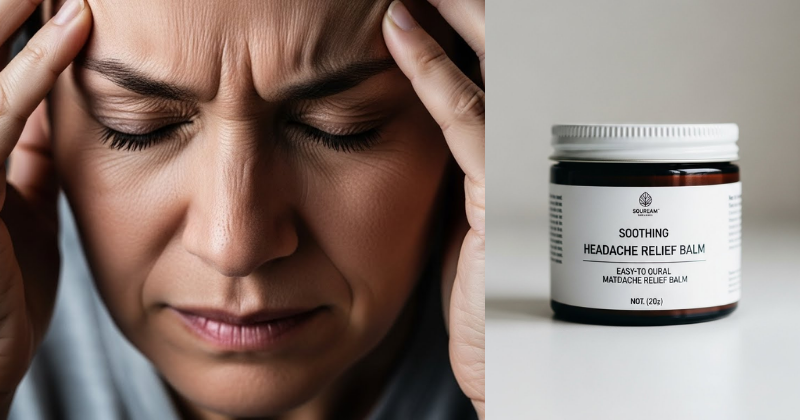
Headache suffering represents one of humanity’s most prevalent pain conditions, affecting approximately 50% of the global adult population annually and significantly impacting quality of life, productivity, and daily functioning. While pharmaceutical interventions dominate conventional treatment approaches, topical botanical formulations—specifically headache relief balms—offer complementary therapeutic strategies combining traditional herbal wisdom with contemporary understanding of transdermal delivery systems and phytochemical pharmacology.
This comprehensive analysis examines the formulation science, therapeutic mechanisms, and practical application protocols for creating and utilizing natural headache relief balms. Understanding the intersection of essential oil chemistry, cutaneous absorption kinetics, and neurophysiological pain modulation empowers individuals to develop evidence-based topical interventions addressing various headache etiologies through accessible, personalized formulations.
Understanding Headache Pathophysiology and Topical Intervention Mechanisms
Headaches manifest through diverse physiological mechanisms requiring nuanced understanding for effective therapeutic targeting. Tension-type headaches—the most prevalent form—result from sustained muscle contraction in cranial, cervical, and shoulder regions, creating myofascial pain patterns and restricted blood flow. Migraine headaches involve complex neurovascular phenomena including cortical spreading depression, trigeminal nerve activation, and inflammatory mediator release. Cluster headaches demonstrate distinct pathophysiology involving hypothalamic dysfunction and autonomic nervous system dysregulation.
Topical balm interventions address headache symptoms through multiple complementary mechanisms. The primary pathway involves transdermal absorption of lipophilic compounds—particularly volatile essential oil constituents—that penetrate the stratum corneum and enter systemic circulation or act locally on peripheral nervous structures. This percutaneous route bypasses hepatic first-pass metabolism, potentially enhancing bioavailability compared to oral administration while minimizing systemic side effects.
Neurophysiological Mechanisms of Topical Analgesia
The gate control theory of pain—proposed by Melzack and Wall in 1965—provides foundational framework for understanding topical analgesic mechanisms. According to this model, non-nociceptive sensory inputs (such as cooling or warming sensations from topical applications) can inhibit pain signal transmission at the spinal cord level by activating inhibitory interneurons. Essential oils containing menthol or camphor specifically activate thermoreceptor channels—TRPM8 for cooling, TRPV1 for warming—creating sensory experiences that modulate pain perception.
Counter-irritation represents an additional mechanism whereby mild irritant compounds applied topically create localized inflammatory responses that paradoxically reduce pain perception in deeper tissues. This phenomenon involves complex interactions between cutaneous nociceptors, spinal processing centers, and descending pain modulation pathways. Certain essential oil constituents—particularly those containing aldehydes or phenolic compounds—demonstrate controlled counter-irritant properties at appropriate concentrations.
Aromatherapeutic effects contribute meaningfully to headache relief through olfactory-limbic pathways. Volatile aromatic molecules stimulate olfactory receptors, generating signals transmitted directly to limbic structures including the amygdala and hippocampus—brain regions regulating emotional responses, stress perception, and autonomic function. This direct neurological connection explains why certain aromatic compounds produce rapid anxiolytic, stress-reducing effects that secondarily alleviate tension-related headache symptoms.
Essential Oil Chemistry and Therapeutic Properties
Understanding essential oil chemical composition proves critical for formulating effective headache relief balms. These complex botanical extracts contain dozens to hundreds of individual compounds, with therapeutic properties determined by specific molecular structures and their interactions. The major chemical families relevant to headache management include monoterpene alcohols (linalool, menthol), monoterpene ketones (menthone, camphor), esters (linalyl acetate), and sesquiterpenes (β-caryophyllene).
Peppermint essential oil (Mentha × piperita) represents the most extensively researched botanical for headache relief. Its primary constituent, menthol (typically 35-50% of total composition), demonstrates multiple therapeutic mechanisms: TRPM8 receptor activation creating cooling sensation, vasodilatory effects improving regional blood flow, and mild analgesic properties through prostaglandin synthesis inhibition. Clinical studies—including a landmark 1996 trial published in Cephalalgia—demonstrated that topical peppermint oil application produced headache relief comparable to 1,000 mg acetaminophen when applied to temples and forehead.
Lavender essential oil (Lavandula angustifolia) contains predominantly linalool (25-38%) and linalyl acetate (25-45%), compounds demonstrating anxiolytic, sedative, and muscle-relaxant properties. A 2012 placebo-controlled trial published in European Neurology found that inhaling lavender essential oil during migraine attacks significantly reduced pain severity compared to placebo, with effects becoming evident within 15 minutes. The proposed mechanism involves GABAergic modulation and reduction of stress-related neurotransmitter release.
Eucalyptus essential oil (Eucalyptus globulus) provides 1,8-cineole (eucalyptol) as its characteristic compound, demonstrating anti-inflammatory properties through cytokine modulation and analgesic effects mediated by endogenous opioid pathways. Additionally, eucalyptol enhances percutaneous absorption of other compounds—acting as natural penetration enhancer—potentially improving overall formulation efficacy.
Formulation Science: Creating Effective Headache Relief Balms
Developing therapeutically effective headache relief balms requires understanding the complex interplay between base components, active botanical ingredients, and delivery system optimization. Unlike simple aromatic preparations, well-formulated balms balance therapeutic potency with safety, stability, and user acceptability through careful ingredient selection and proportioning.
Base Matrix Selection and Functional Properties
The base matrix—comprising waxes and carrier oils—provides structural scaffold while facilitating transdermal delivery of bioactive compounds. Beeswax (Cera alba) serves as primary structuring agent, its melting point (62-64°C) and filmogenic properties creating semi-solid consistency that melts on skin contact. The typical wax concentration ranges from 15-25% of total formulation weight, with higher percentages producing firmer balms suitable for stick applications and lower percentages creating softer salves appropriate for tin containers.
Carrier oil selection significantly influences both therapeutic efficacy and sensory properties. Coconut oil (Cocos nucifera) offers medium-chain triglycerides that penetrate relatively quickly while providing antimicrobial lauric acid. However, its comedogenic rating (4 on a 0-5 scale) makes it potentially problematic for facial applications in acne-prone individuals. Jojoba oil (Simmondsia chinensis)—technically a liquid wax ester—demonstrates superior skin compatibility, non-comedogenic properties, and oxidative stability, though at higher cost. Sweet almond oil (Prunus dulcis) provides balanced properties with good skin feel and moderate absorption rate.
The oil-to-wax ratio fundamentally determines final consistency and application characteristics. A standard formulation employs approximately 3:1 to 4:1 oil-to-wax ratio, though this requires adjustment based on ambient temperature conditions, desired firmness, and application method preferences. Tropical climates may necessitate increased wax proportions to prevent excessive softening, while cooler environments permit softer formulations with enhanced spreadability.
Essential Oil Selection and Synergistic Blending
While individual essential oils demonstrate therapeutic properties, synergistic blending often produces superior outcomes compared to single-oil formulations. The concept of synergy in aromatherapy suggests that combined oils may exhibit enhanced or novel effects absent in individual constituents—a phenomenon documented in various phytochemical studies, though mechanistic understanding remains incomplete.
A foundational headache relief blend might incorporate: peppermint essential oil (40-50% of total essential oil component) providing primary analgesic and cooling effects, lavender essential oil (30-40%) contributing anxiolytic and muscle-relaxant properties, and eucalyptus essential oil (10-20%) offering anti-inflammatory action and penetration enhancement. This combination addresses multiple headache mechanisms simultaneously—muscular tension, stress-related components, and inflammatory processes.
Advanced formulations might incorporate additional botanicals targeting specific headache subtypes. For tension headaches with significant muscular components, adding rosemary essential oil (Rosmarinus officinalis) provides additional muscle-relaxant properties through its camphor and 1,8-cineole content. For migraine-associated symptoms, incorporating frankincense essential oil (Boswellia carterii) may offer additional anti-inflammatory benefits through boswellic acid derivatives that inhibit 5-lipoxygenase pathways.
Essential oil concentration requires careful consideration balancing efficacy and safety. Topical formulations typically contain 2-5% total essential oils by weight—a range supported by aromatherapy literature as providing therapeutic benefits while minimizing adverse reaction risks. Higher concentrations (5-10%) might be appropriate for localized application to specific areas like temples or neck, while lower concentrations suit larger application areas or sensitive skin.
Step-by-Step Formulation Protocol
Creating professionally-quality headache relief balm follows systematic methodology ensuring proper ingredient integration, appropriate consistency, and microbiological safety. This process demands attention to temperature control, mixing technique, and contamination prevention.
Phase 1: Equipment Preparation and Ingredient Measurement (15 minutes)
Sanitize all equipment using 70% isopropyl alcohol or boiling water immersion for at least 5 minutes. Contamination prevention proves critical as balms lack preservatives and rely on inherent antimicrobial properties of certain constituents. Measure ingredients using digital scale accurate to 0.1 grams—precision matters significantly in small-batch aromatherapeutic formulations where minor variations substantially impact aromatic profile and therapeutic concentration.
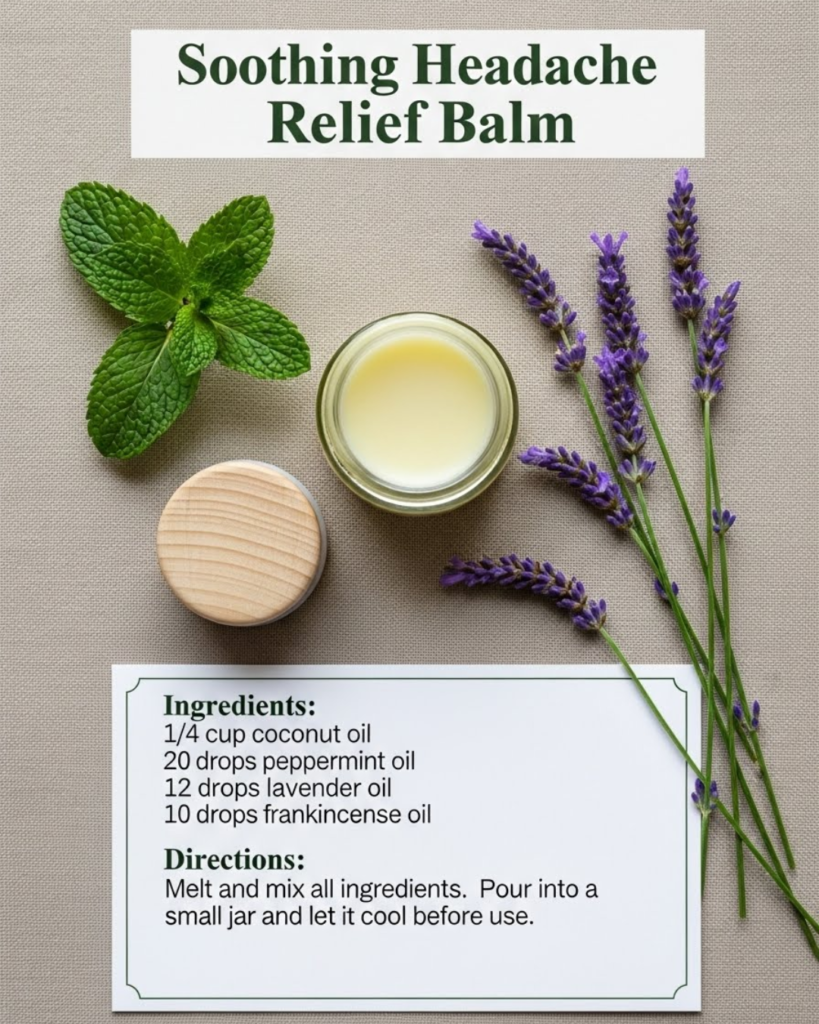
Standard batch quantities for approximately 100 grams finished product: 20g beeswax, 75g carrier oil blend (suggest 40g jojoba oil, 35g sweet almond oil), 5g essential oil blend (2.5g peppermint, 1.5g lavender, 1g eucalyptus). This yields approximately 8-10 containers depending on size.
Phase 2: Base Component Melting and Integration (12-15 minutes)
Create double boiler configuration placing heat-resistant glass container above—not touching—gently simmering water. Add beeswax first as it requires highest temperature for complete liquefaction. Monitor temperature carefully using candy thermometer—maintain between 65-75°C to ensure complete melting without degrading wax properties. Once wax achieves complete liquid state (no visible solid particles), add carrier oils and continue gentle heating with periodic stirring until mixture appears homogeneous and completely clear.
Visual assessment provides useful quality control: properly melted base should demonstrate uniform clarity without cloudiness, separated layers, or suspended particles. Any haziness suggests incomplete melting or potential contamination requiring additional heating or filtration.
Phase 3: Essential Oil Integration and Cooling (5-8 minutes)
Remove base mixture from heat and allow cooling to approximately 55-60°C before adding essential oils—this temperature prevents excessive volatile compound evaporation while remaining sufficiently liquid for thorough mixing. Add essential oils dropwise while stirring continuously to ensure even distribution throughout base matrix. The stirring motion should be gentle and consistent—vigorous agitation incorporates air bubbles that create undesirable texture in final product.
Timing proves critical during this phase. Essential oils added to excessively hot base (above 70°C) suffer significant evaporative losses, reducing therapeutic potency and altering aromatic profile. Conversely, addition to overly cooled base (below 50°C) prevents proper integration as increasing viscosity impedes uniform distribution.
Phase 4: Container Filling and Final Solidification (20-30 minutes)
Pour prepared balm into final containers working efficiently as mixture begins solidifying around 50°C. Fill containers to approximately 95% capacity allowing minor volume contraction during cooling. Avoid disturbing containers during initial solidification phase—movement can create surface irregularities, air pockets, or separation. Complete solidification occurs over 1-2 hours at room temperature, though full maturation requiring molecular reorganization continues for 24 hours.
Quality assessment post-solidification should evaluate: consistency (should be firm yet spreadable at room temperature), aromatic intensity (strong but not overwhelming), color uniformity (pale yellow to off-white depending on carrier oils), and surface appearance (smooth without pitting or cracking).
Advanced Formulation Techniques and Customization Strategies
Once fundamental formulation skills develop, numerous advanced techniques enable customization addressing specific headache patterns, individual preferences, and enhanced therapeutic targeting. These modifications demonstrate the remarkable versatility inherent in botanical formulation science.
Menthol Crystal Enhancement for Intensified Cooling
Natural menthol crystals—isolated from peppermint or cornmint essential oils—can be incorporated at 1-3% concentration to dramatically intensify cooling sensation beyond what peppermint oil alone provides. This proves particularly valuable for acute headache relief where strong sensory distraction supports pain modulation through counter-stimulation mechanisms.
Incorporation technique requires dissolving menthol crystals in carrier oil before adding to formulation. Heat carrier oil portion to approximately 50°C, add menthol crystals, and stir until complete dissolution occurs. Then proceed with standard formulation protocol. The resulting balm demonstrates significantly enhanced cooling effects that some users find more effective for severe headache episodes, though the intensified sensation may prove too strong for sensitive individuals or children.
Caffeine Integration for Vascular Headache Management
Caffeine demonstrates established efficacy for certain headache types—particularly migraines—through vasoconstriction of dilated cerebral blood vessels and enhancement of analgesic medication effects. While oral caffeine consumption represents the conventional delivery route, topical incorporation offers localized effects without systemic stimulation.
Formulation approach involves creating caffeine-infused carrier oil through gentle heating: combine 2-3 grams caffeine powder (available from specialty suppliers) with 100ml carrier oil, heat gently to 50-60°C while stirring until caffeine dissolves completely. This infused oil then replaces portion of standard carrier oil in base formulation. The resulting balm provides mild vasoconstrictive effects when applied to temples and forehead—areas where superficial temporal arteries course near skin surface.
Herbal Infusion Integration for Enhanced Therapeutic Complexity
Beyond essential oils, incorporating herbal infusions adds additional phytochemical dimensions. Preparing infused oils involves steeping dried botanical material in carrier oil—either through cold maceration (2-4 weeks at room temperature) or gentle heat acceleration (low-temperature heating for several hours). Relevant botanicals for headache formulations include feverfew (Tanacetum parthenium) containing parthenolide with documented migraine-preventive properties, white willow bark (Salix alba) providing natural salicylates with anti-inflammatory effects, and ginger (Zingiber officinale) offering circulatory stimulation and nausea relief.
The herbal infusion process: fill glass jar approximately 50% with dried botanical material, cover completely with carrier oil ensuring 1-2 inches oil above plant material, seal and place in warm location (30-40°C) for 2-3 weeks, shaking daily. Strain through fine mesh or cheesecloth, pressing to extract maximum oil. This infused oil replaces standard carrier oil in formulation, contributing both therapeutic compounds and subtle aromatic characteristics.
pH Optimization and Skin Barrier Considerations
While traditional balm formulations don’t directly manipulate pH (being anhydrous systems lacking aqueous phase), consideration of ingredient acidity/alkalinity influences skin compatibility. Healthy skin maintains slightly acidic surface pH (4.5-5.5) protecting against microbial colonization and supporting barrier function. Highly alkaline ingredients can disrupt this protective acid mantle, potentially causing irritation or sensitivity.
Most essential oils and carrier oils demonstrate neutral to slightly acidic characteristics compatible with cutaneous pH. However, certain additives—particularly if incorporating aqueous components or specific botanical extracts—may alter pH profiles. For enhanced skin compatibility, consider adding small amounts (0.5-1%) of naturally acidic ingredients like rosehip seed oil (Rosa canina) rich in vitamin C and citric acid, maintaining formulation within optimal pH range for cutaneous application.
Application Protocols and Therapeutic Optimization
Effective headache relief requires not merely well-formulated balm but also strategic application techniques maximizing therapeutic compound delivery, physiological responses, and symptomatic improvement. Evidence-based application protocols draw from aromatherapy research, massage therapy principles, and neurological understanding of headache pathophysiology.
Anatomical Targeting and Application Techniques
Precise application to specific anatomical regions optimizes therapeutic outcomes. The temples—where superficial temporal arteries and temporalis muscles locate—represent primary application sites for most headache types. Apply small amount (approximately pea-sized quantity) using gentle circular massage motions for 30-60 seconds per side. This mechanical stimulation enhances absorption while providing additional therapeutic benefit through acupressure-like effects on underlying tissues.
The forehead—particularly the glabella region between eyebrows—constitutes another critical application zone. This area correlates with traditional acupressure points (Yintang in Chinese medicine) associated with headache relief and stress reduction. Light pressure application combined with slow, deliberate strokes from center outward toward temples creates both localized effects and broader relaxation responses through parasympathetic nervous system activation.
The posterior neck and occipital region merit attention for tension-type headaches originating from cervical muscle tension. Apply balm along the nuchal ridge—the bony prominence at skull base where neck muscles attach—using firm but gentle pressure. The occipital nerves (greater and lesser occipital) traverse this region, and external stimulation may influence pain signaling through these structures.
Temporal Optimization and Preventive Applications
Timing of application significantly influences therapeutic outcomes. For acute headache episodes, early intervention—at first symptom recognition—generally produces superior results compared to delayed treatment after pain intensification. The neurophysiological rationale involves preventing central sensitization phenomena where prolonged nociceptive input creates amplified pain processing and reduced analgesic responsiveness.
Preventive applications represent an underutilized strategy particularly valuable for individuals with predictable headache patterns. Those experiencing menstrual-associated migraines, weekend tension headaches, or other cyclical patterns may benefit from prophylactic balm application during high-risk periods. Apply to temples, forehead, and neck 1-2 times daily during vulnerable timeframes, potentially reducing headache incidence or severity through sustained exposure to therapeutic compounds and stress-reducing aromatic effects.
Complementary Techniques Enhancing Balm Efficacy
Integrating additional therapeutic modalities creates synergistic effects exceeding isolated balm application. Heat application—using warm compress over balm-treated areas after initial absorption—enhances vasodilation and compound penetration while providing additional muscle relaxation through thermotherapy mechanisms. Apply warm (not hot) damp cloth for 10-15 minutes following balm massage.
Cold therapy offers alternative approach particularly valuable for migraine sufferers. After applying balm to temples and forehead, place cold compress or ice pack wrapped in thin cloth over treated areas. The combination of menthol’s cooling sensation and actual cold temperature creates powerful counter-irritant effects while vasoconstriction addresses the vascular component of migraine pathophysiology.
Controlled breathing exercises performed during and after balm application optimize outcomes through multiple pathways: deep diaphragmatic breathing activates parasympathetic nervous system promoting relaxation, enhanced aromatherapeutic compound inhalation occurs through deliberate breathing, and attention focusing on breath creates meditative state reducing stress-related headache components. Practice slow, controlled breathing (4-second inhalation, 4-second hold, 6-second exhalation) for 5-10 minutes following application.
Safety Considerations and Contraindication Management
While natural headache relief balms generally demonstrate favorable safety profiles compared to pharmaceutical interventions, appropriate precautions ensure safe usage across diverse populations and circumstances. Understanding potential adverse effects, drug interactions, and contraindications enables informed decision-making and responsible formulation practices.
Dermal Safety and Sensitization Concerns
Essential oils, despite natural origins, represent highly concentrated phytochemical mixtures capable of causing adverse dermal reactions in susceptible individuals. Contact sensitization—an allergic response developing through repeated exposure—occurs more frequently with certain essential oil constituents, particularly oxidized monoterpenes and allergenic compounds like citral and geraniol. The European Scientific Committee on Consumer Safety identifies numerous essential oil components requiring concentration restrictions in leave-on cosmetic products.
Patch testing before extensive use proves prudent, especially for individuals with sensitive skin, atopic conditions, or known fragrance allergies. Apply small amount of diluted balm to inner forearm, cover with bandage, and monitor for 24-48 hours. Reactions manifesting as redness, itching, burning, or vesicle formation indicate sensitivity requiring formulation modification or avoidance.
Photosensitivity represents specific concern with citrus essential oils containing furanocoumarins—compounds increasing UV sensitivity and potentially causing severe phototoxic reactions upon sun exposure. While headache balm formulations typically avoid citrus oils, any formulation containing bergamot, lemon, or other citrus constituents requires caution. Avoid sun exposure on treated skin areas for at least 12 hours post-application, or preferably exclude photosensitizing oils from facial formulations entirely.
Population-Specific Considerations
Pregnancy and lactation introduce additional safety considerations requiring conservative approaches. While topical essential oil application generally poses lower systemic exposure risks compared to oral routes, certain constituents may present theoretical concerns. Peppermint oil, though commonly used during pregnancy for nausea relief, requires caution in concentrated topical forms. Conservative recommendations suggest limiting essential oil concentrations to 1% or lower for pregnant individuals and avoiding potentially emmenagogue oils (rosemary, clary sage) entirely.
Pediatric applications demand significant formulation modifications. Children demonstrate thinner stratum corneum enabling enhanced percutaneous absorption, potentially increasing systemic exposure to essential oil constituents. Additionally, developing nervous systems may demonstrate heightened sensitivity to certain compounds. For children under 2 years, avoid essential oil-containing products entirely. For ages 2-6, limit total essential oil concentration to 0.5-1%, emphasizing gentler oils (lavender, chamomile) while avoiding potentially neurotoxic compounds (eucalyptus, rosemary, peppermint).
Individuals with epilepsy or seizure disorders require special consideration as certain essential oils—particularly those high in camphor, 1,8-cineole, or other ketones—may theoretically lower seizure thresholds. While evidence remains limited and primarily derived from case reports of extremely high exposures, conservative practice suggests avoiding or minimizing these constituents in formulations for seizure-prone individuals.
Drug Interactions and Medical Contraindications
Though topical application limits systemic absorption compared to oral routes, potential interactions with medications warrant consideration. Individuals taking anticoagulant medications (warfarin, newer oral anticoagulants) should exercise caution with formulations containing natural salicylate sources (wintergreen oil, sweet birch) as these compounds theoretically potentiate anticoagulant effects. Similarly, those taking cytochrome P450-metabolized medications should note that certain essential oil constituents—particularly from grapefruit—inhibit these enzymes, potentially altering drug metabolism.
Active dermatological conditions at application sites contraindicate use until resolution occurs. Broken skin, active dermatitis, or infectious processes provide abnormal absorption pathways enabling excessive systemic exposure while potentially worsening underlying conditions. Additionally, ocular exposure must be scrupulously avoided—essential oils cause severe irritation to mucous membranes and corneal tissue. If accidental eye contact occurs, flush immediately with carrier oil (not water, which spreads essential oils rather than diluting them), followed by gentle soap and water cleansing.
Important Disclaimer: This article is for informational purposes only and should not replace professional advice. For health-related topics, consult healthcare providers. Individual results may vary, and personal circumstances should always be considered when implementing any suggestions. Headaches can indicate serious underlying conditions requiring medical evaluation. Persistent, severe, or sudden-onset headaches warrant immediate medical assessment.
Conclusion: Integrating Botanical Formulation Science with Therapeutic Practice
The development and application of natural headache relief balms represents convergence of traditional botanical wisdom, contemporary formulation science, and evidence-based therapeutic principles. Current research—though requiring expansion through larger randomized controlled trials—supports meaningful symptomatic benefits from topical essential oil applications, particularly for tension-type headaches and certain migraine presentations. The mechanisms underlying these effects span neurophysiological pain modulation, anti-inflammatory actions, psychological stress reduction, and vascular effects, creating multifaceted therapeutic interventions addressing the complex, multifactorial nature of headache disorders.
Successful outcomes require more than simply applying aromatic preparations to painful areas. Optimal results emerge from thoughtfully formulated balms employing appropriate essential oil selection and concentration, strategic application to neurologically-relevant anatomical regions, integration with complementary therapeutic approaches, and consideration of individual patient characteristics influencing safety and efficacy. This personalized, integrative approach honors both the complexity of headache pathophysiology and the sophisticated chemistry of botanical therapeutics.
The accessibility of natural headache relief balm formulation—requiring modest financial investment and basic equipment—empowers individuals to participate actively in their own symptom management while potentially reducing dependence on pharmaceutical interventions and their associated adverse effect profiles. As our understanding of essential oil pharmacology, transdermal delivery mechanisms, and pain neurobiology continues advancing, these botanical preparations may achieve broader recognition as legitimate components of comprehensive headache management strategies—complementing rather than replacing conventional medical approaches when appropriately applied within evidence-based frameworks that acknowledge both their therapeutic potential and inherent limitations.