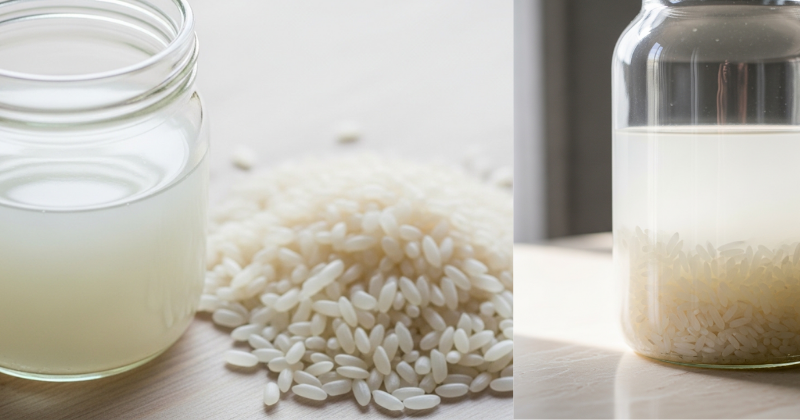
Rice water — the starchy liquid remaining after rinsing or cooking rice — has sustained a remarkable continuity across Asian beauty traditions for over a millennium, with Japanese Heian period court ladies and Chinese Yao ethnic minority women documenting its use for maintaining floor-length hair well into old age. Modern biochemical analysis validates these traditional applications through identification of specific compounds: inositol (a carbohydrate that penetrates damaged hair and repairs from within), amino acids (building blocks for keratin protein synthesis), vitamins B and E (supporting scalp health and follicular function), and minerals including magnesium, zinc, and selenium. Research published in the International Journal of Cosmetic Science documented that inositol remains inside hair even after rinsing, providing continuing protection and repair. This DIY rice water hair growth treatment delivers these bioactive compounds in a preparation requiring minimal effort and essentially zero cost — transforming a byproduct typically discarded into one of the most effective natural hair treatments available.
The Biochemistry Behind Rice Water’s Hair Benefits
Understanding the specific compounds in rice water and their documented effects on hair structure and follicular biology transforms this treatment from traditional remedy into evidence-informed intervention.
Inositol: The Hair Repair Molecule
Inositol — a cyclic carbohydrate abundant in rice water at concentrations of approximately 100-200mg per liter depending on rice variety and preparation method — exhibits a unique property among hair treatment compounds: it penetrates the hair cortex (the structural core beneath the cuticle) and remains there even after thorough rinsing, providing ongoing structural support. The mechanism involves inositol’s ability to diffuse through the hair cuticle’s lipid layers due to its amphiphilic properties (possessing both water-soluble and lipid-soluble characteristics).
Once inside the cortex, inositol provides two critical functions. It increases hair elasticity by filling spaces between keratin protein fibers, allowing hair to stretch and return without breaking — particularly valuable for naturally curly or chemically treated hair prone to brittleness. It also protects against future damage by coating individual cortical fibers, reducing friction between them during combing and manipulation that causes internal structural degradation. The International Journal research demonstrated that inositol-treated hair showed significantly less protein loss when exposed to subsequent chemical damage compared to untreated controls.
Amino Acids and Protein Content
Rice water contains measurable quantities of amino acids released from rice protein during the soaking or cooking process — particularly glutamic acid, aspartic acid, and cysteine. Hair is approximately 95% keratin, a structural protein synthesized from 18 different amino acids. While topically applied amino acids don’t directly synthesize new keratin within the hair shaft (which is biologically dead tissue), they do bind to damaged areas of existing hair where protein loss has occurred, temporarily filling gaps and improving structural integrity until those damaged sections grow out and are trimmed away.
The cysteine content is particularly significant because cysteine forms the disulfide bonds (S-S bridges) that provide hair its strength and resilient structure. Cysteine-rich treatments may support the reformation of broken disulfide bonds in damaged hair, though this mechanism requires further research confirmation.
Vitamins and Minerals Supporting Scalp Health
The vitamin E, B vitamins (particularly niacin, biotin, and pantothenic acid), and minerals (magnesium, zinc, selenium) in rice water provide nutritional support for scalp health and follicular function when applied topically. Zinc specifically plays documented roles in protein synthesis and cell division — processes essential for the actively growing anagen-phase hair follicle. Niacin (vitamin B3) improves scalp microcirculation through vasodilatory effects, enhancing delivery of oxygen and nutrients to follicular dermal papilla cells.
While these micronutrients are present in relatively modest concentrations in rice water compared to their dietary requirements, consistent topical application may provide meaningful supplemental delivery directly to follicles and the scalp surface where they exert local effects.
Complete Rice Water Preparation Methods
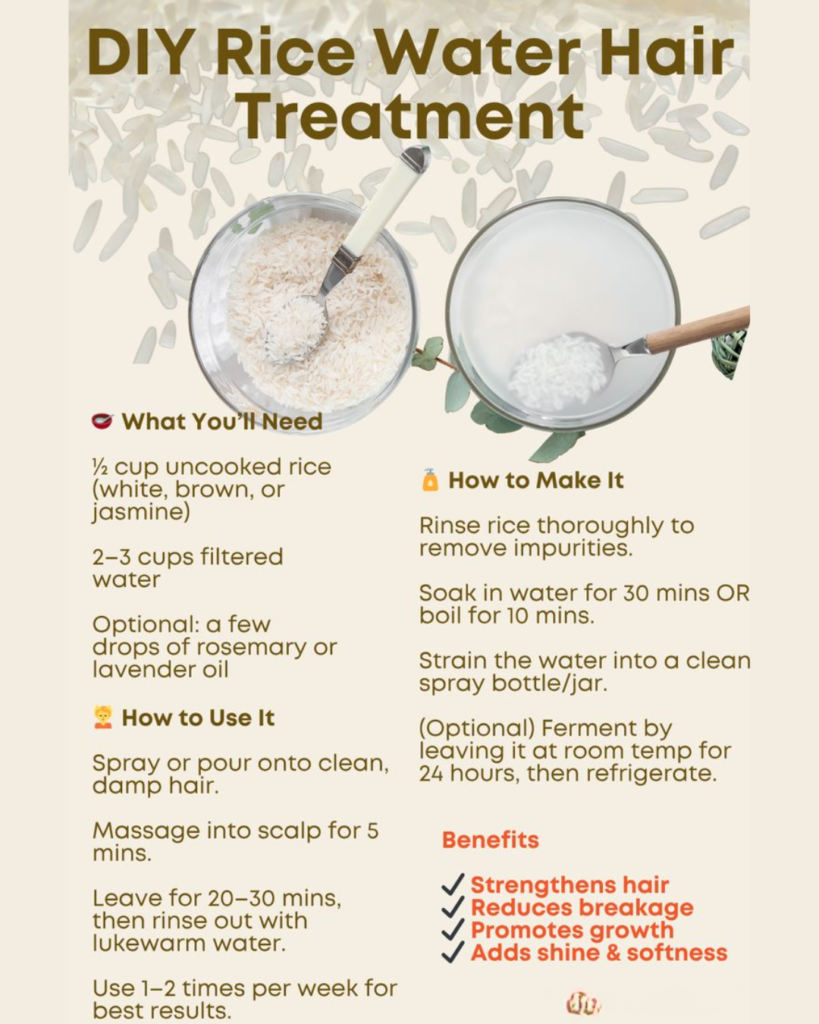
Rice water can be prepared through three distinct methods, each producing different concentrations of bioactive compounds and requiring different time investments.
Method 1: Simple Soaking (Fastest, Mildest)
This method extracts water-soluble compounds without heat-induced extraction of deeper components, producing the mildest preparation appropriate for sensitive scalps or as an introduction to rice water treatments.
What you need:
- 1/2 cup uncooked rice (any variety — white, brown, jasmine, basmati)
- 2-3 cups clean water
- Bowl and strainer
Preparation steps:
Step 1: Rinse the rice under running water for 30 seconds to remove surface dirt and debris — do not use this initial rinse water, discard it.
Step 2: Place the rinsed rice in a bowl and add 2-3 cups of clean water. Swirl and gently squeeze the rice with clean hands for 2-3 minutes — you’ll observe the water becoming increasingly cloudy and white as starch and water-soluble compounds release.
Step 3: Strain out the rice (which can still be cooked and eaten normally), reserving the cloudy water. This is your ready-to-use rice water. Use immediately or refrigerate in a sealed container for up to 7 days.
Expected concentration: This method produces the most dilute preparation with moderate inositol and starch content — appropriate for daily use or for individuals with sensitive scalps.
Method 2: Boiled Rice Water (Highest Concentration)
Heating rice in water extracts not only surface compounds but also components from deeper within the grain, producing the most concentrated bioactive preparation.
What you need:
- 1/2 cup uncooked rice
- 3 cups water
- Pot for cooking
- Strainer
Preparation steps:
Step 1: Rinse rice briefly to remove surface debris.
Step 2: Combine rice and water in a pot. Bring to a boil, then reduce heat and simmer uncovered for 15-20 minutes — longer than you would for eating, as the goal is maximal extraction into the water rather than fully cooked rice.
Step 3: Strain the rice, collecting the cooking water. Allow to cool completely before use. The resulting rice water will be noticeably more opaque and starchy than the soaking method.
Step 4: This concentrated extraction is typically diluted before use — mix 1 part boiled rice water with 2-3 parts plain water for application. Store refrigerated for up to 2 weeks (the heat processing provides slight preservation advantage over raw soaking method).
Expected concentration: This method produces the highest inositol, amino acid, and mineral content — most appropriate for damaged hair requiring intensive treatment or for weekly deep conditioning rather than daily use.
Method 3: Fermented Rice Water (Enhanced With Probiotics)
Allowing rice water to ferment at room temperature for 12-48 hours increases its pH (from approximately pH 6 to pH 5.5-6.0) and produces additional compounds including trace amounts of organic acids and possibly beneficial bacteria.
What you need:
- Rice water prepared by Method 1 (simple soaking)
- Clean container with loose-fitting lid
- 12-48 hours fermentation time
Preparation steps:
Step 1: Prepare rice water using the simple soaking method.
Step 2: Transfer the strained rice water to a clean jar or container. Cover loosely (not airtight — fermentation produces gas) and leave at room temperature for 12-48 hours. The water will develop a slightly sour smell when fermentation is complete — this is normal and indicates organic acid production.
Step 3: After fermentation, refrigerate to halt the process. The fermented rice water should be diluted before use — mix 1-2 tablespoons of fermented rice water with 1 cup of plain water for application.
Expected benefits: Fermentation slightly lowers pH closer to hair’s natural 4.5-5.5 range, which helps seal the hair cuticle for enhanced shine. Some users report that fermented rice water produces stronger results than fresh rice water, though controlled research comparing the two is limited.
Application Protocol for Maximum Hair Benefit
The effectiveness of rice water treatment depends significantly on application technique — ensuring the treatment reaches both the scalp (for follicular benefit) and the hair shaft (for structural repair).
Pre-Application Hair Preparation
Begin with freshly shampooed, wet hair. Rice water works best as a post-shampoo treatment rather than a standalone cleanser — the shampoo removes oil, product buildup, and debris that would otherwise prevent rice water penetration. Gently squeeze excess water from hair so it’s damp but not dripping — overly wet hair dilutes the rice water excessively.
Direct Application Technique
Pour rice water into a bowl or applicator bottle. If using a bowl, lean over it and submerge hair completely, massaging the rice water through from roots to ends for 2-3 minutes. If using an applicator bottle, section hair and apply rice water systematically to the scalp along part lines (as with other scalp treatments), then work through to the ends. Ensure both scalp and full hair length receive coverage.
The Critical Massage and Contact Time
Once hair is saturated with rice water, massage the scalp with firm circular motions for 3-5 minutes. This massage stimulates blood flow (complementing the niacin-mediated vasodilation from rice water), mechanically distributes the treatment, and may enhance penetration through follicular openings. Allow the rice water to remain on hair and scalp for a minimum of 15-20 minutes. Many users report enhanced results with 30-60 minute contact times. Some users apply before bed, wrap hair in a shower cap or towel, and leave overnight (though this requires tolerance of the mild sour smell from fermented versions).
Rinsing and Conditioning
Rinse thoroughly with cool or lukewarm water — cool water helps seal the hair cuticle, locking in the inositol and amino acids that have penetrated during treatment. Some users apply a light leave-in conditioner after rinsing, particularly for naturally dry or curly hair types. Others find rice water provides sufficient conditioning on its own and skip additional products.
Treatment Frequency
For hair growth and scalp health: 2-3 times weekly provides consistent bioactive compound delivery without excessive manipulation or potential protein overload (discussed in troubleshooting). For damaged hair repair and strengthening: Daily application for 2-3 weeks as an intensive treatment, then 2-3 times weekly for maintenance. Most users observe initial improvements in hair texture, shine, and manageability within 2-3 weeks. Hair growth effects manifest more slowly — follicular stimulation requires 8-12 weeks to produce visible length changes.
Advanced Strategies for Enhanced Results
Rice Water Plus Essential Oils for Scalp Stimulation
Enhancing rice water with essential oils documented to improve scalp circulation and potentially stimulate follicular activity creates a synergistic treatment. Add 3-5 drops of rosemary essential oil (documented 5-alpha reductase inhibition comparable to 2% minoxidil in 6-month trials), 3-5 drops of peppermint oil (menthol-mediated vasodilation and increased follicle number/depth in animal studies), or 3-5 drops of lavender oil (increased follicle number and depth in mouse models) per cup of prepared rice water. This enhanced formula addresses both hair structural repair (from rice water) and follicular stimulation (from essential oils).
Rice Water With Aloe Vera for Dry, Damaged Hair
For hair that’s dry, porous, or chemically damaged, combining rice water with aloe vera gel provides complementary benefits. Mix 1/4 cup rice water with 2 tablespoons pure aloe vera gel — whisk or blend until smooth. The aloe provides additional moisturizing humectants and polysaccharides that improve hair elasticity while the rice water delivers protein-strengthening amino acids and inositol. This combination addresses both moisture and protein balance — critical for maintaining healthy hair structure.
Building a Complete Rice-Based Hair System
Rice water achieves maximum results when integrated within a comprehensive hair care approach. Using rice water as a weekly rinse, a rice bran oil scalp treatment (providing ceramides and fatty acids for moisture), and ensuring dietary adequacy of protein (hair is protein, requiring 0.8-1.2g per kg body weight daily) creates a multi-level system where external treatments and internal nutrition work synergistically.
Troubleshooting Common Rice Water Treatment Challenges
Hair Feels Stiff or Straw-Like After Treatment
This is the most commonly reported challenge with rice water treatments and reflects protein overload — excessive protein deposition on and within the hair shaft without adequate moisture balance. Hair requires both protein (for strength and structure) and moisture (for flexibility and softness). Rice water delivers significant protein and amino acids; if used too frequently or in excessively concentrated forms without adequate moisturizing treatments, hair becomes brittle and stiff.
Solutions: Reduce rice water frequency to once weekly. Dilute prepared rice water more than initially used (add 50-100% more plain water). Alternate rice water treatments with deep moisturizing conditioning treatments containing oils, shea butter, or glycerin. Consider switching from boiled method to simple soaking method which extracts fewer proteins.
Scalp Itching or Irritation
Some individuals experience scalp sensitivity to rice water, manifesting as itching, redness, or flaking. This may reflect pH sensitivity (particularly with fermented rice water) or allergic sensitivity to compounds in rice.
Solutions: Perform a patch test on a small scalp area before full application. If fermented rice water causes irritation, switch to fresh non-fermented preparation. Dilute rice water more substantially. Reduce contact time to 10-15 minutes maximum. If irritation persists despite modifications, discontinue use — individual tolerance varies.
No Visible Results After Weeks of Use
If no improvements in hair texture, shine, or growth appear after 6-8 weeks of consistent 2-3 times weekly use, several factors merit consideration. Hair porosity affects treatment absorption — low porosity hair resists penetration of water-based treatments and may require heat (warm towel wrap during treatment, or using rice water warmed to body temperature) to open the cuticle for absorption. The hair loss may be driven by factors rice water doesn’t address — hormonal imbalances, nutritional deficiencies (iron, zinc, biotin, protein), or medical conditions requiring professional treatment. Unrealistic expectations about growth rate — normal hair growth averages 1/2 inch (1.25cm) monthly regardless of treatment.
Comparing Rice Water to Other Natural Hair Treatments
Rice water occupies a unique position in the natural hair treatment landscape — delivering measurable protein-strengthening effects documented in peer-reviewed research (unlike many botanicals relying primarily on traditional use) while remaining remarkably accessible and inexpensive (unlike specialized extracts or supplements). Its primary limitation is the protein-moisture balance challenge requiring careful attention to frequency and complementary moisturizing treatments. For individuals seeking protein strengthening, shine enhancement, and potential growth support through improved scalp health, rice water represents one of the most evidence-supported natural options available.
Conclusion
DIY rice water hair growth treatment delivers genuine hair strengthening, repair, and follicular support through bioactive compounds validated by modern research and refined through centuries of traditional use. Inositol penetrates the hair cortex providing structural reinforcement, amino acids temporarily repair protein-depleted areas, and vitamins plus minerals support scalp health and follicular function. Prepare using the method matching your hair’s needs (simple soaking for daily use, boiled for intensive treatment, fermented for enhanced shine), apply with thorough scalp massage and adequate contact time, and maintain consistent 2-3 times weekly application through the 8-12 week timeline that hair growth biology requires. The improvements in hair texture, shine, strength, and potentially growth rate that rice water produces are genuinely achievable — requiring only consistency, proper technique, and attention to the protein-moisture balance that determines whether treatments strengthen or stiffen your hair.