
Article
Electrolytes are minerals in your body that carry an electric charge, helping regulate vital functions such as fluid balance, nerve signaling, and muscle contraction. The most important electrolytes include potassium, sodium, and magnesium. Understanding their normal ranges and functions can help you maintain health, optimize performance, and prevent imbalances.
In this guide, you’ll learn what each electrolyte does, how to recognize deficiencies or excesses, and practical tips to maintain balance naturally.
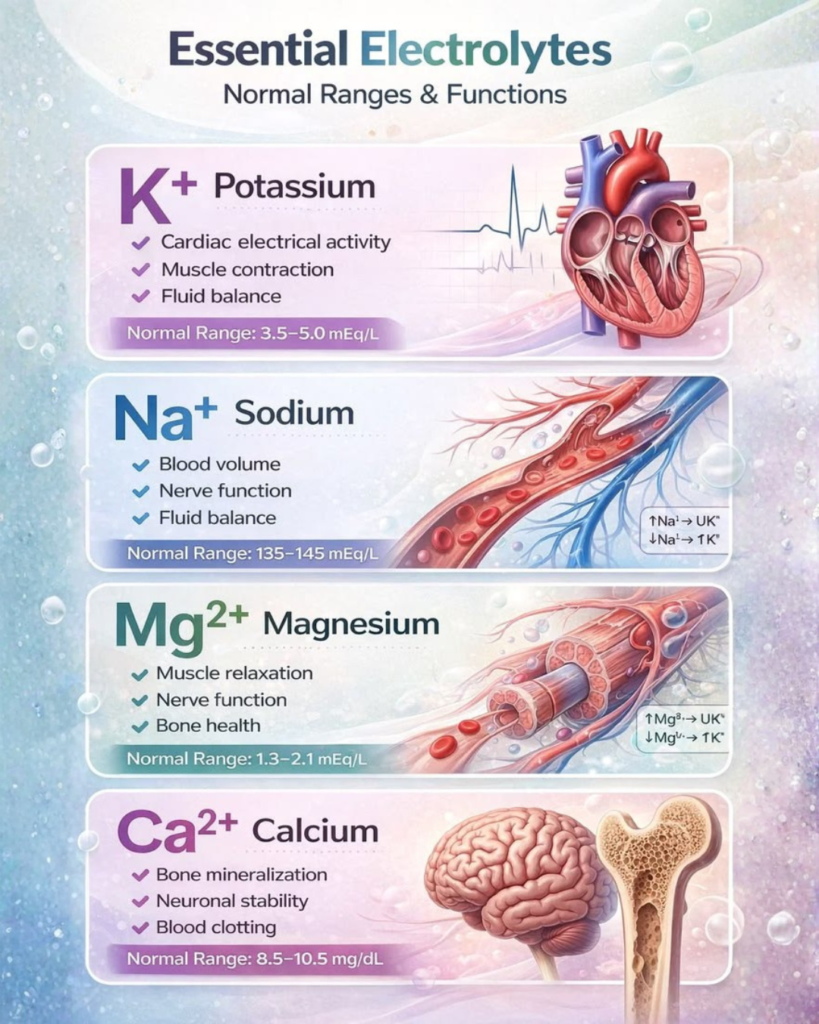
Why Electrolytes Matter
Electrolytes are essential for every cell in your body. They:
- Maintain hydration by regulating fluid balance
- Support nerve and muscle function
- Keep your heart rhythm steady
- Enable metabolic processes and energy production
Imbalances can lead to fatigue, muscle cramps, irregular heartbeat, dizziness, or digestive issues.
1. Potassium
Function:
- Regulates fluid and electrolyte balance
- Supports muscle contractions and nerve signaling
- Helps maintain healthy blood pressure
Normal Range (Adults): 3.5–5.0 mEq/L
Signs of Imbalance:
- Low potassium (hypokalemia): fatigue, muscle cramps, irregular heartbeat
- High potassium (hyperkalemia): weakness, heart palpitations, nausea
Food Sources: Bananas, spinach, avocados, sweet potatoes, beans, and yogurt.
2. Sodium
Function:
- Controls blood pressure and blood volume
- Supports nerve impulses and muscle function
- Works with potassium to maintain fluid balance
Normal Range (Adults): 135–145 mEq/L
Signs of Imbalance:
- Low sodium (hyponatremia): headache, confusion, nausea, weakness
- High sodium (hypernatremia): thirst, high blood pressure, swelling
Food Sources: Sea salt, celery, beets, and seafood.
Tip: Most diets provide enough sodium naturally; excessive intake can raise blood pressure.
3. Magnesium
Function:
- Supports muscle and nerve function
- Helps regulate blood pressure
- Plays a role in energy production and bone health
Normal Range (Adults): 1.7–2.2 mg/dL
Signs of Imbalance:
- Low magnesium (hypomagnesemia): muscle twitches, cramps, fatigue, irritability
- High magnesium (hypermagnesemia, rare): nausea, low blood pressure, slowed heart rate
Food Sources: Nuts, seeds, leafy greens, whole grains, and dark chocolate.
Tips to Maintain Healthy Electrolytes
- Stay hydrated — water helps transport electrolytes efficiently.
- Eat a balanced diet rich in fruits, vegetables, and whole foods.
- Moderate alcohol and caffeine, which can affect electrolyte balance.
- Exercise wisely and replenish electrolytes after intense workouts.
- Consider supplements only if recommended by a healthcare professional.
Conclusion
Potassium, sodium, and magnesium are essential electrolytes that keep your body functioning optimally. Maintaining normal ranges supports energy, muscle function, heart health, and overall well-being. By understanding their roles and including electrolyte-rich foods in your diet, you can help prevent imbalances and keep your body performing at its best.