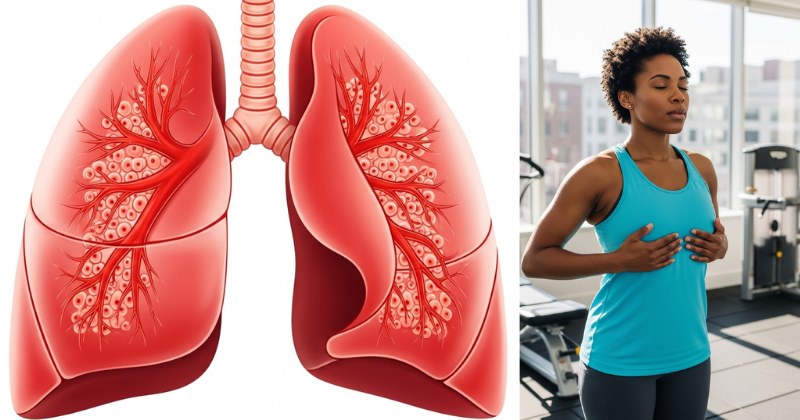
Most people train their arms, legs, and core — but almost nobody thinks to train the muscles that keep them alive every second of every day. Your respiratory muscles, including the diaphragm, intercostals, and accessory breathing muscles, are trainable just like any other muscle group in your body. When you exercise your lungs deliberately and consistently, the physiological rewards are remarkable: greater oxygen efficiency, faster recovery from illness, improved athletic endurance, and the kind of effortless breathing that most adults haven’t experienced since childhood. Whether you’re recovering from a respiratory illness, managing a chronic condition, or simply wanting to perform and feel better every day, lung exercises offer a scientifically validated path to breathing better and spending less time sidelined by breathlessness, fatigue, and respiratory setbacks.
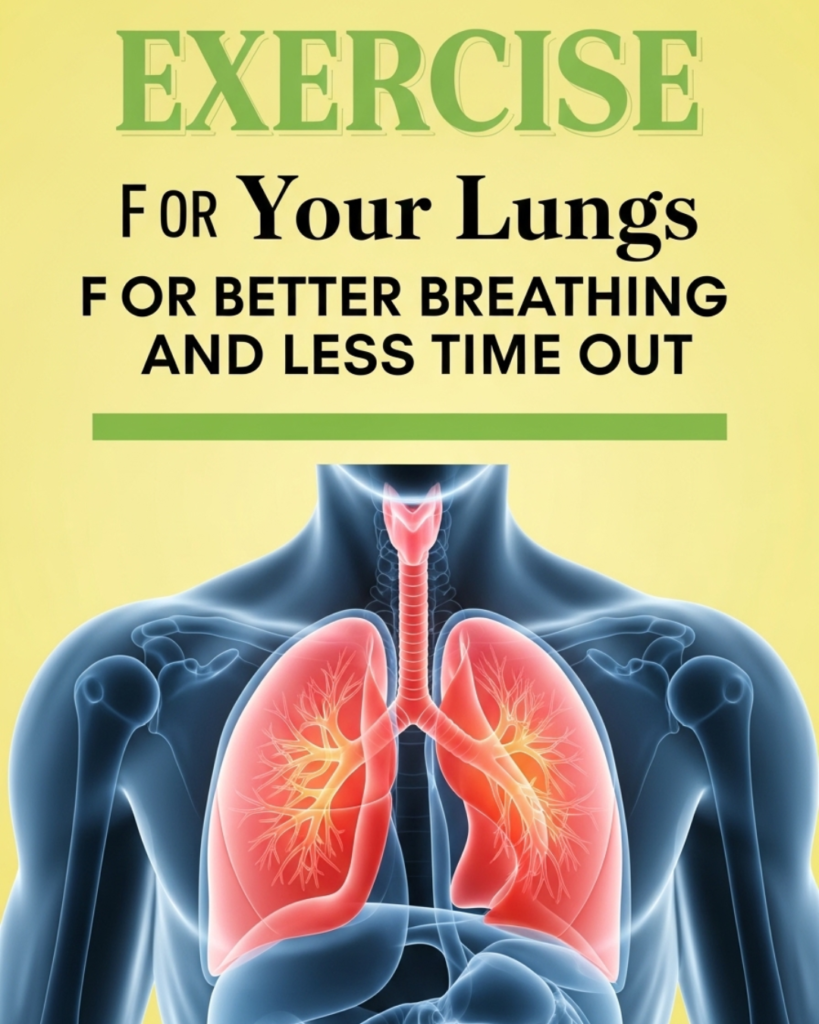
The Physiology of Lung Training: What’s Actually Happening
Before diving into exercises, understanding what lung training actually changes at the physiological level helps you appreciate why these techniques work and motivates consistent practice. The lungs themselves are passive organs — they don’t contract independently. What you’re actually training when you “exercise your lungs” is the entire respiratory system: the muscles that drive ventilation, the neural pathways controlling breathing patterns, and the efficiency of gas exchange at the alveolar level.
Respiratory Muscle Anatomy and Function
The primary muscle of breathing is the diaphragm — a dome-shaped sheet of muscle separating the thoracic and abdominal cavities. During inhalation, the diaphragm contracts and flattens downward, increasing thoracic volume and creating the pressure differential that draws air into the lungs. Simultaneously, the external intercostal muscles between the ribs elevate and expand the rib cage. During quiet breathing, exhalation is largely passive — the elastic recoil of lung tissue and the chest wall drives air out without muscular effort.
During forced or labored breathing, accessory muscles activate: the scalenes and sternocleidomastoids in the neck elevate the upper rib cage on inhalation, while the internal intercostals and abdominal muscles (rectus abdominis, obliques, transverse abdominis) actively compress the thorax during forceful exhalation. Lung training strengthens all of these muscle groups, increasing their endurance and force-generating capacity — which directly translates to reduced effort for any given breathing demand.
Key Metrics That Improve With Lung Exercise
Several measurable physiological parameters respond to consistent respiratory training. Forced vital capacity (FVC) — the total volume of air you can forcefully exhale after maximum inhalation — increases as respiratory muscles strengthen. Peak expiratory flow rate (PEFR) improves as exhalation muscle power develops. Critically, breathing efficiency improves even when absolute lung volumes don’t change dramatically: trained respiratory muscles consume less metabolic energy per breath, leaving more oxygen available for working muscles during exercise or recovery. Research published in the Journal of Applied Physiology demonstrates that inspiratory muscle training reduces the “work of breathing” by up to 30% in trained individuals, directly improving exercise tolerance and reducing perceived breathlessness.
Core Lung Exercises: Your Essential Daily Practice
These foundational breathing exercises form the backbone of any effective lung training program. They require no equipment, can be performed anywhere, and produce measurable improvements within 4-8 weeks of consistent practice.
1. Diaphragmatic Breathing (Belly Breathing) This is the starting point for everyone, regardless of fitness level or respiratory health. Most adults habitually breathe shallowly into the upper chest — a pattern that activates accessory muscles unnecessarily and delivers less air per breath. Diaphragmatic breathing retrains the primary breathing muscle to do its job fully.
Lie on your back with knees bent, or sit comfortably upright. Place one hand on your chest and one on your abdomen just below the ribcage. Inhale slowly through your nose, directing the breath so your abdominal hand rises while your chest hand remains relatively still. The abdomen expanding outward indicates the diaphragm is contracting and descending correctly. Exhale slowly through pursed lips, feeling the abdomen fall as the diaphragm relaxes and rises. Practice 10 slow, full cycles, 2-3 times daily. Initially this feels awkward — most people have been chest breathing for years — but the pattern becomes natural within 2-3 weeks.
2. Pursed Lip Breathing Pursed lip breathing slows the breathing rate and maintains positive airway pressure during exhalation, preventing small airway collapse and improving gas exchange efficiency. Inhale slowly through your nose for 2 counts, then exhale through lips pursed as though blowing out a candle, for 4 counts — twice as long as the inhalation. This extended exhalation activates parasympathetic nervous system tone, reduces respiratory rate, and improves tidal volume. Research with COPD patients demonstrates 20-30% improvements in oxygen saturation with consistent pursed lip breathing practice, though benefits extend to healthy individuals as well.
3. Segmental Breathing This technique targets specific lung regions, mobilizing areas that become underventilated due to habitual breathing patterns, post-surgical splinting, or positional habits. Place your hands on specific chest regions (lateral lower chest for lower lobe expansion, upper chest for apical segments) and consciously direct each breath into that area, feeling the chest wall expand against your hands. Hold briefly at full inhalation to allow alveolar recruitment — the opening of collapsed or underventilated air sacs — then exhale completely. Rotating through different chest regions over a 10-minute session ensures comprehensive lung ventilation.
4. Inspiratory Resistance Training Using a simple incentive spirometer (a device measuring inspiratory volume, widely available in pharmacies) or a dedicated inspiratory muscle trainer, perform sets of maximum inhalations against resistance. The resistance forces inspiratory muscles to work harder, building strength and endurance through progressive overload — the same principle that makes weightlifting effective for skeletal muscle. Start with 30 breaths daily at a resistance level that feels challenging but manageable, and progressively increase resistance as strength improves over weeks.
Advanced Respiratory Training Strategies
Once foundational exercises feel comfortable and automatic, these advanced techniques accelerate progress and unlock higher levels of respiratory performance.
Breath-Hold Training and CO₂ Tolerance
One of the most underappreciated aspects of breathing efficiency is carbon dioxide (CO₂) tolerance — your brain’s sensitivity to rising CO₂ levels, which is the primary driver of the urge to breathe. Counter-intuitively, most people breathe too frequently, not too infrequently, and chronically low CO₂ levels (hypocapnia from overbreathing) can cause paradoxical breathlessness, fatigue, and impaired oxygen delivery to tissues via the Bohr effect.
Systematic breath-hold practice after normal exhalation — starting with comfortable holds of 10-15 seconds and gradually extending duration over weeks — desensitizes CO₂ receptors and reduces the hyperventilation response to normal physiological CO₂ rises. This translates directly to calmer, more efficient breathing during exercise and stress. The Buteyko Method, developed by Ukrainian physician Konstantin Buteyko in the 1950s and subsequently validated in multiple clinical trials for asthma management, systematizes this approach with a structured CO₂ tolerance training protocol.
Respiratory Muscle Endurance Training
Beyond strength, respiratory muscle endurance determines how long you can sustain elevated breathing demands without fatigue. Extended aerobic exercise — running, cycling, swimming — inherently trains respiratory endurance by sustaining elevated ventilatory demands over time. However, specific endurance training can target respiratory muscles more directly: sustained hyperpnea training (breathing at 60-70% of maximum ventilation for 30-minute sessions) has demonstrated significant improvements in respiratory muscle endurance and reductions in exercise-induced breathlessness in research with both athletes and clinical populations.
Vocal and Airway Resonance Techniques
Singing, humming, and playing wind instruments provide surprisingly effective lung training through mechanisms not captured by conventional exercise protocols. These activities require controlled exhalation against variable resistance, precisely timed breath management, and sustained subglottic pressure regulation — all of which develop fine motor control of respiratory muscles beyond what standard breathing exercises achieve. Research on professional singers documents significantly greater respiratory muscle strength and control compared to non-singers, suggesting that musical vocal training represents a genuinely distinct and complementary form of lung exercise.
Troubleshooting Common Breathing Exercise Challenges
Even well-designed programs encounter obstacles. Recognizing and addressing these challenges early prevents discouragement and keeps progress on track.
Dizziness and Lightheadedness During Exercises
Dizziness during breathing exercises almost universally indicates hyperventilation — breathing too deeply or rapidly and washing out CO₂ faster than the body produces it. The solution is simple: slow down. If dizziness occurs, pause the exercise, breathe normally, and when you resume, reduce the depth and rate of breathing. The goal of lung exercises is not maximum air volume per breath but optimal respiratory mechanics. Quality of breathing pattern matters far more than quantity of air moved, and this misunderstanding causes most early-stage difficulties.
Difficulty Maintaining Diaphragmatic Pattern
Many people find it genuinely difficult to shift from habitual chest breathing to diaphragmatic breathing — the pattern simply doesn’t feel natural initially. This reflects neural habituation rather than physical inability. A useful workaround: practice diaphragmatic breathing lying completely flat on your back first, where gravity naturally facilitates abdominal movement. Once the pattern is established supine, practice seated, then standing. Progression through positions consolidates the motor pattern across postural contexts. Placing a light book (200-300g) on the abdomen while supine provides feedback that makes the movement more tangible and easier to learn.
Breathlessness That Worsens During Exercise
If breathing exercises consistently increase breathlessness rather than providing relief, this warrants medical evaluation before continuing. Some degree of initial breathlessness awareness is normal as you become more attuned to your breathing — you’re bringing attention to sensations you previously ignored. However, genuinely worsening breathlessness, chest pain, or significant oxygen desaturation during light exercise indicates underlying respiratory or cardiovascular conditions requiring professional assessment. Lung exercises are powerful therapeutic tools but are not substitutes for medical diagnosis and treatment when symptoms suggest pathology.
Maximizing Long-Term Respiratory Health
Lung exercises produce their greatest benefits when integrated into a comprehensive respiratory health strategy that addresses the full range of factors influencing breathing capacity.
Combining Lung Exercises With Aerobic Conditioning
Breathing exercises and aerobic training produce complementary, additive benefits through different mechanisms. Breathing exercises improve respiratory mechanics, muscle strength, and breathing pattern efficiency. Aerobic exercise improves cardiovascular efficiency, mitochondrial density, and systemic oxygen utilization. Together, they address respiratory performance from both the supply side (breathing mechanics) and the demand side (how efficiently working muscles use delivered oxygen). A well-designed weekly program combines 10-15 minutes of dedicated breathing exercises daily with 150+ minutes of moderate aerobic activity weekly — the combination produces measurably greater improvements than either approach alone.
Posture, Mobility, and Thoracic Expansion
Thoracic spine mobility and posture profoundly influence breathing capacity in ways most people never consider. Chronic forward head posture and thoracic kyphosis (rounded upper back) mechanically restrict rib cage expansion and compress the thoracic volume available for lung inflation. Research demonstrates that thoracic extension mobility work and postural correction exercises meaningfully improve both FVC and peak flow in sedentary adults. Incorporating thoracic spine mobility exercises — including cat-cow stretches, thoracic extension over a foam roller, and open-book rotations — into your lung training program addresses the structural foundation on which respiratory mechanics depend.
Environmental Considerations and Air Quality
The environment where you breathe significantly affects respiratory health outcomes. Indoor air quality frequently exceeds outdoor pollution levels due to volatile organic compounds from furniture, cleaning products, and building materials accumulating in poorly ventilated spaces. Prioritizing ventilation, using air purifiers with HEPA filtration in sleeping areas, and avoiding known respiratory irritants (tobacco smoke, strong chemical fumes, excessive particulate exposure) protects the respiratory system you’re working to strengthen. In regions with seasonal high pollen or pollution, timing outdoor exercise to avoid peak pollution windows (typically midday in urban areas) reduces inflammatory burden on the airways.
Conclusion
Your lungs and respiratory muscles are trainable, adaptable, and remarkably responsive to targeted exercise — and the benefits extend far beyond breathing itself, touching energy levels, sleep quality, athletic performance, and resilience against illness. By mastering diaphragmatic breathing, building inspiratory muscle strength, developing CO₂ tolerance, and combining these techniques with good posture and aerobic conditioning, you can achieve measurably better respiratory function at any age. Start today with just 10 minutes of diaphragmatic and pursed lip breathing practice. Within weeks, you’ll notice the difference — in how you breathe, how you feel, and how quickly you bounce back from physical exertion and respiratory challenges.
Important Disclaimer: This article is for informational purposes only and should not replace professional advice. For health-related topics, consult healthcare providers. Individual results may vary, and personal circumstances should always be considered when implementing any suggestions.