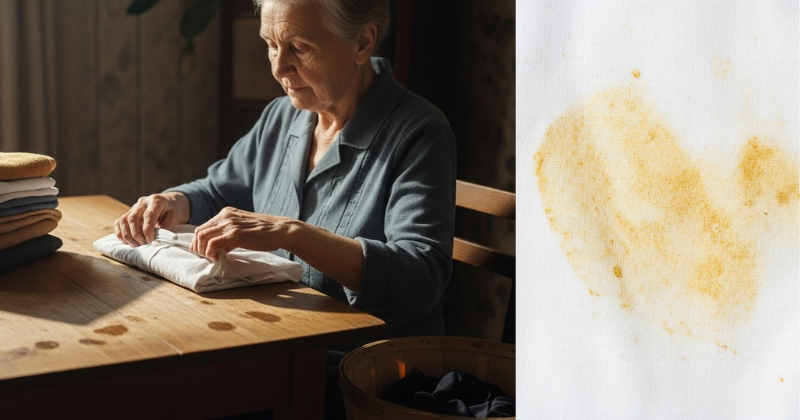
If you’ve ever pulled out a favorite white shirt only to find stubborn yellow stains under the arms or around the collar, you’re definitely not alone. These stains are frustrating, embarrassing, and notoriously difficult to remove with regular detergent. Yet generations before us handled laundry with simple, effective, natural techniques—long before commercial stain removers existed. That’s why Grandma’s quick trick to get rid of yellow stains on white clothes still works today.
Meta description (first 160 characters): Discover Grandma’s quick trick to get rid of yellow stains on white clothes using natural, inexpensive methods that restore brightness fast.
In this guide, you’ll learn her exact method, why it works, step-by-step instructions, troubleshooting tips, and pro-level strategies to keep your whites bright for years to come. This is a practical home tip you can use immediately, no experience required.
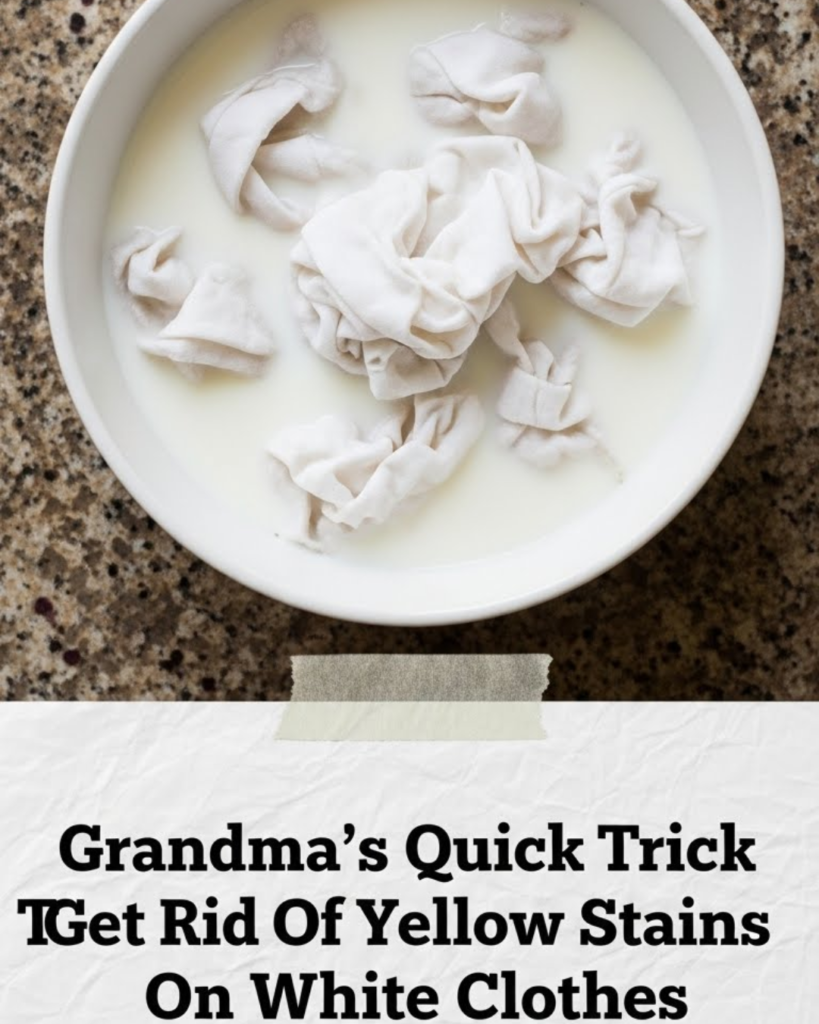
Why Do Yellow Stains Form on White Clothes?
Understanding the cause helps you remove the stains more effectively and prevent them in the future. Yellowing happens for a few key reasons—and it’s not always just sweat.
The Science Behind the Yellowing
Many people believe sweat alone causes discoloration, but the real culprit is sweat mixing with deodorant ingredients like aluminum. When this mixture sits in the fabric, especially when heat or time is involved, it oxidizes into that familiar yellow shade.
Other Common Causes
Some yellow stains come from:
- Body oils trapped in fibers
- Laundry detergent residue
- Hard water minerals
- Long-term storage
- Heat from ironing or drying machines “setting” the stain
Why Grandma’s Trick Works
Her solution cuts through buildup, lifts embedded residue, and restores the natural brightness of the fabric—all using everyday items you already have at home.
Grandma’s Quick Trick To Get Rid Of Yellow Stains on White Clothes (Step-by-Step)
Here’s the exact method passed down through generations. It’s simple, fast, and incredibly effective.
What You’ll Need
- 2 tablespoons baking soda
- 1 tablespoon hydrogen peroxide (3% solution)
- 1 tablespoon dish soap
- Soft laundry brush or toothbrush
This trio forms a powerful cleaning paste that dissolves stains at the source.
Step 1: Create the Stain-Fighting Paste
Mix baking soda, hydrogen peroxide, and dish soap in a small bowl until a smooth, creamy paste forms.
H4: Why This Combination Works
- Baking soda gently scrubs and neutralizes odors
- Hydrogen peroxide naturally whitens and lifts oxidation
- Dish soap breaks down oils and deodorant residue
This blend is mild enough for most fabrics yet strong enough to remove the toughest yellow marks.
Step 2: Apply the Paste Directly
Spread the mixture generously over the stained areas, focusing on armpits, collars, or any yellowed patches.
Step 3: Gently Scrub
Use a soft brush to work the paste into the fibers. A toothbrush is perfect for reaching deep without damaging the fabric.
Step 4: Let It Sit
Let the treated area sit for at least 20–30 minutes. For older stains, let it sit for up to 1 hour.
Step 5: Rinse, Wash, and Dry
Rinse with warm water, then wash as usual. Air-dry the item to ensure the stain is completely gone before using heat.
What If the Yellow Stains Are Very Old or Set In?
Some yellow stains have been sitting for months or even years. Don’t worry—Grandma had a solution for those too.
Method 1: Hot Water Soak With Boosters
Use this for older or deep stains:
You’ll need:
- Hot water
- 1 cup baking soda
- 1/2 cup hydrogen peroxide
- 1 tablespoon laundry detergent
Steps:
- Fill a basin with very hot water.
- Add all ingredients and stir.
- Soak the garment for 2–4 hours.
- Rinse, wash, and dry.
Method 2: Sun Whitening
After using the paste method above, lay the shirt flat under direct sunlight for 1–3 hours. Sunlight acts as a natural bleaching agent. This method works especially well on cotton.
Method 3: Double-Treatment Technique
If the stain persists, repeat the paste method. Some deeply embedded marks need two rounds to lift completely.
How to Prevent Yellow Stains on White Clothes
Removing stains is great—but stopping them from coming back is even better. Here are Grandma’s most reliable prevention tips.
Choose the Right Deodorant
Antiperspirants with aluminum cause the most discoloration. Consider switching to:
- Aluminum-free deodorant
- Natural deodorant
- Clear gel formulas
Let Deodorant Fully Dry
If deodorant transfers to the fabric before drying, it mixes with sweat and causes buildup. Give it 30–60 seconds before dressing.
Wash Whites Sooner
Don’t let sweat-damp clothing sit in the hamper. The longer it sits, the more the stain oxidizes.
Use White-Only Loads
Washing whites separately keeps colors and residue away.
Add Laundry Boosters
Use one of these in the wash:
- Baking soda
- Oxygen bleach
- White vinegar
These help maintain brightness over time.
Troubleshooting: Why Some Stains Don’t Come Out
Sometimes, even with a strong recipe, stains cling tightly. Here’s what might be happening—and how to solve it.
Issue 1: Fabric Is Heat-Damaged
If a shirt has been repeatedly dried in high heat, the stain could be permanently set. For these pieces, repeat the treatment and avoid machine drying.
Issue 2: You Used Too Much Product
Fabric softeners and detergents can build up in white clothing. Try a wash cycle with vinegar to dissolve residue.
Issue 3: Hard Water
Minerals in hard water cling to clothes and cause yellowing. A simple solution is to add a half cup of vinegar or a water softener additive to your wash.
Issue 4: The Fabric Is Synthetic
Polyester holds onto oils more stubbornly than cotton. For synthetic fabrics, soak longer and scrub gently.
Issue 5: Not Enough Exposure Time
Some stains need more time to loosen up. Let the paste sit for a full hour before rinsing.
Want Even Brighter Whites? Here Are Pro Tips You’ll Love
Once you master Grandma’s quick trick, you can take your white laundry to the next level with these expert secrets.
Tip 1: Use Dishwasher Tablets for Deep Cleaning
Add one tablet to a hot-water soak for towels, socks, or shirts. This lifts deep grime and brightens instantly.
Tip 2: Try Oxygen Bleach (NOT chlorine bleach)
Oxygen bleach is gentler and safer for fabrics while still effective at brightening.
Tip 3: Wash in Warm Water
Warm water dissolves oils better than cold, helping keep whites clean.
Tip 4: Use the Sun as a Natural Bleach
Hang white clothes outdoors whenever possible for natural brightening.
Tip 5: Create a Routine
Bright whites stay bright when you treat them regularly rather than waiting for stains to build up.
Conclusion
Yellow stains on white clothes can feel impossible to remove, but with Grandma’s quick trick, you have a simple, natural, and highly effective solution right at your fingertips. The combination of baking soda, hydrogen peroxide, and dish soap cuts through buildup, lifts stains, and restores your whites to their original brightness. Whether you’re dealing with fresh discoloration or deep, old stains, these methods give you real results without harsh chemicals or expensive products. Start with the basic paste, experiment with soaking methods, and adopt a few prevention tips to keep your white clothes looking clean, crisp, and bright every day.
You’ve got everything you need—now go rescue those whites and transform your laundry routine.