
Rosewater is one of those timeless, gentle, and beautifully fragrant DIY creations that instantly makes you feel more connected to nature. From skincare to cooking to freshening your home, learning how to make rosewater gives you a versatile, luxurious product right at your fingertips—without the high price tag. Make your own natural rosewater at home with simple ingredients and a soothing process. (Meta description)
If you’ve ever opened a bottle of real rosewater, you know how calming and refreshing that soft floral aroma can be. But many store-bought versions are filled with preservatives or artificial fragrances. Making it yourself allows you to control the purity, the scent strength, and even the type of roses you use. Whether you want it for glowing skin, hair rinses, desserts, or a calming linen spray, this guide walks you step-by-step through the entire process—beginner-friendly, perfectly detailed, and deeply enjoyable.
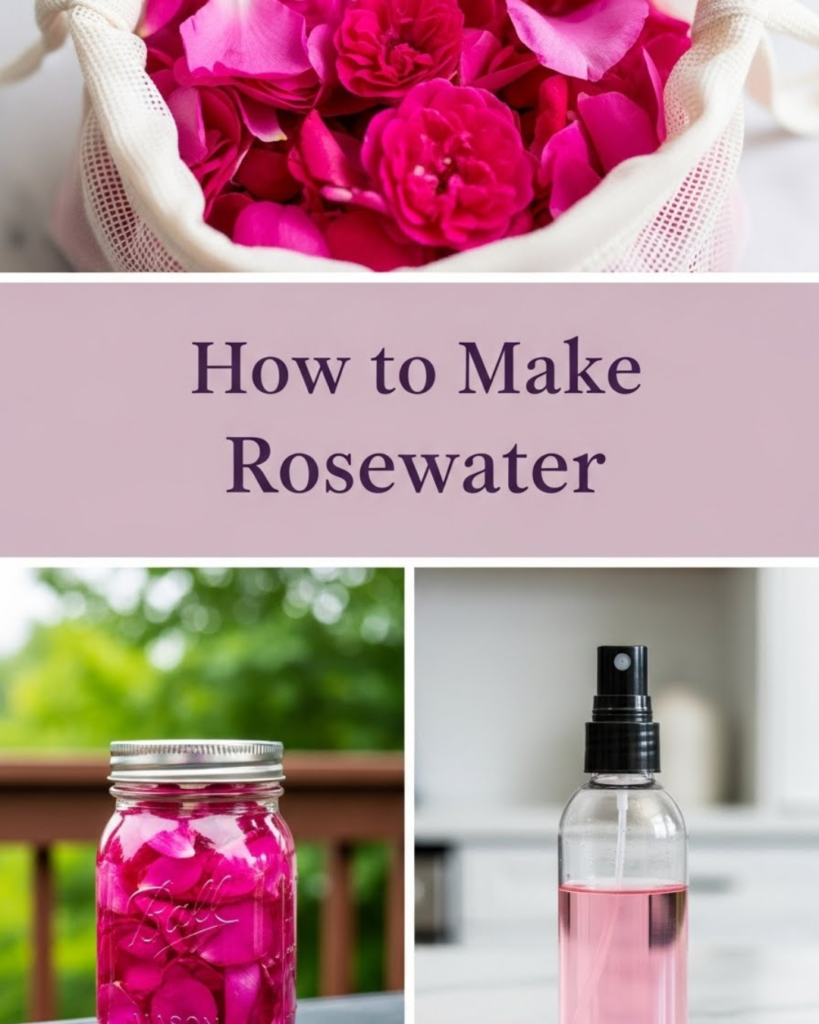
Understanding Rosewater: A Simple but Powerful DIY
Before jumping into the steps, it helps to understand what rosewater actually is. This builds confidence and helps you choose the right method for your needs.
Two Main Ways to Make Rosewater
There are two traditional methods, each offering its own benefits:
1. The Simmering Method (Quick & Easy)
- Best for beginners
- Produces a richly colored and fragrant rosewater
- Perfect for skincare, haircare, and household use
2. The Distillation Method (Pure & Clear)
- Produces a more stable, longer-lasting product
- Ideal for culinary uses or sensitive skin
- Requires a few extra steps but still easy to do at home
Best Roses to Use
To get vibrant, high-quality rosewater, you want the right petals.
- Fresh, organic roses (no pesticides)
- Damask roses (Rosa damascena) for optimal fragrance
- Dried food-grade rose petals if fresh ones aren’t available
- Deep red or pink roses yield stronger scent and color for the simmer method
Why Make Your Own Rosewater?
You’ll love this DIY because you can:
- Avoid chemicals, preservatives, and synthetic fragrances
- Save money on expensive commercial brands
- Customize the scent strength
- Enjoy a relaxing, almost therapeutic process
- Create handmade beauty products, teas, and linen sprays
Internal linking opportunities: articles on DIY natural skincare, homemade hair mist, essential oil sprays, natural cleaning tips, and herbal beauty recipes.
Step-by-Step: How to Make Rosewater at Home
This is the heart of the tutorial—clear steps, beginner-friendly explanations, and tips to ensure success.
1. The Simmering Method (Fast, Simple & Perfect for Beginners)
This is the easiest and most popular way to make rosewater. If you want rich color and a stronger aroma, start here.
Ingredients & Tools
- 2–3 cups fresh rose petals or 1 cup dried petals
- 4 cups distilled water
- A stainless-steel pot
- A fine strainer or cheesecloth
- Sterilized glass jar or bottle
Step-by-Step Instructions
Step 1: Prepare the Petals
Rinse your rose petals gently to remove dust or insects. If using fresh roses, remove the white base near the stem—this prevents bitterness.
Step 2: Add Petals to Pot
Spread petals evenly and pour in just enough distilled water to cover them. More water weakens the scent.
Step 3: Simmer Gently
Heat on the lowest flame. Avoid boiling—it destroys the fragrance.
Simmer until petals lose their color (10–20 minutes).
Step 4: Strain & Cool
Remove from heat, allow to cool fully, and strain through cheesecloth.
Step 5: Bottle & Store
Transfer to a sterilized glass jar.
Store in the fridge for up to 2 weeks.
Tips for Best Results
- Never use tap water—minerals can alter the scent
- Don’t overheat
- For darker rosewater, pick deep red petals
2. The Distillation Method (Clear, Pure & Long-Lasting)
If you want high-quality rosewater similar to what you find in specialty stores, try this.
What You’ll Need
- Large pot with lid
- Heat-safe bowl
- Ice
- Fresh or dried rose petals
- Distilled water
How It Works
This method captures pure rose steam, making ultra-clean rose hydrosol.
Distillation Steps
Step 1: Place a Heat-Safe Bowl in the Pot
This bowl catches the condensed rosewater.
Step 2: Add Petals Around the Bowl
Fill the pot with rose petals and add distilled water until petals float.
Step 3: Invert the Lid
The inverted lid allows steam to drip into the bowl.
Step 4: Add Ice on Top
This cools the lid and helps condensation form.
Step 5: Simmer for 20–30 Minutes
Steam rises, cools under the lid, and drips into the bowl as pure rosewater.
Step 6: Store Properly
Distilled rosewater lasts 4–6 months in the fridge.
Why Choose Distillation?
- Longer shelf life
- Pure, clear hydrosol
- Less overpowering scent
- Perfect for desserts, facial sprays, and toners
Creative Ways to Use Homemade Rosewater
Now that you know how to make rosewater, discover all the beautiful ways you can use it every day.
1. Skincare Uses
- Facial toner
- Makeup-setting spray
- After-sun mist
- Mix with clay for face masks
2. Haircare Uses
- Add to a spray bottle for a hydrating hair mist
- Mix with aloe gel for soothing scalp spray
- Add to your conditioner to enhance shine
3. Home Uses
- Natural room spray
- Linen mist for fresh bedding
- Scented ironing water
4. Culinary Uses
(Only if made by distillation)
- Rose lemonade
- Scented syrups
- Desserts like rice pudding and pastries
Pro Tips to Elevate Your Rosewater
Here are some advanced strategies to enhance your results:
Boost the Fragrance
Add:
- A few drops of rose essential oil
- More petals for double infusion
Increase Shelf Life
- Use amber bottles to block light
- Add 1 tsp vodka as a natural preservative
Create Custom Blends
Try adding:
- Lavender
- Chamomile
- Mint
- Orange peel
These combinations create spa-like aromas perfect for wellness routines.
Troubleshooting: Common Rosewater Problems
Why Is My Rosewater Brown?
You boiled it too hard. Always simmer on low heat.
Why Does It Smell Weak?
You used too much water or low-fragrance roses. Reduce water or increase petals next time.
Why Did My Rosewater Spoil Fast?
Store in the fridge and avoid touching the liquid with your fingers.
Can I Use Store-Bought Roses?
Only if labeled pesticide-free.
Maximizing Results & Long-Term Use
To truly enjoy everything rosewater offers, think long-term:
Storage Recommendations
- Refrigerate for freshness
- Use dark bottles
- Avoid plastic containers
Extended Uses
Try making:
- Rose-infused oils
- Rose bath salts
- Rosewater face masks
Seasonal Considerations
- Use fresh roses in spring
- Switch to dried petals in winter
Conclusion
Learning how to make rosewater opens the door to soothing beauty rituals, fragrant home care, and even sweet culinary moments. With just a handful of petals and simple tools, you can create a natural, multipurpose product that feels luxurious yet budget-friendly. Whether you choose the simmering method or the distillation method, each batch brings you closer to nature and a more mindful lifestyle.
So go ahead—gather your roses, set up your pot, and enjoy the rewarding experience of making your own rosewater right at home. You’re fully capable of transforming simple petals into something beautifully powerful. 🌹