
Discover how to create an effective, natural vapor rub using essential oils that rivals commercial alternatives while offering complete control over ingredients. This comprehensive guide transforms simple, accessible components into a powerful respiratory support remedy you can craft in your own kitchen, providing relief during cold and flu season while avoiding synthetic additives and harsh chemicals.
The Science Behind Vapor Rubs and Essential Oils
The therapeutic application of aromatic compounds for respiratory relief represents a practice validated by both traditional use and modern scientific research. When applied topically, vapor rubs containing essential oils work through multiple physiological mechanisms: the volatile aromatic molecules stimulate olfactory receptors, while the oils’ chemical constituents interact with skin receptors to produce cooling or warming sensations that may ease breathing discomfort.
Understanding Active Compounds
Essential oils derive their therapeutic properties from complex phytochemical profiles. Eucalyptus oil contains 1,8-cineole (eucalyptol), a compound extensively studied for its effects on respiratory comfort. Peppermint oil’s menthol component activates cold-sensitive TRPM8 receptors, creating the characteristic cooling sensation that many associate with easier breathing. Camphor, traditionally derived from camphor trees, affects nerve endings to produce counter-irritant effects.
Carrier Base Selection
The foundation of any vapor rub requires careful selection of carrier substances. Coconut oil provides antimicrobial fatty acids and remains semi-solid at room temperature, ideal for balm consistency. Beeswax contributes structural integrity while offering natural emollient properties. Shea butter adds skin-nourishing vitamins while maintaining the appropriate texture for topical application.
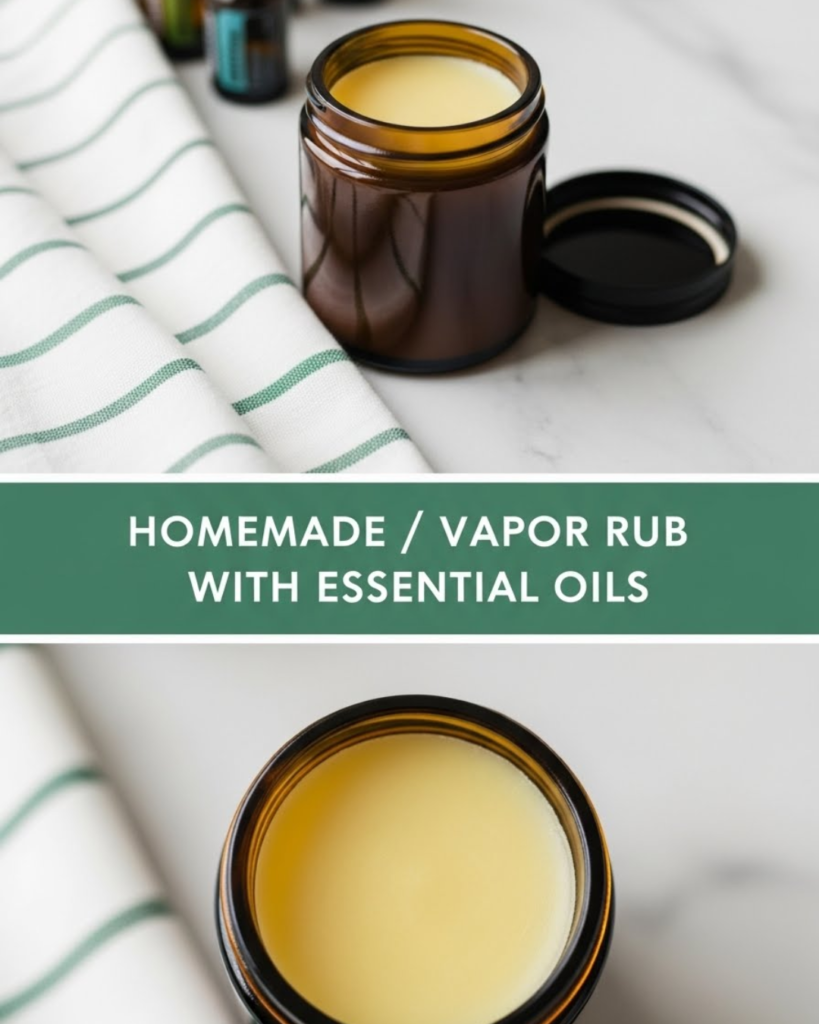
Essential Ingredients and Their Therapeutic Properties
Creating an effective homemade vapor rub requires understanding each component’s specific contribution to the final product.
Primary Essential Oils
Eucalyptus Essential Oil: Research indicates eucalyptus oil’s primary constituent, eucalyptol, may support comfortable breathing through its interaction with airway receptors. Traditional use spans centuries, with contemporary studies exploring its potential mechanisms of action.
Peppermint Essential Oil: The menthol content in peppermint oil creates a physiological cooling effect that many find comforting during respiratory discomfort. Studies have examined menthol’s interaction with sensory neurons and its subjective effects on breathing perception.
Rosemary Essential Oil: Contains compounds including camphor, 1,8-cineole, and alpha-pinene. Rosemary oil contributes aromatic complexity while potentially offering complementary properties to primary respiratory-focused oils.
Lavender Essential Oil: Beyond its calming aromatic profile, lavender adds a balancing element to more intense medicinal scents, potentially supporting relaxation during illness recovery periods.
Base Components
Organic Coconut Oil: Serves as the primary carrier, offering skin compatibility and antimicrobial lauric acid. Its melting point near body temperature facilitates absorption while maintaining solid structure at room temperature.
Pure Beeswax: Provides structural stability, determining the final consistency. The ratio of beeswax to oil controls whether your vapor rub achieves a firm salve texture or softer balm consistency.
Optional Additions: Vitamin E oil acts as a natural preservative while nourishing skin. Shea butter can replace a portion of coconut oil for enhanced moisturizing properties.
Step-by-Step Preparation Process
Crafting your vapor rub involves straightforward techniques that ensure proper incorporation and stability of all components.
Equipment and Materials Needed
Prepare a double boiler setup or heat-safe bowl over simmering water, glass storage containers (preferably 4-ounce tins or jars), stirring utensil (glass or stainless steel), and accurate measuring tools. Essential oil-resistant containers prevent degradation of plastic materials.
Precise Formulation Recipe
For a standard 4-ounce batch:
- 3 tablespoons coconut oil
- 2 tablespoons beeswax pellets or grated beeswax
- 15 drops eucalyptus essential oil
- 10 drops peppermint essential oil
- 8 drops rosemary essential oil
- 5 drops lavender essential oil
- Optional: 1/2 teaspoon vitamin E oil
Detailed Preparation Method
Begin by creating your double boiler environment, ensuring water remains at a gentle simmer rather than vigorous boil. Add coconut oil and beeswax to your heat-safe container, stirring occasionally as the components melt together. This process typically requires 5-7 minutes. Once completely liquefied and combined, remove from heat.
Allow the mixture to cool slightly (approximately 2-3 minutes) before introducing essential oils. This temperature reduction prevents excessive evaporation of volatile aromatic compounds. Add each essential oil while stirring gently to ensure even distribution throughout the base. If incorporating vitamin E, add it simultaneously with essential oils.
Pour the liquid mixture into your prepared storage containers, working efficiently before solidification begins. Allow containers to remain undisturbed at room temperature for several hours, permitting complete cooling and solidification. The vapor rub typically achieves full consistency within 3-4 hours, though overnight setting ensures optimal texture.
Advanced Customization Strategies
Adapting the basic formulation allows personalization for specific preferences, sensitivities, or therapeutic goals.
Modifying Intensity Levels
For sensitive skin or children over two years: Reduce essential oil quantities by 50%, maintaining the same proportional relationships between oils. Consider substituting gentler options like mandarin or sweet orange for more intense medicinal scents.
For enhanced potency: Increase essential oil content by 25%, though never exceed safe dilution guidelines (typically 3-5% for topical adult applications). Monitor for any sensitivity reactions with higher concentrations.
Alternative Essential Oil Combinations
Soothing Nighttime Blend: Emphasize lavender and cedarwood while maintaining eucalyptus base, potentially supporting relaxation during rest periods.
Daytime Clarity Formula: Increase peppermint and rosemary proportions while incorporating lemon or sweet orange oils for uplifting aromatic profiles.
Seasonal Support Variation: Include tea tree oil for its studied antimicrobial properties, particularly during peak cold and flu seasons.
Texture Adjustments
Achieve softer consistency by reducing beeswax ratio or increasing coconut oil proportion. Create firmer stick-style applications by increasing beeswax content. Experiment with small test batches to determine your preferred texture before preparing larger quantities.
Application Techniques and Safety Considerations
Proper use maximizes effectiveness while maintaining safety standards for topical essential oil applications.
Recommended Application Areas
Apply small amounts to chest, upper back, and throat areas, avoiding mucous membranes and sensitive facial regions. The warmth of these body areas enhances aromatic compound volatilization, increasing olfactory stimulation. Some traditional applications include foot sole application, though direct evidence for enhanced absorption through plantar surfaces remains limited.
Frequency and Quantity Guidelines
Most users find relief with 2-3 applications daily during acute discomfort periods. A small amount (approximately pea-sized) typically suffices for each application area. Massage gently into skin using circular motions, allowing natural body heat to warm and release aromatic compounds.
Critical Safety Parameters
Age Restrictions: Never apply vapor rubs containing peppermint or eucalyptus to children under two years due to potential respiratory reflex complications. For children 2-10 years, utilize significantly reduced essential oil concentrations.
Skin Sensitivity: Always perform patch testing before widespread application. Apply small amount to inner forearm, observing for 24 hours for any adverse reactions including redness, itching, or irritation.
Contraindications: Avoid use during pregnancy without healthcare provider consultation, particularly with camphor-containing formulations. Individuals with epilepsy should exercise caution with rosemary oil. Those with asthma should introduce essential oil products gradually, monitoring for any respiratory changes.
Application Boundaries: Never apply to broken skin, near eyes, inside nostrils, or on mucous membranes. Wash hands thoroughly after application to prevent accidental eye contact.
Troubleshooting Common Formulation Challenges
Understanding potential issues and their solutions ensures consistently successful results.
Consistency Problems
Too Soft: Indicates insufficient beeswax ratio. Gently remelt the mixture, incorporating additional beeswax in small increments (1/2 teaspoon at a time) until achieving desired firmness upon cooling test.
Too Hard: Excess beeswax creates overly firm texture. Remelt and add additional coconut oil in small amounts, testing consistency as mixture cools.
Grainy Texture: Results from rapid cooling or uneven mixing. Ensure thorough stirring before pouring and allow gradual cooling at room temperature rather than refrigeration.
Separation Issues
If oil and wax components separate after cooling, the mixture likely wasn’t sufficiently emulsified during melting phase. Remelt completely, stirring continuously for several minutes before attempting to reset.
Scent Intensity Concerns
Overwhelming Aroma: Reduce total essential oil content in future batches. Consider incorporating gentler oils like lavender or sweet orange to balance more intense medicinal scents.
Insufficient Scent: Essential oils may have been added while base was too hot, causing excessive evaporation. Ensure mixture cools adequately before adding volatile aromatic compounds. Alternatively, essential oils may have degraded due to age or improper storage.
Storage, Shelf Life, and Quality Maintenance
Proper storage practices preserve the therapeutic properties and extend the usability of your homemade vapor rub.
Optimal Storage Conditions
Store in amber or opaque containers away from direct sunlight, heat sources, and humidity. Essential oils degrade when exposed to light and elevated temperatures, reducing therapeutic potency. Room temperature storage in dark locations preserves quality effectively.
Expected Longevity
When prepared with proper hygiene practices and stored appropriately, homemade vapor rubs typically maintain quality for 6-12 months. The addition of vitamin E oil may extend this period by reducing oxidation. Monitor for any changes in scent, color, or texture that might indicate degradation.
Contamination Prevention
Always use clean, dry utensils when removing product from containers. Introducing moisture or bacteria can compromise shelf stability. Consider using smaller containers to minimize air exposure in frequently accessed supplies.
Comparing Homemade versus Commercial Formulations
Understanding the distinctions between DIY and manufactured vapor rubs helps inform your choice and highlights the benefits of homemade preparations.
Ingredient Transparency
Commercial products often contain petroleum-derived bases, synthetic fragrances, artificial colors, and preservatives. Homemade formulations provide complete ingredient control, allowing elimination of potentially irritating or unnecessary synthetic additives.
Economic Considerations
Initial essential oil investment may appear substantial, but the per-batch cost of homemade vapor rub typically ranges significantly lower than premium commercial equivalents. A single essential oil bottle produces multiple vapor rub batches, improving long-term cost efficiency.
Customization Advantages
Commercial formulations offer standardized compositions without personalization options. Homemade preparations allow precise adjustment for individual sensitivities, preferences, and therapeutic goals.
Efficacy Perspectives
While commercial vapor rubs undergo standardized manufacturing and quality control, properly formulated homemade versions using quality essential oils can provide comparable aromatic and sensory effects. The primary active mechanisms—aromatic compound inhalation and topical counter-irritant sensations—function similarly regardless of commercial or homemade origin.
Conclusion
Creating homemade vapor rub with essential oils represents an accessible, rewarding practice that combines traditional wisdom with modern understanding of aromatic compounds and their applications. This natural alternative provides respiratory comfort support while offering complete control over ingredients, eliminating concerns about synthetic additives common in commercial preparations. The straightforward formulation process, requiring only basic equipment and readily available components, empowers you to craft personalized respiratory relief solutions tailored to your specific needs and preferences. Whether seeking gentler formulations for sensitive individuals or potent blends for maximum aromatic impact, this versatile approach adapts to diverse requirements. Begin with the foundational recipe, observe your results, and confidently adjust future batches to optimize your homemade vapor rub experience.
Important Disclaimer: This article is for informational purposes only and should not replace professional advice. For health-related topics, consult healthcare providers. Individual results may vary, and personal circumstances should always be considered when implementing any suggestions. Essential oils are potent substances that may cause allergic reactions or interactions with certain medical conditions or medications.