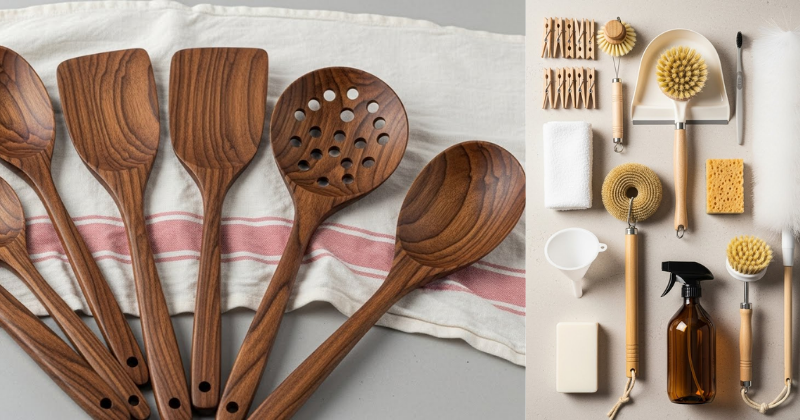
Do your beloved wooden spoons and cutting boards look dull, feel rough, or even carry a faint smell from last night’s dinner? Wood utensils are kitchen favorites for their beauty and durability, but many people worry about their safety and cleanliness, especially when it comes to raw meat or strong flavors. Worry no more! Learning HOW TO CLEAN & SANITIZE WOOD UTENSILS properly is an achievable Home Tips & DIY project that will transform your kitchen hygiene and the lifespan of your woodenware. We will discover the simple step-by-step guidance to kill bacteria, remove deep odors, and keep your wood looking rich and feeling smooth. Get ready to unlock the secrets to effective wood care and enjoy the satisfaction of completion that comes from maintaining a clean, safe, and beautiful kitchen.

🍽️ Section 1: Foundation First: Understanding Wood Care
Before we dive into the sanitization methods, it’s essential to build confidence with basic concepts about what wood needs—and what it absolutely despises.
H3: Building Confidence with Basic Concepts: The Enemies of Wood
Understanding the factors that damage wood is the first step toward knowing HOW TO CLEAN & SANITIZE WOOD UTENSILS effectively.
- Water Immersion: Soaking wood is the number one enemy! When wood absorbs water, it swells, causing fibers to break and leading to cracks, splinters, and roughness. Never leave woodenware submerged in a sink.
- Dishwashers: High heat, prolonged moisture, and harsh detergents in the dishwasher strip the wood of its natural oils, leading to rapid drying, warping, and cracking. Always handwash.
- Oil Depletion: Over time, simple cleaning removes the protective oils within the wood, making it porous and susceptible to bacterial growth and deep stains. This requires regular re-oiling (maintenance).
- Encouraging Reassurance for Beginners: Wood is naturally antimicrobial! Studies show that wood surfaces actually kill certain bacteria faster than plastic. We just need to support that natural strength through gentle cleaning.
H3: Addressing Common Concerns: Why Sanitization is Necessary
While wood is naturally anti-microbial, sanitization remains a critical part of knowing HOW TO CLEAN & SANITIZE WOOD UTENSILS, especially for cutting boards.
- Porous Surface: Wood is porous. Over time, deep flavors (like garlic or onion) and stubborn color stains (like beets or tomato paste) can penetrate below the surface, even after basic cleaning.
- Cross-Contamination: When preparing raw meat or poultry, bacteria like Salmonella can linger. A thorough sanitization process is a crucial safety consideration to prevent cross-contamination in your kitchen.
🧼 Section 2: Core Methods: The Daily Clean and Deep Sanitization
This section provides the achievable, step-by-step guidance for both routine cleaning and periodic deep sanitizing.
Step 1: Routine Daily Cleaning (The Quick Clean)
This should be done immediately after every use.
- Quick Rinse: Immediately after use, rinse the utensil under warm (not hot) running water to remove food particles.
- Soap and Scrub (Actionable Language): Use a mild dish soap and a sponge or soft brush. Scrub gently but quickly. Focus on areas where food buildup is common, like the end of a spoon.
- Rinse Thoroughly: Rinse all soap residue completely.
- Immediate Drying (Practical Tips): This is the most crucial step! Immediately wipe the utensil with a clean, dry cloth or paper towel. Do not allow it to air-dry flat. Stand it upright in a drying rack or lean it against a wall to ensure maximum air exposure on all sides.
Step 2: Deep Sanitization (The Vinegar Soak)
This method should be performed once every 2-4 weeks or immediately after working with raw meat, fish, or poultry.
- Prepare the Solution (Actionable Language): Mix a solution of 1 part distilled white vinegar to 4 parts water in a basin large enough to hold the utensils.
- The Quick Dip (Timing and Planning Considerations): Submerge the wood utensils completely. Let them soak for no more than 3 minutes. Vinegar is a fantastic natural sanitizer and deodorizer, but prolonged soaking can still lead to water damage.
- Final Rinse and Dry: Remove the utensils, give them a quick rinse under running water, and wipe them down thoroughly with a dry towel.
| Sanitization Method | Frequency | Primary Benefit |
| Daily Soap & Dry | After Every Use | Basic cleanliness and preventing moisture damage. |
| Vinegar Soak (1:4) | Every 2-4 Weeks / After Raw Meat | Natural sanitization, deep deodorizing, and stain lifting. |
🍋 Section 3: Advanced Strategies: Removing Deep Stains and Odors
Sometimes, basic cleaning isn’t enough to remove strong garlic odors or persistent tomato stains. These expert-level insights use kitchen staples for an effective deep clean.
H3: Creative Solutions: The Lemon and Salt Scrub
This method is highly effective for removing stains and brightening dull wood.
- The Ingredients: Coarse salt (like kosher or sea salt) and half a lemon.
- Application (Actionable Language): Sprinkle the coarse salt generously over the wooden surface (especially cutting boards). Take the cut side of the lemon half and use it as a scrubber, rubbing the salt and lemon juice vigorously into the wood. The salt acts as a gentle abrasive, and the lemon acid lifts stains and neutralizes odors.
- Creative Solution: Let the salt and lemon mixture sit for $5 \text{ minutes}$ for a true deep-penetrating clean. Scrape off the mixture, rinse quickly, and dry immediately. This is an excellent DIY solution with satisfying results.
H3: Pro Tips for Dealing with Mildew
If wood has been left damp, you may find small spots of black or gray mildew—a serious issue that needs immediate attention.
- The Hydrogen Peroxide Solution: Hydrogen peroxide is an effective, non-toxic bleach for killing mildew spores. Mix $1 \text{ part}$ food-grade hydrogen peroxide with $3 \text{ parts}$ water.
- Localized Treatment: Apply the solution only to the mildewed spot using a cloth or toothbrush. Let it sit for $1 \text{ hour}$. The peroxide will bubble and kill the spores. Rinse, dry, and perform a full re-oiling immediately.
- Pro Tip: This is a good way to customize approach for specific damage. If the mildew is deep, you may need to sand the area lightly before applying the peroxide solution.
💧 Section 4: Troubleshooting and Common Challenges
Even the most careful owners run into problems. Here are practical troubleshooting tips for extending the life of your wood.
Featured Snippet Potential: “How often should I oil my wood utensils and what kind of oil should I use?”
You should oil your wood utensils and cutting boards once a month, or whenever the wood appears dull and dry. Always use a food-safe, non-rancid oil such as mineral oil (food grade), walnut oil, or fractionated coconut oil. Never use cooking oils like olive oil or vegetable oil, as they will go rancid over time, leading to a foul odor and stickiness.
Practical Troubleshooting Tips (Home Tips Focus)
- Problem: The wood feels rough and splintery after cleaning.
- Obstacle: The wood fibers have swelled and broken after contact with water.
- Solution: Encouragement for Setbacks: You can fix this! Allow the wood to dry completely, then use very fine-grit sandpaper (around 220 grit) to smooth the rough area, following the grain of the wood. Preventive Measures: Finish the process with a heavy application of food-safe oil (see below).
- Problem: The wood still smells faintly of garlic or onion after sanitizing.
- Obstacle: Odor molecules have penetrated deeply.
- Solution: Apply a paste made of baking soda and water to the affected area. Let it sit overnight, as baking soda is a powerful natural deodorizer. Scrape it off, rinse quickly, and dry. This alternative approach is highly effective for odors.
- Problem: The wood is developing a dull, gray appearance.
- Obstacle: The wood is dehydrated and needs moisture. This usually happens when the regular oiling schedule is neglected.
- Solution: Perform a deep oil treatment immediately. The next section provides the steps to transform the color and shine.
🌟 Section 5: Maximizing Results: The Art of Seasoning and Maintenance
The key to long-lasting, safe woodenware is consistent maintenance—or “seasoning.” This ensures you build upon basic success and keep your items beautiful for decades.
- Show How to Build Upon Basic Success: Deep Oil Conditioning
- Ensure the wood is perfectly clean and dry.
- Pour a generous amount of food-grade mineral oil onto the wood.
- Rub the oil vigorously into the wood grain using a clean, dry cloth.
- Allow the oil to soak in overnight (or at least 6 hours). The wood should look saturated.
- The next morning, wipe off any excess oil.This periodic treatment revitalizes the color, seals the fibers against water and stains, and is the ultimate maintenance and long-term consideration.
- Suggest Complementary Strategies: Create a Wood Butter (Wax Blend). Melt $1 \text{ part}$ beeswax with $4 \text{ parts}$ food-grade mineral oil. Once cooled, this solid wax is easier to apply than liquid oil, offering a thicker layer of protection that lasts longer. This combines the liquid oil’s penetration with the wax’s superior sealing ability. (Internal Linking Opportunity: Check out our DIY recipe for “Homemade Wood Butter.”)
- Inspire Continued Growth and Learning: Keep a small tag or note reminding you when you last oiled your cutting boards. Aim for monthly, but adjust based on usage. If you use a wooden utensil daily, oiling it every 3 weeks might be necessary to transform its longevity.
✅ Conclusion: Your Capability to Master Wood Care
You have now unlocked the full knowledge of HOW TO CLEAN & SANITIZE WOOD UTENSILS effectively and safely. By prioritizing quick drying, utilizing the vinegar soak for sanitization, and embracing a regular oiling schedule, you are not only extending the life of your kitchen tools but ensuring a hygienic and beautiful cooking environment. This commitment to careful maintenance demonstrates your capability to succeed in mastering true Home Tips & DIY care.
Embrace the rich, clean beauty of your wood utensils. Will you be trying the lemon and salt scrub for deep deodorizing tonight, or is it time for a deep mineral oil conditioning treatment?