Meta description (155–160 characters):
Learn how to easily remove sweat stains from sheets and blankets using simple, effective methods that restore freshness, whiten fabric, and extend bedding life.
Introduction
You wash your sheets regularly, yet those stubborn yellow sweat stains keep coming back. Sound familiar? If you’ve ever wondered how to easily remove sweat stains from sheets and blankets, you’re not alone—and you’re not doing anything wrong. Sweat stains are one of the most common (and frustrating) bedding problems, especially during warm nights, hormonal changes, or stress-filled weeks.
The good news is this: sweat stains are not permanent. With the right approach, you can lift discoloration, remove odors, and bring your sheets and blankets back to life—often using items you already have at home. No harsh chemicals. No fabric damage. No expensive replacements.
This guide walks you step by step through why sweat stains happen, how to remove both fresh and set-in stains, and how to prevent them from returning. You’ll gain confidence, save money, and rediscover that clean, hotel-fresh feeling every night.
Understanding sweat stains and why they form
Before jumping into solutions, it helps to understand the problem.
What causes sweat stains on bedding?
Sweat itself is mostly water, but it also contains:
- Salts and minerals
- Proteins
- Natural body oils
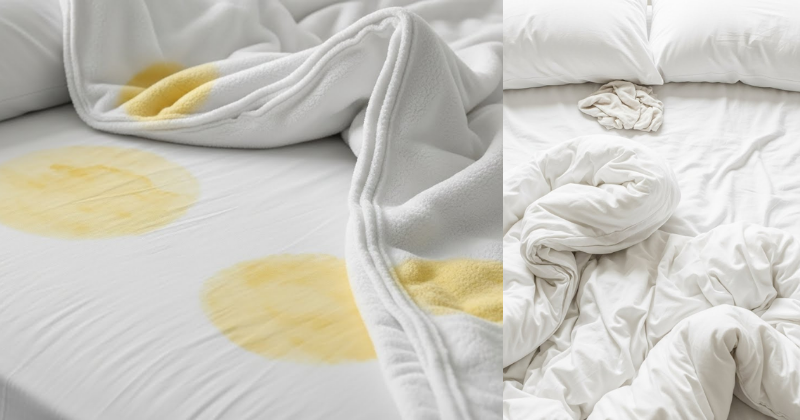
When these mix with laundry detergent residue and fabric fibers, they oxidize over time—creating yellow or gray stains, especially on white sheets and blankets.
Why sheets and blankets stain faster than clothes
Bedding absorbs sweat for hours at a time. Unlike clothing, sheets are pressed directly against warm skin all night, giving sweat more time to bond with fabric fibers.
Common risk factors include:
- Sleeping hot or night sweats
- Cotton and polyester blends
- Hard water buildup
- Using too much detergent
Understanding this makes stain removal much easier.
How to easily remove sweat stains from sheets & blankets (step by step)
Featured snippet – Quick answer:
To easily remove sweat stains from sheets and blankets, pre-soak them in warm water with oxygen bleach or baking soda, then wash with a low-residue detergent.
Method 1: Baking soda and hydrogen peroxide (best for white sheets)
This method is highly effective for yellow sweat stains.
You’ll need:
- ½ cup baking soda
- ¼ cup hydrogen peroxide (3%)
- Warm water
Steps:
- Mix baking soda and hydrogen peroxide into a paste
- Apply directly to the stain
- Let sit for 30–60 minutes
- Wash as usual in warm water
This combination breaks down protein stains while brightening fabric.
Method 2: Vinegar soak for odors and buildup
Perfect for blankets and colored sheets.
Steps:
- Add 1 cup white vinegar to a tub of warm water
- Soak bedding for 1–2 hours
- Wash with mild detergent
Vinegar dissolves mineral buildup that traps odors and stains.
Choosing the right method for different fabrics
Not all sheets and blankets are created equal.
Cotton and cotton blends
These are the easiest to clean and respond well to:
- Baking soda
- Oxygen bleach
- Warm water
Avoid chlorine bleach unless absolutely necessary—it weakens fibers over time.
Microfiber and synthetic fabrics
Use gentler methods:
- Vinegar soaks
- Cold-to-warm water
- Low detergent amounts
Heat can lock in stains if used too early.
Delicate or weighted blankets
For specialty blankets:
- Spot clean first
- Use enzyme-based detergents
- Air dry whenever possible
Always check care labels before soaking.
Advanced stain-removal strategies that really work
Once you’ve mastered the basics, these pro tips help with stubborn stains.
Enzyme cleaners for set-in stains
Enzymes break down protein-based sweat stains at a molecular level. Look for detergents labeled “enzyme-based” and allow longer soak times.
Sun-drying for natural whitening
Sunlight naturally bleaches fabric and kills odor-causing bacteria. After washing:
- Hang sheets in direct sunlight
- Rotate halfway through drying
This works especially well for white cotton sheets.
Oxygen bleach boosters
Unlike chlorine bleach, oxygen bleach is fabric-safe and color-friendly. Add it to your wash cycle for deeply set stains.
Troubleshooting common problems
Even good methods can fail without small adjustments.
Why stains come back after washing
This usually means:
- Detergent buildup
- Incomplete rinsing
- Heat drying before stain removal
Always check stains before drying. Heat sets them permanently.
What if stains don’t fade?
Repeat the soak. Sweat stains build over time and may need 2–3 treatments. Persistence beats harsh chemicals.
How to remove sweat odor without stains
Even invisible sweat can smell. Use:
- Vinegar rinse cycle
- Baking soda in wash
- Extra rinse option
Odor removal and stain removal often go hand in hand.
Preventing sweat stains from returning
Prevention saves time, energy, and fabric life.
Smart bedding habits that help
- Wash sheets weekly
- Use breathable cotton fabrics
- Avoid fabric softener (it traps residue)
- Switch to low-residue detergents
Nighttime strategies
If night sweats are common:
- Use moisture-wicking sheets
- Shower before bed
- Keep bedroom temperature cool
Small changes can dramatically reduce future stains.
Maximizing long-term freshness and fabric life
Once your bedding is clean, keep it that way.
Build a simple bedding care routine
- Weekly washes
- Monthly vinegar rinse
- Seasonal deep soak
This routine prevents buildup before it becomes visible.
Rotate and rest your bedding
Owning two sets of sheets allows fibers to recover and reduces wear, extending their lifespan.
Internal linking opportunities
This article pairs well with:
- How to wash white sheets without bleach
- Best detergents for sensitive skin
- How to remove body oil stains from fabric
- Laundry mistakes that ruin bedding
- How often you should really wash sheets
Conclusion
Learning how to easily remove sweat stains from sheets and blankets is empowering. You don’t need harsh chemicals, expensive products, or new bedding. With simple ingredients, the right timing, and a little patience, you can restore freshness, brightness, and comfort to your bed.
More importantly, you now understand why stains form and how to prevent them—giving you long-term results, not temporary fixes. Your home deserves to feel clean, welcoming, and restful, and you’re fully capable of making that happen.
Start tonight. Your future sleep will thank you.