
A persistent cough — whether dry and irritating or productive with mucus — disrupts sleep, strains throat and chest muscles, and interferes with daily activities through its relentless nature. Coughs result from the body’s protective reflex clearing airways of irritants, mucus, or pathogens, operating through a complex neurological pathway involving sensory receptors in airways, the medullary cough center in the brainstem, and the coordinated contraction of respiratory muscles. While coughs serve essential protective functions, excessive or prolonged coughing becomes counterproductive, causing tissue irritation that triggers further coughing in a self-perpetuating cycle. Getting rid of a cough requires addressing both the underlying cause (viral infection, postnasal drip, irritant exposure, or chronic conditions) and the symptom itself through remedies that soothe irritated airways, thin mucus for easier clearance, suppress the cough reflex when appropriate, and support the immune system’s resolution of infections. This guide provides evidence-based approaches ranging from immediate home remedies to when medical intervention becomes necessary.
Understanding What’s Causing Your Cough
Before treating a cough effectively, identifying its type and underlying cause directs you toward the most appropriate remedies and helps you recognize when professional medical evaluation is warranted.
Acute Versus Chronic Cough Distinction
Medical classification divides coughs by duration: acute coughs last less than 3 weeks and typically accompany viral upper respiratory infections (the common cold, flu, COVID-19), while subacute coughs persist 3-8 weeks (often representing post-viral cough that lingers after the infection resolves), and chronic coughs continue beyond 8 weeks, indicating underlying conditions like asthma, gastroesophageal reflux disease (GERD), chronic bronchitis, or medication side effects.
The majority of coughs seeking home treatment fall into the acute category — accompanying or following respiratory infections that resolve spontaneously within 7-14 days. These respond well to symptomatic treatment supporting the body’s natural recovery. Chronic coughs warrant medical evaluation to identify and treat underlying causes rather than merely suppressing symptoms.
Dry Versus Productive Cough
Dry coughs (non-productive coughs) produce no mucus and often result from airway irritation, postnasal drip, or early-stage viral infections. They feel ticklish and irritating, frequently worsening at night when lying down. Productive coughs (wet coughs) expel mucus from airways and typically indicate the body is actively clearing infection or inflammation. The mucus color provides diagnostic clues: clear or white suggests viral infection or allergies, yellow or green indicates bacterial infection, and blood-tinged sputum (hemoptysis) requires immediate medical evaluation.
Treatment strategies differ: dry coughs benefit from soothing and cough suppression, while productive coughs often require mucus-thinning expectorants that facilitate clearance rather than suppression that could trap infected secretions in airways.
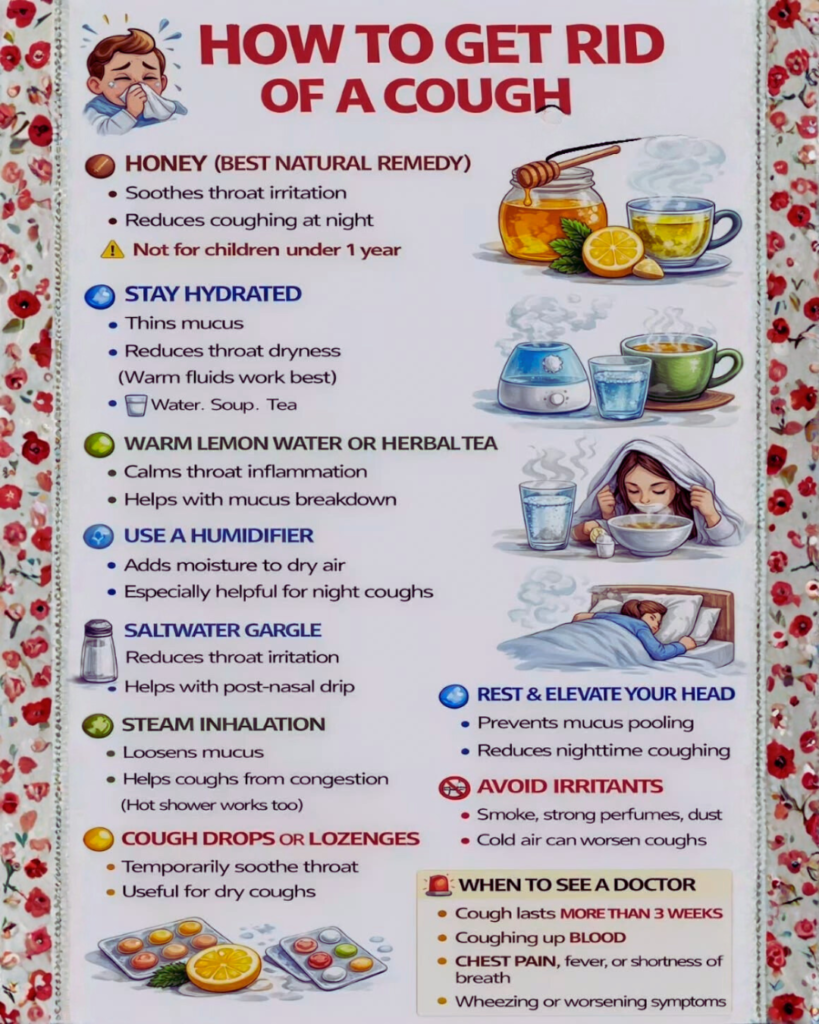
Immediate Home Remedies for Fast Cough Relief
These accessible interventions provide relief within minutes to hours by addressing the irritation and inflammation driving the cough reflex.
Honey for Cough Suppression
Honey stands out as one of the most evidence-supported natural cough remedies, with research demonstrating efficacy comparable to over-the-counter cough suppressants for both children over 12 months and adults.
The mechanism: Honey’s thick consistency coats irritated throat tissues, providing a protective barrier that reduces mechanoreceptor stimulation triggering cough reflexes. Its antimicrobial properties (derived from hydrogen peroxide production, low water activity, and antimicrobial peptides) may support immune response against respiratory pathogens. The sweet taste stimulates saliva production, further soothing throat irritation.
Application protocol: Take 1-2 teaspoons of raw honey directly, allowing it to coat the throat slowly before swallowing. Repeat every 2-3 hours as needed, particularly before bedtime to reduce nighttime coughing. For enhanced effect, dissolve honey in warm (not hot) herbal tea or lemon water. Research published in Pediatrics documented that honey administered before bedtime reduced cough frequency and severity in children with upper respiratory infections more effectively than placebo and comparably to dextromethorphan (a common OTC cough suppressant).
Important note: Never give honey to infants under 12 months due to botulism spore risk. Honey’s antimicrobial properties don’t extend to destroying Clostridium botulinum spores that can germinate in infant intestines.
Hydration and Steam Inhalation
Adequate fluid intake and inhaled moisture address the dry, irritated airways that perpetuate coughing while thinning mucus in productive coughs.
Hydration strategy: Drink warm liquids (herbal teas, broths, warm water with lemon and honey) every 1-2 hours while awake. Aim for 8-10 glasses daily — more if experiencing fever or productive cough with significant mucus. Warm liquids provide superior throat soothing compared to cold beverages and may improve mucociliary clearance (the coordinated beating of airway cilia that transports mucus upward for expectoration).
Steam inhalation technique: Boil water and pour into a heat-safe bowl. Position your face 8-12 inches above the bowl (close enough to feel steam but not so close as to risk burns), drape a towel over your head creating a tent that traps steam, and breathe deeply for 5-10 minutes. The inhaled moisture hydrates dried airway surfaces and loosens thick mucus. For enhanced effect, add 2-3 drops of eucalyptus or peppermint essential oil (compounds like eucalyptol and menthol provide mild bronchodilation and create cooling sensations that reduce irritation perception). Repeat 2-3 times daily.
Alternatively, run a hot shower and sit in the bathroom breathing the steam-filled air for 10-15 minutes — less direct than bowl inhalation but more comfortable and safer (eliminating burn risk from hot water).
Throat Lozenges and Hard Candy
Sucking on lozenges or hard candy stimulates saliva production and provides localized throat coating that temporarily reduces cough triggers.
Selection strategy: Choose lozenges containing menthol, eucalyptus, or honey as active ingredients — these provide genuine therapeutic effects beyond simple throat coating. Menthol activates TRPM8 cold receptors in throat tissues, creating cooling sensations that reduce irritation perception and mildly suppress cough reflexes. Sugar-free options prevent the blood glucose spikes and crashes that can occur with frequent candy consumption while sick.
Usage pattern: Use lozenges every 2-3 hours while symptoms persist. The relief is temporary (lasting 30-60 minutes per lozenge) but consistent use maintains throat coating and comfort. For nighttime, use a lozenge 15-30 minutes before bed to reduce initial coughing when lying down.
Over-the-Counter Medications: When and How to Use Them
Pharmaceutical cough treatments provide more potent symptom control than home remedies but require understanding appropriate applications and potential side effects.
Cough Suppressants (Antitussives)
Dextromethorphan (DXM), the most common OTC cough suppressant, acts centrally in the brainstem’s cough center, raising the threshold for cough reflex activation.
Appropriate use: Reserve cough suppressants for dry, non-productive coughs that interfere with sleep or daily function. Suppressing productive coughs that clear mucus from airways can prolong infections by allowing bacterial growth in retained secretions. Take dextromethorphan 15-30mg every 6-8 hours (adults), following package directions. Maximum effect occurs 1-2 hours after administration and lasts 4-6 hours.
Important considerations: DXM interacts with certain medications (particularly MAO inhibitors and SSRIs) and shouldn’t be used by individuals taking these medications. It causes drowsiness in some users — avoid driving or operating machinery if affected. Never exceed recommended doses; high-dose DXM abuse produces dissociative effects and carries serious health risks.
Expectorants for Productive Coughs
Guaifenesin, the primary OTC expectorant, thins mucus by increasing respiratory tract fluid, making it easier to expel through coughing.
Appropriate use: Use expectorants for wet, productive coughs where thick mucus is difficult to clear. Take guaifenesin 200-400mg every 4 hours (adults) with a full glass of water — adequate hydration is essential for expectorant efficacy. The medication doesn’t suppress cough but should make coughing more productive and less frequent as airways clear efficiently.
Enhanced effectiveness: Combine expectorants with increased fluid intake (8-10 glasses daily) and steam inhalation for maximum mucus-thinning effect. Continue use for 2-3 days after symptoms improve to ensure complete airway clearance.
Combination Medications: Proceed With Caution
Many OTC cold and cough formulations combine multiple active ingredients (cough suppressant + expectorant + decongestant + pain reliever). While convenient, combination products risk unnecessary medication exposure or contraindicated pairings (like combining cough suppressant with expectorant, which have opposite goals).
Smart selection: Choose single-ingredient products targeting your specific symptoms rather than multi-symptom formulas treating conditions you don’t have. This approach minimizes side effects, drug interactions, and the risk of accidental overdose from taking multiple products containing the same ingredients.
Natural Remedies and Complementary Approaches
Beyond honey and steam, several natural interventions show promise for cough relief based on traditional use and emerging research.
Ginger Tea for Anti-Inflammatory Effects
Ginger contains gingerols and shogaols — bioactive compounds with documented anti-inflammatory and mild bronchodilatory effects that may reduce airway irritation driving cough reflexes.
Preparation: Slice 1-2 inches of fresh ginger root, add to 2 cups of boiling water, simmer for 10-15 minutes, strain, and add honey and lemon to taste. Drink 2-3 cups daily while symptoms persist. The warm liquid provides throat soothing while ginger’s bioactive compounds may address underlying inflammation.
Thyme Extract for Respiratory Support
Thyme (Thymus vulgaris) contains thymol and carvacrol — phenolic compounds with antimicrobial and antispasmodic properties. European research documents that thyme extract preparations reduce cough frequency and severity in acute bronchitis.
Application: Thyme cough syrups are available in health food stores. Alternatively, make thyme tea by steeping 2 teaspoons of dried thyme in hot water for 10 minutes, strain, add honey, and drink 2-3 times daily.
Elevating Head During Sleep
Lying flat allows postnasal drip to pool in the throat and permits gastric acid to reflux into the esophagus — both triggering nighttime cough.
Simple solution: Elevate the head of your bed 6-8 inches using bed risers or wedge a foam pillow under the mattress (propping with pillows alone often proves unstable). The incline prevents mucus pooling and reduces acid reflux, measurably decreasing nighttime coughing in both postnasal drip and GERD-related cough.
When to Seek Medical Attention
While most coughs resolve with home treatment, certain presentations warrant professional evaluation to rule out serious conditions or obtain prescription interventions.
Red Flag Symptoms Requiring Immediate Attention
Seek urgent medical care if cough accompanies: difficulty breathing or shortness of breath at rest, chest pain (particularly sharp pain worsening with breathing), coughing up blood or blood-tinged mucus, high fever above 103°F (39.4°C), confusion or altered mental status, or severe fatigue preventing basic activities. These symptoms may indicate pneumonia, pulmonary embolism, heart failure, or other conditions requiring immediate treatment.
Chronic Cough Evaluation
If cough persists beyond 8 weeks despite home treatment, schedule medical evaluation. Chronic cough commonly results from: postnasal drip syndrome (often from allergies or chronic sinusitis), asthma (cough-variant asthma presents primarily as cough without obvious wheezing), GERD (acid reflux irritating the esophagus and airways), or medication side effects (ACE inhibitors for hypertension cause chronic cough in 10-15% of users).
Identifying and treating these underlying conditions resolves the cough far more effectively than continued symptomatic suppression. Diagnostic evaluation may include chest X-ray, pulmonary function testing, or referral to specialists (pulmonologist, allergist, gastroenterologist) depending on suspected causes.
Preventing Future Coughs Through Immune Support
While treating current coughs, implementing strategies that reduce future respiratory infection frequency decreases the likelihood of recurring cough episodes.
Hand Hygiene and Infection Prevention
Most acute coughs result from viral respiratory infections transmitted through respiratory droplets and contaminated surfaces. Consistent hand hygiene (washing hands thoroughly for 20 seconds with soap and water before eating, after public exposure, and after coughing/sneezing) dramatically reduces infection transmission. Avoid touching your face (particularly eyes, nose, and mouth) where pathogens gain entry to respiratory mucosa.
Environmental Air Quality
Irritants including cigarette smoke, air pollution, strong fragrances, and chemical fumes trigger cough in sensitized airways. Minimize exposure by avoiding smoking environments, using HEPA air purifiers in bedrooms and main living areas, choosing fragrance-free cleaning and personal care products, and wearing N95 masks during activities in dusty or polluted environments.
Immune-Supporting Lifestyle Factors
Adequate sleep (7-9 hours nightly), stress management, regular moderate exercise, and nutrition rich in fruits and vegetables support immune function that resists and resolves infections more efficiently. While no intervention guarantees prevention, these practices measurably reduce respiratory infection frequency and severity in epidemiological research.
Conclusion
Getting rid of a cough effectively requires matching treatment strategies to cough type and underlying cause. Honey, hydration, and steam provide evidence-supported relief for acute coughs accompanying respiratory infections. OTC medications — cough suppressants for dry non-productive coughs, expectorants for wet productive coughs — offer more potent symptom control when used appropriately. Natural remedies including ginger tea, thyme preparations, and sleep position adjustments provide additional support through anti-inflammatory and mechanical means. Most coughs resolve within 2-3 weeks with home treatment, but persistent coughs beyond 8 weeks, severe symptoms, or red flag presentations warrant medical evaluation to identify treatable underlying conditions. Begin with accessible remedies, progress to pharmaceutical options if needed, and recognize when professional care becomes necessary for optimal resolution.
Important Disclaimer: This article is for informational purposes only and should not replace professional medical advice. For persistent, severe, or concerning cough symptoms, consult healthcare providers for proper diagnosis and treatment. Individual results may vary, and personal circumstances including underlying health conditions and current medications should always be considered when implementing any suggestions.