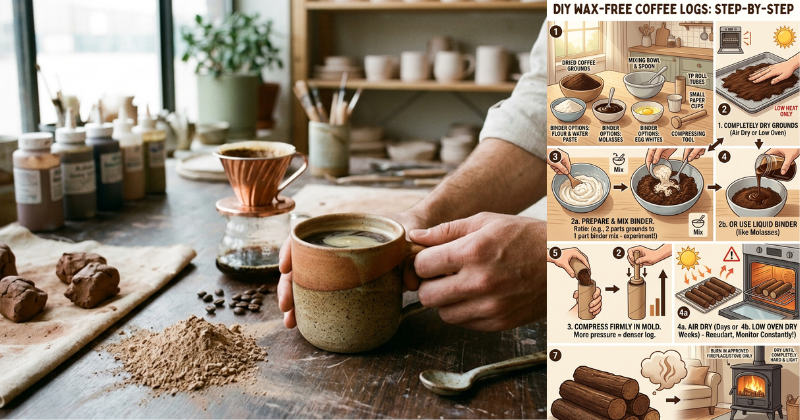
Learn how to make coffee logs without wax using simple, natural binders. Transform your old coffee grounds into eco-friendly fuel for your fireplace today!
Have you ever looked at the damp pile of coffee grounds in your filter and wondered if they could be more than just compost? If you love a warm fire and a sustainable lifestyle, you are in for a treat. Coffee grounds actually contain about 20% more energy than wood, making them a powerhouse for heating your home. While many commercial versions use paraffin, learning how to make coffee logs without wax allows you to create a 100% natural, clean-burning fuel source that smells wonderful and reduces waste.
In this comprehensive guide, we will explore the satisfying DIY process of turning kitchen scraps into high-energy fire logs. You will discover the best natural binders to use, the step-by-step drying process, and how to achieve a long-lasting burn. By choosing wax-free methods, you avoid the chemical soot associated with paraffin and embrace a truly green energy solution. Get ready to unlock the potential of your daily brew and take your eco-friendly home tips to the next level. You have the capability to turn your morning routine into a cozy evening glow!
Foundation: The Science of Coffee as Fuel
To build your confidence in this project, it is essential to understand why coffee works so well as a combustible material. Coffee beans are naturally oily. Even after brewing, the grounds retain a high concentration of these oils, which provide a high calorific value. When compressed into a log, they burn hotter and longer than many types of seasoned hardwood.
Why Go Wax-Free?
Paraffin wax is a petroleum byproduct. While it is an excellent binder, it can release chemicals when burned and leave a greasy residue in your chimney. By learning how to make coffee logs without wax, you are opting for binders like flour, sugar, or even recycled paper pulp. These natural alternatives are biodegradable, cheaper, and safer for your home environment.
Understanding Binders
Without wax, you need something to hold the grounds together. Since coffee grounds don’t naturally “stick” once dry, we use a biological binder. This is usually a starch-based mixture that hardens as it dries, creating a solid brick. It is a simple concept that has been used in charcoal briquette making for centuries, and now you can apply it to your coffee waste!
Reassurance for Beginners
Don’t worry if you aren’t a “handy” person. This process is very similar to baking or making mud pies. It requires no specialized machinery—just some old containers, a bit of pressure, and a little patience. You are about to achieve a sustainable victory for your household!
Step-by-Step Process: Making Your First Batch
Ready to get started? This method uses a simple “flour and water” starch binder, which is the most accessible way to create wax-free logs.
1. Collect and Dry Your Grounds
You cannot make logs with soaking wet grounds, as they will mold before they dry into a solid shape.
- The Method: Spread your used grounds on a baking tray and let them air dry in the sun or put them in a low oven (around 200°F) for an hour.
- Pro Tip: If you are a gardener, you might already know about using grounds in soil. Check out our tips on [gardening with coffee] for more ways to use your leftovers!
2. Create the Natural Binder
For every 4 cups of dry coffee grounds, you will need a binder.
- The Recipe: Mix 1 cup of all-purpose flour with 2 cups of water in a pot. Heat the mixture over medium heat, stirring constantly until it thickens into a translucent, gooey paste. This is your “natural glue.”
3. Mix and Mold
- Step A: In a large bucket, combine the dry coffee grounds with your starch paste. Stir until it feels like thick, heavy dough.
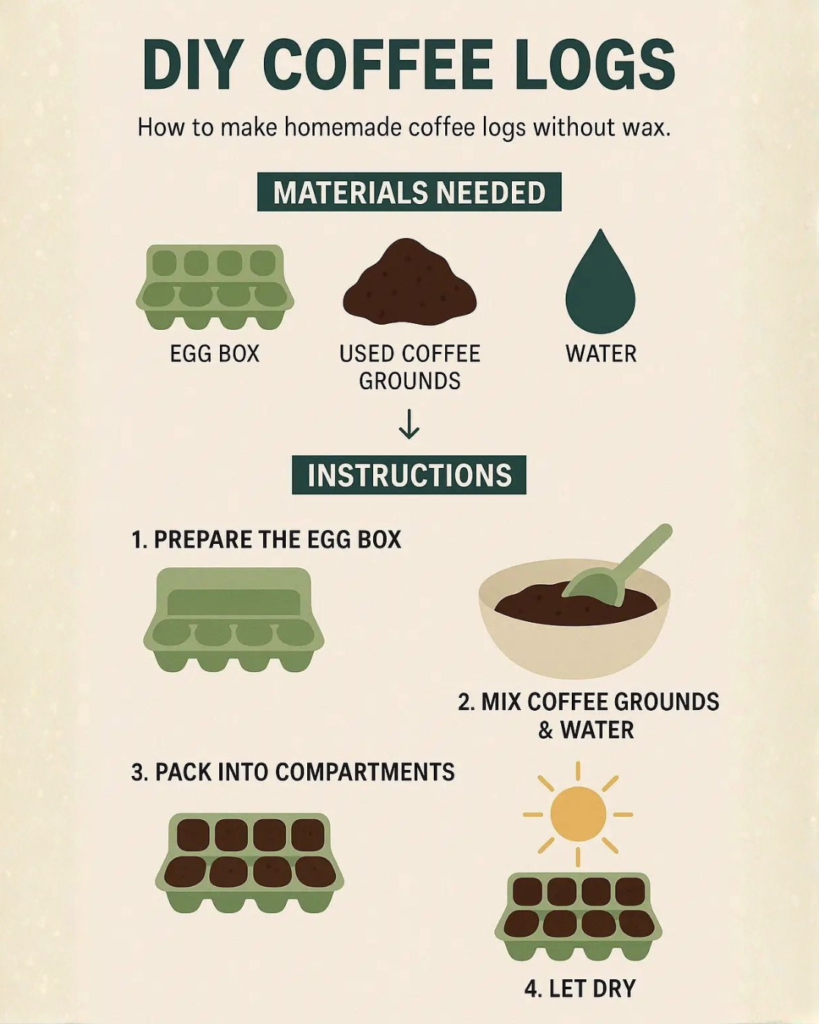
- Step B: Pack the mixture into a mold. You can use old Pringles cans, PVC pipes, or even square juice cartons.
- Step C: Press the mixture down as hard as possible. The more compressed the log is, the longer it will burn.
4. The Drying Phase
This is the most important step. Because we aren’t using wax (which hardens instantly), these logs need to lose their water content to become flammable.
- The Timing: Leave the logs in their molds for 24 hours, then pop them out and let them sit in a dry, warm place for at least 1 to 2 weeks.
Advanced Strategies: Pro Tips for a Better Burn
Once you have mastered the basic flour-binder method, you can experiment with “expert-level” variations to customize your logs for different needs.
Incorporating Paper Pulp
If you want a log that is easier to light, try mixing in recycled paper pulp. Soak old newspapers in water, blend them into a slurry, and mix them 50/50 with your coffee grounds. The paper fibers act as a structural “skeleton” for the log, making it much more durable and less likely to crumble.
Scented Fire Logs
While coffee already smells great, you can add “pro” aromatics to your mixture.
- The Strategy: Add dried orange peels, cinnamon sticks, or a few drops of essential oils to the dough. This turns your coffee log into a giant [diy aroma stone] for your fireplace, filling your home with incredible seasonal scents.
Using a Log Press
If you plan on making these regularly, consider investing in or building a simple manual briquette press. Mechanical pressure removes more water than hand-pressing can, resulting in a much denser log that can burn for up to 90 minutes.
Troubleshooting: Common Challenges and Solutions
DIY projects often come with a few hiccups. Here is how to handle the most frequent obstacles when learning how to make coffee logs without wax.
Problem: My logs are growing mold.
- The Solution: This happens if the grounds weren’t dry enough before mixing, or if the drying area is too humid. Ensure your drying space has good airflow. Using a fan or a dehumidifier in the room can prevent mold from taking hold during the 2-week curing process.
Problem: The logs crumble when I touch them.
- The Solution: This usually means there wasn’t enough binder or the compression wasn’t high enough. Try increasing the amount of flour paste in your next batch, or ensure you are packing the mold much tighter.
Problem: They are hard to light.
- The Solution: Since these logs don’t have wax to act as a fuel accelerant, they need a good bed of embers to get going. Don’t try to light them with just a match. Place them on top of established kindling, and they will catch beautifully.
Maximizing Results: Featured Snippet Potential
Can you burn coffee grounds in a fireplace?
Yes, you can burn coffee grounds in a fireplace, but they should be compressed into logs or briquettes first. Loose grounds will smolder and potentially clog grate airflow. When turned into logs using a binder like starch or paper pulp, coffee grounds burn hotter and cleaner than wood, providing an eco-friendly and aromatic fuel source for your home.
Maintenance and Long-Term Storage
To keep your logs in top shape, store them in a dry, airtight container once they are fully cured. Moisture is the enemy of a wax-free log. If they absorb humidity from the air, they will become difficult to light and may produce more smoke.
Complementary Strategies
- Waste Reduction: Pair this project with other [12 WEIRD KITCHEN HACKS THAT ACTUALLY WORKS] to see how much of your “trash” can actually be repurposed.
- Eco-Friendly Living: Use the ash from your burned coffee logs in your garden! Coffee ash is rich in potassium and can be a great supplement for your plants.
Conclusion
Learning how to make coffee logs without wax is a rewarding way to close the loop on your daily consumption. You have learned how to dry your grounds, create a natural starch binder, and cure your logs for the perfect burn. By turning a waste product into a valuable resource, you aren’t just saving money on firewood; you are actively participating in a more sustainable way of living.
You have the capability to succeed in this DIY journey. It may take a batch or two to find your perfect “recipe,” but the satisfaction of sitting in front of a fire fueled by your own morning coffee is unparalleled. Start saving those grounds today, and soon you’ll be enjoying the cozy, aromatic rewards of your hard work!
Would you like me to create a printable “Recipe Card” with the exact measurements for different sizes of coffee logs?