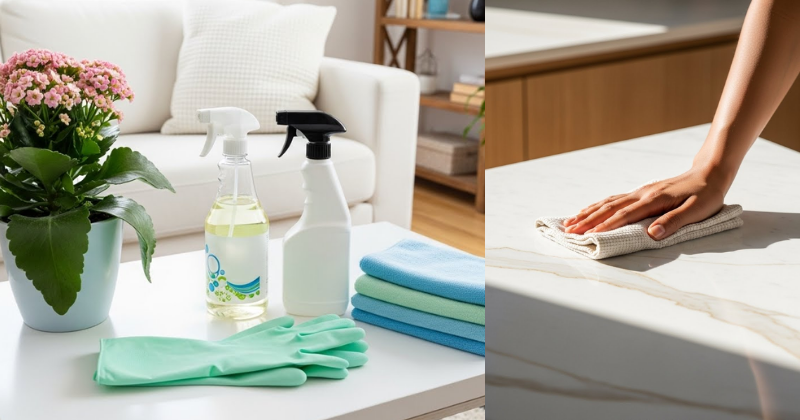
Creating your own dusting spray is more than mixing ingredients—it’s reclaiming the sacred ritual of caring for your living spaces with intention, transparency, and earth-conscious wisdom. This transformative practice liberates you from chemical-laden commercial products while inviting natural fragrances and gentle effectiveness into every corner of your home.
The journey from store-bought dependency to homemade empowerment begins with understanding that cleaning is not warfare against dust, but rather a harmonious dance with our environment. These formulations will guide you through crafting dusting sprays that honor both surfaces and souls, transforming mundane maintenance into mindful practice.

Understanding the Poetry of Dust and Care
Dust is not our enemy—it’s simply matter seeking rest. Every particle tells a story of outdoor pollen, textile fibers, and the constant renewal of our living spaces. When we approach dusting with this perspective, our cleaning solutions become less about aggressive chemical assault and more about gentle persuasion and protection.
The Philosophy Behind Homemade Dusting Spray
Commercial dusting sprays often contain petroleum-based ingredients, synthetic fragrances, and propellants that linger long after application. Your homemade version offers pure transparency—you know every ingredient, control every element, and create solutions tailored to your surfaces’ unique needs. This knowledge is power, and this power transforms cleaning from chore to ceremony.
The base ingredients work in symphonic harmony: water as the carrier, oils as the nourisher, vinegar or alcohol as the gentle cleanser, and essential oils as both fragrance and natural preservative. Each component plays its role in this domestic ballet, lifting dust while conditioning wood, leaving behind nothing but subtle sheen and botanical whispers.
Why Natural Dusting Solutions Transform Your Space
Beyond the obvious health benefits of eliminating synthetic chemicals, homemade dusting spray connects you to centuries of household wisdom. Our grandmothers understood what modern science now confirms: simple, natural ingredients often outperform complex chemical formulations while respecting the materials they touch and the air we breathe.
Cost becomes another compelling narrative—a bottle of homemade dusting spray costs mere pennies compared to commercial alternatives, yet performs with equal or superior effectiveness. This economic liberation extends your budget while reducing plastic waste and chemical runoff into our watersheds.
The Essential Dusting Spray Recipe: A Foundation Formula
This base recipe serves as your canvas for customization, adaptable to any wood type, surface finish, or personal preference. Gather your ingredients as you would assemble paint for creating art—each element contributes to the final masterpiece.
Core Ingredients:
- 1 cup distilled water (the pure foundation)
- 1/4 cup white vinegar or rubbing alcohol (the gentle cleanser)
- 2 tablespoons olive oil or fractionated coconut oil (the nourisher)
- 15-20 drops essential oils of your choice (the aromatic soul)
- Glass spray bottle with fine mist nozzle
The Creation Ritual:
Begin with your glass bottle—glass honors the purity of your creation while avoiding potential reactions with plastic. Pour the distilled water first, establishing your foundation. Water carries intention; as you pour, envision surfaces renewed and radiant.
Add your chosen oil next. Olive oil has nourished wood for millennia, its molecules small enough to penetrate grain while creating protective barriers against future dust accumulation. Fractionated coconut oil offers similar benefits with lighter viscosity, never leaving heavy residue.
Introduce the vinegar or alcohol—your cleaning agent that cuts through grime while evaporating cleanly. White vinegar brings mild acidity that dissolves buildup; rubbing alcohol offers faster evaporation for surfaces where moisture concerns you. Choose based on your surfaces’ temperament.
Finally, add your essential oils. This is where your spray gains personality and therapeutic dimension. Lemon essential oil brings brightness and antibacterial properties. Lavender offers calming aromatherapy while naturally repelling insects. Cedarwood resonates with wood’s own essence, creating olfactory harmony. Tea tree provides powerful antimicrobial action. Create your signature blend—perhaps 8 drops lemon, 7 drops lavender, 5 drops cedarwood for a forest-fresh fusion.
Cap your bottle and shake gently but thoroughly. The oils will disperse through the water-vinegar medium, creating an emulsion that briefly unifies before naturally separating—this is why you’ll shake before each use, reawakening the blend’s potential.
Understanding Oil Selection and Surface Compatibility
Different oils serve different masters. Olive oil, pressed from ancient Mediterranean groves, carries tradition in every drop. Its slightly heavier body suits hardwoods beautifully, particularly darker finishes where its golden hue enhances rather than lightens.
Fractionated coconut oil—coconut oil with long-chain fatty acids removed—remains perpetually liquid and absorbs more readily into lighter woods. It suits modern finishes and laminate surfaces that prefer less substantial conditioning.
Jojoba oil, though pricier, offers remarkable stability and closely mimics wood’s natural protective oils. For treasured antiques or heirloom pieces, jojoba provides archival-quality care worth its premium cost.
Advanced Variations: Customizing Your Cleaning Alchemy
Once you’ve mastered the foundation, these variations allow you to address specific needs, wood types, and personal preferences. Each adaptation tells a different story, solves a unique challenge.
For Dark Hardwoods: The Rich Resonance Formula
Dark woods—walnut, mahogany, ebony—deserve formulations that enhance their depth without creating contrast.
- 1 cup distilled water
- 1/4 cup white vinegar
- 2 tablespoons olive oil
- 1 tablespoon almond oil (for extra richness)
- 10 drops cedarwood essential oil
- 8 drops sandalwood essential oil
- 2 drops patchouli essential oil
This blend carries earthy complexity that complements dark wood’s gravitas while the combined oils provide substantial nourishment.
For Light Woods and Pine: The Bright Morning Formula
Light woods—pine, birch, ash, maple—appreciate lighter touches that won’t darken their natural brightness.
- 1 cup distilled water
- 1/4 cup rubbing alcohol (for faster evaporation)
- 1.5 tablespoons fractionated coconut oil
- 12 drops lemon essential oil
- 8 drops orange essential oil
Citrus notes harmonize with light wood’s cheerful character while the reduced oil content prevents any darkening over time.
For Laminate and Synthetic Surfaces: The Minimalist Formula
Modern surfaces require different consideration—less oil, more cleaning power, quick drying.
- 1 cup distilled water
- 1/3 cup rubbing alcohol
- 1 tablespoon fractionated coconut oil
- 15 drops essential oils (your choice)
- 1 teaspoon castile soap (optional, for extra cleaning power)
This lean formulation respects synthetic surfaces while still providing anti-static properties that repel dust accumulation.
The Furniture Polish Enhancement: Extra Shine Formula
When dusting evolves into polishing—for special occasions or monthly deep-cleaning rituals.
- 3/4 cup distilled water
- 1/4 cup white vinegar
- 3 tablespoons olive oil
- 1 tablespoon beeswax pellets (melted and cooled slightly)
- 20 drops lemon essential oil
The beeswax adds protective dimension and creates luminous sheen. Melt beeswax gently in a double boiler, let cool to just above room temperature, then blend thoroughly with other ingredients.
The Application Ceremony: Techniques for Transformative Results
How you apply your dusting spray matters as much as its formulation. Transform this practical task into meditative practice through intentional technique.
Preparation Rituals
Before spraying, shake your bottle with vigor—watch the oils disperse through the liquid like sunrise illuminating clouds. This physical act awakens the spray’s potential and focuses your attention on the task ahead.
Select your cloth wisely. Microfiber captures dust electrostatically while its fine weave prevents scratching. Old cotton t-shirts offer sustainable alternatives, their soft worn fibers perfect for gentle buffing. Avoid paper towels—their rough texture can microscopically scratch finishes over time.
The Application Dance
Spray your cloth, not the furniture directly. This prevents over-saturation and gives you complete control over product distribution. Two or three sprays suffice for most cloths—you want damp, not dripping.
Move with the wood grain, never against it. This respects the material’s natural structure while ensuring even coverage. On carved details or intricate molding, use a second dry cloth for crevices, preventing buildup in decorative recesses.
Work in sections, completing each area before moving forward. This prevents missing spots while building satisfying momentum—you’ll watch your space transform zone by zone, progress visible and encouraging.
The Finishing Polish
After dusting, take a clean, dry microfiber cloth and perform a final buffing pass. This removes any excess oil while bringing surfaces to their full potential shine. Think of this as the difference between good and transcendent—this final attention elevates your work from adequate to exceptional.
Troubleshooting Common Challenges: Wisdom Through Experience
Even the most carefully crafted formulations occasionally present puzzles. These solutions address frequent concerns with grace and practical wisdom.
Streaking or Residue Issues
If surfaces show streaks or feel sticky, you’re likely using too much spray or your oil-to-water ratio needs adjustment. Reduce oil content by half and reassess. Remember: less is more in dusting spray formulation. You can always add more, but removing excess requires complete re-cleaning.
Separation and Emulsion Stability
Your spray will naturally separate—oils and water maintain their distinct identities despite vigorous shaking. This is not failure but chemistry. Shake before every use, making this action part of your ritual rather than viewing it as inconvenience. For more stable emulsions, add a few drops of castile soap as natural emulsifier.
Scent That Fades Too Quickly
Essential oils evaporate, their volatile nature releasing fragrance but not persisting indefinitely. If you want longer-lasting scent, consider adding 5-10 drops of a fixative oil like benzoin or vetiver to your blend. These base notes anchor lighter scents, extending their presence.
Cloudy Solution Appearance
Cloudiness indicates oils haven’t fully emulsified—completely normal and not problematic. If appearance concerns you aesthetically, slightly warm your water before mixing (not hot—lukewarm). Warmer water helps oils distribute more evenly, creating clearer initial appearance.
Storing Your Creation and Maximizing Longevity
Your homemade dusting spray, properly stored, maintains effectiveness for 2-3 months. This timeframe relates to essential oil potency rather than spoilage—the spray remains safe longer but gradually loses aromatic intensity.
Store in cool, dark locations away from direct sunlight. Light degrades essential oils over time, diminishing both fragrance and therapeutic properties. Under-sink cabinets or cleaning supply closets provide ideal environments.
Label your bottles with creation dates and ingredients. Future-you will appreciate present-you’s diligence when experimenting with multiple formulations. This practice also ensures safety if others use your cleaning supplies.
Consider creating smaller batches more frequently rather than large quantities stored long-term. Fresh formulations perform optimally, and the creation process itself becomes a regular ritual that connects you to your home’s care.
The Ripple Effects: Beyond Clean Surfaces
Creating your own dusting spray initiates cascading benefits that extend far beyond furniture care. Each time you reach for your homemade bottle, you reinforce environmental consciousness, chemical awareness, and self-reliance. These small domestic acts accumulate into significant lifestyle transformation.
You’ll notice increased sensitivity to synthetic fragrances in commercial products—what once seemed normal now registers as overwhelming or unpleasant. This awakening reflects your body’s natural preference for authentic botanical essences over artificial analogues.
Cost savings compound over time. That $6 saved monthly becomes $72 annually, $360 over five years. Money retained is money available for experiences, investments, or simply financial security. These practical benefits complement the philosophical satisfaction of chemical-free living.
Friends and family will notice your home’s ambiance—clean surfaces without harsh chemical overlay, botanical fragrances that feel nurturing rather than aggressive. Many will request your recipe, extending your positive impact into wider circles.
Integrating Dusting Spray into Holistic Home Care
Your dusting spray exists not in isolation but as part of comprehensive natural cleaning practice. Consider exploring complementary DIY formulations: all-purpose cleaners using similar base ingredients, glass cleaning solutions with vinegar and newspaper, floor washes with essential oils and castile soap.
This integrated approach creates cleaning routines where products work synergistically rather than conflicting through incompatible chemical interactions. Your home becomes a coherent ecosystem of natural care rather than a battleground of commercial cleaning agents.
Pair your physical cleaning with energetic clearing—open windows during dusting to refresh stagnant air, play music that uplifts your spirit, burn sustainably sourced sage or palo santo if aligned with your beliefs. Physical cleaning and energetic renewal complement each other beautifully.
Your Invitation to Domestic Alchemy
This dusting spray represents more than combined ingredients—it embodies autonomy, environmental consciousness, and the profound satisfaction of creating rather than consuming. Each bottle you mix is an act of quiet rebellion against chemical dependency and a vote for transparency, simplicity, and earth-honoring practices.
Start with the basic formula, then explore variations as your confidence grows. Trust your intuition about which essential oils call to you, which base oils suit your furniture’s needs. This practice invites experimentation and personalization—make it authentically yours.
Your surfaces await transformation, and you now possess the knowledge to provide it with grace, effectiveness, and botanical wisdom. Mix your first batch today, and discover how something as simple as dusting spray can reconnect you to home, health, and the timeless satisfaction of self-sufficient living.