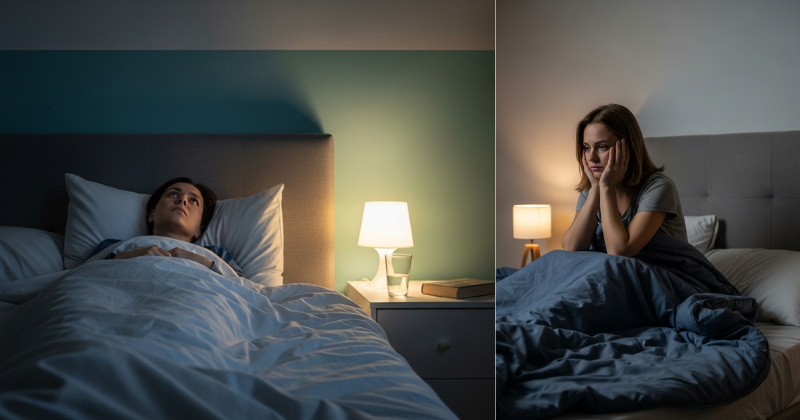
Struggling with racing thoughts at 2 AM? Learn how to sleep if you can’t sleep due to anxiety with our expert guide on calming your mind and reclaiming your rest today.
Important Disclaimer: This article is for informational purposes only and should not replace professional advice. For health-related topics, consult healthcare providers. For safety procedures, verify current best practices and local regulations. Individual results may vary, and personal circumstances should always be considered when implementing any suggestions.
We have all been there: the house is quiet, the lights are off, and your body is exhausted, yet your brain feels like it’s running a marathon. Every worry about tomorrow’s meeting or a mistake from five years ago suddenly feels like a life-or-death crisis. If you find yourself staring at the ceiling, you aren’t alone. Anxiety is one of the most common thieves of rest, but you don’t have to let it win. Learning how to sleep if you can’t sleep due to anxiety is about more than just “trying harder” to relax; it is about outsmarting your nervous system and creating a sanctuary for your mind.
In this comprehensive guide, we are going to unlock the tools you need to break the cycle of nighttime worry. You will discover science-backed breathing techniques, the “Cognitive Shuffle,” and how to build a routine that signals safety to your brain. You have the capability to transform your nights from a battleground into a place of deep, restorative peace. Let’s dive in and achieve the sleep you deserve!
Foundation: Why Anxiety Keeps You Awake
To solve the problem, we must first build confidence in understanding what is happening inside your body. When you are anxious, your brain triggers the “fight or flight” response, flooding your system with cortisol and adrenaline.
The Biological Roadblock
Anxiety is essentially your body’s alarm system. It is trying to protect you from perceived threats. The problem is that your brain can’t distinguish between a real tiger and a stressful email. This hyper-arousal makes it physically impossible for your heart rate to drop to sleep-ready levels. By focusing on [sustainable lifestyle changes], you can begin to lower your baseline stress so your “alarm” isn’t so sensitive.
The Sleep-Anxiety Loop
You worry, which prevents sleep. Then, you worry about the fact that you aren’t sleeping, which creates more anxiety. Breaking this loop is the first step toward recovery. It’s important to remember that one bad night doesn’t define your health. Reassure yourself that your body is resilient. You are embarking on a [wellness journey], and gradual progress is the goal.
Core Components of Nighttime Calm
- Environment: Is your room a “worry-free” zone?
- Routine: Does your body know when the “workday” ends?
- Physiology: Are you using your breath to override your heart rate?
Step-by-Step: The Core Methods to Calm the Mind
If you are currently lying in bed wondering how to sleep if you can’t sleep due to anxiety, follow these manageable steps to reset your nervous system right now.
1. The 4-7-8 Breathing Technique
This is a biological “off switch” for your stress response.
- The Process: Inhale through your nose for 4 seconds, hold your breath for 7 seconds, and exhale forcefully through your mouth for 8 seconds.
- The Why: The long exhale stimulates the Vagus nerve, which triggers the parasympathetic nervous system (the “rest and digest” mode).
2. The 15-Minute Rule (Stimulus Control)
If you haven’t fallen asleep after 20 minutes, get out of bed.
- The Step: Go to a different room with dim lighting. Do a boring, non-electronic task like folding socks or reading a dry book.
- The Goal: You want to avoid your brain associating your bed with the frustration of being awake. Only return when you feel physically sleepy.
3. The “Brain Dump” Journal
Anxiety thrives on the fear of forgetting things.
- The Action: Keep a notepad by your bed. If a worry pops up, write it down.
- The Benefit: By externalizing the thought, you give your brain permission to stop “looping” on it. You’ve “saved” the data for tomorrow, so you don’t have to carry it tonight.
Advanced Strategies: Pro Tips for Chronic Overthinkers
Once you’ve mastered the basics, use these expert-level insights to further customize your approach to nighttime peace.
The Cognitive Shuffle
This is a brilliant “mind game” to distract a racing brain. Think of a neutral word like “BEDTIME.” Starting with ‘B’, visualize as many items as you can that start with that letter (e.g., Bear, Boat, Balloon). Once you run out, move to ‘E’. This keeps your brain busy with non-threatening imagery, which is exactly what happens during the transition to sleep.
Sensory Grounding (5-4-3-2-1)
If you feel a panic attack or high-level anxiety rising, ground yourself in the room. Identify:
- 5 things you can see.
- 4 things you can touch.
- 3 things you can hear.
- 2 things you can smell.
- 1 thing you can taste (even just the inside of your mouth). This pulls your focus out of your head and back into the physical world. It is a powerful [mental health tool] for immediate relief.
Pro-Tip: Temperature Regulation
Anxiety often makes us feel hot or flushed. Scientific research shows that a drop in core body temperature is a primary signal for sleep. Take a warm bath 90 minutes before bed; as you cool down afterward, your brain receives a strong signal that it is time for rest. This is a great [home wellness tip] to incorporate into your nightly ritual.
Troubleshooting: Common Challenges and Setbacks
Even with a plan, anxiety can be stubborn. Here is how to handle frequent obstacles with encouragement.
“My thoughts are too loud to focus on breathing.”
- The Solution: Use an audio guide. Sometimes our own internal voice is too stressed to lead. Use a sleep story or a guided meditation app.
- Encouragement: It’s okay if your mind wanders! When it does, gently bring it back to the audio. This is a skill that improves with practice.
“I’m afraid of being alone with my thoughts.”
- The Fix: Try “Pink Noise” or “Brown Noise” (deeper versions of white noise). Unlike silence, which can feel heavy, these sounds provide a “blanket” for your brain to rest under.
- Alternative Approach: Focus on [improving your daytime routine] with sunlight and exercise, which naturally increases sleep pressure and leaves less room for nighttime rumination.
“I wake up at 3 AM with a racing heart.”
- The Advice: This is often a blood sugar dip or a cortisol spike. Avoid alcohol before bed, as it causes “rebound” anxiety in the middle of the night. If this happens, don’t check the clock! Checking the time triggers “math anxiety” (counting how many hours you have left), which keeps you awake longer.
Maximizing Results: Long-Term Sleep Success
To build upon your success, look at sleep as the result of your entire day, not just your last hour.
The “Wind-Down” Buffer Zone
You cannot expect to go from 100 mph to 0 mph instantly. Create a 60-minute “no-fly zone” for screens and stressful topics. This is the time for [gentle stretching], listening to soft music, or enjoying a caffeine-free herbal tea like Chamomile or Valerian root.
Consistency and Sunlight
Your circadian rhythm—your internal clock—is set by light. Get 10 minutes of natural sunlight in your eyes first thing in the morning. This helps regulate melatonin production for later that night. Pair this with a consistent wake-up time to [achieve long-term sleep stability].
Featured Snippet: How can I fall asleep fast when I have anxiety?
To fall asleep fast when you have anxiety, use the 4-7-8 breathing method to calm your nervous system. If you can’t sleep after 20 minutes, leave the bedroom to do a calm activity in dim light to break the anxiety-bed association. Use the “Cognitive Shuffle” by visualizing random objects starting with a specific letter to distract your mind from racing thoughts and induce a dream-like state.
Conclusion
Understanding how to sleep if you can’t sleep due to anxiety is a journey of reclaiming your right to rest. You have discovered that you have the capability to succeed by using targeted, biological hacks to soothe your mind. By building a consistent routine and being patient with yourself, you achieve a level of peace that once seemed impossible.
You’ve got this! Start tonight by putting your phone away an hour early and trying the 4-7-8 breath. Your body wants to sleep—you are simply learning how to give it permission.