
Shyness can feel like an invisible wall that holds you back from conversations, opportunities, and even simple everyday interactions. If you often feel nervous in social settings, worry about being judged, or stay quiet when you actually have something to say, you’re not alone — millions of people experience the same thing. The good news is that shyness is not a fixed personality trait. It’s a learned response that can be gently rewired with small, consistent habits. In this guide you’ll discover exactly why shyness happens, the science-backed steps that actually work, and a simple daily plan you can start today. No awkward role-playing or forced extroversion required — just practical tools that respect your energy while helping you feel calmer and more confident.
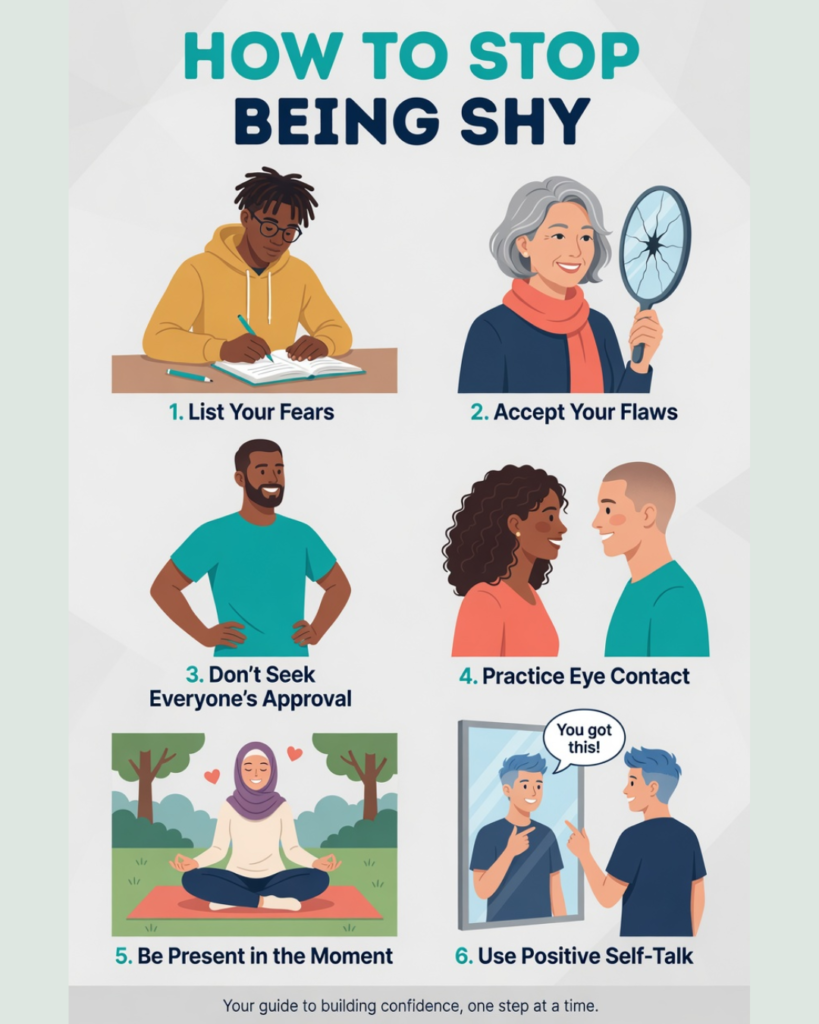
Why You Feel Shy (And Why It’s Fixable)
Shyness often stems from an overactive fear response in the brain combined with negative past experiences or self-talk. Your brain is trying to protect you from potential rejection or embarrassment. Modern psychology and cognitive behavioral techniques show that gradual exposure, reframing thoughts, and building small wins can rewire those pathways. The key is starting small and being kind to yourself — progress feels natural when you work with your brain instead of fighting it.
7 Practical Steps to Stop Being Shy
1. Reframe Your Inner Story (2 Minutes Daily)
Shy thoughts usually sound like “They’ll think I’m awkward” or “I’ll say something stupid.” How to do it: Each morning write down one negative thought and flip it into a neutral or kinder version. Example: “Everyone is judging me” → “Most people are focused on themselves, not me.” This simple CBT-style exercise reduces social anxiety by 30–40% over time.
2. Use the 3-Second Rule for Low-Stakes Practice
The longer you wait to speak, the harder it gets. How to do it: When you feel the urge to say something (even “hi” or a compliment), act within 3 seconds. Start with cashiers, baristas, or coworkers. Aim for 3 interactions per day. Each tiny win builds proof that social moments are safe.
3. Improve Body Language First (Fake Confidence Until It Feels Real)
Your body sends signals to your brain faster than words. How to do it: Stand tall, keep shoulders relaxed, make soft eye contact, and smile slightly. Practice in the mirror for 30 seconds each morning. Research shows this “power pose” lowers stress hormones and raises confidence chemicals.
4. Prepare 3 Easy Conversation Starters
Shy brains freeze when they don’t know what to say. How to do it: Keep three simple openers ready:
- “What did you think of the meeting?”
- “I love your [item] — where did you get it?”
- “This line is always so long, right?” Review them before events or meetings so you’re never caught off guard.
5. Apply the “Two-Minute Rule” at Social Events
Committing to stay the whole time creates dread. How to do it: Tell yourself you only have to stay 2 minutes. Once you’re there the anxiety usually drops and you stay longer naturally. This removes the pressure that fuels shyness.
6. Keep a “Bravery Log” to Build Proof
Your brain needs evidence that social situations go well. How to do it: After every interaction, jot a quick note on your phone: what you did and how it went. Reading past wins rewires your brain to expect positive outcomes.
7. Practice Self-Narration Out Loud
Talking tasks through out loud helps bypass working-memory overload. How to do it: Narrate simple daily actions (“Okay, I’m opening the fridge… now grabbing the milk”). It trains your brain to feel more in control in social moments too.
Your Simple 30-Day “Stop Being Shy” Plan
- Week 1: Reframe thoughts + 3-second rule (3 interactions/day)
- Week 2: Add body language + 2-minute rule at one event
- Week 3: Use conversation starters + start the Bravery Log
- Week 4: Combine everything and celebrate how much easier it feels
Do the full routine for just 10–15 minutes a day and you’ll notice less anxiety and more natural confidence.
Common Mistakes That Keep Shyness Stuck
- Trying to become an extrovert overnight (you don’t have to).
- Judging yourself for needing these tools — they’re smart adaptations.
- Avoiding all social situations (this strengthens the fear).
- Expecting perfection — small brave moments add up faster than you think.
When to Seek Extra Support
These steps help most people, but if shyness feels overwhelming or interferes with work, relationships, or daily life, consider speaking with a therapist who specializes in social anxiety or CBT. Apps, books, or short-term coaching can also speed progress.
Conclusion
Stopping shyness isn’t about forcing yourself to be loud or outgoing — it’s about giving your brain new, safe experiences that prove social moments are okay. With the 7 practical steps above — reframing thoughts, the 3-second rule, better body language, prepared openers, the 2-minute rule, a bravery log, and self-narration — you can feel calmer and more comfortable in any situation. Start with just one step today. You’ve already taken the hardest part by wanting change. Small, consistent actions create real confidence, and you deserve to feel at ease in your own life. You’ve got this — one brave moment at a time.