
Meta description (first 150-160 characters):
Make your own perfume using easy essential oil recipes. Learn step-by-step how to blend scents, dilute safely, and customize fragrances at home.
Introduction
Have you ever wished your scent felt more personal, more “you,” and less like something everyone else wears? Making your own perfume with essential oils lets you express your unique style through scent. This guide will show you how to make your own perfume using easy essential oil recipes, even if you’ve never blended oils before. It’s far more affordable than luxury perfumes and offers complete creative freedom.
In this article, you’ll discover foundation concepts, step-by-step perfume blending instructions, beginner-friendly scent combinations, troubleshooting advice, and pro tips for making your fragrance last longer. You’ll learn how top, middle, and base notes work together and why dilution matters for skin safety.
Whether you want a floral daytime scent, a calming evening blend, or a signature perfume you’ll wear for years, this guide will empower you to unlock your creative potential. Get ready to blend, experiment, and make a scent that feels personal and luxurious.
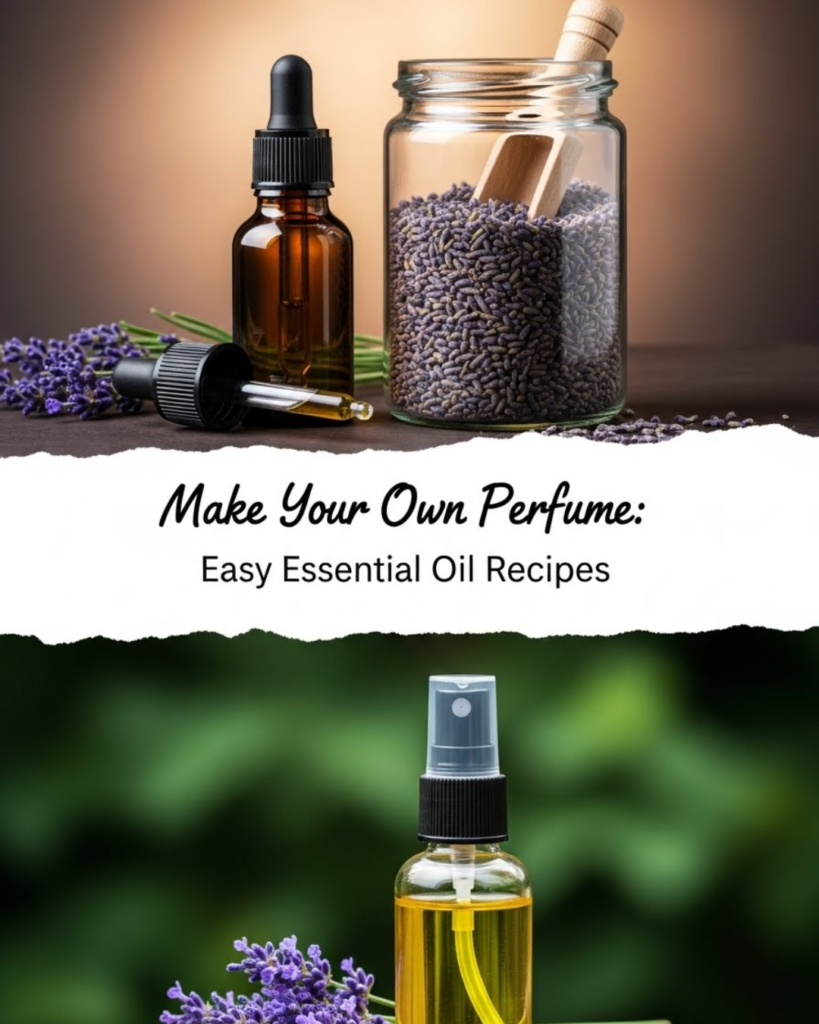
Make Your Own Perfume: Easy Essential Oil Recipes
Understanding the Basics Before Making Your Own Perfume
When diving into DIY perfume, a few foundational principles make the process easier and more rewarding. If you’re new to essential oils, don’t worry. You’ll learn step-by-step and gain confidence quickly.
What are essential oils?
Essential oils are concentrated plant extracts created through steam distillation or cold pressing. Their potency means you only need small amounts to create strong fragrances.
Why make perfume at home?
Here are some common motivations:
- Save money compared to commercial perfumes
- Avoid synthetic chemicals
- Create personalized scents
- Enjoy creative self-expression
- Explore natural aromatherapy benefits
Understanding perfume note structure
Perfumes are built in layers. Notes influence how a perfume smells immediately, after several minutes, and after an hour or more.
H4: Top notes
The first scent you smell. They evaporate quickly. Example oils: lemon, bergamot, peppermint.
H4: Middle notes
Also called heart notes, they provide body and balance. Example oils: lavender, geranium, chamomile.
H4: Base notes
The longest-lasting foundation scents. Example oils: sandalwood, patchouli, vanilla extract, vetiver.
Understanding these categories helps you blend fragrances that evolve beautifully over time instead of fading quickly.
How to Make Your Own Essential Oil Perfume Step-by-Step
Making perfume at home becomes simple when broken into manageable steps. You’ll need only a handful of easy-to-find supplies.
Supplies you’ll need
- Essential oils
- 10 ml glass roller bottle or perfume bottle
- Carrier oil (jojoba, sweet almond, or fractionated coconut oil)
- Small funnel or pipette
- Optional: alcohol base (vodka or perfumer’s alcohol)
Step-by-step process
Step 1 – Choose your scent notes
Pick one oil from each note category. A balanced ratio for beginners is:
- 30% top notes
- 50% middle notes
- 20% base notes
Step 2 – Add base notes first
Start with your slow-evaporating oils. These create depth and longevity.
Step 3 – Add your middle and top notes
Build upward like a pyramid. Smell between additions to understand blending.
Step 4 – Add carrier oil
Essential oils must be diluted before applying to the skin. Fill the rest of the bottle with carrier oil.
Step 5 – Shake and rest
Perfumes require time to marry. Store your blend for 48–72 hours before using.
Easy Essential Oil Perfume Recipes
These beginner-friendly recipes help you explore fragrance combinations confidently. Feel free to customize ratios to suit your preferences.
Citrus Sunrise Roll-On Perfume
- 4 drops sweet orange (top)
- 3 drops bergamot (top)
- 6 drops lavender (middle)
- 3 drops cedarwood (base)
- Carrier oil to fill
Bright and uplifting for daytime wear.
Calm Evening Vanilla Perfume
- 5 drops vanilla extract (base)
- 4 drops lavender (middle)
- 2 drops clary sage (middle)
- 2 drops bergamot (top)
- Carrier oil to fill
Comforting and soothing for night relaxation.
Wooded Amber Musk Perfume
- 3 drops vetiver (base)
- 5 drops sandalwood (base)
- 4 drops patchouli (base)
- 5 drops jasmine (middle)
- Carrier oil to fill
Warm, grounding, and long-lasting.
Pro Tips to Make Natural Perfume Last Longer
Once you start blending, a few advanced strategies help you achieve long-lasting fragrances that feel luxurious.
Use fixatives
Fixatives slow evaporation. Effective natural fixatives include:
- Sandalwood
- Vetiver
- Benzoin resin
- Vanilla
Experiment in small batches
Start with minimal quantities. This approach saves oils while you refine blends.
Write down every recipe
Keeping a blending notebook ensures you can replicate scents you fall in love with.
Store in a cool, dark place
Essential oils degrade with heat and sunlight. Proper storage protects scent quality.
Troubleshooting Common Perfume-Making Challenges
Making your own perfume takes patience. These common issues have simple solutions.
Why does my perfume fade fast?
- Weak base notes
- Oils not concentrated enough
- No fixatives
- Applied to dry skin
Try layering scent over body lotion to extend longevity.
Why does my blend smell strong or unpleasant?
- Too much of one oil
- Incompatible notes
- Insufficient resting time
Adjust ratios gradually. Allow your perfume blend to age before evaluating final scent.
Why irritates my skin?
Always dilute essential oils properly. Perform a patch test before full wear.
Maximize Your Results and Take Your Perfume to the Next Level
Once you master the basics, elevate your blending skills with these creative techniques.
Create seasonal perfumes
Spring blends: floral notes like jasmine and rose
Summer blends: refreshing mint, citrus, neroli
Fall blends: warm spices like cinnamon and clove
Winter blends: resinous balsam, frankincense, myrrh
Explore alcohol-based perfumes
Alcohol helps fragrance disperse and evaporate gradually. Start with a 20–30% oil dilution.
Layer scents across different body products
Try coordinating body oil, lotion, and perfume to extend fragrance lifespan.
Internal linking opportunities
- Essential oil safety guidelines
- DIY body butter recipes
- How to make natural room sprays
- Best essential oils for stress relief
- How aromatherapy works
These articles complement perfume-making and support readers with related projects.
Conclusion
Making your own perfume with essential oils unlocks creativity, personal expression, and natural wellness benefits. With the right understanding of notes, carrier oils, and fixatives, you’ll confidently blend scents that reflect your style.
Follow the foundational steps, explore recipes, troubleshoot challenges, and apply pro-level techniques to extend scent longevity. The joy of perfume-making lies in experimentation. Try new combinations, trust your senses, and enjoy the transformation that happens when nature’s oils blend into your own signature fragrance.
You are capable of creating luxurious scents right at home—start blending today and discover the unforgettable perfume that is uniquely yours.