
Meta-description (first 150–160 characters):
Propagate snake plant from leaf using water with easy steps that help roots grow fast. Learn when, how, and why water propagation works for Sansevieria.
Introduction
If you’ve ever admired your healthy snake plant and wished you had more of them around your home, there’s good news. You can propagate a snake plant from a leaf using water, and the process is surprisingly simple. Water propagation allows you to watch roots develop and encourages beginners to experiment confidently. This guide walks you through every step, from choosing the right leaf to troubleshooting slow root growth.
Growing new plants from cuttings is empowering. You’ll transform one snake plant into many without spending money or needing advanced gardening skills. Whether you’re expanding your indoor plant collection, sharing plants with friends, or creating backup plants for future repotting, propagating snake plants in water is an accessible and satisfying method.
This article covers essential foundations, step-by-step methods, advanced pro tips, common issues, and next-level strategies to help your water propagation succeed consistently. Let’s get started.
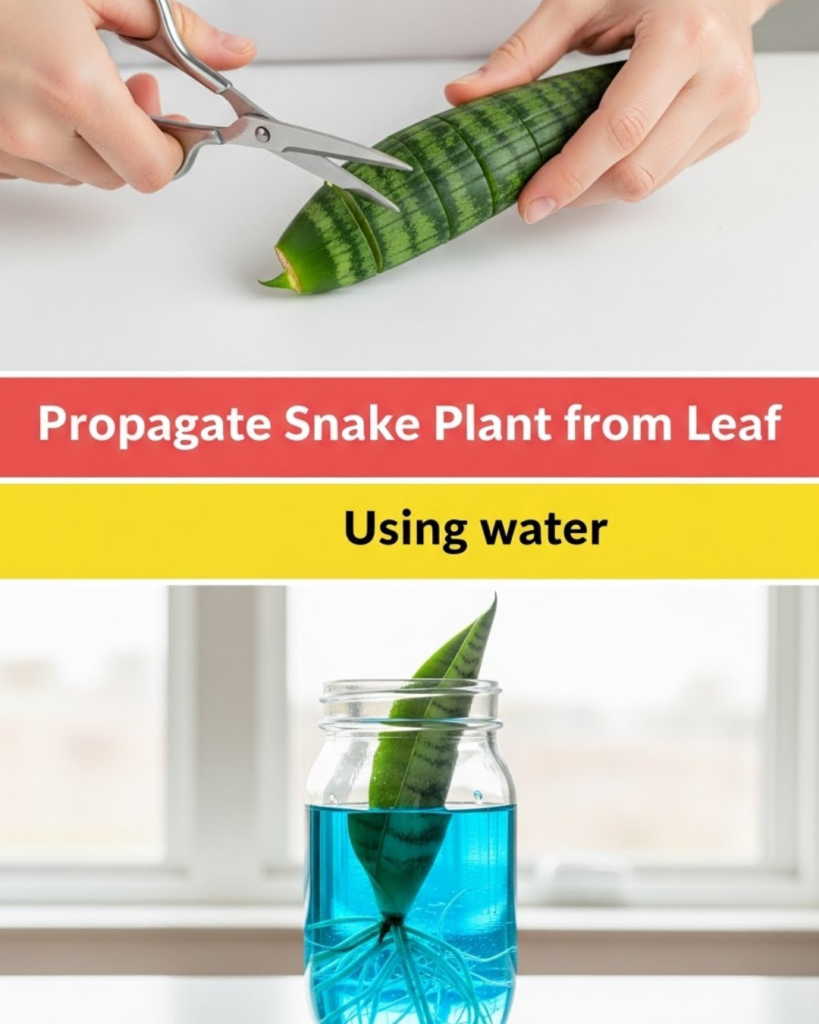
Propagate Snake Plant from Leaf, Using Water
How to Get Started Propagating Snake Plant Leaves in Water
Many beginners wonder whether propagation is difficult or risky. The truth is, snake plants (Sansevieria or Dracaena trifasciata) are extremely resilient, making them ideal for propagation experiments.
H3: Why choose water propagation?
Water propagation offers several advantages:
- You can visually monitor root formation.
- The method encourages fast root development.
- You need only basic supplies.
- It reduces soil-related diseases and pests.
Water propagation also helps build your confidence before trying soil propagation.
H3: What supplies do you need?
To start propagating snake plants in water, gather:
- A healthy snake plant leaf
- Clean scissors or a knife
- A transparent glass or jar
- Filtered or distilled water (preferred)
- Optional: rooting hormone
These simple materials are likely already in your home.
H3: What makes a good cutting?
Select a mature, undamaged leaf. Avoid leaves that:
- are yellowing
- have mushy sections
- show signs of pests
A healthy cutting increases the chance of successful root formation.
Step-by-Step Process to Propagate Snake Plant in Water
This section breaks down the entire propagation process into manageable steps. These instructions help ensure strong root growth and prevent contamination.
H3: Step 1 – Cut the leaf correctly
Use clean scissors to make a straight cut near the base. Cutting at the base ensures the leaf contains enough stored nutrients for rooting.
H4: Cut at the correct orientation
Snake plant cuttings must stay “right-side up.” The end closest to the soil should stay facing downward in the water. If it’s upside down, it won’t root.
H3: Step 2 – Let the cutting callus
Place the leaf on a clean surface for 1–3 days until a dry callus forms over the cut end. This prevents rotting when submerged in water.
This waiting period is crucial because snake plants store moisture and can rot if placed immediately into water.
H3: Step 3 – Submerge the leaf tip in water
Fill a clean glass with filtered water. Only submerge the bottom 1–2 inches of the leaf. Avoid deep submersion because too much water exposure increases rot risk.
Place the glass in bright, indirect light. Avoid direct sunlight, which can overheat the leaf and encourage algae growth.
H3: Step 4 – Maintain and monitor water quality
Replace the water weekly or when it becomes cloudy. Fresh oxygenated water encourages root development.
Patience helps. Roots usually appear in 4–8 weeks.
Pro Tips to Encourage Faster Root Growth When Propagating in Water
Once you know the basics, a few simple adjustments can significantly increase success rates.
H3: Use filtered or rainwater
Tap water may contain minerals or chlorine that delay root development. Using filtered water helps roots form faster.
H3: Keep temperature stable
Snake plants root best in temperatures between 65°F–80°F (18°C–26°C). Avoid drafts or cold windowsills.
H3: Add rooting hormone (optional)
Rooting hormone supports faster root initiation. Dip the cut end before placing it in water.
H3: Slice the leaf into sections for more plants
One leaf can produce multiple new plants when cut into 3–4 inch pieces. Just remember orientation when placing pieces in water.
Troubleshooting Common Problems During Water Propagation
Even though snake plants are tough, water propagation can present challenges. Here are common issues and solutions.
H3: Why is the leaf turning mushy?
Excess moisture or bacteria may cause rot.
Solutions:
- Trim off affected parts
- Change water more frequently
- Reduce submersion depth
- Ensure the cut end callused fully before submerging
H3: Why aren’t roots forming?
Root growth can be slow due to:
- Cold temperatures
- Low light
- Chlorinated water
- A leaf that is too old or damaged
Adjust conditions gradually and remain patient.
H3: What to do if algae appears?
Algae forms when light hits standing water.
Fixes:
- Move the container farther from direct light
- Use an opaque jar
- Change water frequently
How to Maximize Results for a Strong, Healthy New Plant
Once roots appear, you can transition your cutting to soil or allow it to develop fully in water.
H3: When to transfer rooted cuttings to soil
Transfer when roots reach 1–2 inches long. This gives the cutting a better chance of adapting to soil.
Use a fast-draining soil mix designed for succulents.
H3: Keep roots moist during transition
Water lightly for the first few weeks after planting. Snake plants prefer dry cycles, but young roots still need moisture.
H3: Encourage long-term health
Place your new plant in bright, indirect light. Snake plants tolerate low light but thrive with bright filtered sunlight.
Internal Linking Opportunities
Topics readers may also search for include:
- How to propagate snake plant in soil
- Best soil mixes for indoor succulents
- Beginner-friendly indoor plants
- How to fix overwatered succulents
- Water propagation methods for pothos and monstera
These articles help deepen learning and provide cross-support for propagation success.
Conclusion
Propagating a snake plant from a leaf using water is an accessible, rewarding process that allows you to expand your indoor garden with simplicity and joy. With proper leaf selection, clean tools, correct orientation, and consistent water maintenance, you can watch roots emerge and new plants flourish.
By following the steps and pro tips provided, you gain confidence in your gardening skills, reduce plant-care costs, and strengthen your connection to nature. Each cutting represents growth, patience, and nurturing care.
Start with one leaf today, and soon you’ll unlock the satisfaction of transforming a single plant into many thriving new ones.