
Cutting boards are one of the most frequently used tools in the kitchen, but they can also harbor bacteria if not cleaned properly. Raw meat, poultry, and vegetables can leave behind germs that may cause foodborne illness. While commercial disinfectants work, natural methods are effective, safe, and eco-friendly.
Using simple kitchen ingredients like lemon, vinegar, baking soda, and salt, you can clean and disinfect your cutting boards without harsh chemicals. This guide explains natural ways to disinfect your cutting boards and provides tips for keeping them hygienic.
Why Cutting Board Hygiene Matters
Cutting boards can accumulate bacteria such as Salmonella, E. coli, and Listeria. These bacteria thrive on food residue, especially when the board is not cleaned thoroughly.
Common signs that your cutting board may need deep cleaning include:
- Persistent odors
- Stains or discoloration
- Visible food residue stuck in grooves
Keeping cutting boards clean reduces the risk of cross-contamination and helps keep your kitchen safe.
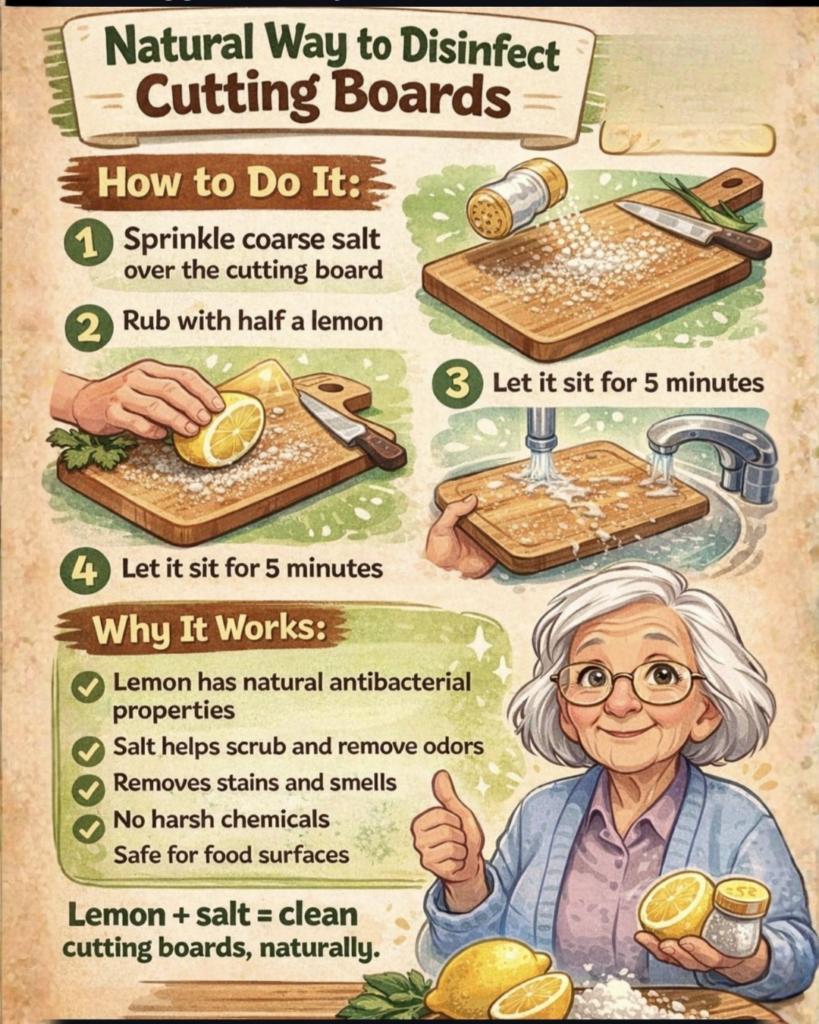
1. Lemon and Salt Scrub
Lemon has natural antibacterial properties, and salt acts as a gentle abrasive to remove stuck-on particles.
Ingredients
- 1 lemon
- 1–2 tablespoons coarse salt
Method
- Sprinkle salt over the cutting board surface.
- Cut the lemon in half and rub it over the salted surface, squeezing slightly to release juice.
- Let it sit for 5 minutes.
- Rinse with warm water and dry thoroughly.
Benefits
- Removes bacteria naturally
- Brightens and deodorizes the board
- Safe for both wooden and plastic cutting boards
2. White Vinegar Rinse
White vinegar is acidic and can help kill bacteria without harsh chemicals.
Method
- Spray or pour undiluted white vinegar over the board.
- Let it sit for 5–10 minutes.
- Rinse with warm water and dry.
Benefits
- Works well for daily disinfecting
- Neutralizes odors
- Safe for most cutting boards
3. Baking Soda Paste
Baking soda is a mild abrasive that can also help neutralize odors and remove stains.
Ingredients
- 2 tablespoons baking soda
- Small amount of water
Method
- Mix baking soda with water to form a paste.
- Spread paste over the cutting board.
- Scrub gently with a sponge or brush.
- Rinse thoroughly and dry.
Benefits
- Eliminates lingering smells
- Helps remove stubborn stains
- Gentle enough for wooden boards
4. Hydrogen Peroxide Spray
Hydrogen peroxide is a natural disinfectant that can kill bacteria effectively.
Method
- Pour 3% hydrogen peroxide over the cutting board.
- Let it sit for a few minutes.
- Rinse with warm water and dry thoroughly.
Benefits
- Kills a wide range of bacteria
- Effective for deep cleaning
- Safe for food contact surfaces if rinsed well
5. Sunlight Exposure
Sunlight is a natural sanitizer due to UV rays, which can kill certain bacteria and help remove odors.
Method
- After cleaning your cutting board, place it in direct sunlight for a few hours.
- Ensure both sides are exposed.
Benefits
- Eco-friendly and chemical-free
- Reduces moisture that bacteria need to survive
- Helps prevent mold on wooden boards
Tips for Keeping Cutting Boards Hygienic
- Use separate boards for raw meat, poultry, seafood, and vegetables.
- Clean immediately after use to prevent bacteria growth.
- Avoid soaking wooden boards in water for long periods, as it can warp the wood.
- Oil wooden boards occasionally with food-grade mineral oil to prevent cracks where bacteria can hide.
- Inspect boards regularly for deep grooves or cracks, which can harbor bacteria; replace if necessary.
Quick Routine for Natural Disinfection
- Wash board with warm, soapy water.
- Apply lemon and salt or sprinkle baking soda for scrubbing.
- Rinse thoroughly with water.
- Optional: spray with white vinegar or hydrogen peroxide for extra disinfection.
- Dry completely and, if possible, leave in sunlight for a few hours.
Conclusion
Disinfecting your cutting boards naturally is both effective and safe. Ingredients like lemon, salt, vinegar, baking soda, and hydrogen peroxide can help remove bacteria, odors, and stains without harsh chemicals. By following these tips and maintaining a regular cleaning routine, you can reduce the risk of cross-contamination and keep your kitchen hygienic.
Natural methods are eco-friendly, inexpensive, and easy—perfect for a safe and healthy cooking environment.