
Meta description (first 150–160 characters):
One spider plant can dramatically improve indoor air quality by removing chemicals like formaldehyde and reducing mold spores in small spaces.
Introduction: A Simple Plant That Can Transform the Air You Breathe
What if improving the air quality in your home didn’t require expensive purifiers, complicated filters, or constant maintenance? Imagine achieving fresher, cleaner air with one resilient houseplant you can grow almost anywhere. That’s exactly why the spider plant has captured so much attention.
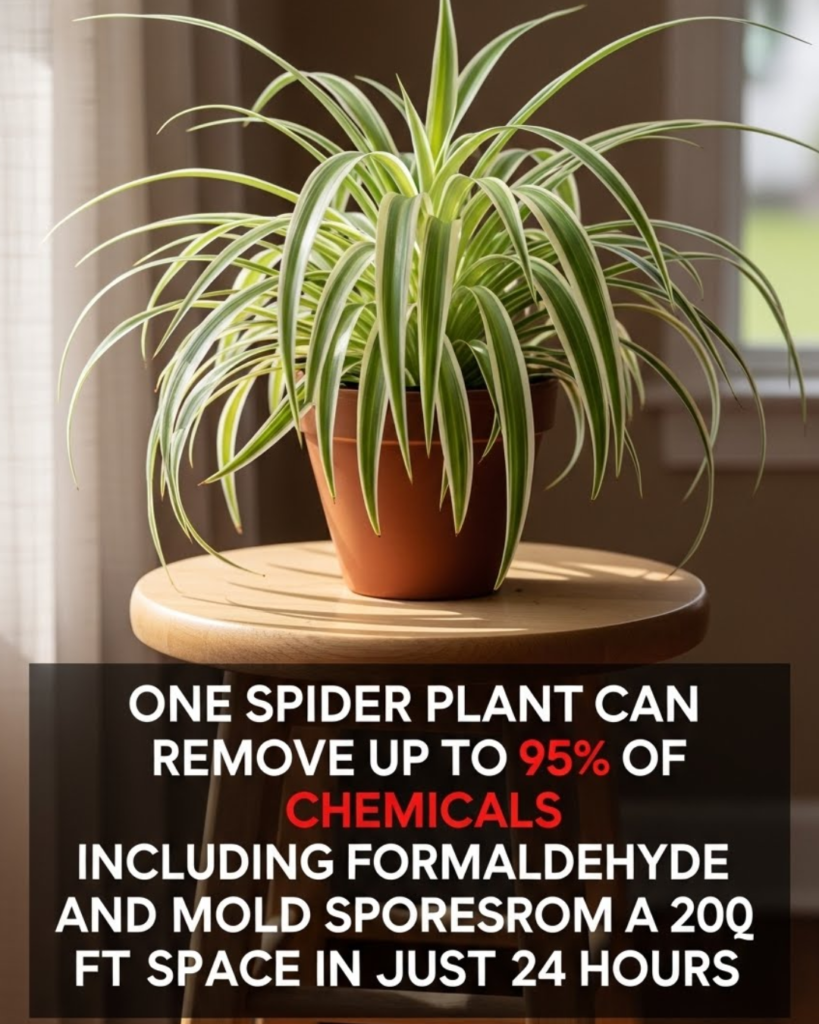
You may have heard the claim that one spider plant can remove up to 95% of chemicals, including formaldehyde, and even reduce mold spores from a 200 sq ft space in just 24 hours. While that number represents optimal conditions in controlled studies, the science behind spider plants is still impressive—and very real.
This article will help you discover how spider plants purify indoor air, how to use them effectively in your own space, and how you can unlock their full potential with simple, achievable care steps. By the end, you’ll feel confident using this humble plant as part of a healthier, more natural home environment.
Why Spider Plants Are Powerful Natural Air Purifiers
Spider plants (Chlorophytum comosum) are more than decorative greenery. They actively interact with your indoor environment in ways that benefit you daily.
How Spider Plants Clean Indoor Air
Spider plants absorb airborne pollutants through their leaves and roots. Microorganisms in the soil then help break these toxins down into harmless compounds.
Key pollutants spider plants help reduce include:
- Formaldehyde (from furniture, carpets, adhesives, and cleaning products)
- Xylene and toluene (from paints and solvents)
- Carbon monoxide traces
- Airborne mold spores (indirectly, by improving air balance)
This natural process is known as phytoremediation, and it’s one of the reasons spider plants were highlighted in early indoor air quality research.
What Research Really Shows
In controlled environments—such as sealed chambers used in lab studies—spider plants have shown exceptionally high removal rates of certain volatile organic compounds (VOCs) within 24 hours. Real homes are more complex, but consistent exposure to spider plants still leads to measurable air-quality improvement over time.
Think of spider plants as a powerful helper, not a magic switch.
Why They’re Ideal for Beginners
Spider plants are:
- Extremely forgiving
- Fast-growing
- Safe for homes with children
- Affordable and widely available
If you’ve ever felt intimidated by houseplants, this is the perfect place to start.
How to Use One Spider Plant in a 200 Sq Ft Space (Step-by-Step)
You don’t need a jungle to benefit. Strategic placement and basic care make all the difference.
Step 1: Choose the Right Location
Place your spider plant where air circulates naturally:
- Living rooms
- Bedrooms
- Home offices
- Near furniture made from pressed wood
Avoid sealing it inside dark corners. Bright, indirect light helps the plant function at its best.
Step 2: Pot Size and Soil Matter
Use a medium-sized pot with drainage holes and light, well-aerated soil. Healthy roots mean better air processing.
Quick tip: Slightly root-bound spider plants often perform better than over-potted ones.
Step 3: Let the Leaves Breathe
Keep leaves clean. Dust buildup reduces the plant’s ability to absorb pollutants.
- Wipe gently with a damp cloth every 2–3 weeks
- Or rinse leaves in the shower occasionally
Step 4: Give It Time to Work
Air purification isn’t instant in real homes. Within days to weeks, many people report:
- Fresher-smelling rooms
- Less stagnant air
- Reduced irritation from chemical odors
Pro Tips to Maximize Air-Cleaning Power
Once you’re comfortable, these strategies help you get even more benefits.
Use Spider Plant “Babies” Strategically
Spider plants produce offshoots (baby plants) that root easily.
Place them in:
- Bathrooms (to help with humidity and mold spores)
- Kitchens (where fumes and odors collect)
- Near new furniture or renovations
Pair With Complementary Plants
For stronger results, combine spider plants with:
- Snake plants (nighttime oxygen release)
- Peace lilies (VOC reduction)
- Pothos (easy care, broad coverage)
This creates a mini ecosystem rather than relying on one plant alone.
Seasonal Considerations
- Winter: Keep away from heaters and cold drafts
- Summer: Bright indirect light boosts growth and efficiency
- Humid climates: Excellent for mold-prone areas
- Dry climates: Mist occasionally to support leaf health
Common Challenges (and Easy Fixes)
Even tough plants face occasional issues. Here’s how to troubleshoot without stress.
Brown Leaf Tips
Cause: Fluoride in tap water or dry air
Fix:
- Use filtered or rested water
- Trim brown tips (they won’t heal, but trimming is safe)
Yellowing Leaves
Cause: Overwatering
Fix:
- Let the top inch of soil dry before watering again
- Ensure proper drainage
Not Seeing Results Fast Enough
Reality check: Plants work gradually.
Solution:
- Improve ventilation
- Add one additional plant if air quality issues are severe
- Reduce chemical sources where possible
Remember, progress beats perfection.
Taking Results to the Next Level: Long-Term Air Quality Care
Spider plants shine brightest when they’re part of a bigger picture.
Combine Plants With Smart Habits
To amplify results:
- Open windows daily when weather allows
- Avoid synthetic air fresheners
- Choose low-VOC paints and cleaners
Ongoing Maintenance Made Simple
Spider plants thrive on routine:
- Water once a week (adjust seasonally)
- Rotate the pot monthly
- Repot every 1–2 years
The reward? A healthier, calmer living space that grows with you.
Internal Linking Opportunities
This topic naturally connects with related articles such as:
- Best air-purifying houseplants for bedrooms
- How indoor plants reduce stress and anxiety
- Natural ways to reduce mold indoors
- Beginner-friendly houseplants that thrive year-round
- Creating a low-toxin home environment
Featured Question Answer:
Can One Spider Plant Really Clean the Air in a Room?
Short answer: Yes—to a meaningful extent.
One healthy spider plant can significantly reduce certain airborne chemicals in a small space, especially over consistent exposure. While it won’t replace ventilation or air purifiers, it’s a powerful, natural support that improves air quality over time.
Conclusion: You’re One Plant Away From Better Air
Cleaner air doesn’t have to be complicated. By welcoming one spider plant into your space, you take a simple yet powerful step toward a healthier home. This unassuming plant works quietly every day—filtering, balancing, and refreshing the environment you live in.
You don’t need perfection. You don’t need expensive tools. You just need to start.
Place a spider plant in your room, care for it gently, and let nature do what it does best. Over time, you’ll breathe easier, live calmer, and feel more connected to your space—and that transformation is absolutely within your reach. 🌿