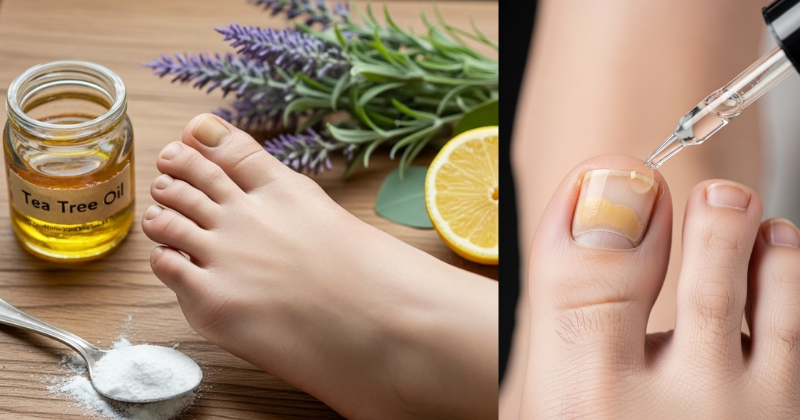
Toenail fungus — medically termed onychomycosis — affects an estimated 10-12% of the global population and represents one of the most persistent dermatological conditions encountered in both clinical and home treatment contexts. The hallmark yellow-brown discoloration, nail thickening, and brittle texture result from dermatophyte fungi (primarily Trichophyton rubrum and Trichophyton mentagrophytes) colonizing the nail bed and nail plate through mechanisms that make eradication genuinely challenging. Prescription antifungal medications work but require months of systemic therapy with associated hepatotoxicity monitoring, while over-the-counter topical treatments frequently fail to penetrate the nail plate sufficiently to reach the infection site. The at-home remedy presented here combines two compounds with documented antifungal mechanisms in a delivery protocol that addresses the primary obstacle to topical efficacy — nail plate penetration. This approach is grounded in mycological research and clinical dermatology rather than anecdotal tradition alone.
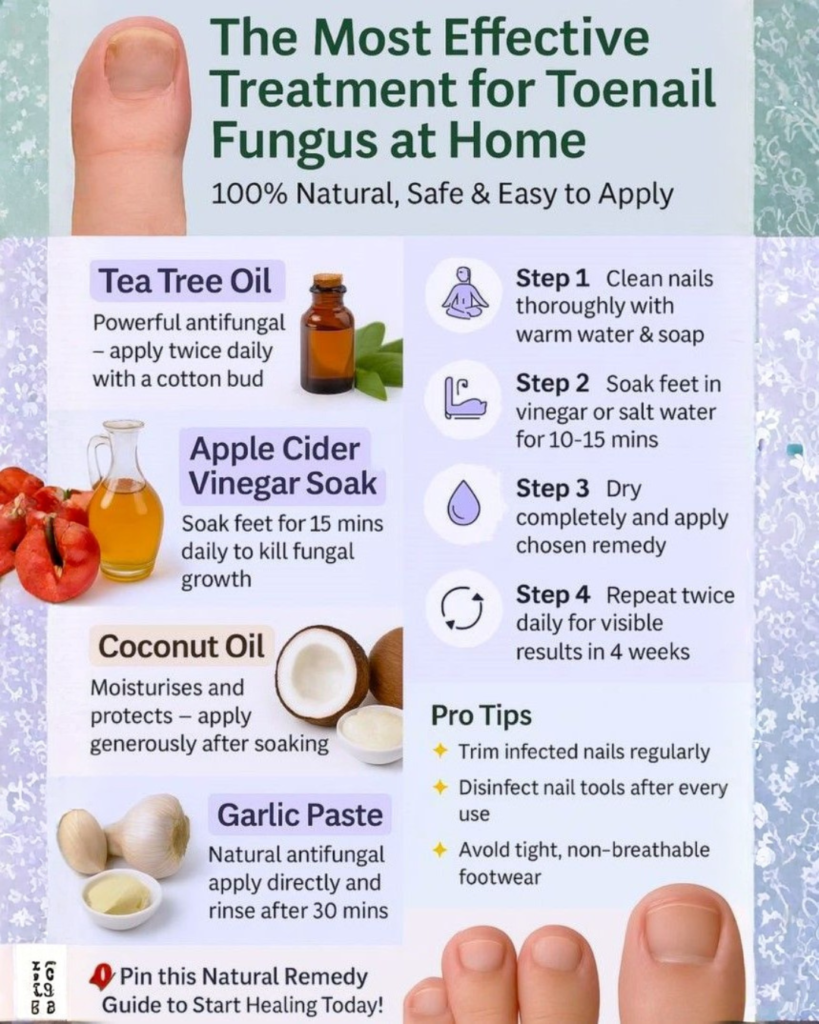
Understanding Toenail Fungus: The Biology Behind the Infection
Effective treatment requires understanding the specific characteristics of dermatophyte fungi that make them resistant to many common antifungal approaches and that explain why toenail infections persist far longer than fungal skin infections.
The Nail Plate as a Protective Barrier
The toenail is composed of densely packed keratinized cells organized in multiple layers — a structure that provides mechanical protection to the underlying nail bed but simultaneously creates a formidable barrier to topical medication penetration. The nail plate’s water content (7-12% in healthy nails, often lower in fungal-infected nails due to structural disruption) and its dense keratin matrix limit the diffusion of both water-soluble and lipophilic compounds. Dermatophyte fungi establish infection beneath this protective barrier in the nail bed and within the nail plate matrix itself, where they are shielded from topical treatments applied to the nail surface.
This anatomical reality explains why superficial skin fungal infections (athlete’s foot, ringworm) respond relatively quickly to topical antifungals while toenail fungus requires months of persistent treatment — the fungi reside in a location that most topical medications cannot adequately reach without specific penetration-enhancing strategies.
The Slow Growth Rate Challenge
Toenails grow approximately 1-1.5mm per month — significantly slower than fingernails (2-3mm/month) and substantially slower than the proliferation rate of the infecting fungi. Complete toenail replacement from cuticle to free edge requires 12-18 months in adults. This slow growth means that even when antifungal treatment successfully prevents new fungal growth in the nail matrix (where new nail is formed), the already-infected nail must grow out completely before the nail appears normal. The frustratingly slow visible improvement during treatment reflects this biological timeline rather than treatment failure — a critical distinction that prevents premature discontinuation.
Why Fungi Thrive in Toenails Specifically
Dermatophyte fungi preferentially colonize toenails over fingernails due to several converging factors. Feet experience occlusive environments (shoes and socks) that maintain warmth and humidity — conditions optimal for fungal proliferation. Feet have reduced blood circulation compared to hands, limiting immune surveillance and the delivery of systemic antifungals when used. The slightly more alkaline pH environment in shoes compared to ambient air favors fungal metabolism. Repeated microtrauma from footwear creates microscopic nail plate disruptions that provide fungal entry points. These factors collectively explain the epidemiological observation that toenail fungus is 10-20 times more prevalent than fingernail fungus.
The Tea Tree Oil and Coconut Oil Protocol: Complete Treatment Method
This remedy combines tea tree oil’s documented antifungal activity with coconut oil’s penetration-enhancing properties in a protocol specifically designed to address the nail plate barrier that defeats most home treatments.
The Evidence Base for Tea Tree Oil
Tea tree oil (Melaleuca alternifolia essential oil) contains terpinen-4-ol as its primary bioactive constituent (30-48% of total oil composition in ISO 4730-compliant preparations), along with gamma-terpinene, alpha-terpinene, and 1,8-cineole. Terpinen-4-ol’s antifungal mechanism operates through disruption of fungal cell membrane integrity — the compound intercalates into the phospholipid bilayer, increasing membrane permeability and causing intracellular potassium ion leakage and loss of membrane potential that fungal cells cannot survive.
In vitro studies demonstrate minimum inhibitory concentrations (MICs) of tea tree oil against Trichophyton rubrum ranging from 0.03-0.12% — concentrations achievable with neat (undiluted) tea tree oil application. A randomized double-blind trial published in the Journal of Family Practice compared 100% tea tree oil to 1% clotrimazole solution (a standard pharmaceutical antifungal) for toenail onychomycosis, documenting statistically equivalent cure rates (18% complete cure, 60% partial improvement in the tea tree oil group versus 11% complete cure and 61% partial improvement in the clotrimazole group after 6 months). While these absolute cure rates appear modest, they match or exceed the efficacy of many prescription topical antifungals — the challenge is not the compound’s inherent antifungal potency but achieving adequate nail penetration.
Why Coconut Oil Enhances Penetration and Adds Antifungal Activity
Virgin coconut oil serves three distinct functions in this protocol. First, it acts as a lipophilic carrier that improves tea tree oil’s contact time with the nail surface and facilitates its penetration into the nail plate’s lipid-associated regions. Second, coconut oil itself exhibits antifungal activity through its lauric acid (approximately 50% of fatty acid composition) and capric acid (approximately 7%) content — medium-chain fatty acids that disrupt fungal cell membranes through mechanisms complementary to terpinen-4-ol. Third, coconut oil’s emollient properties address the nail brittleness and dry texture that characterize fungal infection, improving nail flexibility and potentially facilitating deeper compound penetration into the structurally disrupted nail matrix.
Research published in the Journal of Medicinal Food documented that virgin coconut oil demonstrated fungicidal activity against Candida species at concentrations of 25% and higher, and against dermatophytes at similar concentrations — supporting its role as an active ingredient rather than merely an inert carrier.
The Complete Application Protocol
Ingredients and materials:
- 100% pure tea tree oil (pharmaceutical grade, verified ISO 4730 compliant if possible)
- Virgin coconut oil (organic, cold-pressed)
- Nail file or emery board
- Small glass dropper bottle or roll-on applicator
- Cotton balls or cotton swabs
- Optional: disposable gloves for application
Preparation (makes approximately 10ml of treatment solution): Combine 5ml (approximately 1 teaspoon) of tea tree oil with 5ml of coconut oil in a small glass bottle. This 1:1 ratio provides maximum antifungal concentration while maintaining enough carrier oil to improve penetration and reduce the risk of skin irritation from undiluted tea tree oil on surrounding tissue. If coconut oil is solid at room temperature, gently warm both oils together in a warm water bath before mixing. Shake or stir to combine thoroughly.
Daily application protocol:
Step 1: Mechanical nail surface preparation (critical for success). Use a nail file to gently file the surface of the affected nail, removing the top layer of nail plate — this step is non-negotiable for effective treatment. Filing creates micro-roughening and slightly thins the nail plate, dramatically improving the penetration of subsequently applied antifungals. File in one direction rather than back-and-forth sawing motions to minimize nail damage. The goal is gentle surface abrasion, not aggressive thinning that causes discomfort. Dispose of the used file section or thoroughly disinfect with rubbing alcohol between uses to prevent reintroducing fungal spores.
Step 2: Foot cleaning and preparation. Wash feet thoroughly with soap and water, ensuring complete removal of any lotions, oils, or debris from toenails. Dry feet and toes completely — residual water dilutes the treatment and reduces its effective concentration. For maximum penetration, some dermatology protocols recommend a brief (5-10 minute) warm water foot soak before treatment to temporarily hydrate and soften the nail plate, then thorough drying before oil application.
Step 3: Apply treatment solution to affected nail. Using a cotton swab, small brush, or roll-on applicator, apply the tea tree-coconut oil mixture generously to the entire affected nail surface, the nail edges, the area beneath the nail’s free edge (if accessible), and the skin immediately surrounding the nail (the proximal and lateral nail folds where fungus often extends). Massage the solution gently into the nail surface for 30-60 seconds to enhance penetration. The nail should appear visibly saturated with oil.
Step 4: Allow complete absorption (minimum 15-20 minutes). Do not put on socks or shoes immediately after application — the treatment needs unoccluded contact time for maximum penetration. Ideally, apply the treatment before bed and leave exposed overnight. If morning application is more practical, apply at least 20 minutes before footwear use and avoid occlusive footwear when possible for several hours post-application.
Step 5: Repeat twice daily without exception. Morning and evening applications maintain continuous antifungal pressure on the infection. Consistency is non-negotiable — even occasional missed applications allow fungal regrowth that extends the treatment timeline substantially.
Treatment Duration and Realistic Timeline
As explained earlier, complete toenail replacement requires 12-18 months. Visible improvement typically begins at 6-8 weeks as new, uninfected nail grows from the matrix, but complete resolution requires growing out the entire infected nail. The protocol described here should be maintained for a minimum of 3 months even if improvement is visible earlier, and optimally continued until the nail appears completely normal — which for most adults means 9-15 months of consistent twice-daily application.
This timeline is not a limitation of this particular remedy — it is the biological reality of toenail growth that applies equally to prescription antifungals, over-the-counter treatments, and home remedies. Setting realistic expectations from the outset prevents the premature discontinuation that causes most treatment failures.
Advanced Strategies to Accelerate Results
Vinegar Soaks for Enhanced Fungal Die-Off
Adding a daily vinegar foot soak creates an acidic environment inhospitable to fungal growth while potentially improving the nail plate’s receptiveness to subsequent oil treatment. Combine 1 part white vinegar (5% acetic acid) with 2 parts warm water in a basin large enough to submerge affected toes. Soak for 15-20 minutes daily before applying the tea tree-coconut oil treatment. The acetic acid in vinegar has documented antifungal activity against Trichophyton species and temporarily softens the nail plate, potentially improving subsequent treatment penetration. Thoroughly dry feet after soaking — residual moisture dilutes the oil treatment’s concentration.
Oregano Oil as a Synergistic Addition
For particularly resistant infections, adding oregano essential oil (Origanum vulgare) to the base formula provides complementary antifungal activity through carvacrol and thymol — phenolic monoterpenes with documented fungicidal mechanisms distinct from tea tree oil’s terpinen-4-ol. A modified formula of 4ml tea tree oil, 4ml coconut oil, and 2ml oregano oil creates a more aggressive treatment with multi-compound antifungal action. Important safety note: oregano oil is significantly more likely to cause skin irritation than tea tree oil — perform a patch test on normal skin before applying to infected areas, and discontinue if redness or burning occurs.
UV Light Exposure for Adjunctive Fungal Control
Ultraviolet light, particularly UVB (280-315nm) and UVC (200-280nm) wavelengths, has documented fungicidal effects through direct DNA damage to fungal cells. While home UVC devices marketed for toenail fungus have mixed evidence support, regular outdoor barefoot sunlight exposure (15-20 minutes daily on non-damaged skin) provides UVB exposure with documented benefits for both fungal control and vitamin D synthesis that supports immune function. This should complement, not replace, the topical treatment protocol.
Troubleshooting When Progress Stalls
Persistent Infection Despite Consistent Treatment
If no visible improvement appears after 12 weeks of rigorous twice-daily application, several factors warrant investigation. The infection may be mixed — combining dermatophyte fungi with yeast (Candida species) or bacteria that require different antimicrobial strategies. The nail plate may be excessively thick or dense, preventing adequate treatment penetration despite surface filing. The tea tree oil quality may be substandard — adulterated tea tree oil or oil stored inappropriately (exposure to light, heat, or air causes oxidative degradation of active terpenes) loses antifungal potency substantially.
Addressing these possibilities involves switching to pharmaceutical-grade verified tea tree oil, increasing nail plate thinning (consider professional nail debridement by a podiatrist to remove a larger portion of infected nail), and potentially seeking professional assessment to confirm the infection is purely fungal rather than mixed or misdiagnosed.
Managing Skin Irritation Around the Nail
Tea tree oil can cause contact dermatitis in approximately 1-5% of users, manifesting as redness, itching, or peeling skin surrounding the treated nail. If this occurs, dilute the treatment further — try a 1:3 ratio of tea tree oil to coconut oil rather than 1:1. Apply petroleum jelly to the skin surrounding the nail before treatment application, creating a barrier that limits tea tree oil contact with sensitive skin while allowing full nail contact. If irritation persists despite these modifications, tea tree oil may need to be discontinued and alternative antifungals like oregano oil (at even more diluted concentrations) or pharmaceutical options considered.
Preventing Reinfection After Successful Treatment
Environmental Fungal Reservoir Elimination
Dermatophyte fungi persist in the environment — particularly in shoes, socks, shower floors, and gym surfaces — creating reinfection risk even after successful nail treatment. Comprehensive prevention requires addressing these reservoirs simultaneously. Disinfect the interior of all shoes worn during the infection period with antifungal shoe spray (containing tea tree oil or similar compounds), or if shoes are machine washable, run through a hot water cycle and dry in direct sunlight. Replace insoles in athletic shoes monthly during and after treatment. Launder socks in hot water (60°C minimum) with added vinegar or tea tree oil. Never walk barefoot in public showers, locker rooms, or pool areas — fungal spores persist on moist surfaces for extended periods.
Foot Hygiene and Moisture Management
Maintaining dry feet and nails prevents fungal recolonization. Thoroughly dry toes and the spaces between toes immediately after washing or swimming. Apply antifungal powder (containing miconazole or tolnaftate) to feet and inside shoes daily — the powder absorbs excess moisture and provides ongoing antifungal protection. Choose breathable footwear whenever possible and alternate shoes daily to allow complete drying between wearings. Address any concurrent athlete’s foot aggressively — the same fungi causing toenail infection commonly colonize foot skin, and skin infections serve as an ongoing source for nail reinfection.
Building a Long-Term Nail Health Protocol
The most durable protection against toenail fungus involves comprehensive foot care practices that extend beyond treatment into permanent lifestyle integration. Weekly nail inspection and trimming prevents the accumulation of debris beneath the nail’s free edge where fungi establish initial colonization. Monthly gentle nail surface filing maintains a smooth nail that resists fungal penetration while improving the overall nail’s health and appearance. Consistent use of antifungal foot powder, particularly during summer months and after gym activities, provides ongoing prophylaxis. These practices, combined with immediate treatment resumption at the first sign of discoloration or textural change, creates a sustainable approach that minimizes recurrence risk.
Conclusion
Toenail fungus responds to the tea tree oil and coconut oil protocol through documented antifungal mechanisms — but success requires understanding the biology of both the infection and the nail structure it colonizes. The nail plate barrier, slow nail growth rate, and timeline for complete replacement are immutable biological constraints that no treatment circumvents. What this remedy provides is a cost-effective, evidence-supported approach that achieves efficacy comparable to prescription topicals when applied with the mechanical nail preparation, consistent twice-daily application, and long-term commitment that the condition demands. Begin the protocol today with realistic expectations about the 9-15 month timeline, remain consistent through the initial months when visible progress is minimal, and combine treatment with environmental reservoir elimination and prevention practices. Toenail fungus is genuinely reversible — but reversing it requires matching your commitment to the biology’s timeline.
Important Disclaimer: This article is for informational purposes only and should not replace professional medical advice. For persistent, severe, or rapidly worsening toenail infections, consult a healthcare provider or podiatrist. Individuals with diabetes, peripheral vascular disease, or compromised immune systems should seek professional treatment rather than self-treating. Individual results may vary, and personal circumstances should always be considered when implementing any suggestions.