
Stop using bleach on this surface—it’s making the stains worse! Learn why traditional bleach fails on porous materials like grout and discover the best DIY fixes.
Have you ever spent a Saturday morning scrubbing your bathroom tiles with bleach, only to find that the orange or black stains return even faster the following week? It is a common and deeply frustrating experience. You reach for the strongest bottle in your cleaning cabinet, expecting a sparkling finish, but instead, you’re left with yellowing surfaces and stubborn spots that seem to grow more aggressive over time. The truth is, most people don’t realize they should stop using bleach on this surface because of its hidden chemical reactions. While bleach is a powerful disinfectant, it is often the worst enemy of porous materials and certain natural stones.
Today, you are going to transform your cleaning routine and unlock the secrets to a truly pristine home. This guide will empower you with achievable, step-by-step guidance to remove stains without damaging your property. You have the capability to achieve a professional-level clean using safe, cost-effective alternatives. Get ready to discover why your current method is failing and achieve a breakthrough in your home maintenance routine!
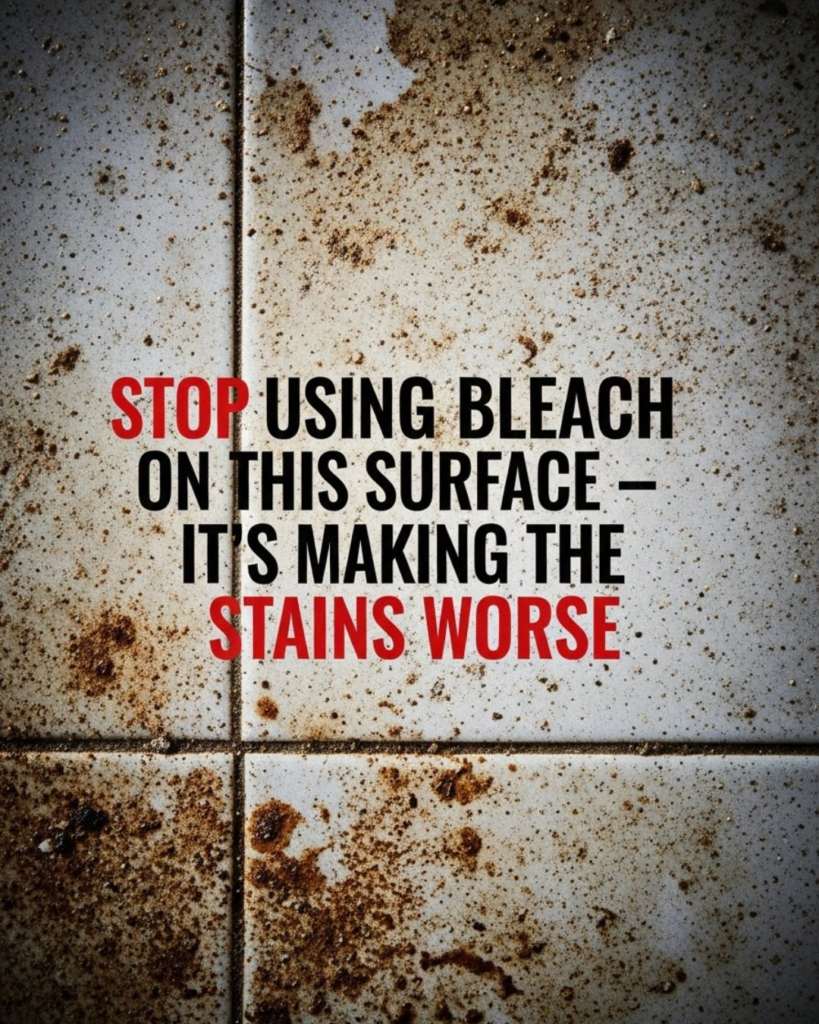
Foundation: Why Bleach Fails on Porous Surfaces
Before we dive into the better alternatives, let’s build your confidence with the basic science of why you should stop using bleach on this surface—specifically, tile grout, natural stone, and wood. Understanding the “why” is the first step toward a cleaner home.
The Problem with Porosity
Grout and natural stones like marble or granite are porous, meaning they are filled with microscopic holes. When you apply liquid bleach, the chlorine sits on the surface while the water component soaks deep into the pores. This creates a damp environment deep inside the material that actually feeds mold and mildew spores, allowing them to regrow from the inside out. This is exactly why it feels like it’s making the stains worse.
Chemical Yellowing and Surface Erosion
Bleach is highly alkaline and corrosive. On white surfaces, it can actually cause a chemical reaction that results in permanent yellowing. For natural stones, the harsh pH of bleach can “etch” or dull the polished finish, creating a rough texture that traps even more dirt and grime than before.
Reassurance for Beginners
If you have been using bleach for years, don’t feel discouraged! Most of us grew up believing bleach was the “gold standard” for disinfection. You aren’t doing a bad job; you were simply using a tool that wasn’t designed for these specific materials. By switching your approach today, you are taking a proactive step toward preserving the longevity and beauty of your home.
Step-by-Step: The Ultimate Grout and Surface Reset
Ready to ditch the harsh chemicals? Follow these manageable steps to lift stains and seal your surfaces for good.
1. The Oxygen Bleach Alternative
Unlike chlorine bleach, oxygen bleach (sodium percarbonate) is non-toxic and works by releasing oxygen bubbles that physically lift dirt out of pores.
- The Action: Mix powdered oxygen bleach with warm water to create a thin paste.
- The Process: Apply the paste to the stained area and let it sit for at least 15–20 minutes. You will see it bubbling—that’s the oxygen doing the hard work for you!
- The Result: Rinse with clean water to reveal a surface that is truly clean, not just “whitened.”
2. The Vinegar and Baking Soda Power Duo
For light stains and general maintenance, look no further than your pantry.
- The Method: Sprinkle baking soda over the surface, then spray with a mixture of equal parts water and white vinegar.
- The Scrub: Use a stiff-bristled brush (or an old electric toothbrush) to work the fizzing mixture into the grout lines.
3. Steam Cleaning for Deep Sanitization
If you want to avoid chemicals entirely, steam is your best friend.
- The Tool: Use a handheld steam cleaner with a pointed nozzle.
- Why it works: High-temperature steam kills 99.9% of bacteria and loosens deep-seated oils without leaving behind any residue that could attract future stains.
Advanced Strategies: Pro Tips for Long-Term Protection
Once you have mastered the basic cleaning, share expert-level insights by focusing on prevention and specialized materials.
The Importance of Sealing
The most effective way to ensure you never have to worry about “making the stains worse” again is to close those microscopic pores.
- Pro Tip: After a deep clean, let your grout or stone dry for 24 hours. Apply a high-quality penetrating sealer. This creates an invisible barrier that makes liquids bead up on the surface rather than soaking in.
Hydrogen Peroxide for Organic Stains
If you are dealing with stubborn mold or food stains on white surfaces, 3% hydrogen peroxide is a safer, more effective “bleach” alternative.
- Expert Secret: Mix hydrogen peroxide with a bit of dish soap in a spray bottle. The soap breaks down surface tension while the peroxide kills spores at the root without the corrosive side effects of chlorine.
Featured Snippet: Why does bleach make grout stains worse?
Bleach makes grout stains worse because it is composed mostly of water, which penetrates the porous grout and provides moisture for mold to grow deep beneath the surface. While the chlorine whitens the surface temporarily, the corrosive nature of bleach wears down the grout’s structure, making it more porous over time and creating more space for dirt and bacteria to hide. Switching to oxygen bleach or steam cleaning is a much more effective, long-term solution.
Troubleshooting: Common Cleaning Challenges
Home maintenance often comes with surprises. here is how to handle frequent obstacles with an encouraging mindset:
- “The stains are still there after one treatment”: If the stains have been there for years, they might be “set.” Action: Repeat the oxygen bleach process but cover the area with plastic wrap to keep it damp for 2 hours. This gives the oxygen more time to break down the pigment.
- “My natural stone looks dull”: This is likely “etching” from previous bleach use.
- Solution: Use a specialized stone polishing powder to restore the shine, and never use acidic or high-alkaline cleaners on it again.
- “The mold keeps coming back”: This is often a ventilation issue rather than a cleaning one.
- Internal Link: To maintain a truly healthy home environment, discover how Making Your Own Natural Scented Aroma Stones can keep your bathroom smelling fresh while you address humidity issues.
Maximizing Results: A Holistic Clean Home
Now that you’ve rescued your surfaces, build upon your success by looking at other areas of home wellness.
Systematic Maintenance
A clean home is easier to maintain when you have the right routines in place.
- Internal Link: To keep your kitchen and bathroom floors in top shape without damaging them, try this floor cleaner diy recipe that is safe for all surfaces.
- Internal Link: Did you know that a cluttered space can lead to a cluttered mind? If your cleaning habits are a reaction to stress, learn why people who overthink at night usually had this type of childhood and how organizing your environment can lead to mental peace.
Safe Disposal
When you stop using bleach on this surface, don’t just pour the old bottle down the drain. Chlorine bleach can react with other household chemicals (like ammonia or acids) to create dangerous gases. Dispose of it according to your local hazardous waste guidelines.
Conclusion: Achieve the Pristine Home You Deserve
You have now discovered why you must stop using bleach on this surface and, more importantly, you have the achievable steps to fix the damage. You have moved from a cycle of temporary whitening to a path of deep, structural cleanliness. By following these methods—oxygen bleach, steam, and sealing—you have achieved a level of home care that protects both your family’s health and your property’s value.
The journey to a perfectly maintained home is a rewarding path. We encourage you to try the oxygen bleach paste on a small section of your grout today. You are more than capable of achieving a sparkling, healthy home that stays clean for years to come!