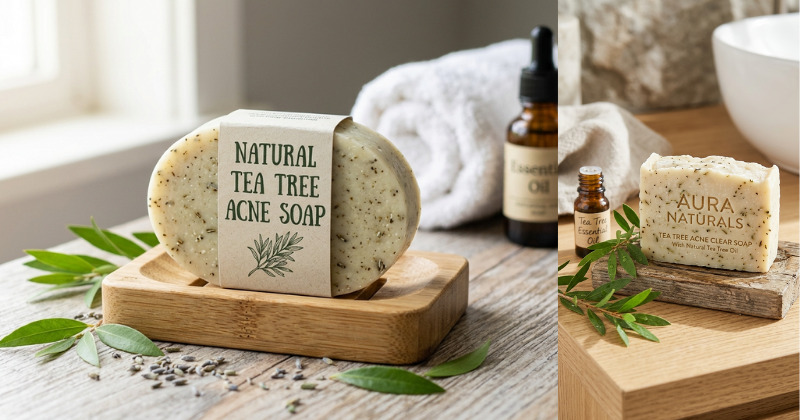
Struggling with stubborn breakouts that just won’t calm down? Tea tree acne soap might be the simple, natural solution your skin needs. Known for its antibacterial and anti-inflammatory properties, tea tree oil has become a trusted ingredient for clearer, healthier-looking skin.
If you’re tired of harsh products that leave your face dry and irritated, this guide will show you how tea tree acne soap works, how to use it properly, and how to get the best results safely.
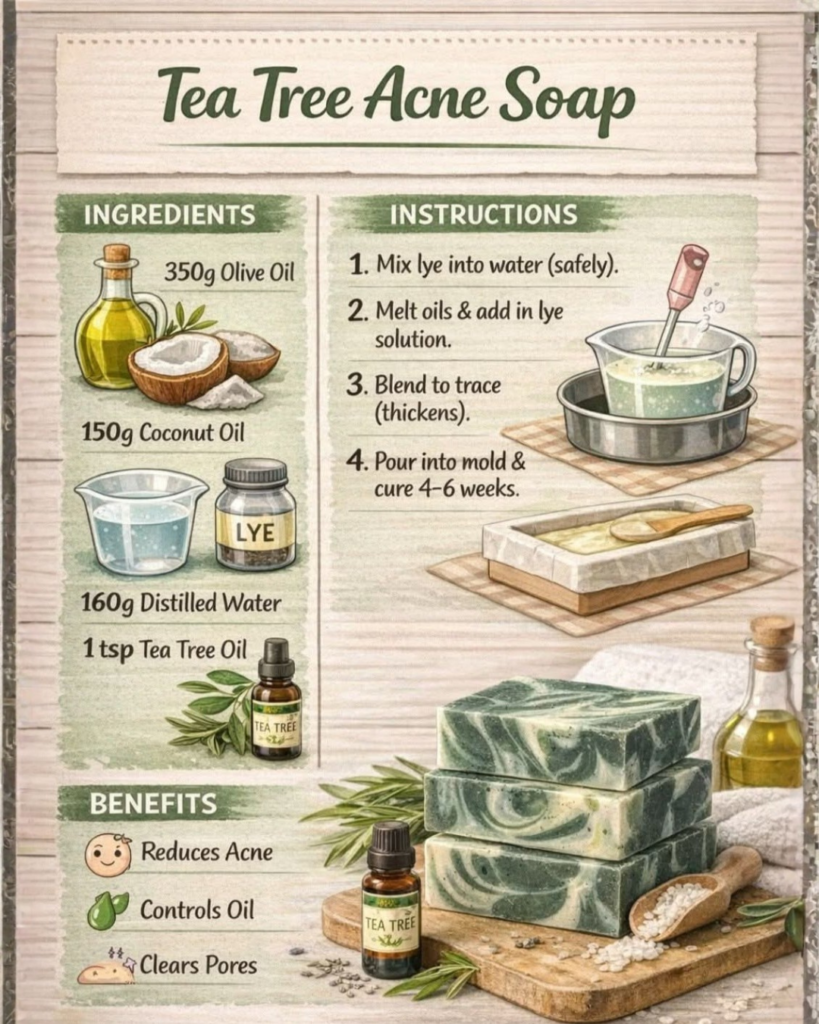
Why Tea Tree Oil Works for Acne
Tea tree oil comes from the leaves of the Australian plant Melaleuca alternifolia. It has been widely studied for its antimicrobial and soothing properties.
H3: Antibacterial Action
Acne often develops when pores become clogged with oil, dead skin cells, and bacteria. Tea tree oil helps reduce acne-causing bacteria on the skin’s surface.
H3: Anti-Inflammatory Benefits
Red, swollen pimples are often caused by inflammation. Tea tree oil can help calm irritated skin and reduce visible redness.
H3: Oil Control Support
If you struggle with oily skin, tea tree acne soap may help balance excess sebum without completely stripping your skin.
Unlike harsh chemical treatments, tea tree products often feel gentler — especially when formulated properly in soap form.
How Tea Tree Acne Soap Helps Your Skin
Tea tree acne soap combines cleansing with targeted acne support. Here’s what it can do:
- Remove excess oil and impurities
- Help unclog pores
- Reduce acne-causing bacteria
- Calm mild inflammation
- Support clearer-looking skin over time
It’s especially helpful for:
- Oily skin
- Combination skin
- Mild to moderate acne
- Body acne (back and chest)
However, consistency and correct usage matter more than just the product itself.
How to Use Tea Tree Acne Soap Properly
Using it the right way makes all the difference.
H3: Step 1 – Wet Your Face with Lukewarm Water
Avoid hot water, as it can increase dryness and irritation.
H3: Step 2 – Lather Gently
Rub the soap between your hands first. Apply the foam to your face using gentle circular motions.
H3: Step 3 – Let It Sit (30–60 Seconds)
Allow the active ingredients to work before rinsing.
H3: Step 4 – Rinse & Moisturize
Pat dry with a clean towel and follow with a lightweight, non-comedogenic moisturizer.
Start with once daily use. If your skin tolerates it well, you may increase to twice daily.
Pro Tips for Better Results
If you want to maximize results from tea tree acne soap, consider these expert tips:
H3: Do a Patch Test First
Apply a small amount behind your ear or on your wrist to test for sensitivity.
H3: Don’t Overuse It
More washing does not mean faster results. Over-cleansing can damage your skin barrier.
H3: Combine with Gentle Skincare
Avoid mixing with strong exfoliants or alcohol-based toners at the same time.
H3: Be Patient
Visible improvements may take 2–4 weeks of consistent use.
Acne healing is a gradual process — your skin needs time to adjust.
Common Mistakes to Avoid
Many people unknowingly reduce the effectiveness of tea tree acne soap.
Using It with Harsh Treatments
Pairing it with strong acne creams may cause dryness or irritation.
Skipping Moisturizer
Even oily skin needs hydration. Skipping moisturizer can trigger more oil production.
Expecting Overnight Results
Natural ingredients work steadily — not instantly.
Who Should Avoid Tea Tree Acne Soap?
Tea tree oil is powerful, but it’s not for everyone.
Avoid or consult a professional if you have:
- Very sensitive skin
- Eczema or severe skin conditions
- Known allergies to essential oils
If irritation occurs, discontinue use.
How Long Does It Take to See Results?
Most people notice:
- Reduced redness within 1–2 weeks
- Fewer breakouts after 3–4 weeks
- Improved skin clarity with continued use
Results depend on skin type, consistency, and overall skincare habits.
Can You Use Tea Tree Acne Soap on Body Acne?
Yes. It can be helpful for:
- Back acne
- Chest acne
- Shoulder breakouts
Use it during showers and rinse thoroughly.
Final Thoughts
Tea tree acne soap can be a powerful yet gentle addition to your skincare routine when used correctly. It supports clearer skin by targeting bacteria, reducing inflammation, and balancing oil production.
Consistency, patience, and proper skincare pairing are key.
If you’re looking for a natural acne solution that feels effective without being overly harsh, tea tree acne soap may be worth trying.
Important Disclaimer: This article is for informational purposes only and should not replace professional advice. For health-related topics, consult healthcare providers. Individual results may vary.